
Reviewed · WALKING TOURS
Cultural Walking Tour in Rotterdam
Rotterdam’s story is written in its buildings. This two-hour cultural walk begins at the bold new Central Station, crosses the postwar city center, and ends beside the Maas with a view of the Erasmus Bridge. Along the way, your guide connects modern design with Rotterdam’s wartime destruction and rebuilding.
I like the small maximum group of 20 and the focus on architecture rather than a quick checklist of sights. I also like the chance to stop at Markthal and buy a local snack, since food gives you a more ordinary taste of city life. The main drawback is the pace: this is a fairly long outdoor walk, and the published stops are short, so you should bring water, wear good shoes, and dress for the weather.
In This Review
- Key points to know before you book
- Why Rotterdam makes a good walking-tour subject
- Starting at Rotterdam Centraal
- Walking through the Lijnbaan
- Laurenskerk, Rotterdam’s old survivor
- Markthal and the taste of daily Rotterdam
- Beyond the listed stops: Rotterdam’s architectural story
- Ending beside the Maas and Erasmus Bridge
- What the guide adds for the price
- Practical advice for a comfortable walk
- Who should book this Rotterdam walk?
- Should you book it?
- FAQ
- Where does the Rotterdam cultural walking tour begin?
- Where does the tour end?
- How long does the tour last?
- What language is the tour offered in?
- What sights are included?
- Is food included?
- Is hotel pickup included?
- How much does the tour cost?
- Is there a minimum age?
- How many people can join the tour?
- What physical fitness level is needed?
- Can I cancel for a refund?
Key points to know before you book
- Rotterdam’s rebuilt center is the main subject: You learn why the city looks so different from Amsterdam, Delft, or other Dutch destinations.
- The route links old and new Rotterdam: See the surviving Laurenskerk alongside Central Station, Markthal, modern towers, and the Erasmus Bridge.
- Architecture guides lead the experience: The guide may be an art historian, architect, or multilingual local guide. Tania and Sonia are named among the guides associated with the tour.
- Markthal adds a practical local touch: You can buy a snack there, but food and drinks are not included in the tour price.
- The walk ends at the Maas, not back at the station: Plan your onward route from Boompjeskade.
- Best for curious walkers aged 12 and up: You need moderate physical fitness, and at least two people are required per booking.
Why Rotterdam makes a good walking-tour subject
Rotterdam can seem puzzling at first. Its center has few of the narrow canal streets and old merchant houses that many people expect in the Netherlands. Instead, you find broad avenues, striking postwar buildings, experimental housing, offices, bridges, and a working port city that keeps reinventing itself.
That contrast gives this tour a clear purpose. You are not simply moving from one photo stop to another. You are learning how Rotterdam changed after the Second World War, when much of the historic center was destroyed by bombing. The city rebuilt with modern planning and architecture, creating the unusual mix you see today.
A guide with an art history or architecture background can make that mix easier to read. The route brings together urban design, engineering, politics, culture, and memorial details. That is more useful than memorizing building names. You begin to understand why the city favors open space and large-scale construction, and why old survivors such as Laurenskerk matter so much.
The tour costs $54.06 per person. That is not the cheapest way to walk around Rotterdam, since you can see many of these sights from public streets at no cost. Still, the price can be fair if you want someone to explain what you are seeing, point out less obvious buildings, and give the city a coherent story in a short visit.
More Walking Tours in Rotterdam
- Rotterdam: Architectural Highlights Guided Walking Tour
★ 4.8 · 215 reviews - Rotterdam Walk: Hilights, Gems, Architecture & WWII | 2 or 3hrs
★ 5.0 · 149 reviews - Rotterdam: Highlights & Gems Walking Tour with Dutch Local
★ 5.0 · 133 reviews
Starting at Rotterdam Centraal
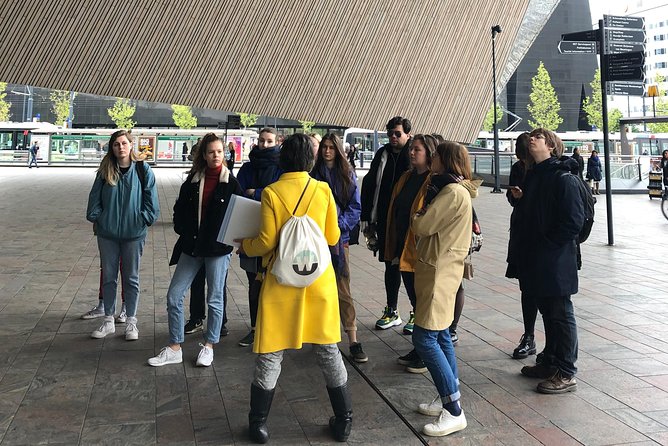
Meet at Rotterdam Central Station, a practical starting point near public transportation. The station itself is an immediate lesson in the city’s modern character. Its newly built design is large, angular, and forward-looking, with a strong sense of movement toward the center.
The first formal stop lasts about 10 minutes, though the full walk may run closer to two and a half hours depending on the group and the guide. Use this opening to get oriented. If you arrive by train, you can meet the guide without crossing the city first. If you are already staying in central Rotterdam, the station remains easy to reach by public transport.
The station is more than a meeting point. It helps frame the tour’s central idea: Rotterdam is a city shaped by rebuilding, transportation, trade, and modern design. From here, the route moves into the center rather than heading straight for the river.
The meeting instructions are simple, but I would arrive a little early. A busy station has many exits, and the tour requires a minimum of two people per booking. The guide may be multilingual, and English is the offered tour language, so confirm the language when booking if that matters to you.
Walking through the Lijnbaan
The route continues through the Lijnbaan, described as the country’s largest national monumental area. This is an important stop for understanding postwar urban planning. It is not just a shopping street. It reflects an effort to create a new kind of pedestrian center after the old city was badly damaged.
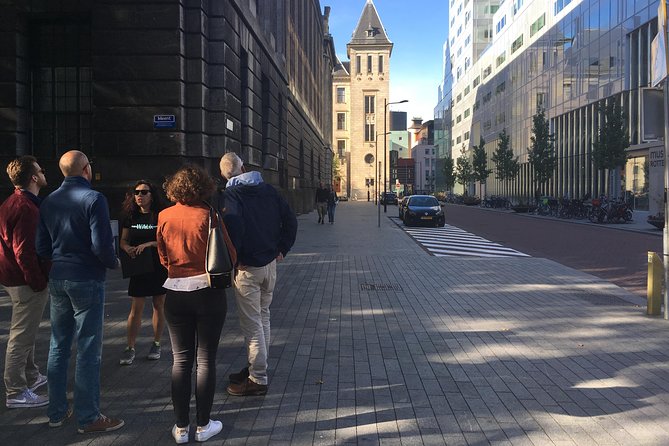
Your guide can explain how the Lijnbaan fits into Rotterdam’s wider rebuilding plan and how the city separated pedestrians from traffic in a modern way. This is where the tour begins to show you that everyday streets can be architectural landmarks.
The Lijnbaan is also a useful reality check. Rotterdam’s architecture is not all dramatic towers and famous bridges. Some of the city’s most important design decisions appear in ordinary public spaces, shops, walkways, and housing blocks. You may find this part less visually spectacular than the Erasmus Bridge, but it gives the later sights more meaning.
Because the walk passes through active city streets, stay aware of other pedestrians and traffic. The tour is conducted outdoors, and weather can change the experience. A cold January day did not prevent one guide from keeping the group engaged, but warm layers and waterproof clothing will make the walk much more comfortable.
Laurenskerk, Rotterdam’s old survivor
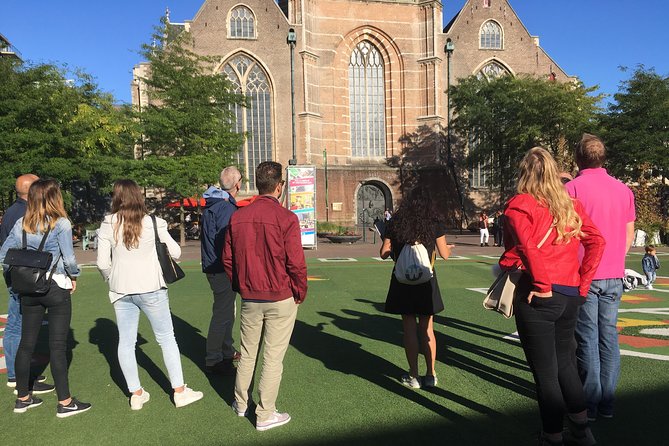
At Grote of Sint-Laurenskerk, you pause to admire the exterior of Rotterdam’s oldest building. The church partly survived the wartime bombing, making it one of the clearest links to the city that existed before the modern rebuilding.
The stop lasts about 10 minutes. That is enough for an explanation and exterior views, but not for a full visit inside. If seeing the interior matters to you, ask the guide whether a separate visit would fit your schedule later. The supplied tour information promises admiration of the exterior, not admission.
This brief stop carries real weight. After seeing Rotterdam’s new station and postwar planning, the church reminds you that the city was not created from nothing. Its survival gives physical form to the loss and recovery that shape Rotterdam’s identity.
I especially like this part of the route because it prevents the experience from becoming a simple celebration of modern buildings. You see the cost of the city’s transformation, as well as its creative response. The guide may also point out nearby memorials, sculptures, and sites whose meaning is easy to miss when you walk alone.
Same city, a completely different afternoon:
- Rotterdam: Harbor Sightseeing Cruise
★ 4.3 · 7,599 reviews - Rotterdam: 1-Hour Sightseeing Splash Tour
★ 4.5 · 3,299 reviews - Rotterdam: Rotterdam Zoo Blijdorp Entry Ticket
★ 4.6 · 2,754 reviews - Rotterdam: Euromast Lookout Tower Ticket
★ 4.4 · 2,549 reviews
Markthal and the taste of daily Rotterdam
Markthal is the tour’s most social stop. This impressive indoor market and food hall combines apartments, shops, and food stalls in one large structure. The guide explains its design and place in Rotterdam’s current city center.
You have about 10 minutes here, so do not expect a leisurely meal. The tour description refers to a local-market snack, but snacks and drinks are not included in the $54.06 price. Bring a little spending money if you want to try something, and do not count on having time for a full lunch.
That small food break is valuable because it changes the rhythm of the walk. You have been looking at buildings and planning decisions. At Markthal, you can connect the architecture with the way people shop, eat, and meet in the city today.
The market can also be busy, so keep the group’s timing in mind. If you want to browse every stall or take your time with photographs, you may need to return on your own. The guide’s explanation is the main purpose of the stop, while the snack is an optional extra.
Beyond the listed stops: Rotterdam’s architectural story
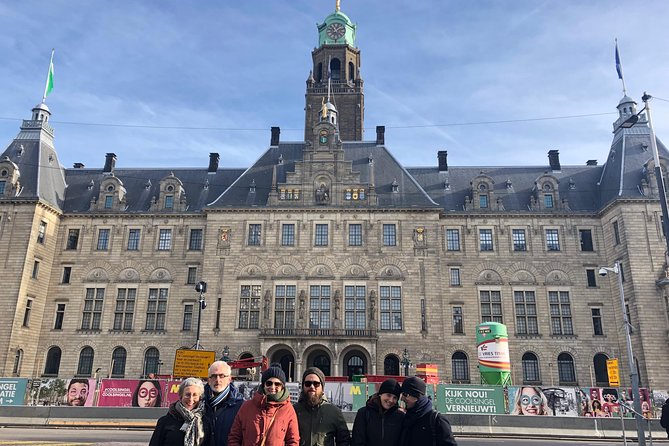
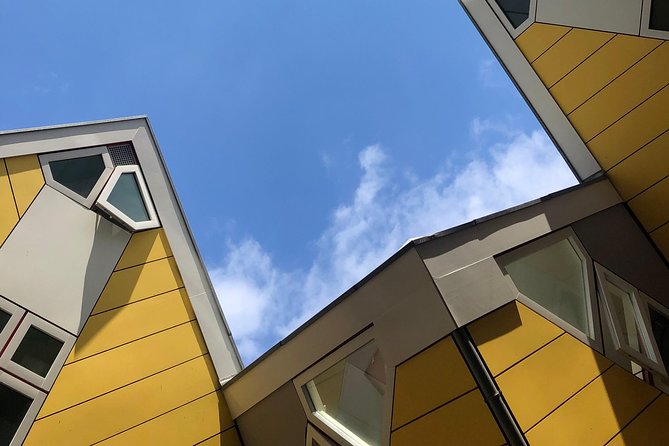
The formal itinerary names Central Station, Lijnbaan, Laurenskerk, Markthal, and the Erasmus Bridge. The route can also bring you near several other well-known buildings and areas, including the Cube Houses, Pencil Building, Groot Handelsgebouw, Timmerhuis, City Hall, and the White House.
Exactly how much attention each receives can vary with the guide, weather, walking speed, and group size. Do not treat every nearby landmark as a guaranteed full stop. Still, these buildings help explain Rotterdam’s range, from early twentieth-century commercial architecture to bold housing experiments and new office design.
The Cube Houses are particularly useful for understanding Rotterdam’s willingness to test unusual ideas in ordinary neighborhoods. The White House offers a different architectural chapter, while Timmerhuis shows how newer development can fit into the rebuilt center. A guide who enjoys urban design can connect these examples instead of presenting them as isolated curiosities.
This is where the quality of the guide matters most. Tania has been praised for knowing the material and keeping the group engaged in cold weather. Sonia is described as a local architect who explained the rebuilt downtown and the context of a major port city destroyed during the war. If either guide leads your walk, you can expect architecture to receive serious attention, though guides may change.
Ending beside the Maas and Erasmus Bridge
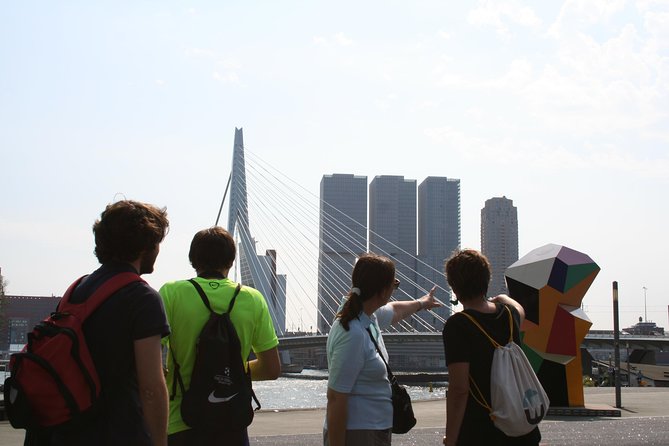
The walk ends at Boompjeskade, beside the Maas river. This is a strong finish. From the waterfront, you get views toward Rotterdam’s landmark bridges and the high-end architecture developing on the opposite side of the river.
The Erasmus Bridge is one of the city’s most recognizable sights, and the river setting gives you a chance to step back from individual buildings. Rotterdam’s identity as a major port city becomes easier to grasp here. The water is not merely scenery. It helps explain the city’s trade, growth, engineering, and continuing development.
The end point is not Rotterdam Centraal, so plan ahead. You will need to make your own way back to your hotel, train station, or next sight. That is not a serious problem, since the tour finishes near public transportation, but it is worth knowing before you set out.
This final stretch is also the best place for photographs. Keep your phone charged, especially if you want pictures of the bridge, river, and modern buildings. One useful suggestion is to ask the guide to point out the strongest photo spots and, if appropriate, take a picture of you there. Do not assume every guide will automatically stop for posed photos.
What the guide adds for the price
The strongest reason to book this walk is the explanation. You can walk past Markthal, Laurenskerk, and the Erasmus Bridge alone, but you may not understand how they fit into Rotterdam’s story.
The guide adds detail about history, architecture, engineering, urban planning, politics, culture, sculptures, and memorial sites. That range suits you if you want more than dates and building names. The experience can feel like a conversation rather than a formal lecture, especially when the group is small.
A group of up to 20 people is large enough to provide company but small enough for questions. On some dates, you might be the only participant or part of a very small group. That can bring extra attention and a more personal discussion, though it also means you will not meet as many fellow visitors.
The tour is not designed around hotel pickup, private transport, or entrance tickets. You pay for the guide’s time and interpretation, then walk between public sights. For some people, that makes the price worthwhile. If you prefer a private guide, a museum visit, or included food, this may not be the right choice.
Practical advice for a comfortable walk
Wear shoes suitable for a sustained city walk. The supplied details call for moderate physical fitness, and the actual experience can last around two to two and a half hours. There are no claims of a seated vehicle transfer or frequent indoor breaks.
Bring water, particularly on sunny days. Carry a charged phone for photographs, and pack sunglasses if the forecast is bright. In colder months, gloves and a warm coat will help. Rotterdam’s waterfront can feel especially exposed, so weather-ready clothing matters.
The minimum age is 12. Service animals are allowed, and the route is near public transportation. Hotel pickup and drop-off are not included, and you arrange your own drinks and snacks.
You receive confirmation at booking, and free cancellation is available if you cancel at least 24 hours before the local start time. Changes or cancellations inside that window are not accepted for a refund.
Who should book this Rotterdam walk?
I would choose this tour if you are visiting Rotterdam for the first time and want a clear introduction to its architecture and urban story. It is also a good fit if you have seen the main sights but want to understand why the city feels so different from other Dutch destinations.
Architecture students, design-minded visitors, and people interested in postwar rebuilding should get the most from it. The route also suits anyone who prefers walking and conversation to a bus tour. The local market stop adds a modest food element, but this is not primarily a culinary experience.
You may want to skip it if you dislike outdoor walking, need a slow pace, or want extensive time inside each attraction. The short stops are designed for explanation and orientation, not detailed visits. You will need to schedule separate time for the church, market, or other buildings if you want to explore them deeply.
Should you book it?
Book this cultural walking tour if you want Rotterdam explained by an art historian, architect, or strong local guide, especially during a first visit. The route connects the new Central Station, Lijnbaan, Laurenskerk, Markthal, and Erasmus Bridge in a sensible west-to-east walk, while the discussion adds the historical and design context that street signs cannot provide.
At $54.06, the value depends on how much you want interpretation. The sights themselves are free to view, but a good guide can turn a collection of unusual buildings into a readable story about war, trade, memory, and modern city planning. Bring water, dress for the weather, budget separately for a market snack, and remember that you finish at the Maas rather than the station.
FAQ
Where does the Rotterdam cultural walking tour begin?
The tour begins at Rotterdam Central Station, at 3013 AJ Rotterdam, Netherlands.
Where does the tour end?
The walk ends at Boompjeskade, 3011 Rotterdam, beside the Maas river.
How long does the tour last?
The stated duration is approximately two hours. One detailed account describes a walk lasting about two and a half hours, so allow some extra time.
What language is the tour offered in?
The tour is offered in English. It may be operated by a multilingual guide.
What sights are included?
The route includes Rotterdam Central Station, the Lijnbaan, Grote of Sint-Laurenskerk, Markthal, and the Erasmus Bridge. The route may also pass notable buildings such as the Cube Houses, Pencil Building, Timmerhuis, City Hall, and the White House.
Is food included?
No. Drinks and snacks are not included. You may have the chance to buy a snack at the local market.
Is hotel pickup included?
No. Hotel pickup and drop-off are not included.
How much does the tour cost?
The listed price is $54.06 per person.
Is there a minimum age?
Yes. The minimum age is 12.
How many people can join the tour?
The group can include a maximum of 20 people. A minimum of two people is required per booking.
What physical fitness level is needed?
You should have a moderate level of physical fitness because the experience is a city walking tour lasting about two hours or more.
Can I cancel for a refund?
Yes. You can cancel at least 24 hours before the local start time for a full refund. Cancellations or changes made less than 24 hours before the start are not accepted for a refund.
Just added around Rotterdam
- Rotterdam: Breweries and Water Taxi Tour★ 4.7 · 23 reviews
- Rotterdam: National Museum of Photography Entrance Ticket★ 3.8 · 24 reviews
- Rotterdam Highlights Private Walking Tour★ 5.0 · 26 reviews
- Private Tour: Rotterdam Walking Tour Including Harbor Cruise★ 4.5 · 27 reviews
- Rotterdam Tour with Cube House Admission★ 4.4 · 27 reviews
- Rotterdam: Food Tour by Bike★ 4.8 · 31 reviews
- Private Customizable Day Trip From Rotterdam★ 4.5 · 31 reviews
- Rotterdam: Exclusive Rooftop Tour with 360˚ views★ 4.8 · 34 reviews
Walking Tours, compared.
Anne Frank’s Story – Guided Walking Tour through Amsterdam
Read our review →
Life of Anne Frank and World War II Walking Tour
Read our review →
Absolutely Amsterdam – the Essential Introductory Walking Tour
Read our review →
Anne Frank Walking Tour – Guided in EN/DE/IT/ES
Read our review →
Anne Frank Walking Tour Amsterdam Including Jewish Cultural Quarter
Read our review →Browse the lists this tour appears in