
Reviewed · WALKING TOURS IN AMSTERDAM
Absolutely Amsterdam – the Essential Introductory Walking Tour
Amsterdam’s story begins with water, trade, and a willingness to bend the rules. This 2.5-hour walk links the old harbor, Red Light District, Chinatown, Jewish Quarter, canals, university buildings, and Royal Palace, giving you a useful map of the city as well as plenty of stories.
I like the low upfront price, which lets you decide what the tour was worth through your tip. I also like the mix of subjects: Rembrandt, the Dutch East India Company, Catholic worship, marijuana policy, Nazi occupation, bicycles, and the monarchy all fit into one route.
The main drawback is that this is an outdoor overview, not a museum tour. You will see the hidden church and the Royal Palace from outside, and busy streets can make it harder to hear or keep close to the guide.
In This Review
- Key points to know before you go
- Why this walk works as an Amsterdam introduction
- Beurs van Berlage and Damrak: water, money, and the city’s oldest tensions
- Our Lord in the Attic and Chinatown: tolerance with limits
- The Waag and Oostindisch Huis: art, trade, and uncomfortable wealth
- Waterlooplein: Jewish Amsterdam and the hunger winter
- The Amstel and Amsterdam’s narrow canal houses
- Oudemanhuispoort: the city’s bike culture explained
- Royal Palace Amsterdam: from republic to monarchy
- How the guides affect the experience
- The $5.93 price and what you really receive
- Who should book this walk
- Should you book Absolutely Amsterdam?
- FAQ
- How long does the Absolutely Amsterdam walking tour last?
- How much does the tour cost?
- What language is the tour offered in?
- Where does the tour start?
- Where does the tour end?
- Does the tour enter the hidden church or Royal Palace?
- Can I cancel for a full refund?
Key points to know before you go
- Ten central stops: The route covers Amsterdam’s major old-town sights without requiring public transport.
- History with modern edges: Expect frank discussion of prostitution, drug policy, colonial trade, wartime suffering, and royal gossip.
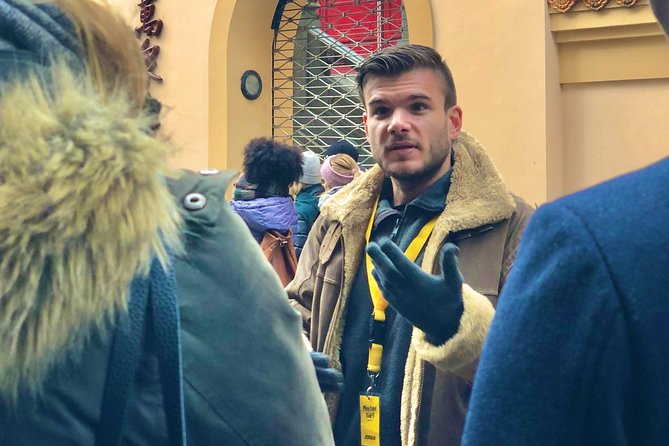
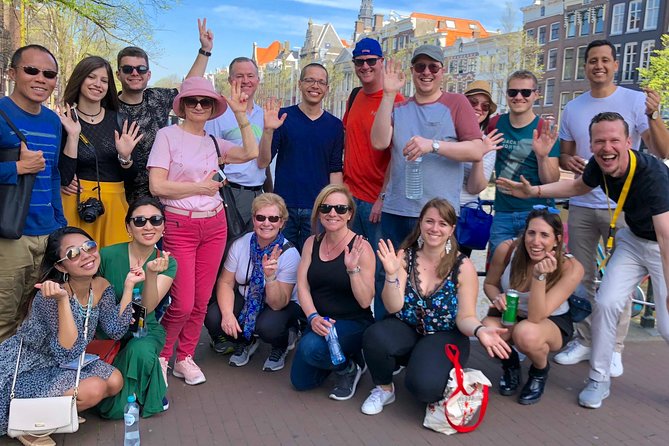
- Small group size: The tour accepts no more than 15 people, which helps with questions and keeping the group together.
- Guides shape the experience: Jaap, Raymond, Sergio, David, Fernando, Roman, and others are praised for humor, stories, and local tips.
- A true budget option: The price is $5.93 per person, with a tip left to your judgment.
- Wear sensible shoes: You cover plenty of ground on foot, and bicycles, crowds, and weather are part of the city experience.
Why this walk works as an Amsterdam introduction
A first walk in Amsterdam can feel like a jumble of canals, narrow houses, bike bells, churches, souvenir shops, and signs you do not yet understand. This tour gives those pieces a clear order.
You begin at Beursplein, then move through the oldest center before finishing at Dam Square. Along the way, the guide explains not just what a building is, but why Amsterdam developed in such a peculiar way. Water created the city. Trade made it powerful. Religious compromise kept it functioning. Modern Dutch policy grew from some of those same habits of practical tolerance.
That wide subject range is the tour’s best feature. You do not spend two hours hearing dates and names. You connect daily life with bigger forces: why the canals were built, why houses lean, why the Red Light District exists, why Dutch bicycles often look battered, and how a republic became a monarchy.
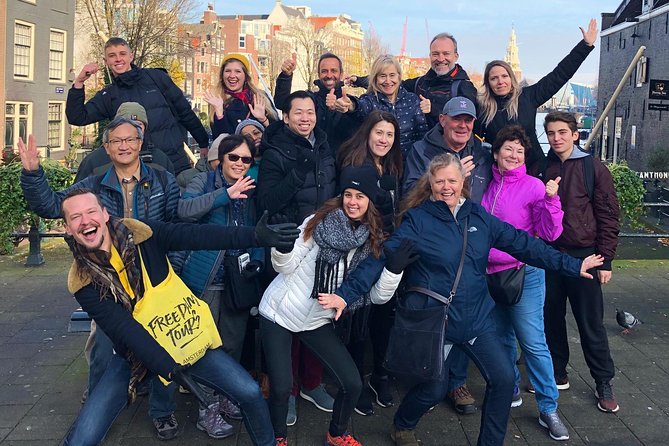
The guides also use humor. Jaap is praised for a funny, well-informed presentation, while Raymond is noted for a relaxed pace and for bringing the group together. Sergio, David, Fernando, Roman, and others are also singled out for warmth, storytelling, and useful suggestions for the rest of your stay. Your exact guide will affect the tone, but the format leaves room for personality.
More Walking Tours in Amsterdam
- Anne Frank’s Story – Guided Walking Tour through Amsterdam
★ 5.0 · 11,619 reviews - Amsterdam: Life of Anne Frank and World War II Walking Tour
★ 4.8 · 10,467 reviews - Amsterdam: Anne Frank Guided Small Group Walking Tour
★ 4.8 · 2,722 reviews
Beurs van Berlage and Damrak: water, money, and the city’s oldest tensions
The first stop, in front of Beurs van Berlage, sets up Amsterdam’s basic story. The buildings occupy ground connected to the former course of the Amstel River, so the guide starts with the practical problem behind the city: how to build, trade, and live on wet ground.
You learn how water and finance shaped Amsterdam. That is a smart opening because the city’s canals are not just pretty scenery. They helped move goods, define property, and support commercial growth.
At Damrak, the old harbor provides a sharper change of subject. The guide explains the origins of the Red Light District, the role of the Church, and the long relationship between religious ideals and commercial reality. You also hear how prostitution became legal, how the area changed during the 20th and 21st centuries, and what pressures it faces now.
This part is frank but not presented as cheap entertainment. If you want an honest account of Amsterdam’s most famous neighborhood, it is useful. If you prefer a tour that avoids adult subjects, this section may feel too direct.
Our Lord in the Attic and Chinatown: tolerance with limits
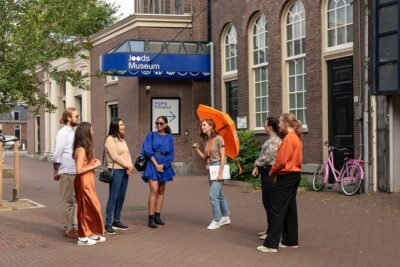
At Our Lord in the Attic Museum, you do not enter the hidden church. You see the building from outside and use pictures of the interior while the guide explains how Catholic worship continued after Catholicism became illegal in the 17th century.
That distinction matters. The stop gives you historical context, but it does not replace a museum visit. If the church interests you, plan to return and pay for admission separately. On the walk, the value comes from the discussion of how tolerance worked in practice. It was not always broad-minded or equal. Often, it meant authorities allowed private worship under narrow conditions because keeping the peace was more useful than enforcing every rule.
The next stop, Chinatown, shifts from religious policy to Dutch drug policy. You learn how the neighborhood became a no-go area in the 1970s and how this helped lead to the rise of coffeeshops selling marijuana.
This is a useful correction to the simple image of Amsterdam as a city that has always been relaxed about drugs. The guide explains policy as a response to specific urban problems, not just as a national personality trait. The stop is short, so expect an overview rather than a full legal history.
The Waag and Oostindisch Huis: art, trade, and uncomfortable wealth
At The Waag, the focus turns to Rembrandt. The guide explains where he painted his first major work and how it changed portrait making. A copy of the painting is used to point out details, which is helpful when you are standing outside and cannot study the original up close.
I appreciate this kind of visual aid. Art history can become abstract on a street corner, but a copy gives you something specific to look at while the guide tells the story.
Oostindisch Huis offers one of the tour’s strongest historical stops. On weekdays, you may be able to see its 17th-century courtyard, an added benefit that depends on access. Inside this setting, the guide explains how Amsterdam became the center of a global trading empire during the Dutch Golden Age.
The building was the headquarters of the Dutch East India Company, described here as the first and largest corporation in human history. The discussion connects overseas trade with the early workings of modern capitalism. Just as important, it does not present this period as simple glory. You hear about the darker side of the empire as well as its wealth.
This is the kind of stop that gives Amsterdam more depth. Canal houses and grand civic buildings look different once you understand the systems that paid for them.
Same city, a completely different afternoon:
- Amsterdam: Van Gogh Museum Ticket
★ 4.7 · 52,054 reviews - Amsterdam Classic Saloon Boat Cruise with Drinks and Cheese
★ 5.0 · 31,825 reviews - Amsterdam Luxury Canal Cruise + Unlimited Drinks & Bites option
★ 5.0 · 30,518 reviews - Amsterdam: Heineken Experience Ticket
★ 4.6 · 30,055 reviews
Waterlooplein: Jewish Amsterdam and the hunger winter
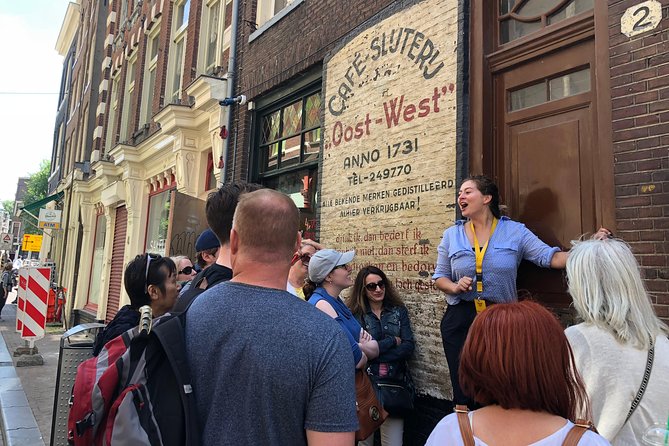
Waterlooplein Market is one of the most serious stops. It is the city’s oldest market and sits in the former Jewish Quarter, an area that was almost completely destroyed by the end of the Second World War.
The guide explains what happened to Amsterdam’s Jewish population during the Nazi occupation and the disastrous effects of the war. You also learn about the hunger winter and the measures Amsterdammers took to survive.
The description of the neighborhood’s destruction is intentionally direct. This is not a quick mention of wartime history added for decoration. It asks you to consider how a city that had once offered refuge to persecuted Jewish communities became part of a catastrophe.
Because the stop lasts about 15 minutes, it cannot cover every detail. Still, it gives you a serious reason to return to museums and memorial sites during your stay. I would pay close attention here, since this section may be the moral center of the walk.
The Amstel and Amsterdam’s narrow canal houses
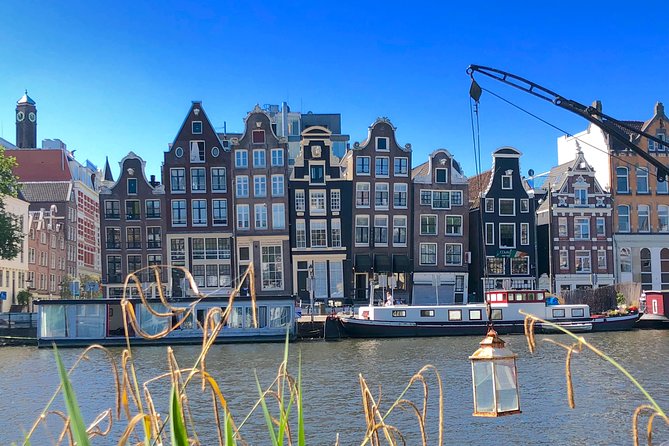
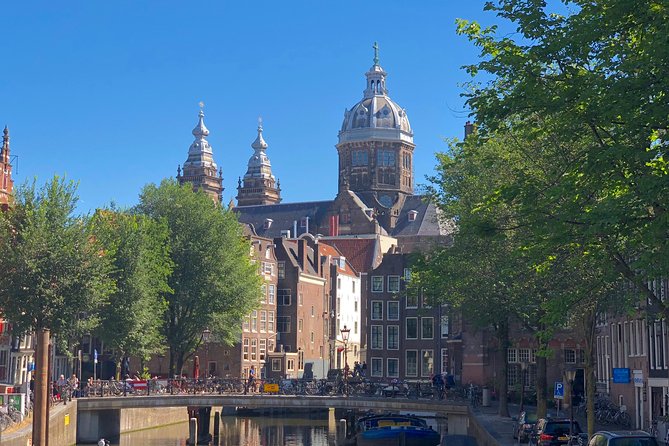
At the Amstel, or at another canal if weather or the guide requires a change, the tour returns to the city’s most familiar views. You learn why Amsterdam has canals and how the canal houses work.
The guide explains why the houses are so narrow, why many lean, and why some of that leaning was intentional. You also learn about the hooks on the facades and the Dutch habit of leaving curtains open.
These details are small, but they make sightseeing more fun. Once you know what to look for, a canal cruise or an evening walk becomes more rewarding. You stop seeing rows of old buildings and start noticing their practical design.
This is also where weather matters. Amsterdam is an outdoor city, and the tour continues in rain unless conditions force a change in the canal stop. Bring a drink and wear shoes that can handle several hours of pavement. One person specifically praised the manageable pace, but you are still covering a good part of the old center.
Oudemanhuispoort: the city’s bike culture explained
Oudemanhuispoort is a former monastery that later became a hospital and is now connected with the University of Amsterdam. It is a quieter, harder-to-find passage than the main squares, so it gives the route a change of mood.
Here, the guide explains Dutch bike culture. You learn why Amsterdam has more bicycles than people and why many bikes look plain, old, or even ugly.
That may sound like a light subject, but it is practical. Amsterdam’s bikes are not mainly fashion objects. They are daily tools, and their rough appearance often makes sense once you understand how common cycling is.
You also need to stay alert. Bicycles move quickly, often on paths that cross the walking route. One guide’s presentation was praised for being easy to follow, but keeping your eyes open is still your responsibility. The city’s bike traffic is part of the experience, though it can make a crowded walk feel less relaxed.
Royal Palace Amsterdam: from republic to monarchy
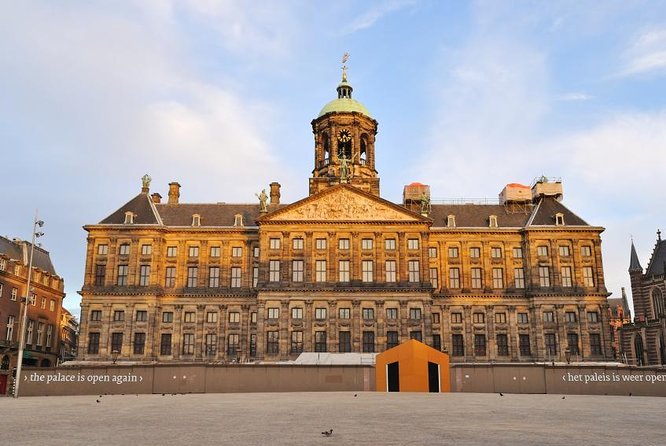
The final stop is the Royal Palace on Dam Square. The guide covers the unusual route from Dutch republic to modern monarchy, introduces the current royal family with pictures, and adds some lighter royal gossip.
This is a good ending because it brings the story into the present. Amsterdam is often associated with its merchant past, but the Netherlands is now a constitutional monarchy. The guide helps connect those two identities.
You do not enter the Royal Palace as part of this walk. Admission is not included, and the tour ends back at the starting point in the Dam Square area. That makes the palace easy to revisit if you want to see the interior later.
Dam Square can be crowded, especially at busy times. The walk may be harder to hear near heavy foot traffic, so stay close to the guide and avoid assuming that every story will reach you clearly from the edge of the group.
How the guides affect the experience
This tour depends heavily on the person leading it. The strongest guide qualities are clear delivery, humor, local knowledge, and the ability to manage a group while walking.
Jaap is praised for combining jokes with a strong grasp of Dutch history. Raymond is described as a lifelong local who gives an easy-paced introduction and involves the group. Sergio is noted for passion, humor, and helpfulness. David brings enthusiasm and stories, while Fernando is especially useful if you want suggestions for what to do after the walk.
Other named guides include Gianni, Esi, Samuel, Dani, Alex, Sebastien, Alexander, Ramses, and Roman. The guide you receive is not guaranteed, but the range of names reflects a team with different personalities and strengths. Roman’s tour, for example, may include a taste of quintessential Dutch food such as a waffle, though that should not be treated as a fixed part of every departure.
The group limit of 15 is a real advantage. It is still large enough to have energy, but small enough that questions and guide interaction are possible. You may find the pace especially comfortable if you are new to Amsterdam and want time to take in the setting.
The $5.93 price and what you really receive
At $5.93 per person, this is unusually inexpensive for a 2.5-hour guided city walk. The low price makes sense because the experience is built around free outdoor sights, and the tip is left to you.
The value is not in included admissions. You do not enter Our Lord in the Attic Museum or the Royal Palace, and the listed admission costs for those places are not included. Instead, you pay for orientation, explanation, storytelling, and the chance to see how separate sights connect.
I see this as an excellent first-day purchase if you are new to Amsterdam. It can help you decide which places deserve a return visit, and several guides offer ideas for food and other activities during your stay. If you already know the old center well, the broad route may feel familiar, but the trade, wartime, policy, and art context can still add something.
The tour is offered in English only. Confirmation arrives at booking, service animals are allowed, public transportation is nearby, and most people can take part. Free cancellation is available up to 24 hours before the start time. If the minimum group size is not reached, you are offered another date or experience, or a full refund.
Who should book this walk
I would choose this tour for a first visit, a short stay, or a morning when you want to get your bearings fast. It is also a good fit if you like city walks that mix famous sights with difficult subjects.
You should book it if you want:
- A broad introduction before choosing museums and neighborhoods to explore later
- A small group rather than a large coach tour
- History delivered with jokes and practical city details
- An inexpensive activity with no required admission fees
- A walk that covers the old center in a manageable, steady rhythm
You may want something else if you need wheelchair-smooth sightseeing, indoor shelter, or detailed time inside museums. The route is outdoors, bicycles and crowds can interfere, and several important sites are explained from the street.
Should you book Absolutely Amsterdam?
Yes, if you want a low-cost, story-filled introduction to central Amsterdam. The tour earns its value through range: water engineering, prostitution, Catholic tolerance, drug policy, Rembrandt, empire, Jewish history, bicycles, canals, and the monarchy all appear in one compact route.
Book early if your schedule is fixed, since it is commonly reserved well ahead of time. Choose comfortable shoes, carry water, and arrive ready for changing weather. If possible, take it near the start of your stay, then use the guide’s suggestions to decide where to spend your remaining time.
FAQ
How long does the Absolutely Amsterdam walking tour last?
The tour lasts approximately 2 hours and 30 minutes.
How much does the tour cost?
The listed price is $5.93 per person. The experience is tip-based, so you can decide how much you would like to give.
What language is the tour offered in?
The tour is offered in English.
Where does the tour start?
It starts at Freedam Tours, Beursplein 5, 1012 GZ Amsterdam, Netherlands.
Where does the tour end?
The activity ends back at the meeting point, in the Dam Square area by the Royal Palace.
Does the tour enter the hidden church or Royal Palace?
No. The hidden church is discussed from outside with pictures of its interior, and the Royal Palace is also viewed from outside. Admission is not included.
Can I cancel for a full refund?
Yes. You can cancel at least 24 hours before the experience start time for a full refund. Cancellations or changes made less than 24 hours before the start time are not accepted for a refund.
Just added around Amsterdam
- Amsterdam: Food and Canal Tour★ 4.6 · 22 reviews
- Segway City Tours Amsterdam★ 4.3 · 23 reviews
- Amsterdam Canal Cruise in Classic Salon Boat With Drinks and Cheese★ 4.0 · 22 reviews
- Discover Deventer with an Outside Escape city game tour!★ 4.5 · 23 reviews
- Historical Walking Tour, private with local Dutch guide★ 5.0 · 23 reviews
- Utrecht Food Tour on a Bicycle with local guide★ 5.0 · 23 reviews
- Amsterdam: Captain For a Day 2-Hour Boat Rental★ 4.9 · 23 reviews
- Amsterdam Small-Group Breakfast Morning Cruise★ 5.0 · 23 reviews
Walking Tours in Amsterdam, compared.
Anne Frank’s Story – Guided Walking Tour through Amsterdam
Read our review →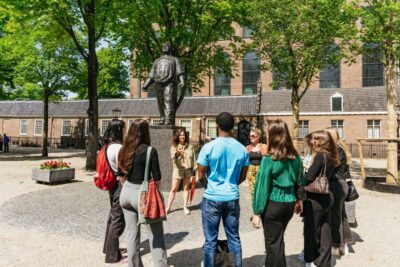
Life of Anne Frank and World War II Walking Tour
Read our review →

Anne Frank Walking Tour – Guided in EN/DE/IT/ES
Read our review →
Anne Frank Walking Tour Amsterdam Including Jewish Cultural Quarter
Read our review →
Amsterdam Highlights Walking Tour: Small Group Experience
Read our review →Browse the lists this tour appears in