

Reviewed · ANNE FRANK & JEWISH HERITAGE TOURS
Amsterdam: Anne Frank Walking Tour – Guided in EN/DE/IT/ES
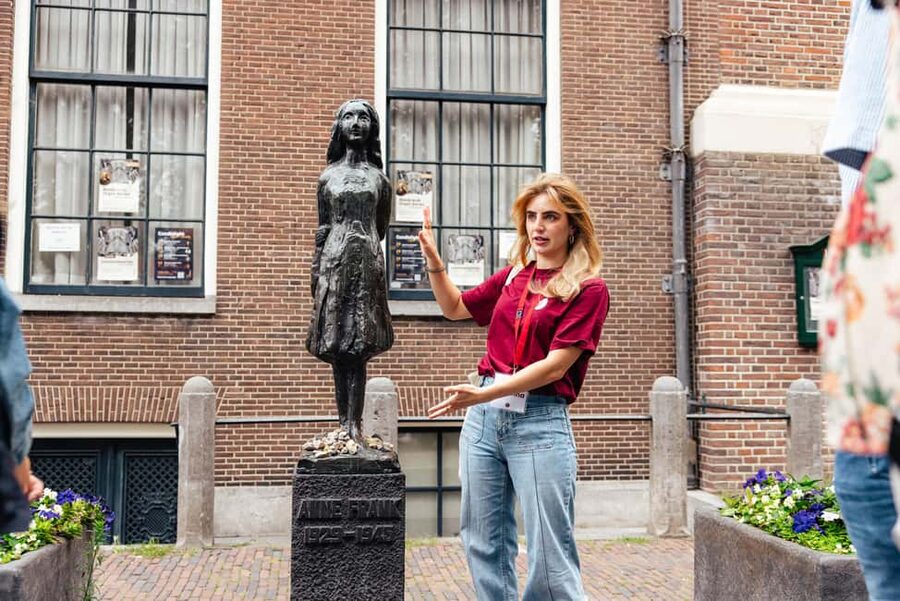
Amsterdam’s Jewish Quarter tells a much bigger story than Anne Frank’s alone. Starting at the old Waag, this two-hour walk traces Jewish life, Nazi persecution, local resistance, and the Holocaust through streets, memorials, Stolpersteine, and diary passages read along the way.
I like the way the tour connects Anne Frank’s private words with real places across the city. I also like the attention given to Jewish and non-Jewish resistance, including the 1941 February Strike. The main consideration is that the route does not visit or even show the Anne Frank House, so you need a separate plan for that landmark.
In This Review
- Key points to know before you book
- Why this walk matters in Amsterdam
- Meeting at Waag in Nieuwmarkt
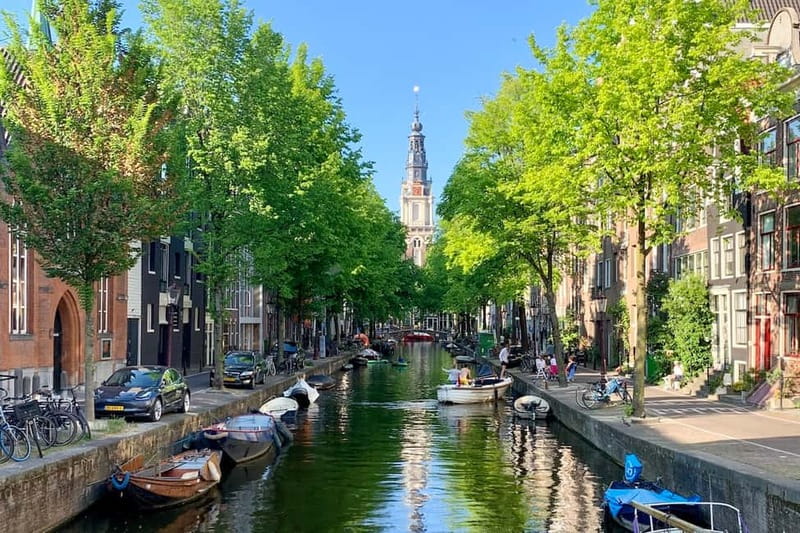
- Nieuwmarkt Square and the Zuiderkerk
- Huis de Pinto and the shape of the neighborhood
- Rembrandt House and Sint Antoniesluis
- The Portuguese Synagogue
- Jewish Historical Museum and the Auschwitz Monument
- The Dokwerker and the story of resistance
- National Holocaust Names Monument
- The guides and the way the story is told
- What you get for $28
- Who should book this walk
- Should you book the Anne Frank walking tour?
- FAQ
- Does the tour visit the Anne Frank House?
- How long does the walking tour last?
- What languages are available?
- Where does the tour begin?
- How do I find the correct side of Waag?
- Does the tour enter the museums or synagogue?
- What should I bring?
- Is the tour wheelchair accessible?
- Can I cancel or pay later?
Key points to know before you book
- Diary passages give the history a human voice, rather than treating Anne Frank as only a famous name.
- The route covers about 2 to 3 kilometers, with stops at the Portuguese Synagogue, Auschwitz Monument, Dokwerker, and National Holocaust Names Monument.
- Guides such as Valentina, Josh, Emilia, Deborah, Julia, and Charlotte have been praised for clear storytelling, thoughtful answers, and a steady walking pace.
- You choose one tour language, English, German, Italian, or Spanish. It is not a bilingual tour.
- The tour costs about $28 per person, with no admission fees during the walk, making it a useful history lesson for a moderate price.
- Comfortable shoes and rain gear matter, since the tour runs in all weather and takes place entirely outdoors.
Why this walk matters in Amsterdam

I find this tour most useful because it puts Anne Frank’s story into the setting that shaped it. You are not simply hearing about a hidden annex in the western canal belt. You are walking through the former Jodenbuurt, the Jewish neighborhood east of the old city center, where Jewish families lived, worked, worshipped, and helped shape Amsterdam’s growth.
Jewish residents expelled by the Spanish Inquisition settled in Amsterdam and helped turn the city into a major commercial center. Their presence changed the city’s buildings, institutions, and street life. The tour explains why this part of Amsterdam became home to the Jewish community and how the Jewish Triangle developed.
The story then turns sharply. Jewish life in Amsterdam was not only about trade, religious buildings, and prosperity. Nazi occupation brought registration, discrimination, deportation, and murder. Anne Frank’s diary becomes a thread through the walk, helping you connect broad events with the thoughts and fears of one young person.
That balance is important. The tour covers tragedy, but it also makes room for courage. You hear about Jewish and non-Jewish people who resisted the Nazi regime, often at serious personal risk. The February Strike of 1941 receives particular attention, as does the work of people who helped others avoid deportation.
The subject is painful, and the best guides treat it with care. Julia, Valentina, Josh, Emilia, Deborah, Lili, Bianca, and others have been praised for a calm, respectful approach, while still making the material easy to follow. Several guides use photos or carefully selected diary passages to help explain what you are seeing.
More Walking Tours in Amsterdam
- Anne Frank’s Story – Guided Walking Tour through Amsterdam
★ 5.0 · 11,619 reviews - Amsterdam: Life of Anne Frank and World War II Walking Tour
★ 4.8 · 10,467 reviews - Absolutely Amsterdam – the Essential Introductory Walking Tour
★ 5.0 · 3,629 reviews
Meeting at Waag in Nieuwmarkt
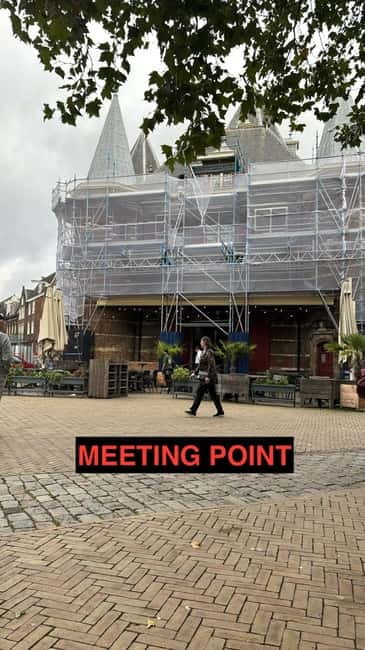
The walk begins at Waag, the old stone building that looks a little like a small castle in the middle of Nieuwmarkt. Meet at the entrance to the restaurant De Waag, not at the rear of the building.
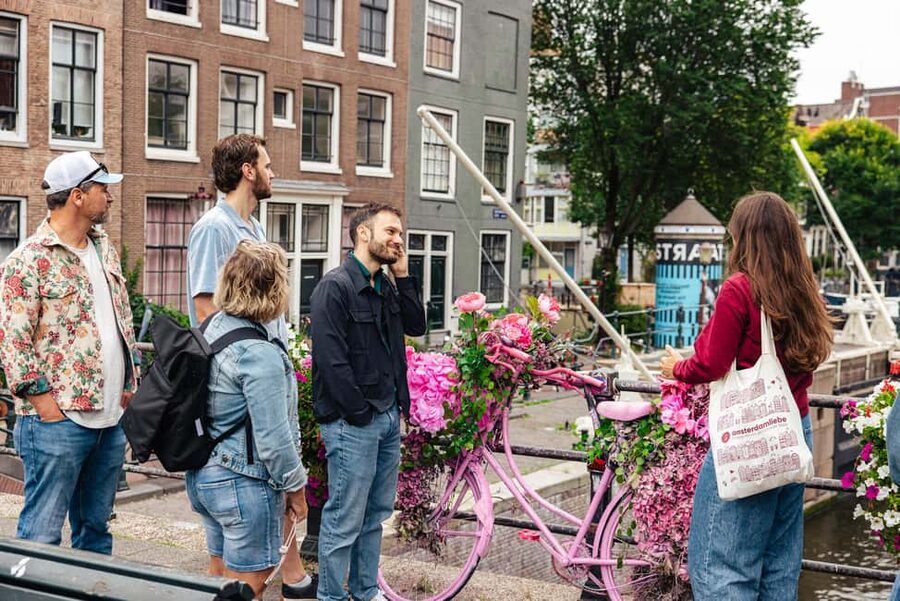
This warning matters. Google Maps can lead you to the wrong side. If you see the coffeeshop Jolly Joker, you are behind the building and need to walk around to the entrance. Look for a guide wearing a red name tag around the neck.
Nieuwmarkt is a practical starting point, with cafés and restaurants nearby. It also gives the guide a useful place to explain Amsterdam’s old city center before the group heads into the Jewish Quarter.
The walk lasts two hours and covers roughly 2 to 3 kilometers. That is not a hard distance, but Amsterdam’s streets can be uneven, and you will be standing at several stops. Wear shoes you can walk in comfortably. Bring water, weather-appropriate clothing, and an umbrella if rain is in the forecast.
Nieuwmarkt Square and the Zuiderkerk

At Nieuwmarkt Square, the guide begins setting out the geographic and historical background. You start to see how close the Jewish Quarter is to the old center, and why this district became an important part of Amsterdam’s development.
The next stop is Zuiderkerk, where the guided explanation lasts about ten minutes. This church is a reminder that the Jewish Quarter was never isolated from the rest of Amsterdam. Jewish and non-Jewish residents lived close together, and the neighborhood’s story is tied to the wider city.
I like this early part of the route because it prevents the tour from shrinking into a single-family biography. Anne Frank remains central, but you also learn about the people and institutions around her. The setting helps you understand Amsterdam as a shared city, not a collection of separate communities.
Huis de Pinto and the shape of the neighborhood

Huis de Pinto receives a shorter stop of about five minutes. The building helps illustrate the status and presence of Jewish families in Amsterdam. The guide explains how Jewish residents influenced the cityscape and how the neighborhood developed over time.
This is also where the tour’s theme of class and social position can become clearer. The Jewish Quarter included grand homes as well as ordinary streets and working communities. The area cannot be understood through Holocaust memorials alone. Its earlier life included commerce, family, religion, and ambition.
The stop is brief, so do not expect a long interior visit or a museum-style presentation. Its value comes from seeing the building in place and hearing how it fits the neighborhood’s story.
More Anne Frank and Jewish heritage walks:
- Amsterdam: Anne Frank Guided Small Group Walking Tour
★ 4.8 · 2,722 reviews - Anne Frank Walking Tour Amsterdam Including Jewish Cultural Quarter
★ 5.0 · 1,879 reviews - Anne Frank’s Last Walk & See Anne Frank House in Virtual Reality
★ 5.0 · 957 reviews - Amsterdam: Dutch WWII Resistance Museum Entry Ticket
★ 4.7 · 951 reviews
Rembrandt House and Sint Antoniesluis
The Rembrandt House is one of the longer stops, at around fifteen minutes. The famous painter lived in the Jewish Quarter, and the guide uses his connection to show how Jewish and non-Jewish lives overlapped in Amsterdam.
This is a useful correction to the idea that the Jewish Quarter was inhabited only by Jews. Rembrandt’s home gives the guide a concrete way to discuss daily contact, neighbors, business, and the mixed character of the area.
At Sint Antoniesluis, the tour continues for about ten minutes. The guide places the neighborhood’s streets and waterways into the story, explaining why this land appealed to Jewish residents and how Amsterdam’s urban form shaped community life.
The route is not a string of grand attractions. Some stops are buildings or street corners that require explanation to mean much. That is normal for a historical walking tour, and it is also the point. You are learning to read the city’s ordinary spaces as evidence.
The Portuguese Synagogue
The Portuguese Synagogue is one of the most striking sights on the route. The group pauses for photographs and receives about ten minutes of explanation.
This building represents the long Jewish presence in Amsterdam and the influence of Sephardic Jews who came after persecution in the Iberian Peninsula. The guide links religious life to the city’s growth, wealth, and architecture.
You should not expect entry into the synagogue as part of this activity. No admission fees are needed during the walk, and the tour focuses on exterior sights and public memorials. If you want to visit interiors, check separately for opening times and admission rules.
The synagogue stop gives the tour a needed pause before the darker sections. You see evidence of a community that built institutions and maintained religious life, rather than encountering Jewish history only through suffering.
Jewish Historical Museum and the Auschwitz Monument
The stop near the Jewish Historical Museum lasts about five minutes. The museum area provides another chance to discuss Jewish culture and life in Amsterdam, both before and after World War II.
Again, this is an exterior stop rather than a museum visit. The tour gives you orientation and context, but it does not include museum entry. If you want displays, objects, and a longer cultural visit, plan that separately.
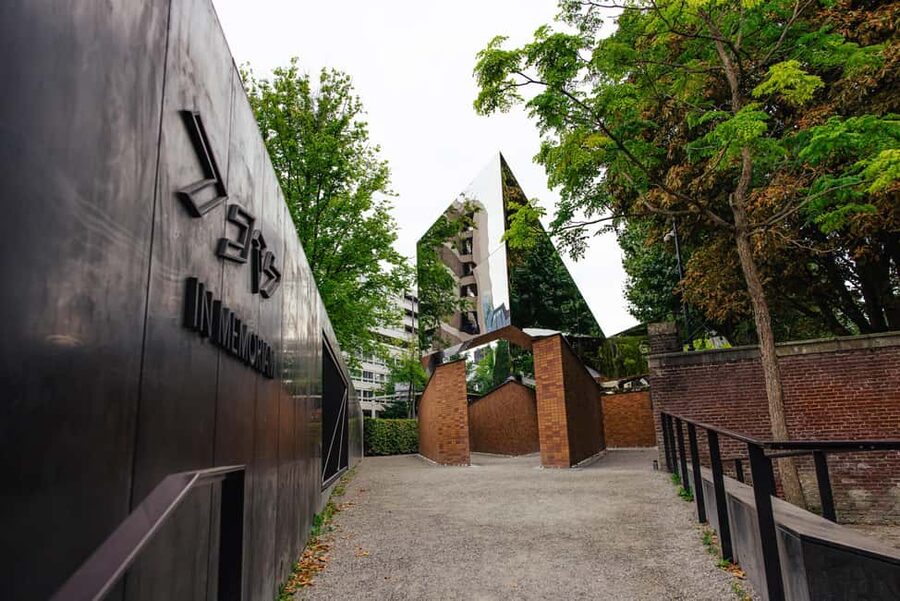
The Auschwitz Monument is a more solemn point on the route, with around ten minutes of guided discussion. Here the guide addresses the destruction of Jewish life during the Holocaust. Thousands of Amsterdam’s Jews were deported, and very few returned.
Anne Frank’s diary helps keep this section personal. The guide reads selected passages in the language you choose, connecting her fear and hope with the fate of the wider community. The readings are one of the strongest elements of the experience, particularly when presented with restraint.
You should be prepared for an emotional shift. This is not light sightseeing, and the guide’s role is not to soften the facts. The best approach is to listen, ask respectful questions, and allow the memorial to remain a place of reflection.
The Dokwerker and the story of resistance
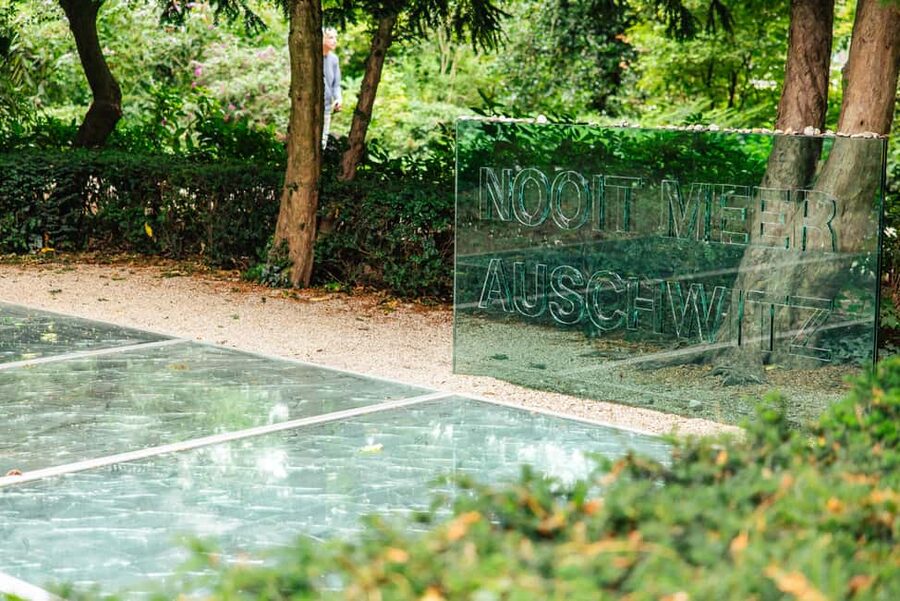
The Dokwerker, a monument associated with the February Strike, receives about five minutes of explanation. The February Strike of 1941 was a major act of protest against the persecution of Jews in the Netherlands.
The stop also opens the door to a broader point: resistance was not limited to one group. Jewish and non-Jewish people opposed Nazi policies, helped others hide, and took risks that could cost them their lives.
This section gives the walk some moral complexity. It does not suggest that resistance erased the scale of the Holocaust. Instead, it shows that people made difficult choices under an oppressive regime. That is valuable context, especially if your prior knowledge centers only on deportation and hiding.
Guides such as Josh have been praised for sharing personal insight and photos while keeping the discussion accessible. Others, including Charlotte and Deborah, have been noted for drawing questions into the conversation rather than delivering a nonstop speech. That can make a difference in a small group.
National Holocaust Names Monument
The final major stop is the National Holocaust Names Monument, where the guided explanation lasts about fifteen minutes and photographs are possible. This is the longest memorial stop and gives the tour room to gather the individual stories into a larger picture.
Names make mass murder harder to reduce to a statistic. The monument brings the scale of the loss into view while keeping attention on individual people and families.
The tour’s route is listed as finishing at this monument. However, the meeting information also says the activity ends back at the meeting point. Since those details do not fully match, confirm the exact end arrangement when you book or meet the guide. Either way, the monument is a useful place to continue reflecting or to plan your next stop.
The guides and the way the story is told
The strongest part of this experience is the guide-led storytelling. The guide does not merely point at a building and recite a date. The route works best when the guide explains how the place, the wider history, and Anne Frank’s diary connect.
Valentina has been praised for passionate delivery, excellent English, and effective use of diary extracts. Emilia is noted for detailed explanations at each stop and for answering questions about Anne and World War II. Josh receives repeated praise for patience, warmth, photos, and a strong fund of historical information.
Deborah is especially useful if you want wider context about the Jewish Quarter, the Nazi occupation, and Dutch life. Charlotte has been appreciated for taking the group away from crowded areas and keeping the presentation friendly and easy to follow. Guides such as Lili, Bianca, Kaya, Julia, David, and Amelia are also described as engaging, respectful, and attentive to the pace of the group.
Guide quality can vary on any walking tour, but the pattern here is clear: look for a guide who gives the diary passages room to breathe and welcomes questions. A guide who rushes through the readings would miss much of what makes this walk different from a standard history tour.
The tour is available in English, German, Italian, or Spanish. Choose carefully. It is conducted in one language, not two at the same time. The information identifies English and German guides in some places, while the live tour options also include Italian and Spanish, so check the exact language choice and starting time before paying.
What you get for $28
At about $28 per person, the tour offers two hours of guided history without admission fees. I consider that fair value if you want a structured introduction to Amsterdam’s Jewish Quarter and the Holocaust memorials.
You are paying mainly for interpretation. The buildings and monuments are public sights, and you could walk between them on your own. But without a guide, you would miss much of the connection between the Portuguese Synagogue, Rembrandt’s home, the February Strike, the memorials, and Anne Frank’s diary.
The value rises if this is your first day in Amsterdam. One person found that the tour helped make sense of other sights around the city afterward, and that is exactly how I would use it: early in your visit, before exploring the Jewish Cultural Quarter or related museums.
The price does not include food, drinks, museum entry, or the Anne Frank House. It is not a substitute for visiting the Anne Frank House, and you should not book it expecting to see the Secret Annex. Tickets for that separate attraction require their own planning.
Private groups are available. That may suit families or groups who want more control over questions and pace, though the public walk can offer good value for solo visitors and couples.
Cancellation is free up to 24 hours before the start time, and you can reserve now and pay later. Those terms are useful if your Amsterdam schedule is still moving around.
Who should book this walk
I would recommend this tour to you if you want historical context rather than a quick photo stop. It suits adults, older children, students, and anyone who wants Anne Frank’s story connected to the wider Jewish community of Amsterdam.
It is also a good choice if you prefer an outdoor experience. You move through real streets and public spaces instead of spending two hours inside a single museum. The pace is generally manageable, but you will walk 2 to 3 kilometers and stand at monuments, so anyone with mobility concerns should consider the distance even though the activity is listed as wheelchair accessible.
You may want something else if you are mainly interested in seeing the Anne Frank House. This walk does not go there. You may also find the subject too heavy for a casual first activity, especially if you prefer sightseeing with little historical discussion.
Rain does not cancel the experience. Bring an umbrella and suitable clothing. Amsterdam weather can change quickly, and there is no indoor alternative built into this route.
Should you book the Anne Frank walking tour?
Book it if you want a serious, well-paced introduction to Amsterdam’s Jewish Quarter, with Anne Frank’s diary used as a human guide through the history. The combination of public memorials, Jewish landmarks, resistance stories, and careful readings gives you more than a simple Anne Frank sightseeing walk.
At $28, it is a sensible choice for an early Amsterdam day, especially if you plan to visit related museums later. Just choose your language correctly, wear good shoes, and remember to arrange the Anne Frank House separately. If those limits fit your plans, this is a thoughtful and useful way to understand a difficult part of the city.
FAQ
Does the tour visit the Anne Frank House?
No. The Anne Frank House is not visited or seen during this walking tour. Entry is not included, so you need to arrange that separately.
How long does the walking tour last?
The tour lasts two hours. The route covers approximately 2 to 3 kilometers.
What languages are available?
You can choose English, German, Italian, or Spanish. The tour is conducted in one selected language and is not bilingual.
Where does the tour begin?
Meet at the entrance to the restaurant De Waag in the middle of Nieuwmarkt Square. Look for the guide wearing a red name tag.
How do I find the correct side of Waag?
Google Maps may send you to the rear of the building. If you see the coffeeshop Jolly Joker, walk around the castle-like building to reach the entrance.
Does the tour enter the museums or synagogue?
No admission fees are required during the tour, and the route uses public sights and exterior viewpoints. Separate entry to museums or the Portuguese Synagogue is not included.
What should I bring?
Bring comfortable shoes, water, and weather-appropriate clothing. The tour operates in all weather, so bring an umbrella if rain is possible.
Is the tour wheelchair accessible?
Yes, the activity is listed as wheelchair accessible. Since it covers about 2 to 3 kilometers, check that the distance and outdoor route suit your needs.
Can I cancel or pay later?
You can cancel up to 24 hours in advance for a full refund. You can also reserve your place and pay later.
Just added around Amsterdam
- Amsterdam: Food and Canal Tour★ 4.6 · 22 reviews
- Segway City Tours Amsterdam★ 4.3 · 23 reviews
- Amsterdam Canal Cruise in Classic Salon Boat With Drinks and Cheese★ 4.0 · 22 reviews
- Discover Deventer with an Outside Escape city game tour!★ 4.5 · 23 reviews
- Historical Walking Tour, private with local Dutch guide★ 5.0 · 23 reviews
- Utrecht Food Tour on a Bicycle with local guide★ 5.0 · 23 reviews
- Amsterdam: Captain For a Day 2-Hour Boat Rental★ 4.9 · 23 reviews
- Amsterdam Small-Group Breakfast Morning Cruise★ 5.0 · 23 reviews
Anne Frank & Jewish Heritage Tours, compared.
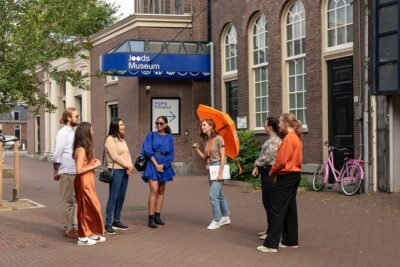
Anne Frank’s Story – Guided Walking Tour through Amsterdam
Read our review →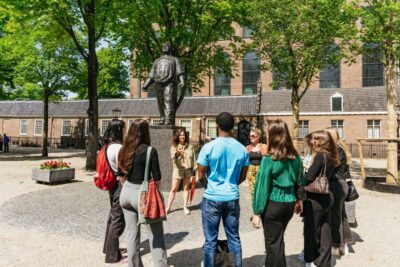
Life of Anne Frank and World War II Walking Tour
Read our review →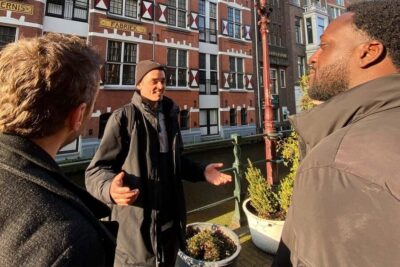
Anne Frank Walking Tour Amsterdam Including Jewish Cultural Quarter
Read our review →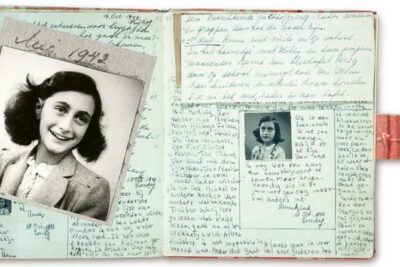
Anne Frank’s Last Walk & See Anne Frank House in Virtual Reality
Read our review →
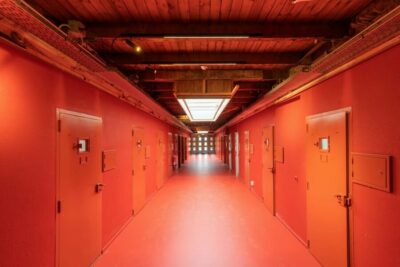
Oranjehotel World War II Prison Entrance Ticket
Read our review →
Anne Frank and Jewish Quarter Amsterdam Private Walking Tour
Read our review →Browse the lists this tour appears in