
Reviewed · WALKING TOURS IN AMSTERDAM
Amsterdam: Guided Cultural Walking Tour
Amsterdam’s story unfolds well on foot, and this tour links the city’s biggest ideas to its most recognizable places. You start at Dam Square, pass grand buildings and narrow canal houses, then finish beside the Amstel and the National Monument. It is a useful first look at Amsterdam rather than a tour of museum interiors.
I like the mix of history and current city life, especially the way the walk connects medieval trade, the Golden Era, World War II, colonial history, and Amsterdam’s modern multicultural identity. I also like the practical local advice, from foods to try to districts worth exploring by bicycle. The main consideration is pace: two hours covers a lot, so several stops are explained from outside rather than visited in depth.
In This Review
- Key points to know before booking
- Why this is a useful first look at Amsterdam
- Meeting at the National Monument on Dam Square
- Royal Palace, Nieuwe Kerk, and Amsterdam’s grand center
- Beurs van Berlage and the city built on trade
- Canal houses, Torensluis, and the Multatuli Statue
- Anne Frank Monument and Westerkerk
- Homomonument and Amsterdam today
- De Negen Straatjes and the quieter Begijnhof
- Returning beside the Amstel
- Guides, group feel, and the pace
- Food advice and what to do afterward
- Who should book this walk?
- Should you book the Amsterdam Cultural Walking Tour?
- FAQ
- How long does the Amsterdam cultural walking tour last?
- Where does the tour begin?
- How will I recognize the guide?
- Where does the tour finish?
- Which languages are available?
- Are entrance fees included?
- Is the tour suitable for children and wheelchair users?
Key points to know before booking
- Dam Square is both the meeting point and the historical starting line: You meet by the white National Monument, then learn how Amsterdam began around this central space.
- Begijnhof gives the walk a quieter finish: After busy streets and grand civic buildings, this courtyard offers a calmer look at Amsterdam’s past.
- The route handles difficult subjects directly: Colonial history, World War II, tolerance, and the Homomonument all form part of the city’s story.
- The guides shape the experience: Alex, Justin, Deborah, Stefanie, Charlotte, Prisha, and others are praised for clear storytelling, humor, and useful answers.
- You get practical advice, not only dates: The walk includes food suggestions, including bitterballen and, on some tours, a stroopwafel tasting.
- It is a good-value orientation walk: At $29 per person, you pay for two hours of live guidance, with no admission fees required along the way.
Why this is a useful first look at Amsterdam
Amsterdam can feel confusing at first. The canals bend in ways that make the center hard to read, bicycles move quickly, and the city’s famous sights are spread through a compact but busy area. This walk helps you place the pieces.
The route is not built around entering major attractions. Instead, your guide explains what you are seeing and how each place fits into Amsterdam’s development. That matters because the city’s character is not held in one palace or church. It is found in the relationship between water, trade, religion, architecture, migration, and daily life.
At $29, the price is reasonable if you want a clear introduction before exploring alone. You are not paying for museum admission, food, or transport. You are paying for someone to connect the sights, answer questions, and point out details you could easily walk past.
The strongest value comes when you take the guide’s suggestions and use them afterward. You can return to an area, visit a museum independently, try a local snack, or explore a district by bicycle with a better sense of where you are.
More Walking Tours in Amsterdam
- Anne Frank’s Story – Guided Walking Tour through Amsterdam
★ 5.0 · 11,619 reviews - Amsterdam: Life of Anne Frank and World War II Walking Tour
★ 4.8 · 10,467 reviews - Absolutely Amsterdam – the Essential Introductory Walking Tour
★ 5.0 · 3,629 reviews
Meeting at the National Monument on Dam Square
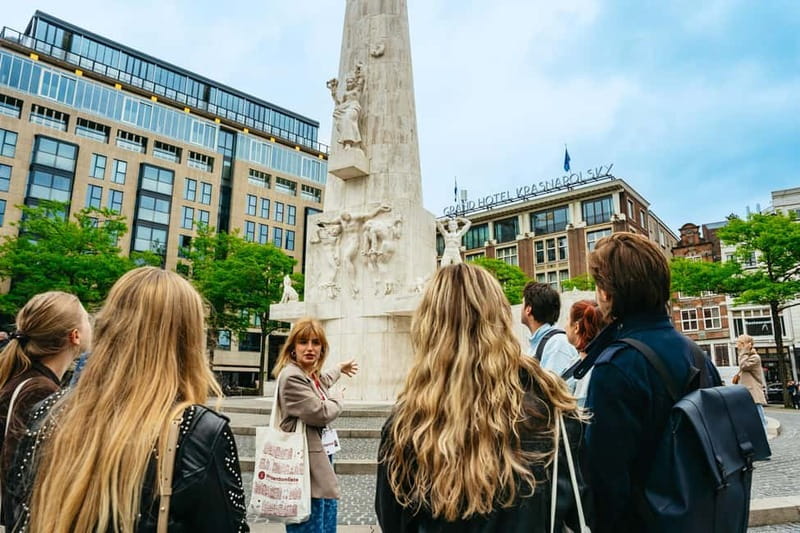
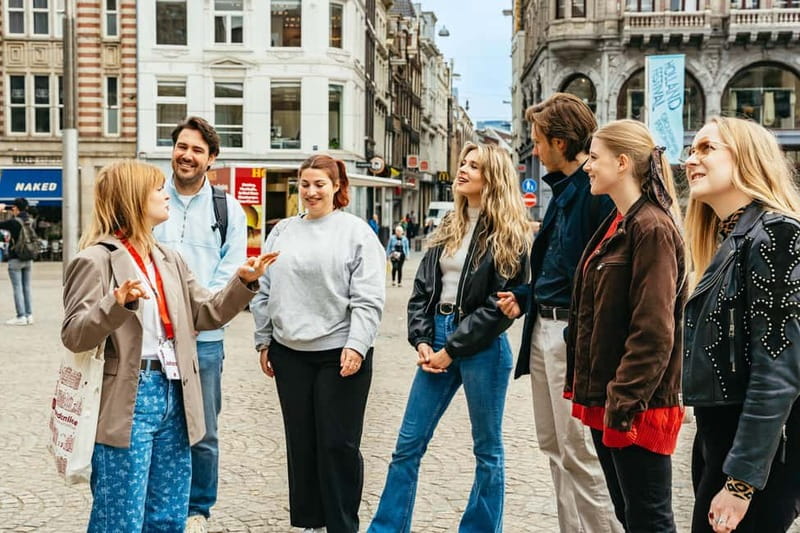
The tour begins on the stairs of the National Monument, the tall white obelisk at the center of Dam Square. Look for a guide wearing a red name tag around the neck. One practical point: the meeting area can be crowded with other walking tours, and a red lanyard may not be easy to spot right away. Arrive a few minutes early and keep an eye out.
Dam Square is a sensible place to begin because it marks the historic center of Amsterdam. Your guide spends about 15 minutes here, explaining the square, the city’s beginnings, and the role this space has played over time.
The square is not always peaceful. Trams, bicycles, shoppers, street activity, and tour groups all compete for space. That is part of the point. You are seeing Amsterdam’s civic center as a working public space, not a preserved set piece.
The National Monument was first built to remember Dutch victims of World War II. It now serves as a memorial to people who lost their lives in any war worldwide. That change gives the final moment of the tour added weight when you return here.
Royal Palace, Nieuwe Kerk, and Amsterdam’s grand center
From Dam Square, the walk continues past the Royal Palace of Amsterdam and the Nieuwe Kerk, or New Church. You should expect an exterior explanation and photo stop rather than an interior visit.
The Royal Palace helps show how Amsterdam’s merchant wealth was expressed in stone. The church adds a different layer, linking the square to public ceremonies and religious life. Your guide uses these buildings to explain how power, commerce, and civic identity developed side by side.
This is one of the better parts of the walk for first-time orientation. You see two major landmarks immediately, but the guide also gives you a reason to look beyond their façades. The important question is not only what the buildings are, but why they were placed at the heart of the city.
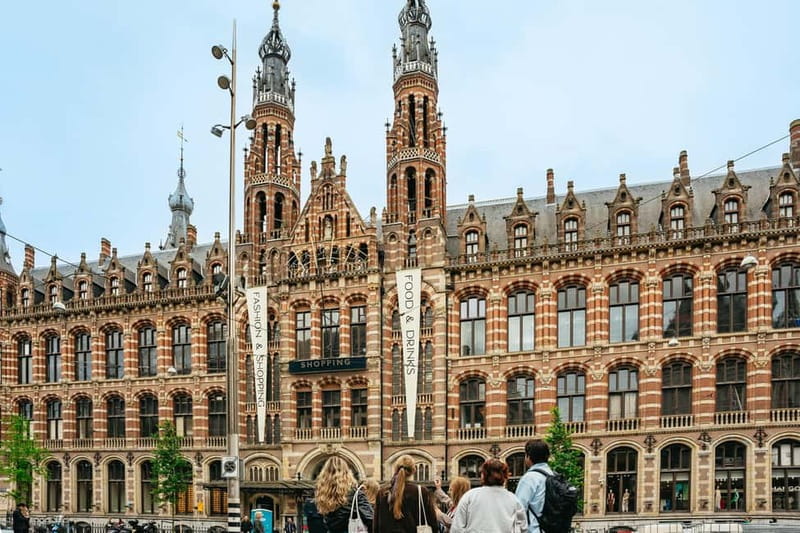
A short stop at the former main post office, now associated with Magna Plaza, adds another architectural chapter. The building’s grand style contrasts with Amsterdam’s narrow canal houses, and your guide discusses designs that were popular in earlier periods.
Beurs van Berlage and the city built on trade
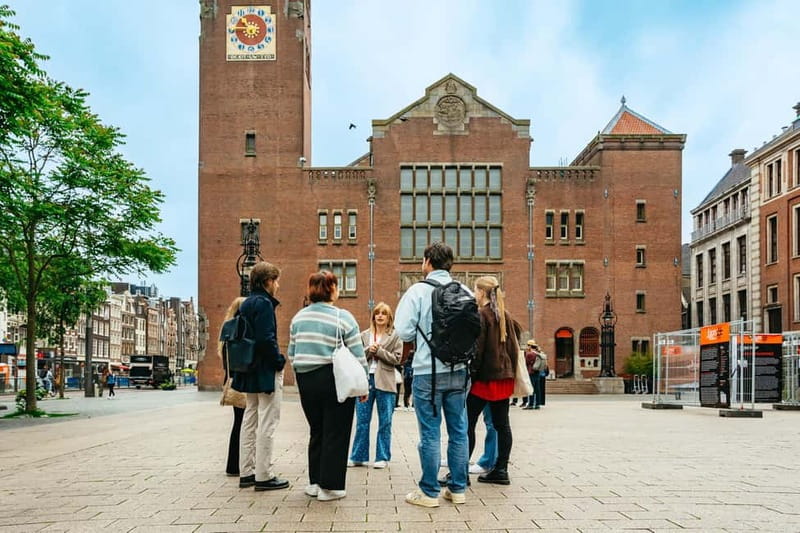
The Beurs van Berlage receives about 15 minutes of explanation and a photo stop. Its name points to the role of the exchange and the commercial world in Amsterdam’s growth.
This is where the tour moves beyond postcard Amsterdam. The city was shaped by merchants, salesmen, workers, and poor residents, not just wealthy traders. You hear about how people lived in the Middle Ages and how trade helped create the conditions for Amsterdam’s Golden Era.
The discussion of art during that period is especially useful. Amsterdam’s artistic success did not happen in isolation. It grew alongside money, shipping, urban expansion, and a large market for paintings and other goods.
You will not get a full economic history in 15 minutes, but you should come away with a clearer idea of why Amsterdam became such an important city. The guide turns impressive buildings into evidence of how people earned money and organized civic life.
Same city, a completely different afternoon:
- Amsterdam: Van Gogh Museum Ticket
★ 4.7 · 52,054 reviews - Amsterdam Classic Saloon Boat Cruise with Drinks and Cheese
★ 5.0 · 31,825 reviews - Amsterdam Luxury Canal Cruise + Unlimited Drinks & Bites option
★ 5.0 · 30,518 reviews - Amsterdam: Heineken Experience Ticket
★ 4.6 · 30,055 reviews
Canal houses, Torensluis, and the Multatuli Statue
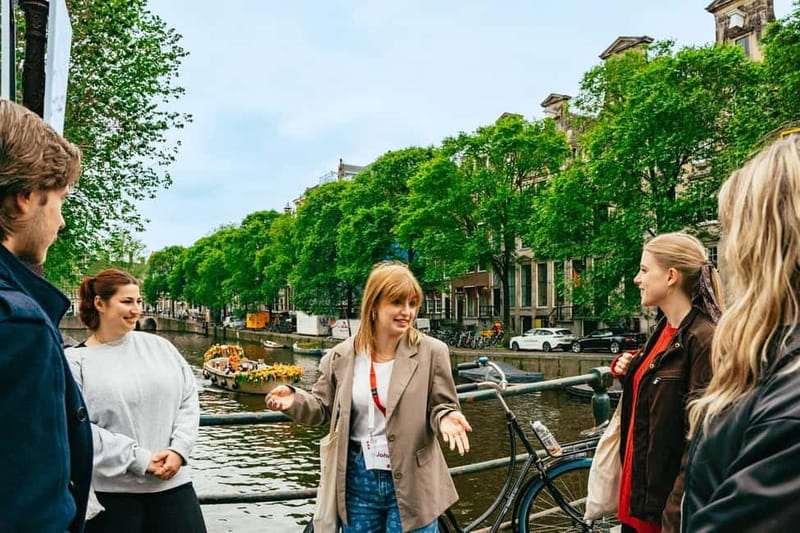
The route then moves into the canal area, where the scale changes. Narrow façades, house fronts close to the water, and romantic-looking canal views replace the broad openness of Dam Square.
Your guide points out one of the city’s tiniest houses. Small buildings like this make more sense after hearing about taxes, property, and the limited space available inside the old center. Look up as you walk. Amsterdam’s façades often reveal more from the street than they do at eye level.
At the Torensluis Bridge, you learn about Multatuli and the colonial era. The statue provides a direct way into a complicated part of Dutch history. This is not a tour that only presents pretty canals and cheerful anecdotes. It places Amsterdam’s wealth and culture alongside the colonial systems that supported Dutch power.
The Torensluis is also a good place to understand the old city’s relationship with water and defense. Your guide explains the bridge and its setting while connecting the site to literature, politics, and the legacy of empire.
Anne Frank Monument and Westerkerk
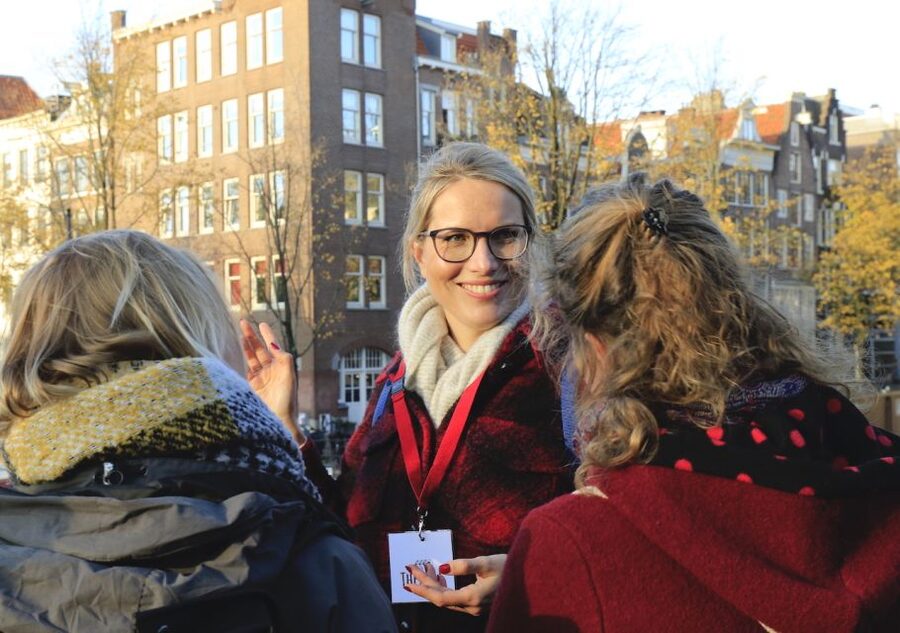
The walk continues past the Anne Frank Monument and Westerkerk. These stops address World War II and the way the war changed Amsterdam’s people.
The Anne Frank Monument is a brief outdoor stop, not a substitute for visiting the Anne Frank House. That distinction matters. If you plan to visit the house, this tour can provide useful background, but it does not include entry or replace the museum experience.
Westerkerk adds an important landmark to the same section of the route. The church is closely tied to the canal district and helps you read the surrounding streets as more than attractive scenery. Here, the guide can explain the city’s wartime memory and the place of the canal belt in Amsterdam’s wider story.
Expect a serious stretch of the tour. The guide’s job is not to flatten difficult history into a quick fact. The best guides, including Deborah, Alex, and Justin, are praised for balancing historical detail with an approachable manner and leaving room for questions.
Homomonument and Amsterdam today
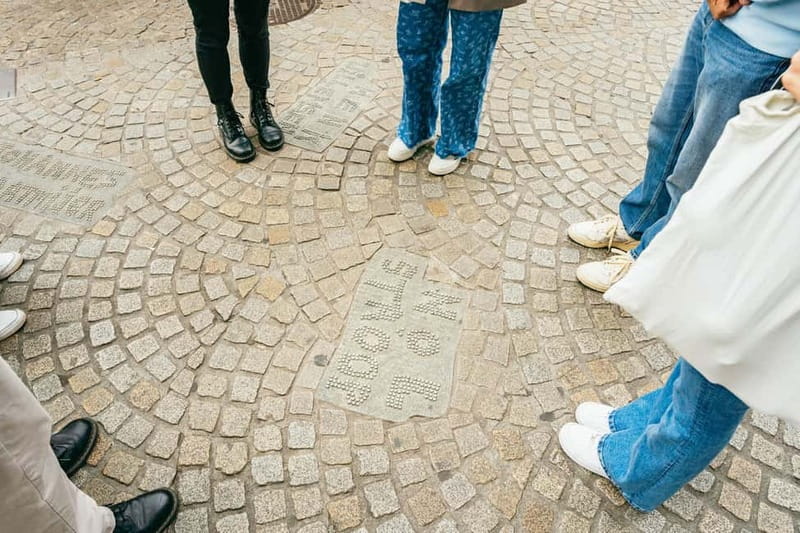
The Homomonument brings the tour into Amsterdam’s modern cultural and political life. It commemorates LGBTQ people who faced persecution and violence, and it fits the tour’s larger discussion of tolerance and the city’s multicultural character.
This stop is valuable because it prevents the tour from treating Amsterdam as a city that finished developing centuries ago. You hear about what it feels like to live in Amsterdam today, including the ideals and debates that shape its public identity.
The city’s reputation for tolerance is not presented as a simple slogan. A good explanation gives you room to think about how a city’s values are built, tested, and remembered. The Homomonument is a short stop, but it adds modern relevance to the older stories about trade, religion, and war.
De Negen Straatjes and the quieter Begijnhof
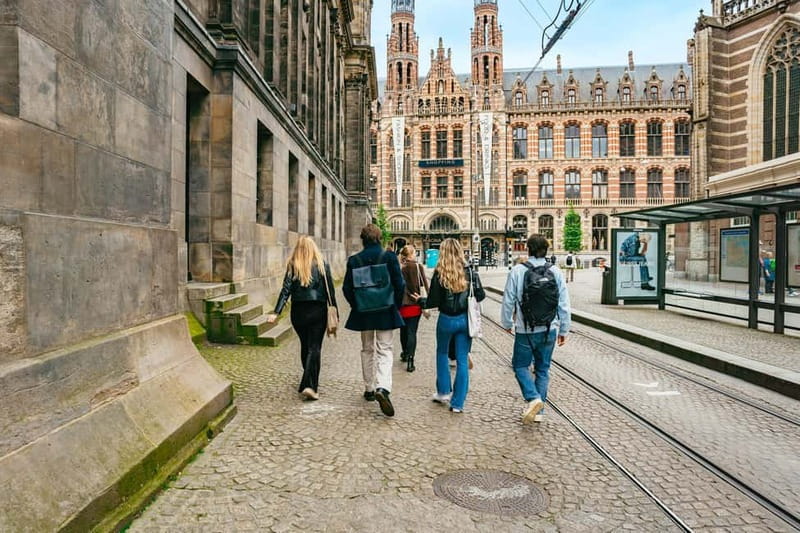
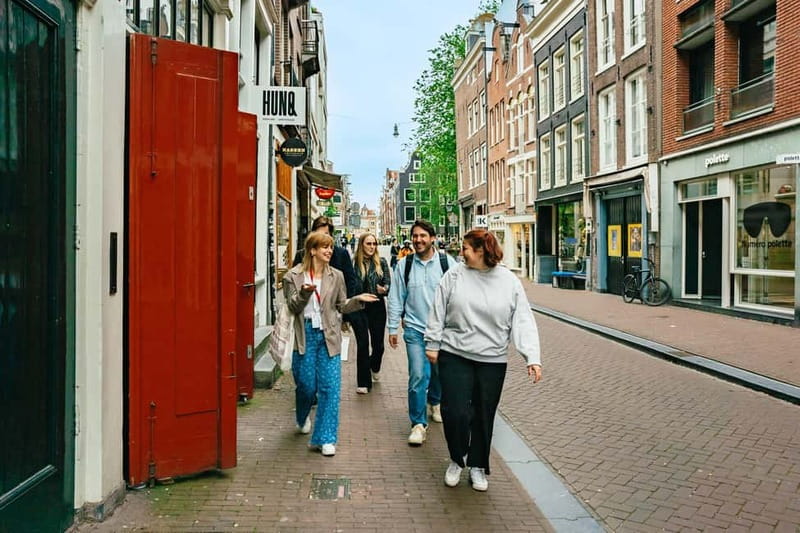
De Negen Straatjes, or Nine Streets, offers a look at one of the city center’s well-known canal shopping areas. The stop is short, about five minutes, so do not expect a detailed shop-by-shop visit.
It is still useful for orientation. Your guide can point out the layout, atmosphere, and reasons you may want to return independently. If you are looking for cafés, small shops, or a pleasant canal walk, this is an area to mark for later.
The route then reaches the Begijnhof, one of Amsterdam’s most memorable spaces. This enclosed courtyard feels different from the busy streets outside. It is often considered the pearl of Amsterdam, and the setting gives you a quieter look at religious and communal life in the old city.
You spend about 15 minutes here with a photo stop and guided explanation. The Begijnhof is a highlight for many people because it offers a sudden change of mood without requiring a long trip across town.
Please treat the courtyard as a place of respect. It is not simply a photo backdrop. Keep your voice down and follow any posted instructions. The contrast between the peaceful courtyard and the noisy center is exactly what makes this stop work.
Returning beside the Amstel
On the way back, the walk reaches the Amstel River, the waterway that gives Amsterdam its name. This helps tie together the tour’s main theme: Amsterdam developed through its relationship with water.
You see how the river, canals, bridges, and buildings form one connected system. After hearing about trade and urban growth, the waterways no longer look like separate scenic spots. They become part of the reason the city exists where it does.
The tour ends back at the National Monument on Dam Square. That return is convenient, especially if you want to continue sightseeing, find lunch, or head toward another central attraction. It also brings the discussion back to the monument’s role as a memorial to victims of war.
Guides, group feel, and the pace
The guide makes a large difference on this tour. The available languages are English and German, and a private group option is available. Some departures may be small, while others can feel more like a standard city walk.
Names praised for clear, engaging delivery include Alex, Justin, Deborah, Stefanie, Charlotte, Prisha, Claudia, Anne, Noemi, Nikki, and Josh. The specific guide depends on the departure, but the repeated strengths are useful answers, humor, historical detail, and a willingness to tailor the walk to the group.
Josh is noted for giving a strong first orientation to the city. Justin receives praise for mixing stories with historical facts and offering a student perspective. Deborah is especially good for visitors who like a balanced discussion of past and present Amsterdam. Stefanie is described as funny, informed, and good at keeping the pace comfortable.
The walk lasts two hours and includes frequent stops. That makes it manageable for children and for anyone arriving in Amsterdam after a long journey. You will still be on your feet, so wear comfortable shoes. Bring water and an umbrella. One excellent tour continued successfully in rainy weather, but Amsterdam weather can change quickly.
The route is wheelchair accessible according to the activity details. If you prefer a more personal experience, check for a private group when booking.
Food advice and what to do afterward
Food and drinks are not included, but the guide can recommend things to try. Bitterballen are specifically mentioned, and one small-group experience ended with a stroopwafel tasting. Treat that tasting as a possible guide-dependent extra, not a guaranteed part of every departure.
The food advice is useful because it comes at the right time. You are already in the center, close to places where you can continue exploring after the tour. Ask your guide for suggestions suited to your plans.
You also receive advice about districts worth discovering by bicycle. The walk itself does not include bike rental or a cycling tour. Instead, it helps you decide where independent exploration may make sense after you understand the city’s layout.
Who should book this walk?
I would choose this tour for a first or second day in Amsterdam. It gives you a working map of the central sights, introduces difficult history without spending an entire day in a museum, and leaves you with ideas for the rest of your visit.
It suits families because the route has regular stops and no admission fees. It also suits adults who want cultural context but prefer a conversational walk to a formal lecture. The English and German choices make it practical for different groups.
You may want something else if your main goal is to enter major attractions, spend long periods at individual monuments, or focus on one subject such as art, architecture, or World War II. This is an overview, and its strength is the range of topics rather than great depth at any single stop.
Should you book the Amsterdam Cultural Walking Tour?
At $29 per person, I think this is a solid value for a two-hour introduction, particularly if you are new to Amsterdam. The 4.9 rating from 2,384 ratings fits the experience described: guides tend to be warm, funny, well-prepared, and generous with practical advice.
Book it early in your stay if you want help deciding what to see next. Choose it knowing that the meeting point can be hard to spot in a crowd, the tour stays outdoors, and most landmarks are explained from the street.
If you want a friendly overview with real attention to Amsterdam’s past and present, this walk earns its place on your schedule. Just bring sensible shoes, a rain layer, and a willingness to look beyond the canals’ pretty façades.
FAQ
How long does the Amsterdam cultural walking tour last?
The tour lasts two hours. Check the available dates for current starting times.
Where does the tour begin?
Meet on the stairs of the National Monument at Dam Square. The monument is a large white pillar or obelisk.
How will I recognize the guide?
The guide will wear a red name tag around their neck. The meeting area can be busy, so arrive a little early and look carefully for the red tag.
Where does the tour finish?
The tour finishes back at the National Monument in Dam Square.
Which languages are available?
The tour is offered in English and German.
Are entrance fees included?
No admission fees are needed during the walk. The sights are visited from the outside and can be visited for free.
Is the tour suitable for children and wheelchair users?
The tour is suitable for children and is listed as wheelchair accessible. Comfortable shoes, water, and an umbrella are recommended.
Just added around Amsterdam
- Amsterdam: Food and Canal Tour★ 4.6 · 22 reviews
- Segway City Tours Amsterdam★ 4.3 · 23 reviews
- Amsterdam Canal Cruise in Classic Salon Boat With Drinks and Cheese★ 4.0 · 22 reviews
- Discover Deventer with an Outside Escape city game tour!★ 4.5 · 23 reviews
- Historical Walking Tour, private with local Dutch guide★ 5.0 · 23 reviews
- Utrecht Food Tour on a Bicycle with local guide★ 5.0 · 23 reviews
- Amsterdam: Captain For a Day 2-Hour Boat Rental★ 4.9 · 23 reviews
- Amsterdam Small-Group Breakfast Morning Cruise★ 5.0 · 23 reviews
Walking Tours in Amsterdam, compared.
Anne Frank’s Story – Guided Walking Tour through Amsterdam
Read our review →
Life of Anne Frank and World War II Walking Tour
Read our review →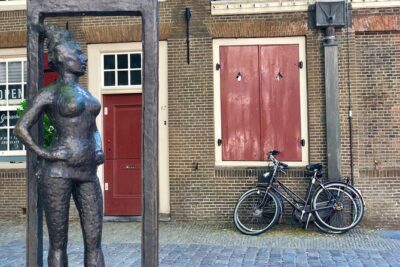
Absolutely Amsterdam – the Essential Introductory Walking Tour
Read our review →

Anne Frank Walking Tour – Guided in EN/DE/IT/ES
Read our review →
Anne Frank Walking Tour Amsterdam Including Jewish Cultural Quarter
Read our review →
Amsterdam Highlights Walking Tour: Small Group Experience
Read our review →Browse the lists this tour appears in