
Reviewed · ANNE FRANK & JEWISH HERITAGE TOURS
Amsterdam: Jewish Quarter and History Guided Tour
Amsterdam’s Jewish Quarter is not a place you understand by simply strolling past its buildings. The streets, memorials, and surviving landmarks tell a difficult story about Jewish life before and during Nazi occupation. This tour places that story in human terms, from ordinary daily routines to the terrible choices forced on people between 1940 and 1945. I like the clear focus on Jewish life, and I like that the walk links several important sites instead of treating them as isolated photo stops.
The guides, including James, Aaron, Joshua, Masha, and Jyry, are praised for explaining painful subjects with care and answering personal questions patiently. The small-group option is a real plus, especially if you want time to ask questions. The main drawback is pace: two hours covers a lot, and one guide moved on quickly from some monuments, leaving little time to pause or study them.
In This Review
- Key points at a glance
- Why this walk matters in Amsterdam
- Starting beside the Amstel River
- The Portuguese Synagogue and Jewish institutions
- The Dokwerker and the meaning of resistance
- The Auschwitz Monument and the weight of memory
- Ending near Anne Frank House
- The guides make the difference
- Is $23 a fair price?
- Who should book this tour?
- Practical advice for a better walk
- Should you book it?
- FAQ
- How long is the Amsterdam Jewish Quarter tour?
- What landmarks does the tour visit?
- Does the tour include entry to Anne Frank House?
- What languages are available?
- Is the tour private or shared?
- What does the $23 price include?
Key points at a glance
- A human view of occupation: Learn how Nazi rule changed daily life for Amsterdam’s Jewish community.
- Important sites in one walk: Pass the Portuguese Synagogue, Jewish Historical Museum, Jewish Council headquarters, Dokwerker, Auschwitz Monument, and Anne Frank House area.
- Strong guide quality: James, Aaron, Joshua, Masha, and Jyry are among the guides praised for clear, sensitive presentations.
- Private or small-group choices: A smaller group gives you more room for questions and conversation.
- A serious two-hour walk: The subject is emotional, and the route covers a great deal in a short time.
- Good value at $23: You pay for interpretation and context, not admission to museums or the Anne Frank House.
Why this walk matters in Amsterdam
Amsterdam is often introduced through canals, bicycles, grand merchant houses, and lively squares. Those sights are real, but they are only part of the city’s story. The Jewish Quarter adds a harder layer, showing how a long-established community was affected by persecution, forced control, and deportation during the Second World War.
I find a guided walk especially useful here because the evidence is not always obvious. A building may look like an ordinary façade. A monument may be easy to pass without understanding what it recalls. The guide’s job is to connect places to people and events, so the neighborhood becomes more than a collection of streets.
This experience focuses on Jewish life during the occupation of the Netherlands from 1940 to 1945. You hear about the effects on Amsterdam’s Jewish population, the role of Dutch society, and the systems imposed under Nazi rule. The emphasis is not only on famous names and final tragedies. It also covers day-to-day life, which helps you understand how persecution entered homes, workplaces, schools, and public spaces.
That human scale is one of the tour’s strongest features. Instead of treating the Holocaust as a distant chapter, the walk asks you to picture how ordinary life was narrowed and controlled. The subject remains painful, but the guides are expected to present it in a factual, impartial, and respectful way.
More History Tours in Amsterdam
- Amsterdam Food and Cultural Tour with Tastings
★ 5.0 · 2,442 reviews - Amsterdam: Haunted History and Ghost Walking Tour
★ 4.5 · 488 reviews - Amsterdam High-End Dutch Food & History Tour – Up to 8 guests
★ 5.0 · 482 reviews
Starting beside the Amstel River
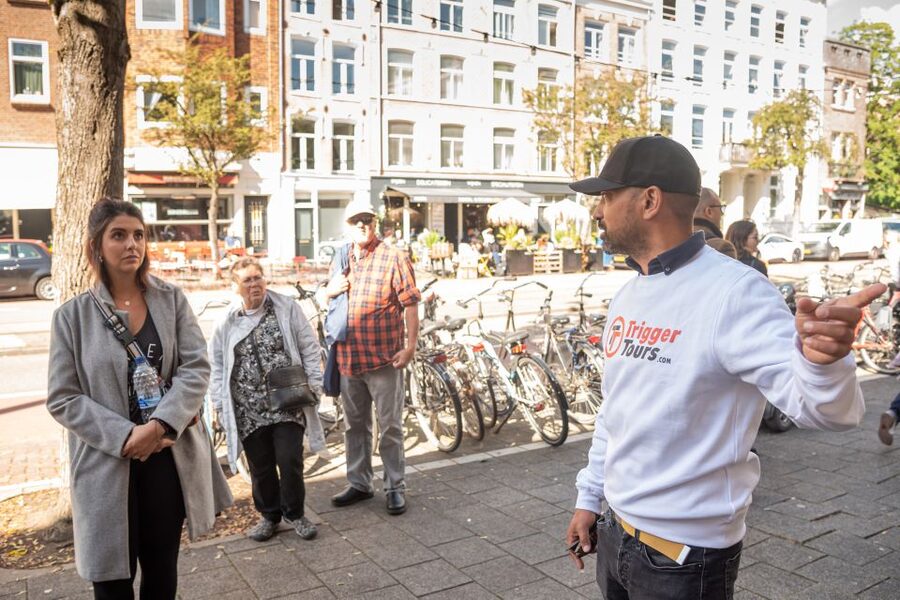
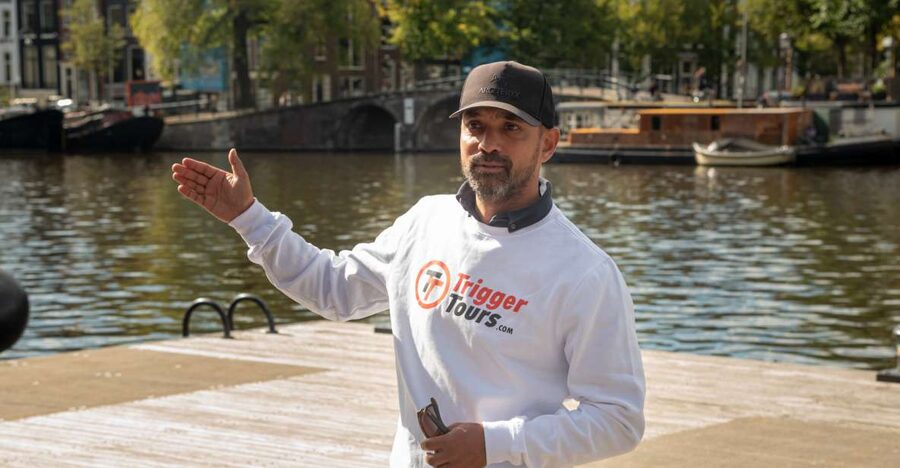
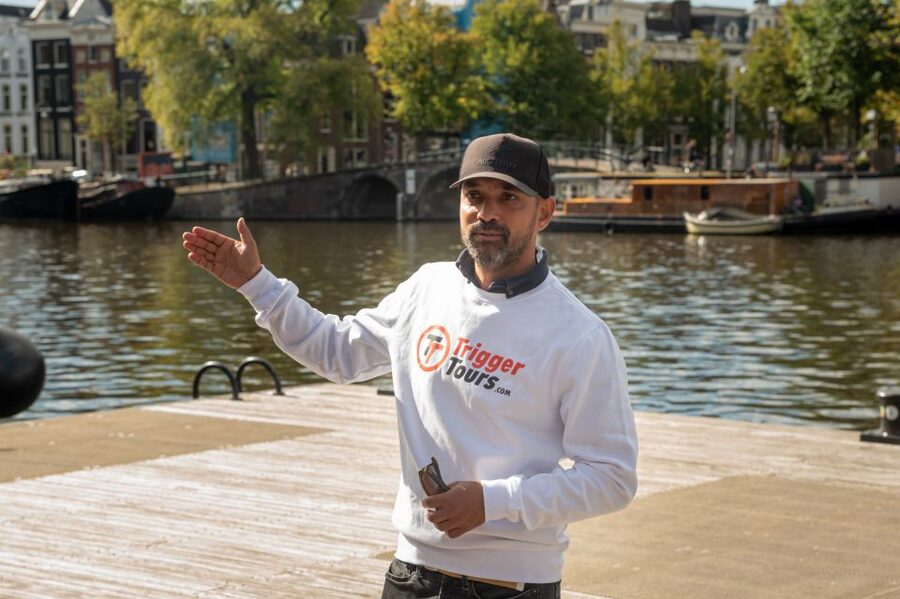
The walk begins by the Amstel River, though the exact meeting point can depend on the option you book. Check your booking details carefully, especially if you choose a private tour or a particular departure time.
Starting near the river gives the route a useful sense of place. Amsterdam’s Jewish community developed within the city rather than in some remote district, and the opening section helps place that community in the wider city. You are not just being led to monuments. You are learning how the neighborhood fit into Amsterdam’s urban life before the war and how occupation changed it.
The guide introduces the Nazi occupation and its effects on the capital. This opening context matters because the later stops can otherwise feel disconnected. A synagogue, a council office, and a memorial each tell a different part of the story. The guide helps you understand how they relate.
You should expect steady walking and frequent stops rather than a museum-style talk. Wear comfortable shoes, and keep your attention on the guide while also making room for the city around you. Amsterdam streets can be active, and the group may need to keep moving to stay together.
The Portuguese Synagogue and Jewish institutions
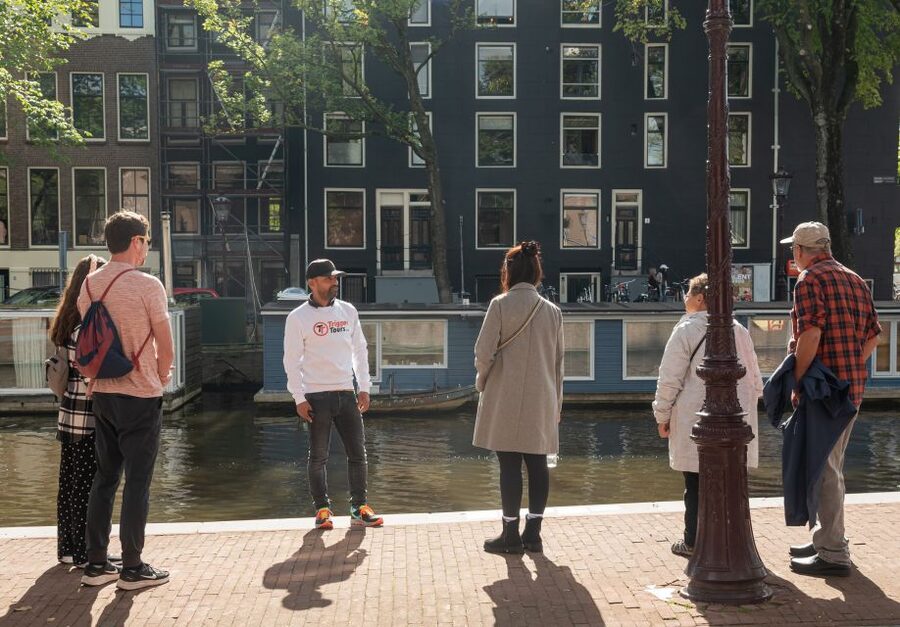
The Portuguese Synagogue is one of the major landmarks on the route. Its presence points to the long history of Jewish life in Amsterdam, including the arrival and development of Portuguese Jewish communities. The tour does not treat the building only as an architectural sight. It uses the synagogue to introduce the institutions and traditions that shaped Jewish life in the city.
You will also pass the Jewish Historical Museum. This stop helps connect the outdoor walk with Amsterdam’s wider effort to preserve and explain Jewish culture and experience. If you have time during your stay, a museum visit can add detail that a two-hour walk cannot cover, but the tour gives you a useful framework first.
The former headquarters of the Jewish Council is another important location. Here, the story becomes especially difficult because the council’s role existed within the machinery of occupation. A guide can explain the pressures and responsibilities surrounding this institution in a way that a quick visit on your own rarely provides.
I like this part of the route because it moves beyond the simplest version of the story. Jewish Amsterdam was not defined only by wartime suffering. The tour first shows a functioning community with places of worship, institutions, and daily life, then explains how occupation disrupted that world.
The Dokwerker and the meaning of resistance

The Dokwerker is one of the walk’s most memorable monuments. The statue recalls the February Strike of 1941, when Amsterdam workers protested against the persecution of Jewish residents. It gives the tour a chance to discuss resistance and public action, not just victimhood.
That balance is important. The Dutch response to Jewish persecution was complex, and the tour addresses how Dutch people behaved toward Jewish residents during the occupation. A good guide does not flatten that history into a simple story of heroes and villains. Instead, you get a more careful picture of courage, fear, cooperation, silence, and resistance.
The Dokwerker also works well as a physical stop because the monument’s meaning is not immediately clear to everyone passing by. Without explanation, it is simply a powerful figure in a public space. With context, it becomes a reminder that people did object to persecution, even though protest did not end the occupation.
Allow yourself a moment here. This is one of the places where the pace can matter. The route aims to cover several sites in two hours, so you may need to listen and look at the monument at the same time. If you want photographs or a longer pause, tell your guide or step aside only when it is safe to do so.
More Anne Frank and Jewish heritage walks:
- Anne Frank’s Story – Guided Walking Tour through Amsterdam
★ 5.0 · 11,619 reviews - Amsterdam: Life of Anne Frank and World War II Walking Tour
★ 4.8 · 10,467 reviews - Amsterdam: Anne Frank Guided Small Group Walking Tour
★ 4.8 · 2,722 reviews - Amsterdam: Anne Frank Walking Tour – Guided in EN/DE/IT/ES
★ 4.9 · 2,676 reviews
The Auschwitz Monument and the weight of memory
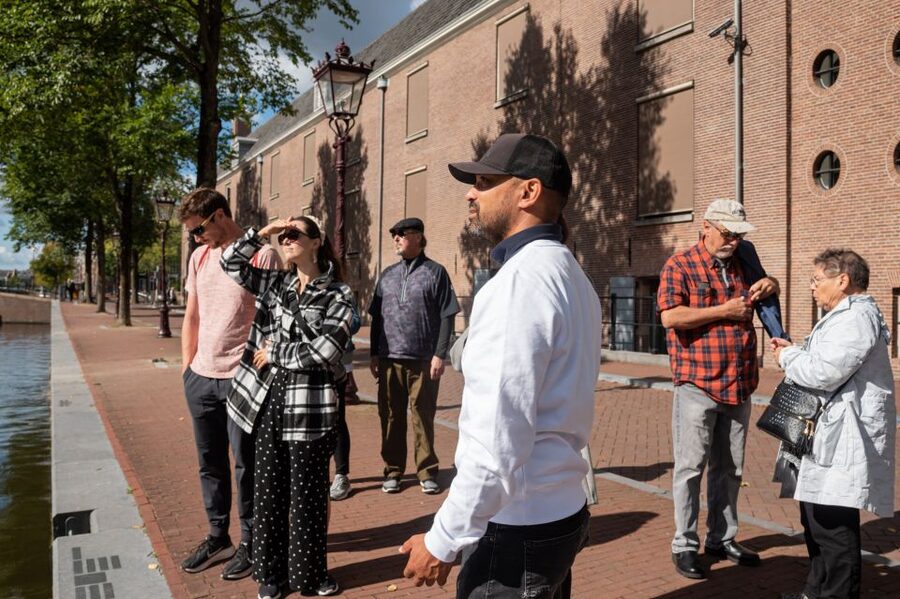
The Auschwitz Monument brings the walk into its most solemn section. It remembers those murdered at Auschwitz and gives the guide a place to explain how the broader system of deportation and extermination affected Amsterdam’s Jewish community.
This is not a cheerful sightseeing stop, and it should not be treated like one. The monument asks you to slow down mentally, even if the walking schedule remains fairly brisk. The guide’s interpretation is central here. Several guides, especially James and Aaron, are praised for handling questions about the Holocaust with care, clarity, and patience.
The value of this stop is not just the monument itself. It connects Amsterdam to the wider European history of Nazi persecution. You begin with local streets and institutions, then understand that the consequences reached far beyond the city.
The route may finish at or near this memorial in some versions of the experience. The published endpoint also describes finishing in front of the Anne Frank House, so confirm the exact final stop for your chosen option. One practical note is clear: this is an exterior walking tour. It does not include admission to museums, the Anne Frank House, or other indoor attractions.
Ending near Anne Frank House
The planned finish is in front of the Anne Frank House, where the guide discusses Anne’s diary, its publication by her father Otto Frank, and its worldwide impact. This is a fitting end because Anne’s story is the best-known personal account connected with Amsterdam’s wartime Jewish history.
The stop does not mean you enter the Anne Frank House. The tour gives you background and location, but a separate ticket would be needed for a museum visit. If seeing the interior is important to you, arrange that independently and do not assume the walking tour includes it.
The discussion of Otto Frank adds useful context. Anne’s diary became famous because it was preserved, published, and later read across the world. The tour places that personal story after the wider neighborhood walk, so you can understand Anne not only as an individual writer but also as one person within Amsterdam’s much larger Jewish community.
There is also a practical advantage to ending here. You can continue exploring the Jordaan and central Amsterdam afterward, or treat the walk as a starting point for visiting the Anne Frank House area on your own. Just remember that the endpoint can vary by booking option.
The guides make the difference
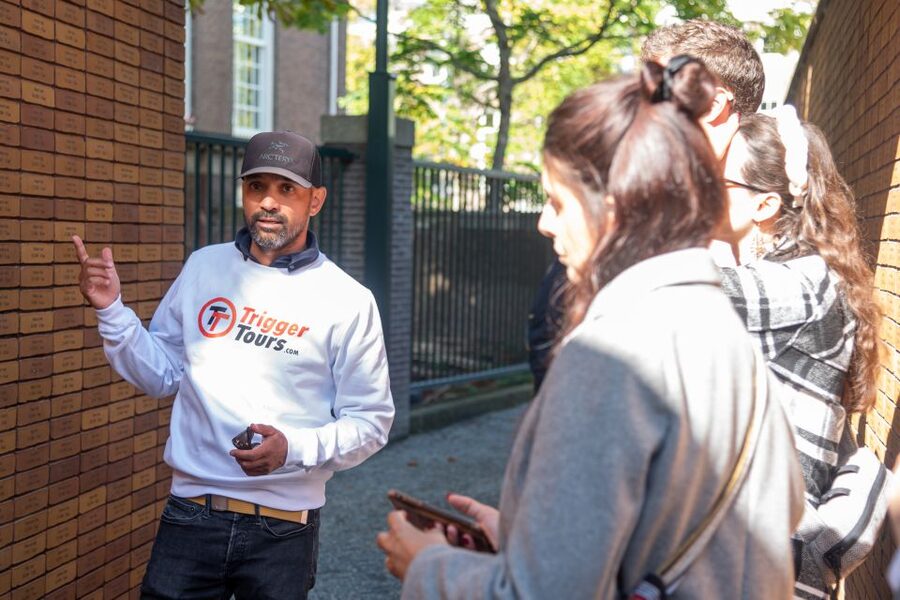
The strongest part of this experience is the guide. The subject requires more than memorized dates. You need someone who can explain institutions, social behavior, personal experience, and moral questions without turning the walk into a lecture.
James receives especially strong praise for his clear, sensitive, and impartial approach. He is also described as patient and willing to connect the subject with personal family histories. Aaron is praised for warmth, easy conversation, and a strong command of the period. Joshua is noted for a thorough tour at a comfortable pace, while Masha is described as professional and careful with the subject.
Jyry is singled out for adding personal touches and adapting the discussion to the group. That ability matters on a small-group walk. Some participants arrive with family connections to the Holocaust. Others have studied European history. Some are encountering the subject for the first time. A guide who can respond to different backgrounds makes the experience more useful.
The tour is offered in English and Spanish. Private and small-group formats are available. If you care most about conversation, ask for the smallest group option available when booking. A very small group can turn the walk into a thoughtful exchange rather than a one-way presentation.
Is $23 a fair price?
At $23 per person, this is a good-value experience if you want historical interpretation. You are paying for two hours of a guided walk and the guide’s preparation, not for admission to a museum or a major attraction.
The value depends on how you like to explore. If you are happy to read plaques and look up buildings later, you can walk through parts of the area without paying. But you may miss why a particular office, synagogue, or memorial matters. The tour adds the connective tissue between the places.
It also helps you use your time well. In two hours, you cover several Jewish landmarks and receive an overview of Amsterdam during occupation. A private tour costs more than the base price may suggest, depending on the option, but it can be worthwhile if you want a slower conversation and room for personal questions.
Food and drinks are not included, although the walk is short enough to fit easily around a meal. Free cancellation up to 24 hours before the experience and a reserve-now, pay-later option make it easier to place the tour early in your schedule without locking in every detail at once.
Who should book this tour?
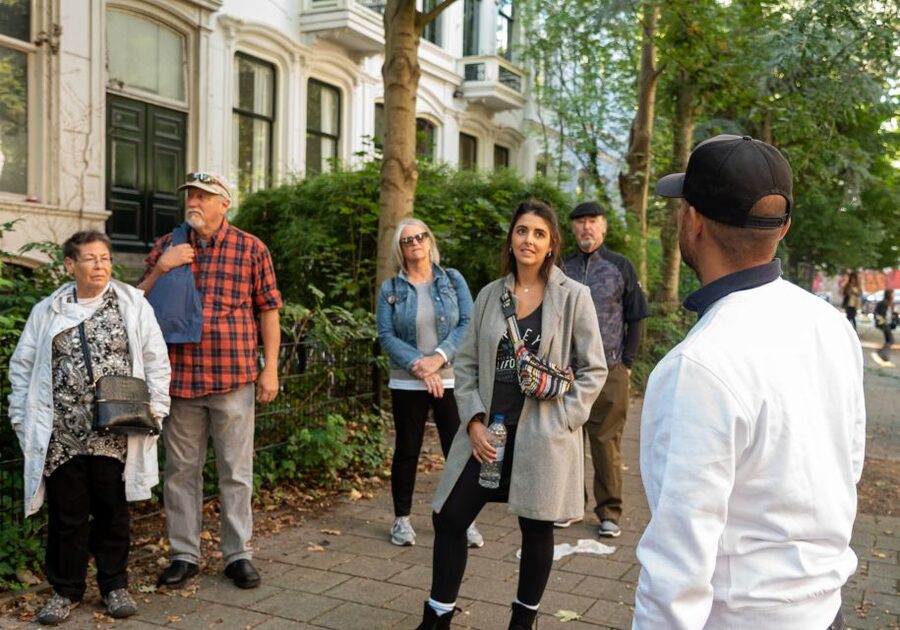
I would recommend it to anyone who wants to understand Amsterdam beyond its postcard sights. It suits history-minded visitors, people interested in Jewish heritage, and those who want a serious introduction before visiting the Anne Frank House or the National Holocaust Museum.
It is also a good choice for families with older children and teenagers who can engage with a difficult subject. The tour is not entertainment, and the Holocaust receives direct attention, so consider your group’s readiness before booking.
You should also book it if you prefer asking questions as you go. The guides are repeatedly praised for being approachable, and the small-group format gives you a better chance to discuss sensitive points.
I would be more cautious if you want a slow architectural walk or lots of time for photographs. Two hours is enough for a strong overview, but not enough to study every monument or building in detail. One past participant felt the walk could have moved at a slower pace, and that is a fair concern for anyone who likes lingering at each stop.
Practical advice for a better walk
Book this early in your Amsterdam stay if possible. The tour gives you context that can improve later visits to the Jewish Historical Museum, the National Holocaust Museum, or the Anne Frank House area.
Sunday morning may be a quieter choice, based on one booking experience, though starting times vary and availability must be checked. Small groups are best for questions, particularly if your interest is personal or academic.
Bring weather-ready clothing. The experience is entirely on foot, and Amsterdam weather can change quickly. Keep your phone or camera available, but do not let taking pictures distract you from the explanations at the memorials.
Most of all, allow emotional space afterward. You may want to continue walking quietly, visit a museum, or discuss what you heard. The tour covers dark material, but its attention to community, resistance, and human detail keeps the story from becoming a list of grim facts.
Should you book it?
Yes, if you want a serious and well-explained look at Amsterdam’s Jewish Quarter for a modest price. The route covers key landmarks, the guides handle difficult questions well, and the emphasis on daily life makes the history personal without becoming careless or sensational.
Choose the small-group or private option if conversation matters to you. Book something else if you mainly want a relaxed city walk, interior museum visits, or long stops for photographs. For most visitors seeking context, this two-hour tour is an efficient and respectful way to see the Jewish Quarter with open eyes.
FAQ
How long is the Amsterdam Jewish Quarter tour?
The walking tour lasts two hours. Starting times depend on availability for the date and option you choose.
What landmarks does the tour visit?
The route includes the Portuguese Synagogue, Jewish Historical Museum, former headquarters of the Jewish Council, Dokwerker, Auschwitz Monument, and the area in front of the Anne Frank House.
Does the tour include entry to Anne Frank House?
No. The experience is a walking tour and does not include admission to the Anne Frank House or other museums.
What languages are available?
Live guiding is available in English and Spanish.
Is the tour private or shared?
You can choose between a private experience and a small-group option, depending on availability and the booking option selected.
What does the $23 price include?
The price includes the walking tour and a guide. Food and drinks are not included.
More History Walks around Amsterdam
- Rotterdam: Kinderdijk UNESCO World Heritage Entry Ticket
★ 4.6 · 1,477 reviews - The Hague: Hop-on Hop-off Old-Fashioned Heritage Tram Tour
★ 4.4 · 1,083 reviews - Rotterdam: Harbor Cruise on a Historic Ship
★ 4.2 · 812 reviews - Leiden: Cruise through the Historic City Center with Guide
★ 4.6 · 445 reviews
Just added around Amsterdam
- Amsterdam: Food and Canal Tour★ 4.6 · 22 reviews
- Segway City Tours Amsterdam★ 4.3 · 23 reviews
- Amsterdam Canal Cruise in Classic Salon Boat With Drinks and Cheese★ 4.0 · 22 reviews
- Discover Deventer with an Outside Escape city game tour!★ 4.5 · 23 reviews
- Historical Walking Tour, private with local Dutch guide★ 5.0 · 23 reviews
- Utrecht Food Tour on a Bicycle with local guide★ 5.0 · 23 reviews
- Amsterdam: Captain For a Day 2-Hour Boat Rental★ 4.9 · 23 reviews
- Amsterdam Small-Group Breakfast Morning Cruise★ 5.0 · 23 reviews
Anne Frank & Jewish Heritage Tours, compared.
Anne Frank’s Story – Guided Walking Tour through Amsterdam
Read our review →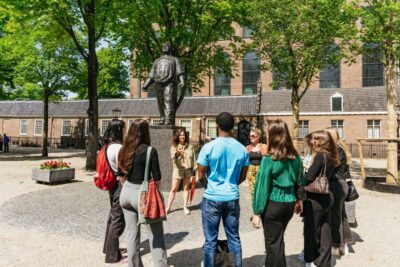
Life of Anne Frank and World War II Walking Tour
Read our review →

Anne Frank Walking Tour – Guided in EN/DE/IT/ES
Read our review →
Anne Frank Walking Tour Amsterdam Including Jewish Cultural Quarter
Read our review →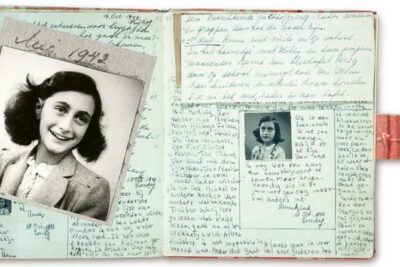
Anne Frank’s Last Walk & See Anne Frank House in Virtual Reality
Read our review →
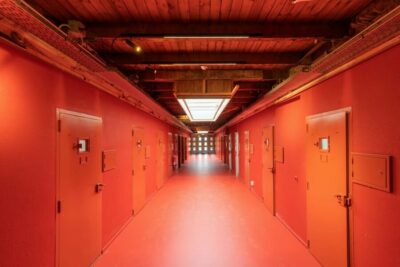
Oranjehotel World War II Prison Entrance Ticket
Read our review →Browse the lists this tour appears in