
Reviewed · AMSTERDAM FOOD TOURS
Amsterdam High-End Dutch Food & History Tour – Up to 8 guests
Amsterdam’s food story is far more interesting than a quick stop for fries and waffles. This four-hour walk takes you from apple pie in a famous brown café to Indonesian satay, farmhouse cheese, herring, smoked eel, and bitterballen near the former Dutch West India Company headquarters. I especially like the small maximum of eight and the mix of family-run shops, markets, and old cafés. The cheese and Dutch wine pairing also gives the tour a more polished feel than a basic snack crawl.
The main consideration is price. At $157.21 per person, this is not a cheap way to fill an afternoon, and Dutch food can be plain if you expect every bite to be spectacular. You are paying for a substantial amount of food, drinks, access to small businesses, and a guide who adds context as you walk.
In This Review
- Key things to know before you book
- Starting with apple pie at Papeneiland
- Saturday at the Lindengracht market
- Dutch wine, farmhouse cheese, and a private room
- Fish, herring, eel, and the Dutch taste for cured food
- Sunday and Monday bring sausage, croquettes, and spekkoek
- The butcher shop and Amsterdam’s everyday bites
- Ending with bitterballen near the birthplace of New York
- How much food do you really get?
- What the small group and guide add
- Price, pacing, and practical details
- Should you book the Amsterdam food tour?
- FAQ
- How long does the Amsterdam High-End Dutch Food and History Tour last?
- How many people can join the tour?
- Where does the tour start?
- Where does the tour end?
- Is the tour suitable for vegans?
- Are non-alcoholic drinks available?
- What happens if the weather is bad?
- What is the cancellation policy?
Key things to know before you book
- Six food stops with a wide range of flavors: Expect apple pie, sausage, cheese, fish, Indonesian food, and bitterballen rather than one narrow food theme.
- The schedule changes by day: Saturday includes the Lindengracht market, while Tuesday through Friday includes a wine tasting and fish stop. Sunday and Monday offer a different set of tastings.
- Small groups matter here: With no more than eight people, it is easier to hear the guide and ask about unfamiliar dishes.
- Dutch and Indonesian food share the spotlight: Satay, sambal, and spekkoek reflect the Netherlands’ long connection with Indonesia.
- Come hungry: The portions add up across four hours, with craft beer or wine at some stops and alternatives available.
- You need normal walking ability: You may walk and stand for up to 20 minutes at a time, though bad weather can shorten the walks.
Starting with apple pie at Papeneiland
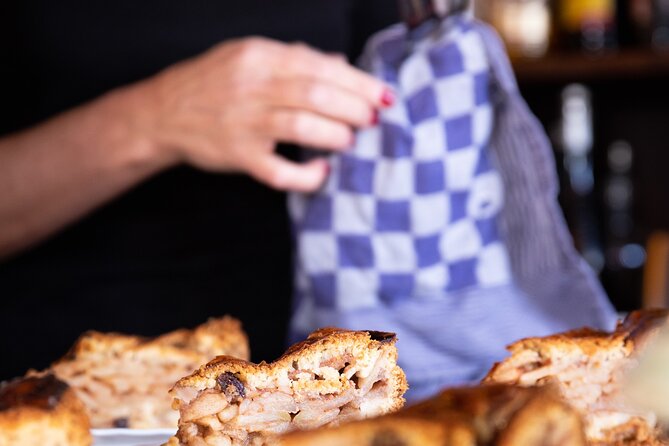
Meet your English-speaking guide outside The Papeneiland at Prinsengracht 2. This old brown café sets the tone nicely. Brown cafés are traditional Amsterdam drinking places with a worn, intimate feel, and homemade apple pie here gives you a gentle start before the more savory food arrives.
I like this opening because it puts food in a real Amsterdam setting instead of treating the city as a collection of tasting counters. The café is also a useful first chance to meet the guide and the rest of the group. Guides named Rudolph, Jan, David, Catharina, Caroline, and Jelte van Koperen have all led this experience, and the strongest feedback consistently centers on guides who combine local knowledge with an easy sense of humor.
The first tasting is sweet and familiar, but the conversation should quickly move beyond pastry. Your guide connects the café and surrounding streets with Amsterdam’s past, architecture, and food habits. That balance matters. You are not simply eating six separate samples, you are learning why certain foods became part of everyday Dutch life.
More Food Tours in Amsterdam
- 10 Tastes of Amsterdam: Food Tour by UNESCO Canals and Jordaan
★ 5.0 · 3,020 reviews - Amsterdam: River Cruise With All-You-Can-Eat Dutch Pancakes
★ 4.4 · 1,504 reviews - Eating Amsterdam: Food Tour & Canals Cruise
★ 5.0 · 496 reviews
Saturday at the Lindengracht market
If you book for Saturday, the route includes the Lindengracht market. Here you try Indonesian satay with side dishes, a useful reminder that Dutch food culture was shaped by the country’s former colonial relationship with Indonesia.
This is one of the more exciting stops for anyone who likes bold seasoning. Indonesian food brings peanut sauce, spice, and grilled meat into a tour that otherwise leans toward dairy, bread, sausage, and fish. The contrast makes the Dutch dishes easier to understand. It also keeps the afternoon from feeling like a long parade of similar brown and salty foods.
The market setting adds energy and variety, but it can also make the stop less settled than the café or private tasting room. On a busy market day, you may be standing while you eat. The tour notes that reserved seats and bathrooms are available at three of the six stops, so do not expect every tasting to come with a table.
Saturday’s version then moves to a boutique deli for three farmhouse Dutch cheeses. The selection is a good chance to compare texture and flavor rather than treating cheese as one generic Dutch souvenir. Your guide can explain the differences as you taste, and the smaller shop setting lets you ask questions directly.
Dutch wine, farmhouse cheese, and a private room
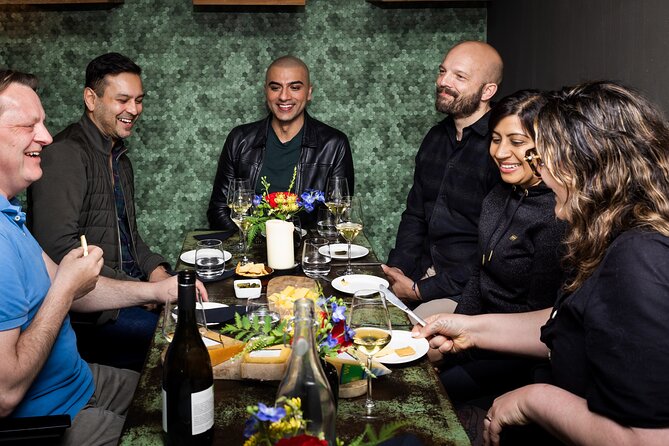
On Saturday and from Tuesday through Friday, the cheese tasting is paired with Dutch wine in a private speakeasy room. That is an unusual feature. Dutch wine is not the first thing most people associate with the Netherlands, so the tasting adds something beyond the usual cheese-and-beer routine.
The private room should be one of the calmer sections of the walk. You can sit, use the bathroom, and give the food your attention. The cheese is served with wine pairings, and you can request beer or non-alcoholic drinks instead. Be sure to mention your preference when booking if alcohol is not suitable for you.
I see this as one of the places where the price makes more sense. You are not merely buying a bite at a market stall. You are getting a guided tasting with a deliberate pairing in a reserved setting. Still, wine lovers should keep expectations sensible. The tour promises a Dutch wine tasting, not a full vineyard excursion or a specialist wine course.
The cheeses are also served differently on the Sunday and Monday schedule. Those days include three artisan soft and hard cheeses with crackers, quince pear, and ossenworst, a smoked beef sausage usually eaten with pickles and mustard. It is a fuller board and a good example of how the food changes according to the day you choose.
Fish, herring, eel, and the Dutch taste for cured food
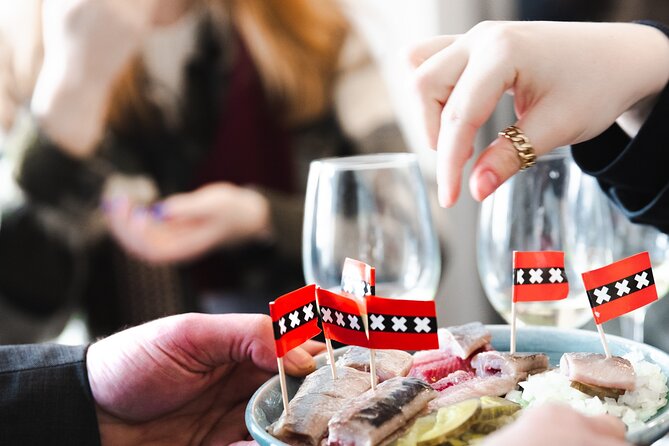
The Tuesday through Friday and Saturday routes include a local fish shop with Dutch herring, fried cod, and smoked eel. This is a strong stop for understanding classic Dutch seafood, even if you are unsure about fish with a pronounced flavor.
Herring is the famous test. Its clean, salty taste and soft texture will not suit everyone, but this is precisely the sort of local specialty that is worth trying with a guide beside you. Smoked eel has a richer, heavier character, while fried cod gives you a more familiar option. The three samples create a useful range rather than forcing you to commit to one style of seafood.
This stop may appeal most to curious eaters rather than cautious ones. If you dislike fish, the meal plan has plenty of other food, but you should not book this tour expecting easy substitutions at every stop. Dietary needs should be stated when you reserve, and you should ask the operator what can be changed for your particular restriction.
More History Tours in Amsterdam
- Amsterdam Food and Cultural Tour with Tastings
★ 5.0 · 2,442 reviews - Amsterdam: Haunted History and Ghost Walking Tour
★ 4.5 · 488 reviews - Amsterdam: Historic City Sightseeing Canal Cruise
★ 4.5 · 444 reviews - Amsterdam: Historical Highlights Walking Tour with Tasting
★ 4.6 · 381 reviews
Sunday and Monday bring sausage, croquettes, and spekkoek
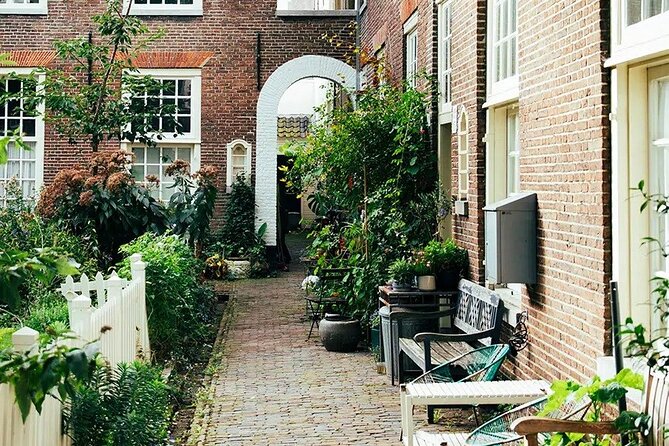
The Sunday and Monday route replaces some of the market, wine, and fish stops with a set of distinctly Dutch and Indonesian bites. At a boutique deli, you get a fresh baguette topped with Dutch grillworst, a warm, spiced pork sausage. It comes with honey-mustard sauce, mayonnaise, pine nuts, and rocket salad.
That combination is more filling than it may sound. The sausage is hearty, while the sauces and salad keep the sandwich from being too heavy. It is also a good example of how the tour presents everyday food in a carefully assembled form.
Next comes a Dutch shrimp croquette from Patisserie Holtkamp, a famous Amsterdam pastry shop. Croquettes are a major part of Dutch snack culture, and the shrimp filling offers a more refined version than the standard quick bite. If you like seafood and pastry, this may be one of the day’s best stops.
The route then turns to freshly grilled Javanese chicken satay with peanut sauce, cassava kroepoek, and sambal. Handmade Indonesian spekkoek, a layered cinnamon cake, follows. The cake is especially useful as a cultural bridge. It is not simply a dessert added for sweetness, it reflects the long exchange between Indonesian and Dutch kitchens.
The Sunday and Monday schedule finishes its food sampling with cheeses, crackers, quince pear, ossenworst, pickles, and mustard. Compared with the Tuesday through Saturday versions, these days give you more sausage and croquette, and less emphasis on the fish shop and Dutch wine room.
The butcher shop and Amsterdam’s everyday bites
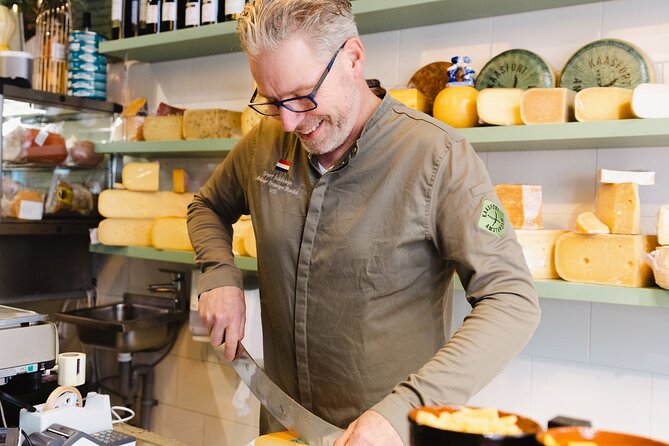
From Tuesday through Friday, the tour visits a 130-year-old family butcher shop for ossenworst and grillworst. That age gives the stop a sense of continuity, but the real value is learning how Dutch people eat cured and spiced meats outside the restaurant setting.
Ossenworst is a smoked beef sausage, while grillworst is a flavored pork sausage. They offer two different ideas of Dutch meat, one smoky and beefy, the other warmer and more seasoned. Pickles and mustard help cut through the richness.
This stop will be less appealing if you avoid meat. The tour is unfortunately not suitable for a vegan diet, and some dietary substitutions may not be available at the butcher. Vegetarian arrangements have been made in at least some cases, including an alternative sweet tasting, but you should explain your needs before paying rather than relying on an on-the-spot solution.
Ending with bitterballen near the birthplace of New York
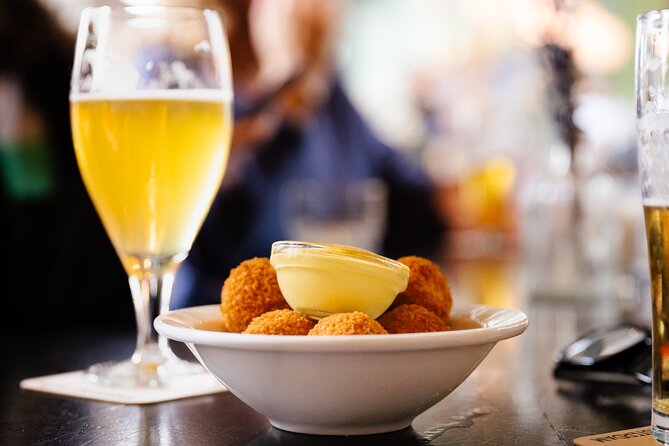
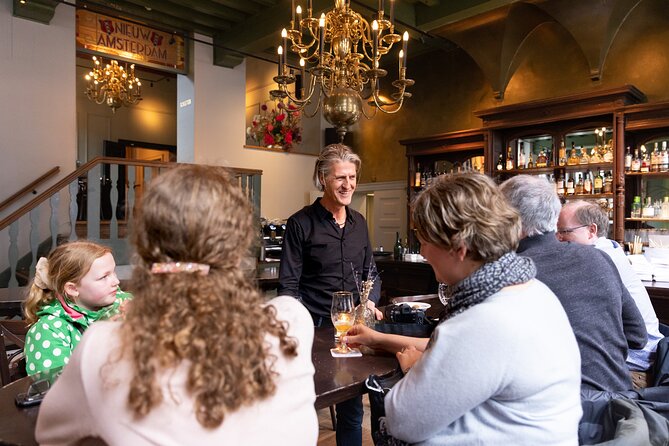
The final stop is at Café Nieuw Amsterdam on Haarlemmerstraat 75, near the former 17th-century headquarters of the Dutch West India Company. The site is linked to the Dutch settlement that became New York, giving the last tasting a strong historical setting.
Here you finish with traditional bitterballen, crisp fried snacks filled with a savory ragout. They are classic Dutch bar food, especially good with a drink, and they make sense as the final bite after a walking route through cafés, shops, and markets.
Ending at Café Nieuw Amsterdam is practical as well as atmospheric. You are not returned to the starting point, so think of the tour as a one-way introduction to part of central Amsterdam. After four hours of eating, you may be glad to have a clear end point rather than another long walk back.
How much food do you really get?
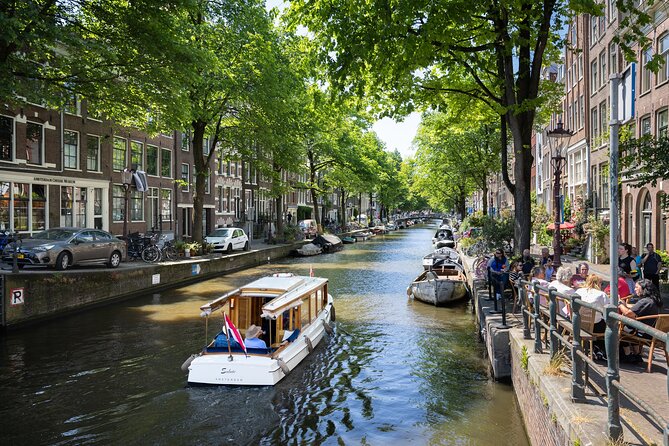
The food is substantial. Apple pie, meat, cheese, fish, Indonesian dishes, croquettes, and bitterballen can add up to something close to a meal, depending on portion size and the day’s schedule. I would eat a light breakfast or lunch beforehand, but I would not arrive completely empty if you tend to feel unwell while walking.
The strongest part of the food plan is variety. You get sweet and savory flavors, hot and cold dishes, meat and seafood, familiar foods and less obvious choices. The weaker point is that Dutch cuisine can lean salty, fatty, or plain. One honest assessment is that the value lies as much in the setting and cultural explanation as in culinary fireworks.
That is not a criticism of the tour so much as a warning about expectations. If you want elaborate restaurant plates, this is the wrong format. If you want to understand what people actually snack on in Amsterdam, the range is much more useful.
What the small group and guide add
The group limit is eight people. That is small enough for the guide to keep the party together, answer questions, and maintain relationships with the shop owners. It also reduces the awkwardness that can come with large food tours, where everyone crowds around one counter and half the group cannot hear.
Guide quality is an important part of this experience. Rudolph is repeatedly singled out in the supplied material for his historical knowledge, charm, and ability to make the group feel relaxed. Catharina, Jan, David, Caroline, Dirk, Bo, Mark, and Jelte are also named as guides who brought humor, local detail, and good pacing.
I would still allow for some variation from one departure to another. One very poor account described a social problem involving an invited observer, while the operator disputed that account. It appears to be an isolated complication rather than a normal part of the tour, but it is fair to note that your guide and group chemistry will shape the afternoon.
Price, pacing, and practical details
At $157.21 per person, this sits in the high-end range for a walking food tour. The cost is easier to justify if you value six food stops, drinks, reserved seating at some venues, a group capped at eight, and four hours of history and neighborhood orientation.
It is less compelling if you only want a few cheap tastings or already know Amsterdam’s food scene. You could spend less by visiting cafés and markets on your own, but you would lose the organized progression and the explanation behind each dish. The tour also saves you from guessing which shops are worth your time.
The walking is manageable for most people who can walk and stand for up to 20 minutes at a time. Three of the six food stops have reserved seats and bathrooms. In bad weather, all tastings take place indoors and the walking distances may be shortened, which is a welcome bit of planning in rainy Amsterdam.
The start is at The Papeneiland, Prinsengracht 2. The finish is Café Nieuw Amsterdam, Haarlemmerstraat 75. The tour is offered in English, uses a mobile ticket, and is near public transportation. Service animals are allowed, and most people can take part.
Free cancellation is available until 24 hours before the start time for a full refund. Changes or cancellations inside that window are not accepted for a refund, and a minimum number of participants is required for the departure.
Should you book the Amsterdam food tour?
I would book this if you want a guided introduction to Dutch food that includes history, small businesses, and several dishes you might not choose alone. It is particularly well suited to first-time visitors, couples, families who enjoy tasting, and anyone who likes a small group with plenty of conversation.
I would skip it if you are vegan, strongly dislike fish or meat, want a budget activity, or prefer a formal restaurant meal. Also check the day carefully: Saturday is best for a market setting, Tuesday through Friday suit people interested in Dutch wine and fish, while Sunday and Monday bring croquettes, sausage, and spekkoek.
For the right eater, this is a generous and well-organized way to get beyond the standard Amsterdam snack list. The price is high, but the combination of food, access, pacing, and local explanation gives it a fair case, especially when the guide is one of the strong personalities associated with the tour.
FAQ
How long does the Amsterdam High-End Dutch Food and History Tour last?
The tour lasts approximately four hours.
How many people can join the tour?
The maximum group size is eight people.
Where does the tour start?
The meeting point is The Papeneiland at Prinsengracht 2, 1015 DV Amsterdam.
Where does the tour end?
The tour ends at Café Nieuw Amsterdam at Haarlemmerstraat 75, 1013 EC Amsterdam.
Is the tour suitable for vegans?
No. The tour is not suitable for a vegan lifestyle.
Are non-alcoholic drinks available?
Yes. At the Dutch wine tasting, non-alcoholic and beer options are available.
What happens if the weather is bad?
All tastings will take place indoors, and the walking distances between stops may be shortened.
What is the cancellation policy?
You can cancel up to 24 hours before the start time for a full refund. Cancellations or changes made less than 24 hours in advance are not accepted for a refund.
More History Walks around Amsterdam
- Rotterdam: Kinderdijk UNESCO World Heritage Entry Ticket
★ 4.6 · 1,477 reviews - The Hague: Hop-on Hop-off Old-Fashioned Heritage Tram Tour
★ 4.4 · 1,083 reviews - Rotterdam: Harbor Cruise on a Historic Ship
★ 4.2 · 812 reviews - Leiden: Cruise through the Historic City Center with Guide
★ 4.6 · 445 reviews
More Food and Drink Tours in Amsterdam
- Amsterdam Jordaan Food & Drinks Tour with Eating Europe
★ 5.0 · 2,425 reviews - Amsterdam: Premium Henri Willig Cheese Tasting Experience
★ 4.7 · 1,106 reviews - Amsterdam: Cheese & Wine Cruise Tasting Experience
★ 4.5 · 1,090 reviews - Amsterdam: Food and Culture Walking Tour with Tastings
★ 4.9 · 838 reviews
Just added around Amsterdam
- Amsterdam: Food and Canal Tour★ 4.6 · 22 reviews
- Segway City Tours Amsterdam★ 4.3 · 23 reviews
- Amsterdam Canal Cruise in Classic Salon Boat With Drinks and Cheese★ 4.0 · 22 reviews
- Discover Deventer with an Outside Escape city game tour!★ 4.5 · 23 reviews
- Historical Walking Tour, private with local Dutch guide★ 5.0 · 23 reviews
- Utrecht Food Tour on a Bicycle with local guide★ 5.0 · 23 reviews
- Amsterdam Small-Group Breakfast Morning Cruise★ 5.0 · 23 reviews
- Giethoorn Day Trip from Amsterdam With Cruise and Cheeseplatter★ 5.0 · 23 reviews
Amsterdam Food Tours, compared.
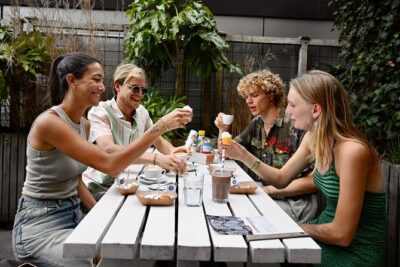
10 Tastes of Amsterdam: Food Tour by UNESCO Canals and Jordaan
Read our review →
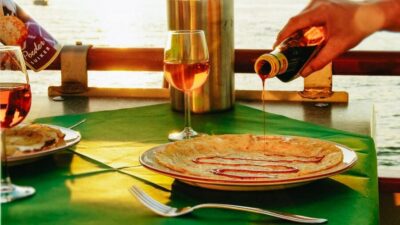
River Cruise With All-You-Can-Eat Dutch Pancakes
Read our review →
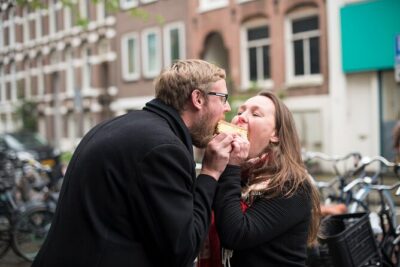
Amsterdam’s Market Street Food Tour with Streat Bites
Read our review →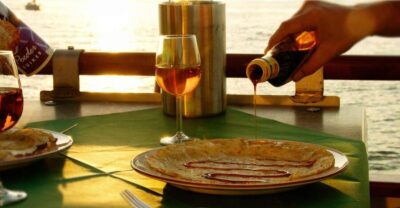
Nijmegen: River Cruise with All-You-Can-Eat Dutch Pancakes
Read our review →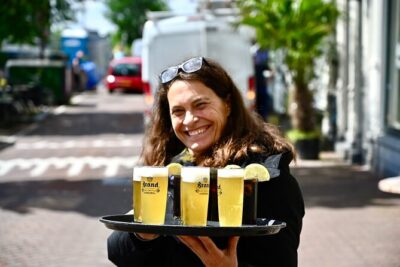
Amsterdam Food Tour of 10+ Local Classic Tastings in Jordaan Area
Read our review →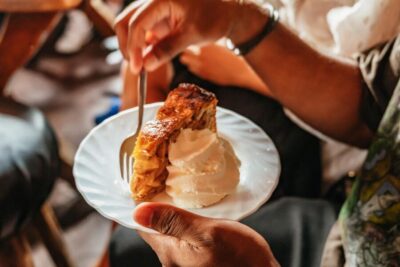
Browse the lists this tour appears in