
Reviewed · ANNE FRANK & JEWISH HERITAGE TOURS
Oranjehotel World War II Prison Entrance Ticket
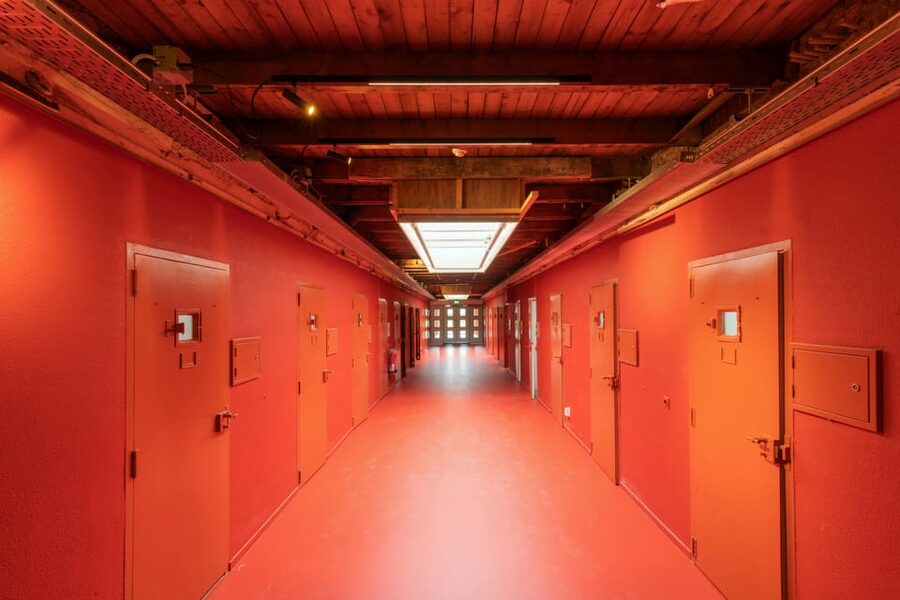
The most powerful part of the Oranjehotel is also the simplest: you enter a real prison and stand inside Cell 601, the death cell where condemned prisoners awaited execution. More than 250 people held here were sentenced to death and killed by firing squad. This is not a grand museum with endless displays. It is a quiet, personal place built around names, photographs, letters, and voices.
I like the self-guided format, because you can pause when a story hits hard and move on when you need a breather. I also like the way the audioguide connects prison life with the wider occupation, the rise of resistance, and the pain carried by families after the war. The main drawback is that there is not a large number of preserved cells to explore. One visitor found the museum somewhat limited in what there was to see, though still powerful.
In This Review
- Key points at a glance
- Entering the Oranjehotel in The Hague
- Cell 601 and the people condemned to die
- Following the numbered audioguide route
- What prison life meant under occupation
- How much is there to see?
- Bringing children to a difficult memorial
- The staff and the tone of the visit
- Is $15 a fair price?
- How to fit it into a Hague visit
- Who should book the Oranjehotel?
- Should you book this ticket?
- FAQ
- Where is the Oranjehotel located?
- What does the ticket include?
- Is there a live guided tour?
- Which audioguide languages are available?
- Can I visit Cell 601?
- Is the Oranjehotel suitable for children?
- Is the site wheelchair accessible?
Key points at a glance
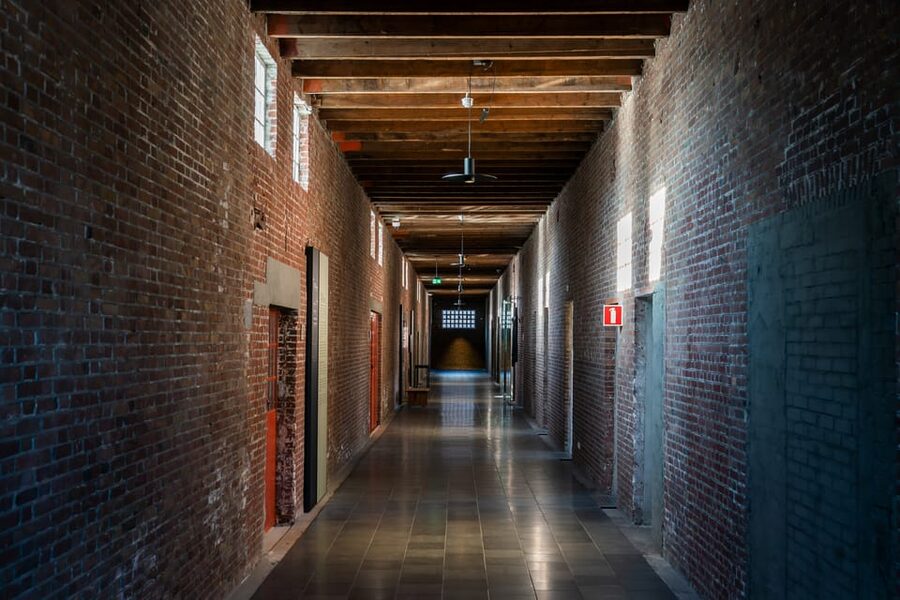
- Cell 601: Enter the notorious death cell and learn about the people who awaited execution there.
- Personal stories: Hear about hunger, fear, injustice, faith, solidarity, and hope through documents, photographs, interviews, and audio fragments.
- Self-guided visit: Follow the numbered route at your own pace instead of joining a timed group tour.
- Four audioguide languages: Choose English, Dutch, German, or French.
- Family-friendly with care: Children as young as 8 have found it interesting, but the subject is serious and emotional.
- Practical value: At $15 per person, the ticket gives you a full day of validity, an audioguide, and access to a significant place in Dutch wartime history.
Entering the Oranjehotel in The Hague
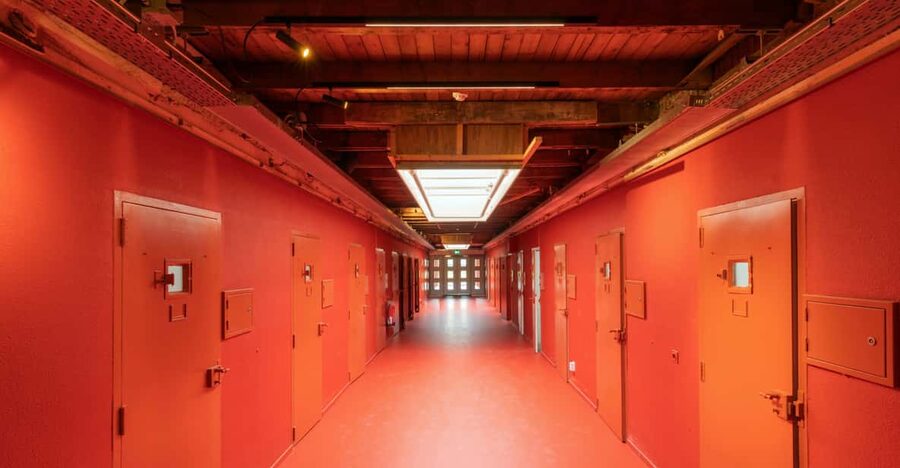
The Oranjehotel is at Van Alkemadelaan 1258 in The Hague, at the Nationaal Monument Oranjehotel. During the Nazi occupation, this prison became the main detention site for members of the Dutch resistance and others arrested by the German authorities.
Calling it a prison museum does not quite capture the feeling of the place. The building itself is part of the story. You are not only looking at objects behind glass. You are moving through rooms connected with confinement, interrogation, uncertainty, and death.
The visit begins with practical help from the staff, who explain how to use the audioguide and follow the numbered route. This matters because there is no live guided tour. You receive the device, start at the beginning, and move through the exhibition in order.
I prefer this arrangement for a place like this. A guide speaking to a group can make a solemn site feel hurried. Here, you can stand quietly with a photograph or letter, listen again to an audio fragment, or take a moment before entering the next space.
More Entry Tickets in The Hague
- The Hague: Mauritshuis Entrance Ticket
★ 4.7 · 2,706 reviews - The Hague: Madurodam Miniature Park Entry Ticket
★ 4.6 · 1,559 reviews - The Hague: The Pier SkyView Ticket with Drink and Snack
★ 4.4 · 1,398 reviews
Cell 601 and the people condemned to die
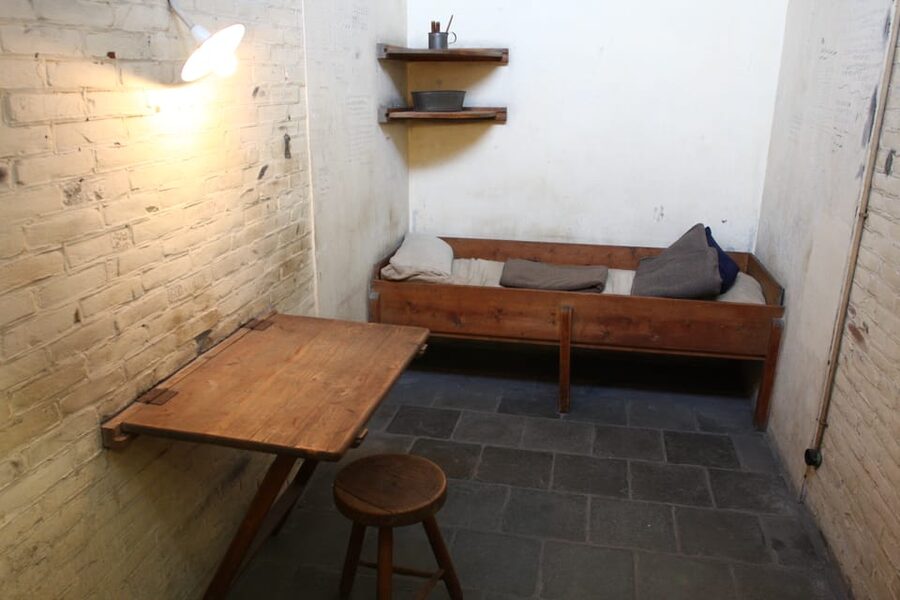
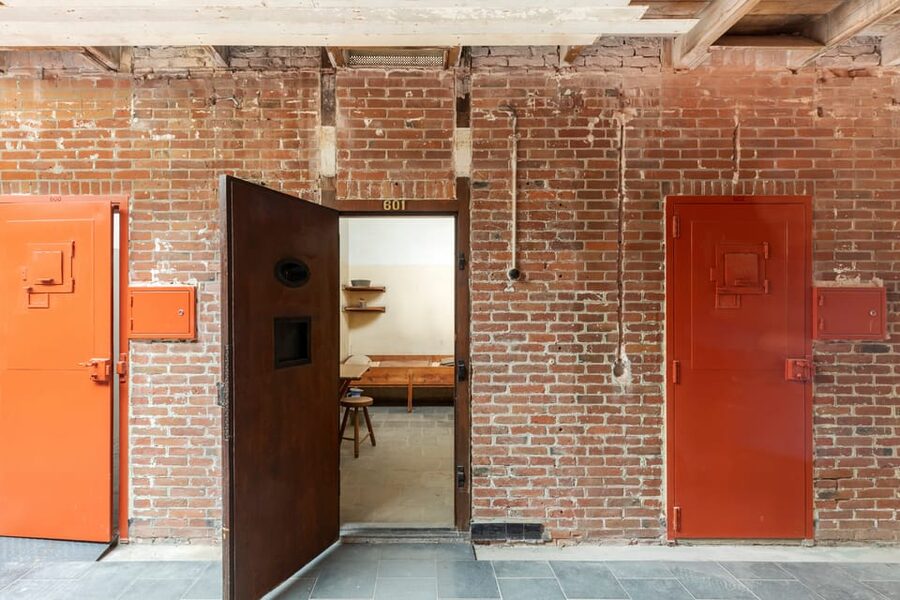
Cell 601 is the emotional center of the visit. It was a death cell, used for prisoners sentenced to execution by firing squad. More than 250 prisoners held at the Oranjehotel met that fate.
The cell is not presented as a dramatic attraction. That restraint is important. You are given enough context to understand what happened, then left with the stark physical reality of the room. The power comes from the gap between its ordinary size and the enormity of what prisoners faced there.
The audioguide helps put names and lives behind the number. You hear about people caught up in resistance work, occupation policies, and the machinery of Nazi justice. Documents and photographs make the stories specific. Interviews and recorded fragments add human voices rather than leaving the history as a list of dates.
This is one of those museum visits where you should not plan to rush. Cell 601 may take only a short time to see, but the information around it deserves attention. If you move too quickly, you will miss the point of the memorial: each prisoner was a person with connections, fears, and plans, not simply a wartime statistic.
Following the numbered audioguide route
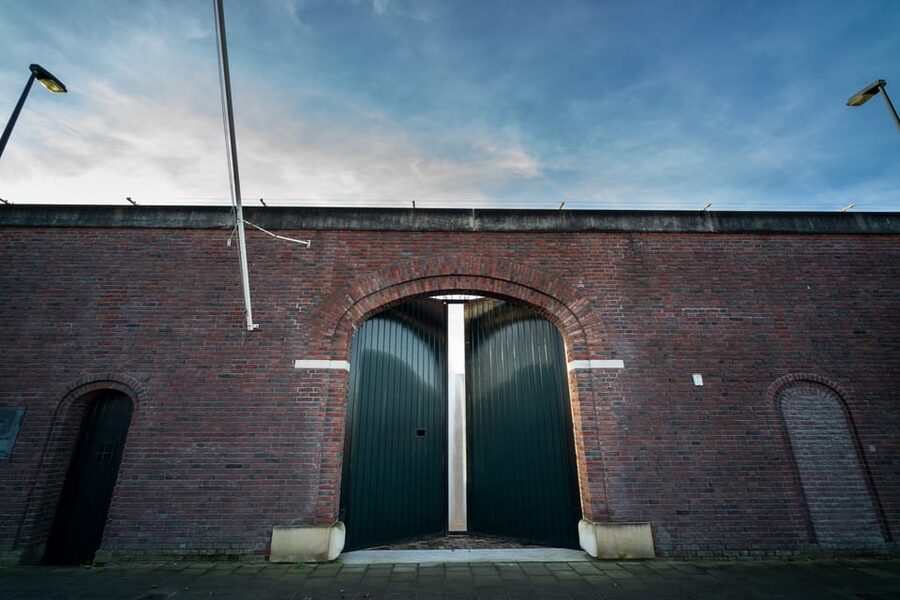
The exhibition is designed for independent exploration. You follow the numbers, listen to the matching audio, and read the supporting material as you go.
The audioguide is available in English, Dutch, German, and French. For English-speaking visitors, this removes a common problem at smaller historic sites: having to rely on short translated labels while missing the human detail. The audio includes stories and testimony, while the displays add documents, photographs, and written background.
The route covers several connected subjects:
- The history of the prison building
- The Nazi occupation of the Netherlands
- The growth of the Dutch resistance
- Daily conditions for prisoners
- Hunger, fear, and insecurity
- Hope, faith, and solidarity among those imprisoned
- The effect of arrests and imprisonment on families
- The postwar consequences for survivors and relatives
That last point gives the museum extra weight. The story does not stop when the war ends. An arrest could disrupt an entire family, and the damage could continue long after liberation. The exhibition asks you to think about those left outside the prison walls, as well as those held inside.
There is a fair amount of written information, along with video material. If you enjoy reading museum panels, you can spend longer here. If you prefer listening, the audioguide carries the main narrative. You do not need to join a group or keep pace with a staff member.
What prison life meant under occupation
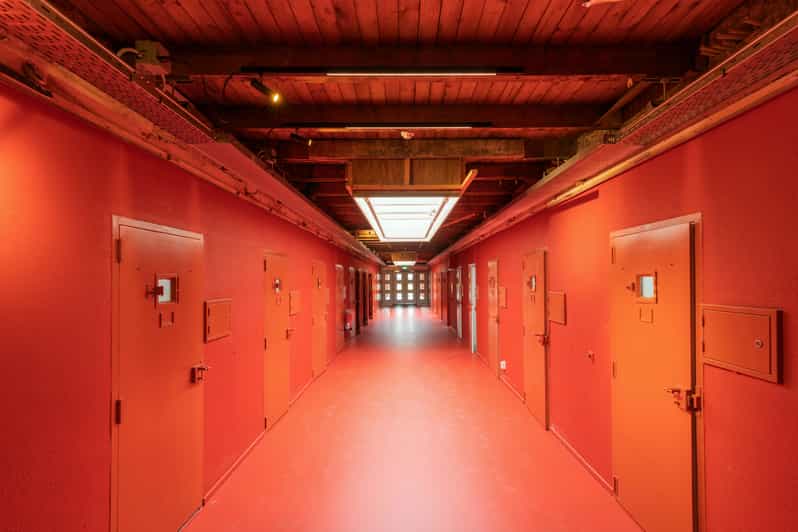
The Oranjehotel experience works best when you let the individual stories explain the larger events. The occupation was not presented as an abstract political change. It affected food, safety, family life, freedom of speech, and the right to resist.
The displays deal with hunger and insecurity, two facts that can be easy to overlook when you study wartime history from a distance. Prisoners were cut off from normal life and uncertain about what would happen next. Families faced their own fear, often without clear information.
The exhibition also gives room to hope and mutual support. That balance matters. A museum about a Nazi prison could easily become a catalogue of cruelty. Here, the stories also show faith in freedom and the ways people supported one another despite harsh conditions.
You will hear about prisoners sent from the Oranjehotel to Sachsenhausen. If you have visited Sachsenhausen, this can help connect two separate places in the history of Nazi persecution. If you have not, the reference still shows that the prison formed part of a wider system rather than operating in isolation.
The tone is serious but not sensational. The site is intended to make you think, not to entertain you. That makes it a good choice for anyone wanting a clearer understanding of The Hague during World War II.
More Anne Frank and Jewish heritage walks:
- Anne Frank’s Story – Guided Walking Tour through Amsterdam
★ 5.0 · 11,619 reviews - Amsterdam: Life of Anne Frank and World War II Walking Tour
★ 4.8 · 10,467 reviews - Amsterdam: Anne Frank Guided Small Group Walking Tour
★ 4.8 · 2,722 reviews - Amsterdam: Anne Frank Walking Tour – Guided in EN/DE/IT/ES
★ 4.9 · 2,676 reviews
How much is there to see?
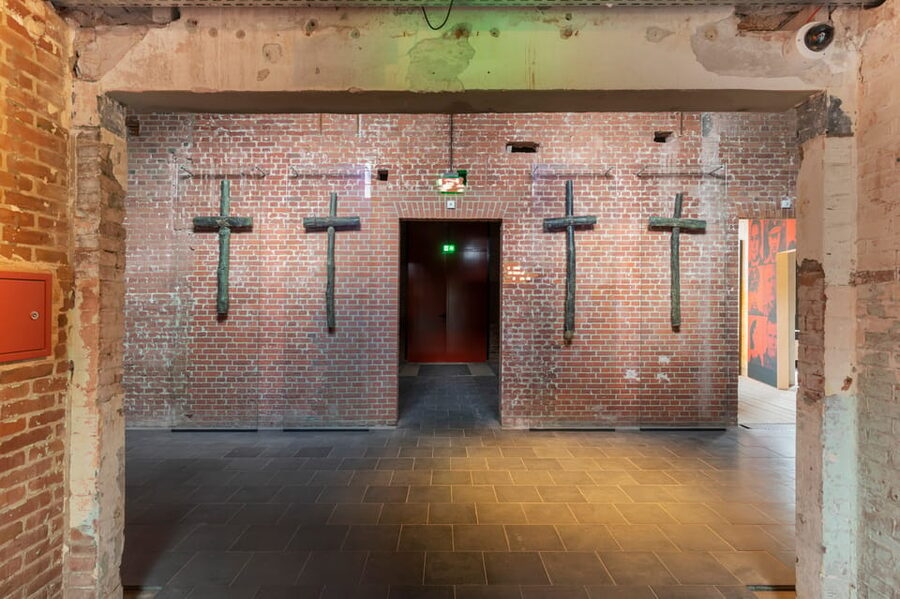
This is the point to consider before buying a ticket. The Oranjehotel is not a huge complex filled with room after room of original interiors. One of the preserved spaces emphasized during the visit is Cell 601, and there are not many unchanged cells to inspect.
If you judge a museum by size, you may find the visit limited. The value comes from the quality of the stories and the care given to the material, not from the number of rooms.
Allow yourself time to read and listen rather than expecting a long walking route. The ticket is valid for one day, so you are not forced into a quick schedule. The supplied information does not set a fixed visit length, and the self-guided format means your timing depends on how closely you follow the documents, videos, and audio.
I would not book this as a casual filler activity between major sights. It asks for attention. But if you want one focused historical visit in The Hague, the compact size can be an advantage. You can absorb the central story without spending half a day crossing a large museum.
Bringing children to a difficult memorial
Families can visit, but you should prepare children for the subject first. The material concerns imprisonment, executions, fear, and Nazi occupation. It is not suitable for treating the museum as a light afternoon stop.
At the same time, the experience can work well with older children and teenagers. A family with children aged 6, 10, and 13 found that all three engaged with the displays and asked questions. Another parent said an 8-year-old found the visit interesting. A separate family with children from 12 to 19 felt the visit made them think about how fortunate they are.
Those details suggest that age alone is not the deciding factor. Your child’s temperament and your willingness to explain difficult subjects matter more. Younger children may focus on the physical prison, while older children can understand resistance, injustice, and the effect on families.
I would give children permission to ask questions and take a quiet pause when needed. You do not have to listen to every audio segment in one go. The self-guided format lets you adjust the visit to your family.
The staff and the tone of the visit
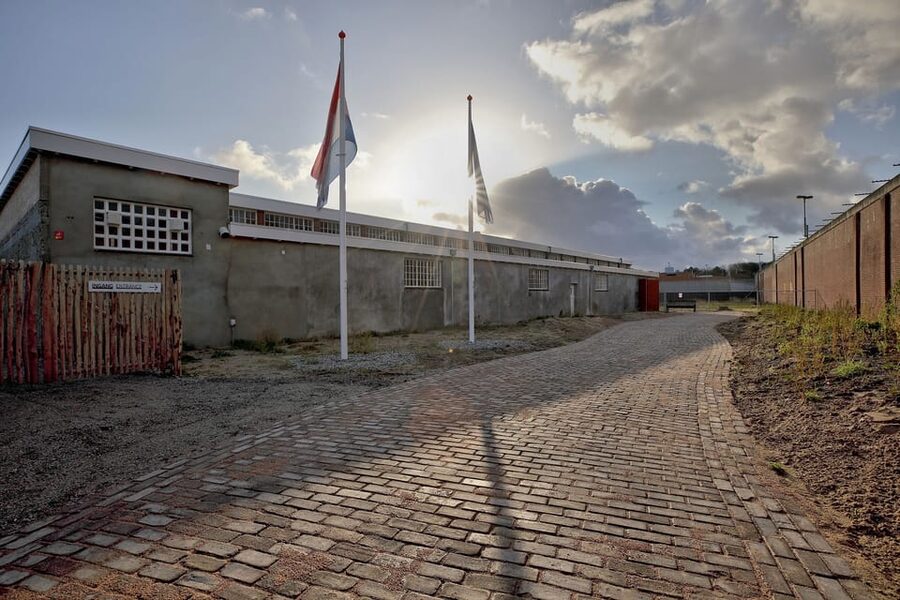
Although there is no live guided tour, the staff help you get started. Clear instructions are useful here because the museum’s numbered route and audioguide are central to the experience.
The welcome is described as friendly and helpful, which is especially valuable at a solemn memorial. Staff can give you the information needed to begin without turning the visit into a formal group presentation.
The exhibition itself is arranged with care. You are given time in each part to learn and to show respect for the people held there. That pacing supports the museum’s purpose. It avoids the feeling of being pushed from one display to the next.
You may also find video material alongside the written displays and audio. This gives the visit several ways in. Some people connect most strongly with letters and photographs. Others respond to spoken testimony. The mix keeps the experience from relying on one type of evidence.
Is $15 a fair price?
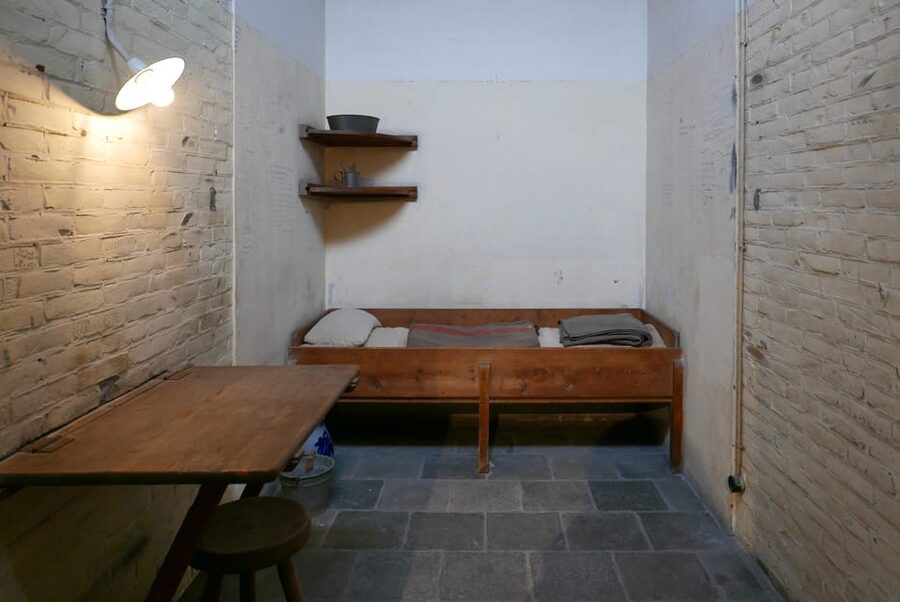
At $15 per person, the ticket is reasonably priced for a focused museum visit with an audioguide. You are paying for access to a place of major importance in Dutch wartime history, not simply for a room of exhibits.
The value is strongest if you listen carefully and read the supporting material. A quick walk through the building will make the ticket feel less worthwhile because there are not many cells or large-scale displays. Give the site the time it deserves, and the personal accounts make the price easier to justify.
The ticket is valid for one day, which gives you flexibility. You can also reserve now and pay later, and cancellation is free up to 24 hours in advance. These terms are useful if your Hague plans may change.
Food and drinks are not included. Plan around the visit rather than expecting the ticket to cover refreshments. The site is wheelchair accessible, which makes it a practical choice for a wider range of visitors.
How to fit it into a Hague visit
The Oranjehotel is in The Hague, but the supplied information does not provide transport directions or a travel time from the city center. Check your route before setting out, especially if you are working around timed museum reservations elsewhere.
Because the ticket is valid for one day and the visit is self-guided, you have some freedom in your schedule. I would place it on a day when you can leave space afterward. The subject may stay with you, and it is not an experience I would pair with a rushed sequence of unrelated sights.
The museum can also be a useful bridge to other World War II sites. The material about prisoners sent to Sachsenhausen helps show how local arrests connected with the wider Nazi prison and camp system.
Who should book the Oranjehotel?
I would recommend this experience if you want:
- A serious look at The Hague during the Nazi occupation
- Personal stories rather than only military dates and political facts
- A self-guided museum where you control the pace
- An accessible introduction to Dutch resistance and wartime imprisonment
- A meaningful visit with older children or teenagers
- A compact historical site that does not require a full day of walking
I would think twice if you want a large museum with many original rooms, extensive architectural remains, or a live guide leading a group. The Oranjehotel is intentionally focused. Its strength is the human story, especially the voices, documents, and photographs connected with the prisoners.
Should you book this ticket?
Yes, if you are ready for a quiet and emotional visit. The Oranjehotel gives you a direct way to understand Nazi occupation in the Netherlands, and Cell 601 provides a powerful focus for the story.
Go for the personal accounts, not the number of rooms. Use the audioguide, read the documents, and give yourself time to think. At $15, it is good value for a carefully presented memorial, provided you understand that this is a place of remembrance rather than a conventional attraction.
FAQ
Where is the Oranjehotel located?
The Nationaal Monument Oranjehotel is at Van Alkemadelaan 1258, 2597 BP Den Haag, Netherlands.
What does the ticket include?
The ticket includes entrance to the Oranjehotel and an audioguide.
Is there a live guided tour?
No. You explore independently with an audioguide and follow the numbered route through the exhibition.
Which audioguide languages are available?
The audioguide is available in English, Dutch, German, and French.
Can I visit Cell 601?
Yes. The experience includes entry to Cell 601, the notorious death cell.
Is the Oranjehotel suitable for children?
Children can visit, but the subject is serious. The museum covers imprisonment, executions, fear, and Nazi occupation. Families with children from 6 to 19 have found ways to engage with the experience.
Is the site wheelchair accessible?
Yes. The Oranjehotel is wheelchair accessible.
Just added around The Hague
- The Hague: Street Art Tour by Bike★ 4.8 · 30 reviews
- Vermeer Centrum Delft Museum Admission Ticket★ 4.0 · 45 reviews
- The Hague Tower Guided Tour★ 4.5 · 45 reviews
- Scheveningen Beach: 2-Hour Surf Experience for Adults★ 4.8 · 50 reviews
- Walking Tour of Delft – The City of Orange and Blue★ 5.0 · 50 reviews
- The Hague: One Way Boat Ticket to or from Delft★ 4.5 · 52 reviews
- The Hague: Courtyard Walking Tour★ 4.5 · 71 reviews
- The Hague: Beginner’s Surf Lesson★ 4.7 · 78 reviews
Anne Frank & Jewish Heritage Tours, compared.
Anne Frank’s Story – Guided Walking Tour through Amsterdam
Read our review →
Life of Anne Frank and World War II Walking Tour
Read our review →

Anne Frank Walking Tour – Guided in EN/DE/IT/ES
Read our review →
Anne Frank Walking Tour Amsterdam Including Jewish Cultural Quarter
Read our review →
Anne Frank’s Last Walk & See Anne Frank House in Virtual Reality
Read our review →

Anne Frank and Jewish Quarter Amsterdam Private Walking Tour
Read our review →Browse the lists this tour appears in