
Reviewed · ZAANSE SCHANS & WINDMILL TRIPS
Rotterdam: Kinderdijk UNESCO World Heritage Entry Ticket
Kinderdijk is where Dutch water engineering becomes real. You are not just looking at postcard windmills: you can enter two working mills, see the machinery that kept families dry, and glide along the canals with the famous line of mills beside you. I especially like the self-guided pace and the chance to combine walking, museums, and a boat ride in one ticket.
The polder boat gives you views that are hard to get from the path, while the pumping station and short film explain why these mills matter. You can also see the site without paying for the museums, but the $25 ticket adds the parts that turn a pretty outing into a useful lesson in Dutch water management. The main drawbacks are long walks, little shade, and boats that may stop in bad weather.
In This Review
- Key points at a glance
- Why Kinderdijk is more than a windmill photo stop
- Starting with the film and exhibition
- Entering the Blokweer Museum Mill
- Seeing the Nederwaard Museum Mill in operation
- The pumping station and the next stage of water control
- Taking the boat through the polders
- Walking, cycling, and dealing with the open-air setting
- How much time should you allow?
- Is the $25 ticket good value?
- Who will enjoy Kinderdijk most?
- Should you book this Kinderdijk ticket?
- FAQ
- Is the Kinderdijk ticket valid for one day?
- What does the ticket include?
- Is transport from Rotterdam included?
- Is the visit guided by a tour leader?
- Does the boat always operate?
- Is Kinderdijk wheelchair accessible?
- Can I cancel the booking?
Key points at a glance
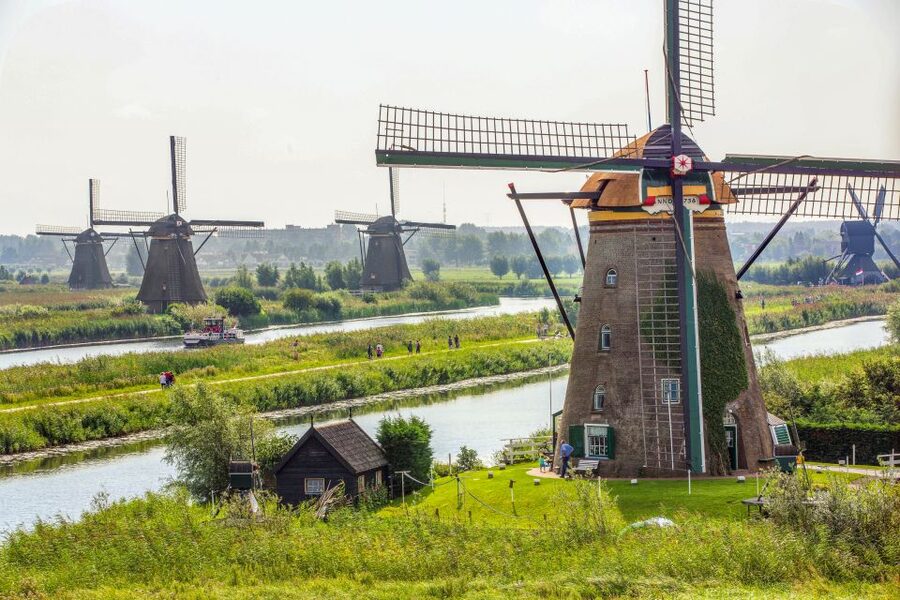
- Nineteen historic windmills: See the famous row of mills in their working water-management setting.
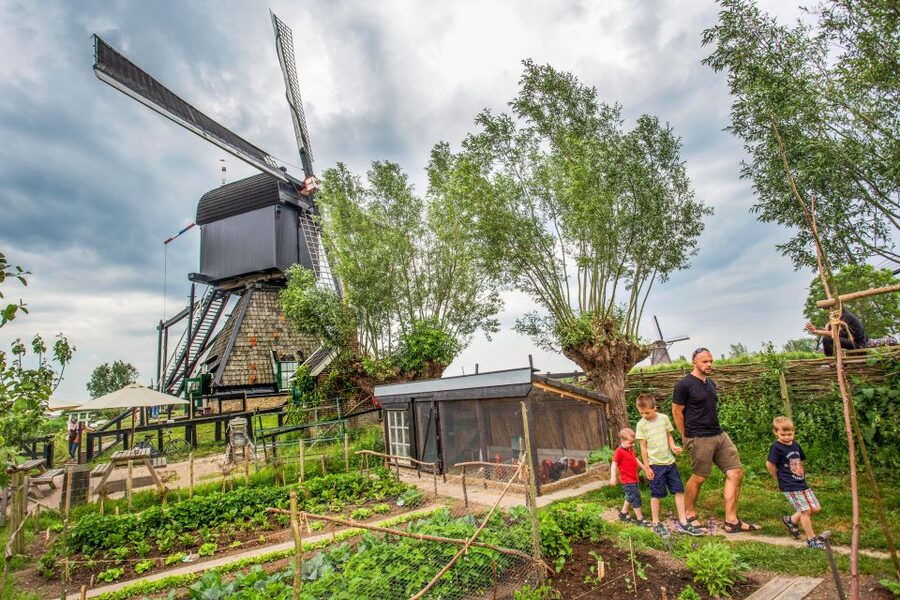
- Two mills you can enter: Explore the Blokweer and Nederwaard Museum Mills, including the cramped spaces where miller families lived and worked.
- A boat through the polders: Use the included boat to view the mills from the water and save some walking.
- A working pumping station: Visit the engine room and see a different stage of Dutch drainage technology.
- Self-guided and flexible: Use the online audio guide, film, exhibits, and your own walking route rather than following a fixed group.
- Plan for the weather: The site is open-air, shade is limited, and the boat may not sail during poor weather.
Why Kinderdijk is more than a windmill photo stop
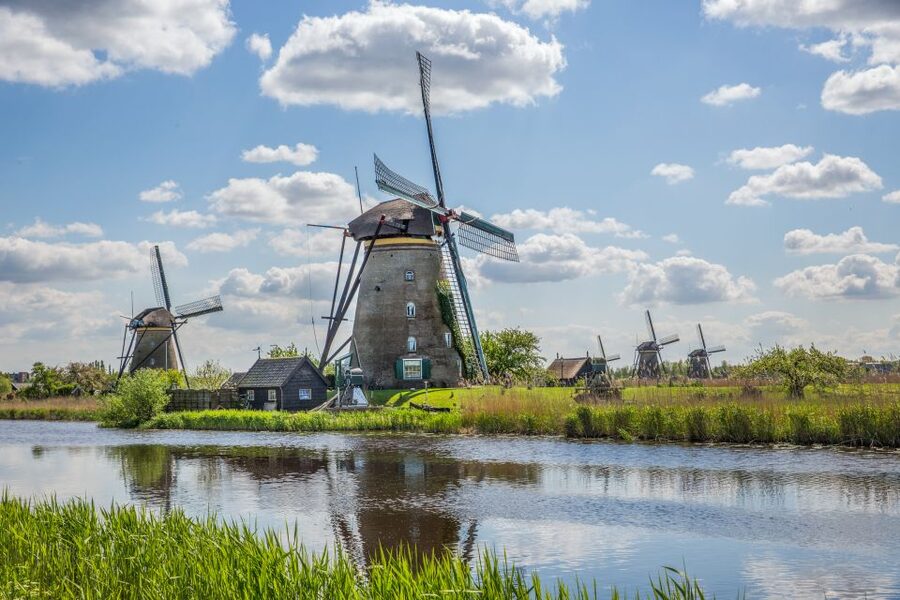
The classic Dutch image is here in abundance: tall windmills, narrow waterways, grassy banks, and old buildings spread across the polders. But the real interest is practical. Kinderdijk shows how people reclaimed and protected low-lying land over centuries, using wind power, canals, pumping stations, dikes, and careful teamwork.
That matters because the mills are not random decorations placed in a pretty setting. They belong to a system. Water had to be moved from one level to another, then sent toward the river. The mills helped keep farmland and homes usable in a country where water is always close at hand.
You can walk along parts of the site without buying an attraction ticket, which makes the paid admission worth thinking about. The $25 ticket is mainly for the two museum mills, the pumping station engine room, the film and exhibition, and the boat ride. If you only want photographs from the path, you may not need it. If you want to understand what you are seeing, the ticket adds real value.
I would allow two to four hours for a focused visit. You can move faster, but the site rewards a slower half-day or full-day outing, especially if you walk between the museums, pause for the exhibits, and wait for a boat.
More Entry Tickets in Rotterdam
- Rotterdam: Rotterdam Zoo Blijdorp Entry Ticket
★ 4.6 · 2,754 reviews - Rotterdam: Euromast Lookout Tower Ticket
★ 4.4 · 2,549 reviews - Efteling Theme Park Entrance Ticket
★ 4.0 · 988 reviews
Starting with the film and exhibition
The entrance facilities give you a useful introduction before you head out among the mills. The informative film is short enough to fit into a busy day, and one boat video runs for about nine minutes. These explanations help you notice the important details later, such as water levels, mill machinery, and the way each building fits into the wider drainage system.
This is a good stop for families because the site also offers an interactive scavenger hunt for children. It gives younger visitors something to look for while adults take in the engineering and local history. An online guide supplies audio tours in English, Dutch, French, Spanish, Italian, Chinese, and German.
The experience is not led by one guide from start to finish. You set your own route and decide how long to spend inside each building. Staff members and boat hosts are available around the site, and the on-site information is presented in Dutch and English.
One useful tip is to ask at the information desk for the code needed for the audio tour. Do not assume it will be handed to you automatically. Once activated, the audio guide gives more context than a quick walk and helps explain why the mills were built and how they worked.
Entering the Blokweer Museum Mill
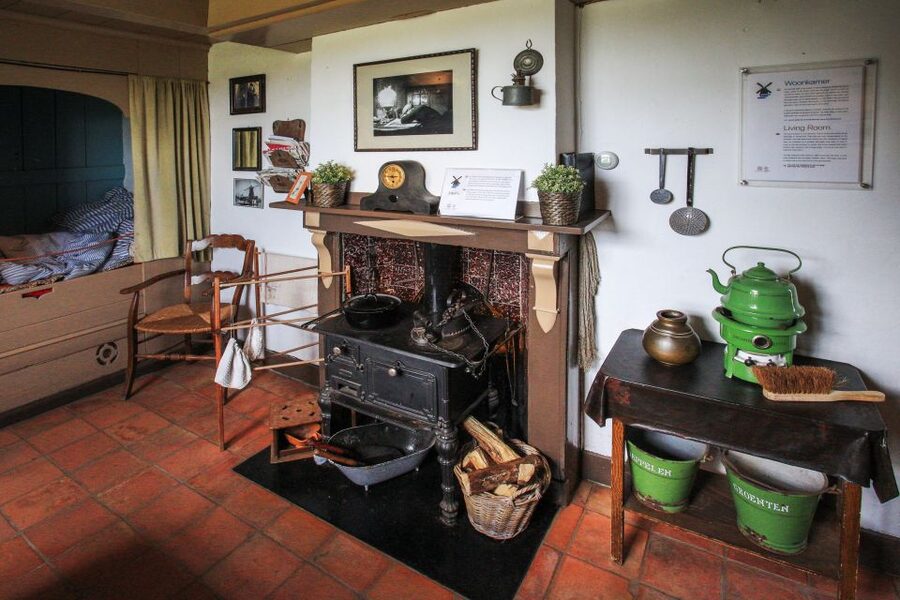
The Blokweer Museum Mill gives you a close look at an older rural way of life. It is not simply an empty historic structure with a few signs. The interior helps you picture the mill as a home and workplace, with the miller’s family living in the same tight quarters as the machinery.
You will see how limited the space could be and how much daily life depended on the mill. The machinery is the star, but the domestic details make the place easier to understand. This is where Kinderdijk shifts from a scenic walk to a human story.
Access inside historic mills can feel narrow and uneven, so take your time. The site itself is wheelchair accessible, but individual historic structures may feel more confined than the newer visitor facilities. If you use a mobility scooter or wheelchair, the grounds are generally manageable, though the route from transport connections can be less convenient.
Seeing the Nederwaard Museum Mill in operation
The Nederwaard Museum Mill is another highlight because you can see the working parts of a mill and learn how a miller’s household functioned. The machinery is not hidden behind glass. Depending on conditions, you may see the sails and internal mechanisms moving, which makes the building feel like a piece of active infrastructure rather than a frozen exhibit.
The mill dates from the eighteenth century, and the displays show how several generations could live and work in the same place. You may need to wait your turn in narrow sections, particularly when the site is busy. That is not a flaw so much as part of the experience: these were compact working homes, not roomy museums designed for crowds.
I like visiting both museum mills because they complement each other. One gives you a stronger sense of the household and older rural setting, while the other makes the machinery and the miller’s working life easier to grasp. Seeing only one would leave out part of the story.
More windmill trips from Rotterdam:
- Rotterdam: Waterbus Ticket to Dordrecht and/or Kinderdijk
★ 4.6 · 542 reviews - All-Inclusive Private Windmill Tour to Kinderdijk from Rotterdam
★ 4.5 · 59 reviews - Kinderdijk Bike Tour
★ 5.0 · 35 reviews - From Amsterdam: Zaanse Schans, Volendam, and Marken Day Trip
★ 4.4 · 15,931 reviews
The pumping station and the next stage of water control
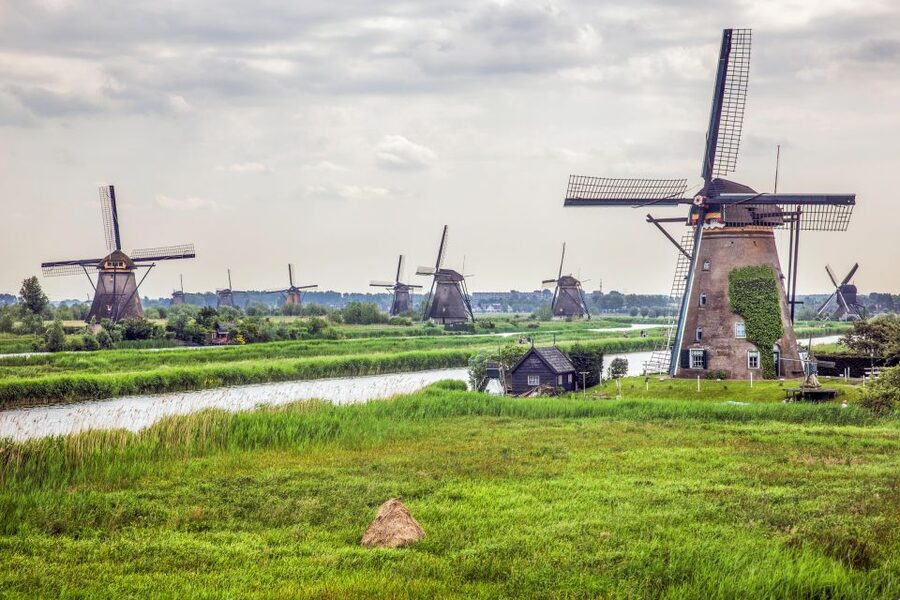
The pumping station engine room shows how Dutch water management moved beyond wind power. Here, large mechanical equipment replaces the simple image of sails turning in the wind. The contrast helps you understand that Kinderdijk is not only about old mills. It is about a long chain of methods used to control water.
The engine room is included in the ticket, and it is an important stop for anyone interested in engineering. It also gives you a break from the open paths if the weather turns cool or wet. Pair it with the film, and the system becomes much easier to follow.
The displays are useful for adults and older children who want more than a photo opportunity. Younger children may prefer the scavenger hunt and the boat, so you can split your time rather than expect every stop to hold everyone’s attention equally.
Taking the boat through the polders
The included boat ride is one of the best reasons to buy the ticket. From the water, the windmills line up in a way that is difficult to see while walking. The ride also gives your feet a rest, which matters because the distances between the entrance, museums, and crossings are longer than they first appear.
Use the boat as part of your route, not just as an optional extra at the end. Some boats connect the main stops, while another route takes you around the canals. You can ride through the site, get off near the museums, and continue on foot. The boat does not replace walking entirely, but it makes the day easier and gives you a second view of the mills.
Space on the boat is limited. At busy times, you may need to wait for the next departure, so do not plan your entire visit around the final sailing. The last boat leaves 30 minutes before closing.
Bad weather can also stop the boats from sailing. If the ride matters to you, check conditions on the day and leave room in your schedule. The walking route and indoor exhibits still provide a worthwhile visit, but the water view is a distinct part of the experience.
One practical approach is to take the boat through the site first, then walk back slowly to the museums. Another is to walk one way and use the boat for the return. Either way, you get both the close-up view from the paths and the broad view from the canal.
Walking, cycling, and dealing with the open-air setting
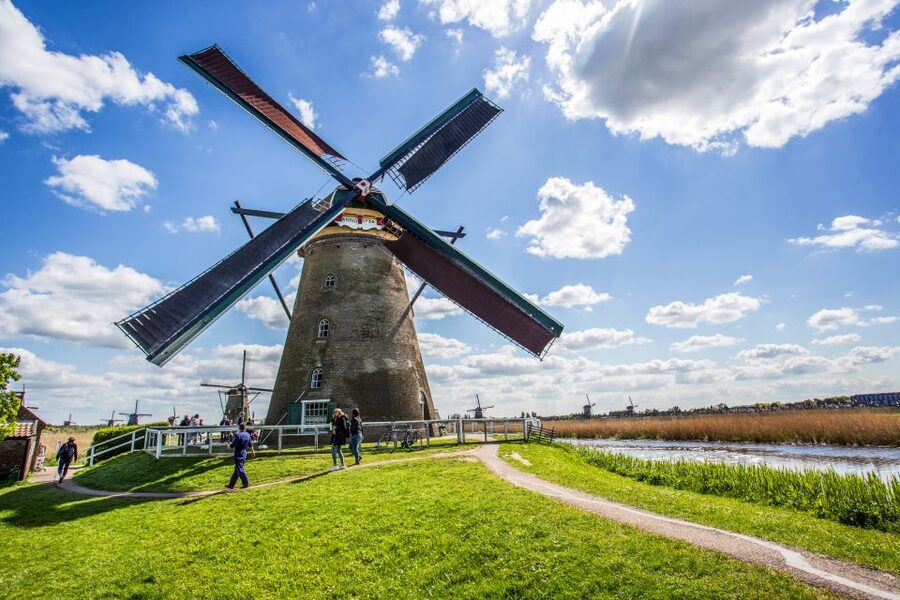
Kinderdijk is best seen at a relaxed pace, but it is not a compact museum. You will walk along paths beside canals and dikes, and some crossings take time to reach. Good shoes are more useful here than stylish ones.
There is little shade during the longer stretches between museums. On a sunny day, bring water, sun protection, and a hat. A picnic can make the visit last longer, though food and drinks are not included in the ticket.
A bicycle can be useful if you want to cover more ground. One visitor combined the Waterbus to Alblasserdam with a bike rental and found it an ideal full-day outing. Another cycled from Rotterdam, creating a very Dutch approach to the site. Cycling does require care around pedestrians, especially on busy paths, so slow down near the museums and crossings.
Parking can be difficult, and the site warns visitors not to rely on finding an easy space. Public transport or a bicycle may be less stressful, but transport to Kinderdijk is not included in this ticket. The Waterbus is one reported option from Rotterdam, including a direct Waterbus 21 connection, but check the current timetable before setting out because departures affect the whole day.
How much time should you allow?
For a quick visit, two to three hours can cover the film, one or both museum mills, the pumping station, and part of the boat route. You will need to keep moving, especially if you wait for a boat.
A half-day is a better target for most people. It gives you time to visit both museum mills, ride the boat, pause for exhibits, and walk the central paths without rushing. A full day suits anyone arriving by bicycle, bringing a picnic, or wanting to explore at a very slow pace.
The site can feel peaceful in good weather, but the same open setting creates exposure to wind, rain, and sun. Plan around conditions rather than assuming the boat and walking route will feel the same in every season.
Opening times change through the year:
- Through March 5, on open days, the site is open from 10:30 a.m. to 4 p.m.
- From March 6 through November 1, it is open daily from 9 a.m. to 5:30 p.m.
- From November 2 through December 31, it is open daily from 10:30 a.m. to 4 p.m.
- It is closed on Christmas Day.
Check the schedule for your date before planning transport. A late arrival can leave you with less time than expected, especially because the final boat departs 30 minutes before closing.
Is the $25 ticket good value?
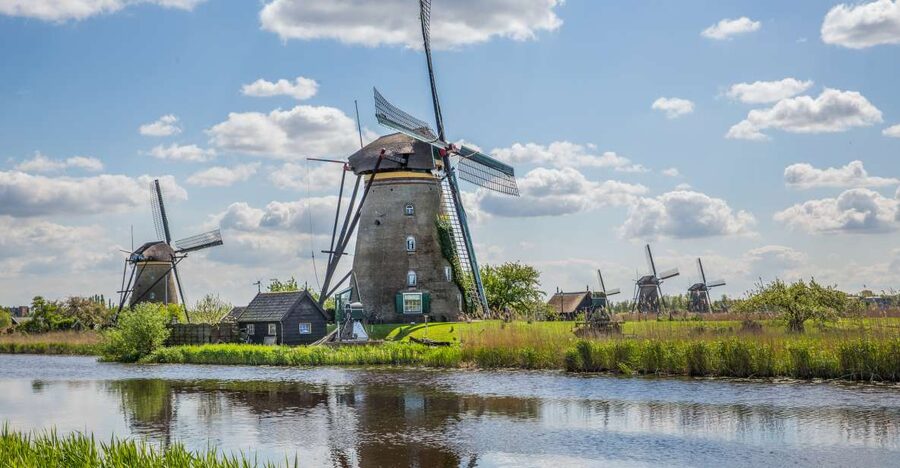
I think the price is fair if you plan to use the included features. The two museum mills alone give you access to spaces that you cannot experience from the public paths. Add the pumping station, film, exhibition, audio guide, and boat, and the ticket covers the main interpretive parts of the site.
The value is weaker if you only want to walk along the canal and photograph the windmills. Much of the outdoor setting can be viewed without paying for the added attractions. In that case, you are paying for access you may not use.
The ticket is also useful for families because it combines several types of activity: a boat ride, outdoor walking, machinery, historic homes, and a children’s scavenger hunt. Couples and solo visitors who enjoy self-guided museums will appreciate the freedom to stop and start without a fixed tour schedule.
Booking ahead can make entry quicker, and the ticket allows free cancellation up to 24 hours before the visit. A reserve-now, pay-later option is also available, which helps if your Rotterdam plans depend on weather or cruise timing.
Who will enjoy Kinderdijk most?
You should book this if you want to understand Dutch water management rather than collect a quick windmill photograph. It is especially good for first-time visitors to the Netherlands, families with school-age children, photographers, cyclists, and anyone who likes working technology in an authentic setting.
It also suits independent visitors. You are not tied to a group leader, and you can choose between walking, boating, listening to the audio guide, or simply sitting beside the water. Staff are described as friendly and helpful, and the boat hosts can answer questions during the ride.
You should think twice if you dislike walking, need guaranteed boat service, or are visiting during a period of poor weather. The site is wheelchair accessible, but access from the water taxi can be difficult for some disabled visitors. Once at the venue, mobility scooters are supported, though the historic mills themselves may have tight interiors.
Should you book this Kinderdijk ticket?
I would book it if you have at least half a day in Rotterdam and want a hands-on look at how the Netherlands manages water. The boat ride, two museum mills, pumping station, and audio material make the $25 price worthwhile for most first-time visitors.
Choose a free outdoor visit instead if your time is short or you only want the famous views. For the best paid visit, arrive early, check the transport and boat schedules, wear comfortable shoes, bring protection from the sun or rain, and ask for the audio-tour code at the information desk.
FAQ
Is the Kinderdijk ticket valid for one day?
Yes. The ticket is valid for one day, with starting times and availability shown when you check your chosen date.
What does the ticket include?
It includes entry to the Blokweer Museum Mill, the Nederwaard Museum Mill, the pumping station engine room, the informative film and exhibition, the online audio guide, and the boat trip through the World Heritage Site.
Is transport from Rotterdam included?
No. Transport to Kinderdijk is not included. You must arrange your own transport, such as public transport, a bicycle, or another option.
Is the visit guided by a tour leader?
No fixed guided tour is included. The visit is self-guided, with an online audio tour available in English, Dutch, French, Spanish, Italian, Chinese, and German. Hosts or greeters speak Dutch and English.
Does the boat always operate?
No. The tour boats may not sail during bad weather. The last boat departs 30 minutes before closing, and seats are limited.
Is Kinderdijk wheelchair accessible?
The venue is wheelchair accessible, and mobility scooters can be used at the site. Access from the water taxi may be difficult for disabled visitors, and the historic mills can have tight interior spaces.
Can I cancel the booking?
Yes. You can cancel up to 24 hours in advance for a full refund. A reserve-now, pay-later option is also available.
More History Walks around Rotterdam
- Rotterdam: Harbor Cruise on a Historic Ship
★ 4.2 · 812 reviews - MUST DO: Rotterdam highlights & history with a local guide
★ 4.5 · 57 reviews - Rotterdam Must Do Tour: Highlights, History, WW2 and Architecture
★ 5.0 · 20 reviews - Amsterdam Food and Cultural Tour with Tastings
★ 5.0 · 2,442 reviews
Just added around Rotterdam
- Rotterdam: Breweries and Water Taxi Tour★ 4.7 · 23 reviews
- Rotterdam: National Museum of Photography Entrance Ticket★ 3.8 · 24 reviews
- Rotterdam Highlights Private Walking Tour★ 5.0 · 26 reviews
- Private Tour: Rotterdam Walking Tour Including Harbor Cruise★ 4.5 · 27 reviews
- Rotterdam Tour with Cube House Admission★ 4.4 · 27 reviews
- Cultural Walking Tour in Rotterdam★ 5.0 · 28 reviews
- Rotterdam: Food Tour by Bike★ 4.8 · 31 reviews
- Private Customizable Day Trip From Rotterdam★ 4.5 · 31 reviews
Zaanse Schans & Windmill Trips, compared.
Zaanse Schans, Volendam, and Marken Day Trip
Read our review →
Zaanse Schans, Edam, Volendam & Marken Bus Tour
Read our review →
Day Trip to Zaanse Schans, Edam, Volendam and Marken from Amsterdam
Read our review →
Guided Zaanse Schans, Windmills & Cheese Tour
Read our review →
Windmill Tour from Amsterdam, Including Volendam & Marken
Read our review →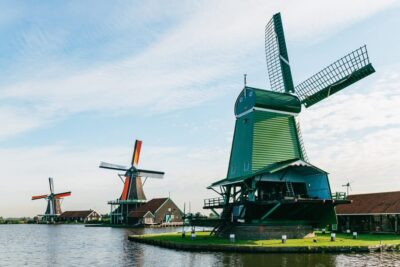
Tour to Keukenhof Gardens with Windmill Cruise
Read our review →
Zaanse Schans Windmills, Clogs and Dutch Cheese Small-Group Tour from Amsterdam
Read our review →Browse the lists this tour appears in