
Reviewed · WALKING TOURS IN AMSTERDAM
Amsterdam 2 Hour History Walking Tour
Amsterdam’s past is packed into a short walk on this tour. In two hours, you move from the canals and Red Light District to the Jewish Quarter, the old Dutch East India Company headquarters, Begijnhof, and a picture-perfect bridge linked with Monet. It is a brisk introduction to how water, trade, religion, war, and tolerance shaped the city.
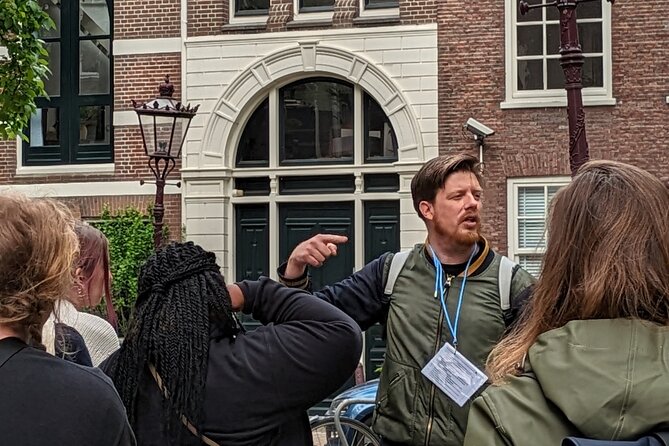
I like the small group of no more than 10 people, which makes it easier to hear the guide and ask questions. I also like the mix of serious history and useful advice, with guides such as Axel and Mark bringing humor and an easy social tone to the walk. The main drawback is the pace: most stops last only five to ten minutes, so you get a broad overview rather than a long look inside any one site.
In This Review
- Key points to know before you book
- Why this compact walk works for a first day
- Canal Ring: learning to live with water
- De Wallen: a frank look at Amsterdam’s famous district
- Dam Square: water, power, and the center of town
- South Church and the shift from Catholic to Protestant
- Jodenbreestraat: confronting Amsterdam’s wartime past
- Bushuis and Oost-Indisch Huis: trade, empire, and Dutch power
- Stopera Pier: an ugly building with local pride
- Begijnhof: a quiet courtyard in the middle of the city
- Royal Palace Amsterdam: French influence, the royal family, and orange
- Groenburgwal: the Monet bridge photo stop
- What $30.04 buys you
- Timing, meeting point, and practical planning
- Who should book this Amsterdam walk?
- Should you book it?
- FAQ
- How long does the Amsterdam History Walking Tour last?
- What time does the tour start?
- Where does the tour begin and end?
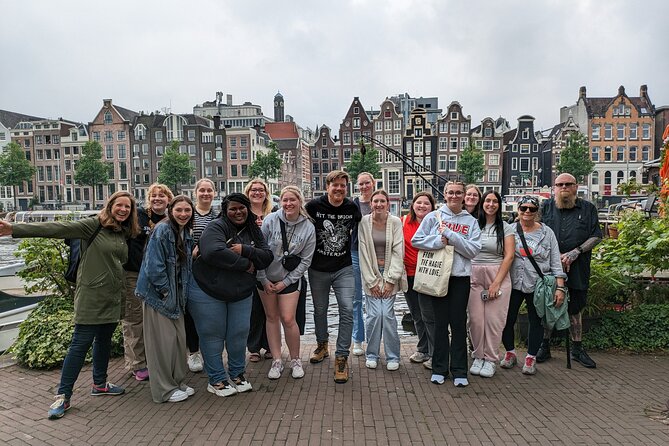
- How large is the tour group?
- Is admission to the Royal Palace included?
- Is bottled water provided?
- What happens if bad weather cancels the tour?
Key points to know before you book
- Ten major Amsterdam sights in two hours: The route covers the canal belt, De Wallen, Dam Square, South Church, the Jewish Quarter, Begijnhof, and more.
- A useful first-day orientation: You get practical tips for seeing Amsterdam and finish on Dam Square, close to public transportation.
- Serious history without a stiff lecture: Expect stories about religious change, Jewish life during the war, Dutch empire, water management, and the monarchy.
- The Monet bridge photo stop: Groenburgwal gives you a quick chance to capture one of Amsterdam’s most recognizable canal views.
- Bring a refillable water bottle: Water is not supplied, although there are places along the route to refill.
- Good value for a short introduction: At $30.04 per person, the tour is priced for an accessible overview, not an in-depth specialist walk.
Why this compact walk works for a first day
This is the kind of tour I would use near the start of an Amsterdam visit. You do not spend two hours inside a museum or hear a narrow account of one neighborhood. Instead, you get the city’s main themes in quick succession: Amsterdam had to live with water, built wealth through global trade, changed its religious identity, and developed a complicated relationship with tolerance and power.
That broad view helps you make sense of the city afterward. A canal is not just a pretty waterway. A church courtyard is not just a quiet place to pause. A grand commercial building points to overseas trade, while a modern city hall reveals how Amsterdam continues to argue with itself about architecture and public space.
The tour begins at 11:00 a.m. from Hit the Bricks Walking Tours at Prinsenstraat 13. It ends at Dam Square, listed as about two minutes from the starting area and well placed for onward transportation. That timing gives you the rest of the afternoon for a museum, a canal cruise, or simply wandering with a better sense of direction.
The format also helps if you are new to the city and want to ask basic questions without feeling out of place. Axel has been praised for making the history lively and memorable, while Mark has been described as personable, funny, and easy to talk with. Guide assignments can change, but the experience is designed around a relaxed small-group approach.
More History Tours in Amsterdam
- Amsterdam Food and Cultural Tour with Tastings
★ 5.0 · 2,442 reviews - Amsterdam: Haunted History and Ghost Walking Tour
★ 4.5 · 488 reviews - Amsterdam High-End Dutch Food & History Tour – Up to 8 guests
★ 5.0 · 482 reviews
Canal Ring: learning to live with water
The opening stop is the Canal Ring, Amsterdam’s famous belt of waterways. The guide explains how the Dutch had to build, drain, manage, and share space with water, and how that long struggle influenced the country’s habits and outlook.
This is a smart place to begin because it gives the rest of the walk a clear frame. Amsterdam’s canals are beautiful, but they were also practical infrastructure. They helped organize the city and support trade, while forcing people to think carefully about land, drainage, construction, and cooperation.
You spend about five minutes here, so do not expect a technical lesson in Dutch engineering. The value is in getting the basic idea early. As you walk later through the old center, you can connect the narrow streets and waterways to that first explanation.
The canal belt also sets the tone. You are outside, moving at an easy pace, with no admission line or indoor schedule to manage. Bring comfortable shoes, since the tour is entirely on foot.
De Wallen: a frank look at Amsterdam’s famous district
The Red Light District, known locally as De Wallen, receives about ten minutes. This is one of the most talked-about areas in Amsterdam, and the guide explains why it developed here, how it operates, and how Dutch society views it.
That context matters. A short walk through De Wallen can leave you with more questions than answers if you only see the windows, signs, and crowds. A good explanation helps separate the neighborhood’s long history from the sensational image many people bring with them.
This stop may feel uncomfortable for some people, especially if you are visiting with children or prefer a quieter route. The tour’s stated approach is informative rather than purely gawking, but the district is still what it is. Keep your camera away from people working in the area and listen to the guide’s advice about respectful behavior.
Since the group is small, you may have a better chance to ask a direct question here. That is useful for a subject that is often reduced to jokes or stereotypes.
Dam Square: water, power, and the center of town
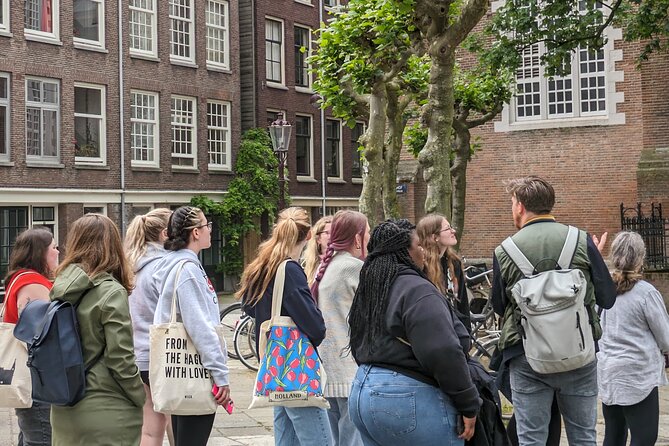
Dam Square is Amsterdam’s central public square and another place where the tour returns to the problem of water. The guide connects the square’s role in the city with the Dutch fight to control their environment and the way that struggle influenced national thinking.
You spend only about five minutes here, but the location is practical as well as historic. The tour ends here, so you can remain in the area afterward, continue to the Royal Palace, or catch public transportation.
Dam Square can be crowded and visually distracting. That is part of the point, since it has long been an important civic space, but it means you should pay attention to where the group pauses. The guide’s voice may compete with street noise, so stay close.
More Walking Tours in Amsterdam
- Anne Frank’s Story – Guided Walking Tour through Amsterdam
★ 5.0 · 11,619 reviews - Amsterdam: Life of Anne Frank and World War II Walking Tour
★ 4.8 · 10,467 reviews - Absolutely Amsterdam – the Essential Introductory Walking Tour
★ 5.0 · 3,629 reviews - Amsterdam: Anne Frank Guided Small Group Walking Tour
★ 4.8 · 2,722 reviews
South Church and the shift from Catholic to Protestant
At South Church, the tour moves into religious history. The stop takes place in the calm inner courtyard beside the church, where you learn how and why the Dutch changed from Catholicism to Protestantism.
The courtyard setting is a welcome pause after the noise of central Amsterdam. It also shows how the city can hide quiet spaces just steps from busy streets. The guide uses this stop to explain a major change in Dutch society, rather than simply pointing out an old church.
Again, the time is short, around five minutes. You will get the main story and its place in Amsterdam’s development, but not a full architectural tour or extended religious history. If this subject interests you, note the location so you can return later at your own pace.
Jodenbreestraat: confronting Amsterdam’s wartime past
Jodenbreestraat marks the beginning of the old Jewish Quarter. Here the guide addresses the Jewish community that lived in Amsterdam before and during the war, the destruction caused by persecution, and the Hunger Winter.
This is the most solemn part of the walk. The stop is brief, but the subject deserves attention. Amsterdam is often presented through canals, art, and easygoing charm. This section reminds you that the city also carries painful memories and that Jewish life was once a central part of its identity.
A five-minute stop cannot cover the full story of wartime Amsterdam. Still, it provides important context before you visit places such as the Jewish Cultural Quarter or the Anne Frank House, if those are on your schedule. I appreciate that this difficult subject is included in a general city walk rather than left out in favor of lighter stories.
The timing may feel compressed here. Treat the explanation as an introduction, not a complete account. The guide’s role is to point you toward the historical shape of the area and help you understand what you are seeing.
Bushuis and Oost-Indisch Huis: trade, empire, and Dutch power
At Bushuis and Oost-Indisch Huis, the former headquarters of the Dutch East India Company, the tour turns to commerce and empire. You learn how a small country built a far-reaching trading system, gained control of the spice trade, and fought to preserve its own independence.
This stop helps balance the familiar image of Amsterdam as a tolerant, modest canal city. The wealth behind many old buildings was tied to worldwide trade, military force, and colonial expansion. That story is not always comfortable, but it is essential if you want to understand why Amsterdam became so prosperous.
The stop lasts about ten minutes, making it one of the longer pauses. That gives the guide enough time to explain the tension between Dutch independence, commercial ambition, and overseas power.
Look at the building as more than an attractive old facade. Its former purpose gives you a way to read Amsterdam’s historic center as a place of business and government, not just a postcard setting.
Stopera Pier: an ugly building with local pride
By the Amstel River, you see the modern city hall known as the Stopera. The name combines the words for city hall and opera house, and the guide explains why locals use it.
The building is described as one of Amsterdam’s ugliest, yet still a source of local pride. That contrast makes this a more interesting stop than a simple photo pause. It shows that city identity is not limited to beloved old buildings. People can argue about design and still claim a modern structure as part of their city.
You spend about five minutes here. The river adds a change of scenery, and the stop gives you a chance to see how modern Amsterdam fits beside its older districts.
Begijnhof: a quiet courtyard in the middle of the city
Begijnhof is one of the tour’s most appealing surprises. This enclosed garden-like courtyard sits in the middle of Amsterdam and is associated with the beguine sisters who built and maintained the community.
The setting offers a sharp contrast with the Red Light District and Dam Square. Within a short walk, you move from public streets and city noise into a quiet inner space. The guide explains who the beguines were and why this place developed.
You get about ten minutes here, enough to understand the site’s purpose and enjoy the change of mood. Please treat the courtyard as a lived-in religious and residential place, not simply a photo backdrop. The quiet atmosphere is part of its value.
Begijnhof is especially useful for first-time visitors because it teaches you to look beyond Amsterdam’s main streets. The city’s most memorable places are not always marked by a grand exterior.
Royal Palace Amsterdam: French influence, the royal family, and orange
The Royal Palace stop covers the origins of the Dutch royal family, the role of France, and the reason orange is the national color even though the Dutch flag is red, white, and blue.
The palace is an admission-free stop on the walking route, but entry to the interior is not included. The tour does not promise an inside visit, so plan separately if you want to see the rooms and collections.
This five-minute explanation is a good example of the tour’s broad method. Rather than focusing only on the building in front of you, the guide uses it to explain national symbols and political history. The orange question is particularly useful because it clears up a detail you will notice on flags, clothing, and sports displays around the Netherlands.
Groenburgwal: the Monet bridge photo stop
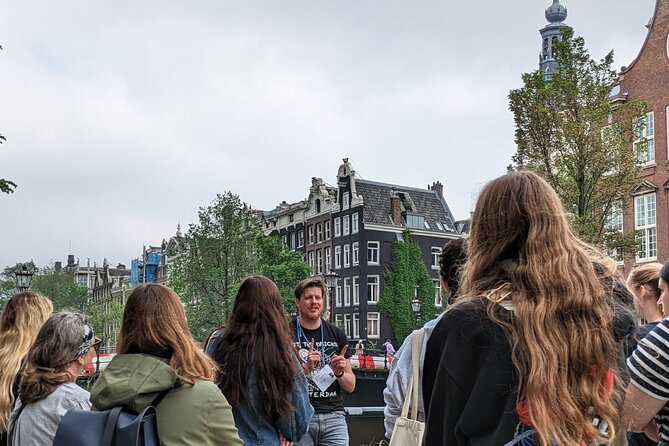
The final stop is Groenburgwal, where you see the bridge associated with a famous Monet view. You have about three minutes to take photographs and enjoy the canal scene.
This is a quick finish, but it works. After several serious historical subjects, the route ends with one of Amsterdam’s most attractive views. The stop is aimed at the person who wants a memorable image to take home, and the composition should be especially appealing if you enjoy canals, bridges, and reflections.
Do not expect a long photography session. Three minutes passes quickly, especially with a group. Have your phone or camera ready before you arrive.
What $30.04 buys you
At $30.04 per person, this tour offers a reasonable price for a two-hour introduction led by a local guide. You are paying for interpretation, organization, and the chance to connect ten places into one understandable story. The sights themselves are mostly public spaces, so the value is not in admission tickets.
I would judge the price by your plans. If you are new to Amsterdam and want a quick orientation, the cost is easy to justify. The practical advice may save time later, especially if the guide helps you decide which districts, museums, or transport options fit your schedule.
If you already know Amsterdam well, the value is less certain. The route moves quickly and does not provide long visits inside buildings. You may prefer a narrower tour focused on architecture, Jewish history, canals, or Dutch empire.
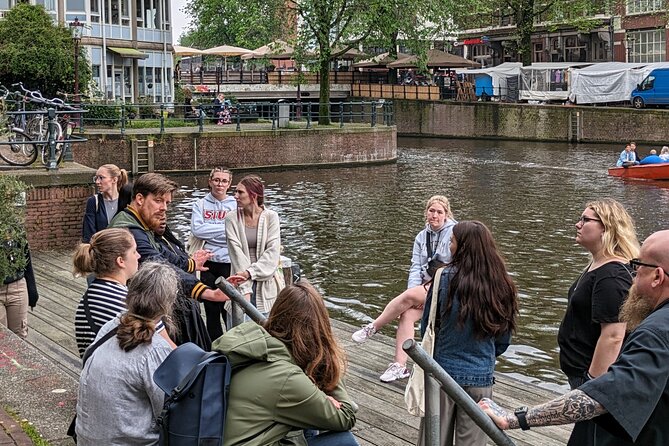
The group limit of 10 is important. A small group usually makes a walking tour more comfortable, especially at busy squares and narrow streets. It also gives you a better chance to hear the explanation and speak with the guide.
The experience includes an expert local guide, city tips, and discount codes for other tours if requested. Bottled water is not included, but refill points are available. Bring your own refillable bottle.
Timing, meeting point, and practical planning
The tour starts at 11:00 a.m. at Prinsenstraat 13, the Hit the Bricks Walking Tours location. Confirmation is provided when you book, and the meeting point is near public transportation.
You end at Dam Square. That is useful if you want to continue sightseeing instead of returning to the start. The square also gives you access to many forms of transport.
Wear shoes suited to two hours of walking and stay aware of bikes. Amsterdam’s streets can be busy, and the guide may need to keep the group moving between stops. A small group helps, but you still need to watch the route.
The tour requires good weather. If poor weather causes cancellation, you are offered another date or a full refund. You can cancel for a full refund up to 24 hours before the start time. Changes or cancellations inside that 24-hour window are not accepted.
Most people can participate, and service animals are allowed. The tour is offered in English and includes a mobile ticket.
Who should book this Amsterdam walk?
I would recommend it most strongly to first-time visitors, solo visitors who want an easy way to get oriented, and people who enjoy history delivered with humor. It is also a good choice if you want to understand the city before choosing which museums and historic sites deserve more of your time.
The tour suits you if you prefer variety. In two hours, you see canals, churches, civic buildings, old commercial headquarters, a royal palace, a historic neighborhood, and a quiet courtyard.
It may not suit you if you want detailed architecture, long photography stops, or extensive time inside attractions. The route is an overview, and the short pauses require you to listen while staying aware of the group.
The tone also matters. You should be comfortable with frank discussion of the Red Light District, religious conflict, Jewish persecution, war, empire, and colonial trade. These subjects are part of the city’s story, and the tour does not avoid them.
Should you book it?
Book this tour if you want a compact, human introduction to Amsterdam with practical help along the way. The best reasons are the small group, the range of subjects, and the balance between humor and difficult history. Axel and Mark are examples of the personable guide style you can expect, though your guide may be someone else.
Skip it if you already know central Amsterdam or want a specialist experience. For most first-time visitors, though, $30.04 is a fair price for two hours that can save you from seeing the city as a collection of disconnected pretty streets. Bring water, wear good shoes, and keep your camera ready for the Monet bridge.
FAQ
How long does the Amsterdam History Walking Tour last?
The tour lasts approximately two hours.
What time does the tour start?
The tour starts at 11:00 a.m.
Where does the tour begin and end?
It begins at Hit the Bricks Walking Tours, Prinsenstraat 13, Amsterdam. It ends at Dam Square, about two minutes’ walk from the starting area.
How large is the tour group?
The activity has a maximum of 10 travelers.
Is admission to the Royal Palace included?
No. Admission to the Royal Palace is not included. The walking tour makes an exterior stop there.
Is bottled water provided?
No. Bottled water is not included. Several stops have places to refill a water bottle, so bring a refillable bottle.
What happens if bad weather cancels the tour?
If the tour is canceled because of poor weather, you can choose another date or receive a full refund. You can also cancel up to 24 hours before the start time for a full refund.
More 2-Hour Experiences in Amsterdam
- Amsterdam: 2-Hour Canal Cruise incl. Drinks & Dutch Snacks
★ 5.0 · 594 reviews - Amsterdam 2-hour Private Canal Cruise with Live Guide and Drinks
★ 5.0 · 296 reviews - Utrecht 2-Hour Walking Tour | Discover The City With A Local
★ 5.0 · 138 reviews - Amsterdam 2-Hour Evening Cruise With Live Guide and Bar
★ 5.0 · 134 reviews
More History Walks around Amsterdam
- Rotterdam: Kinderdijk UNESCO World Heritage Entry Ticket
★ 4.6 · 1,477 reviews - The Hague: Hop-on Hop-off Old-Fashioned Heritage Tram Tour
★ 4.4 · 1,083 reviews - Rotterdam: Harbor Cruise on a Historic Ship
★ 4.2 · 812 reviews - Leiden: Cruise through the Historic City Center with Guide
★ 4.6 · 445 reviews
Just added around Amsterdam
- Amsterdam: Food and Canal Tour★ 4.6 · 22 reviews
- Segway City Tours Amsterdam★ 4.3 · 23 reviews
- Amsterdam Canal Cruise in Classic Salon Boat With Drinks and Cheese★ 4.0 · 22 reviews
- Discover Deventer with an Outside Escape city game tour!★ 4.5 · 23 reviews
- Historical Walking Tour, private with local Dutch guide★ 5.0 · 23 reviews
- Utrecht Food Tour on a Bicycle with local guide★ 5.0 · 23 reviews
- Amsterdam: Captain For a Day 2-Hour Boat Rental★ 4.9 · 23 reviews
- Amsterdam Small-Group Breakfast Morning Cruise★ 5.0 · 23 reviews
Walking Tours in Amsterdam, compared.
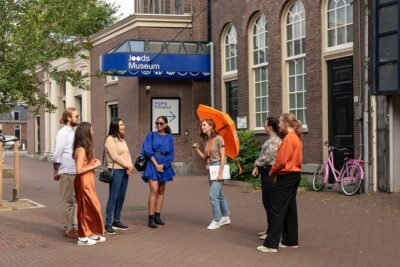
Anne Frank’s Story – Guided Walking Tour through Amsterdam
Read our review →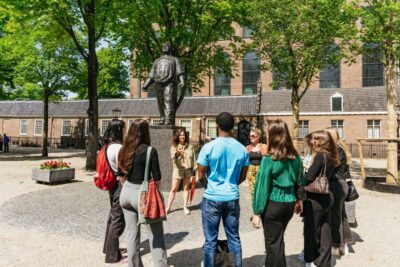
Life of Anne Frank and World War II Walking Tour
Read our review →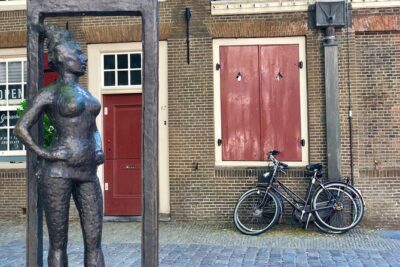
Absolutely Amsterdam – the Essential Introductory Walking Tour
Read our review →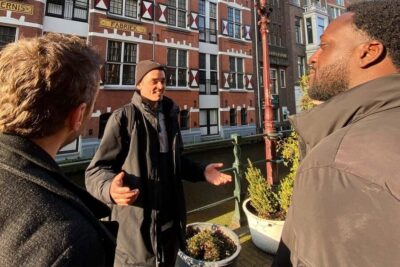

Anne Frank Walking Tour – Guided in EN/DE/IT/ES
Read our review →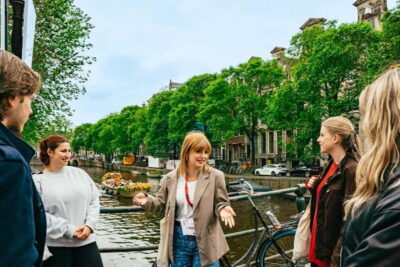

Anne Frank Walking Tour Amsterdam Including Jewish Cultural Quarter
Read our review →Browse the lists this tour appears in