
Reviewed · THE HAGUE TOURS
Surfing at The Shore in The Hague
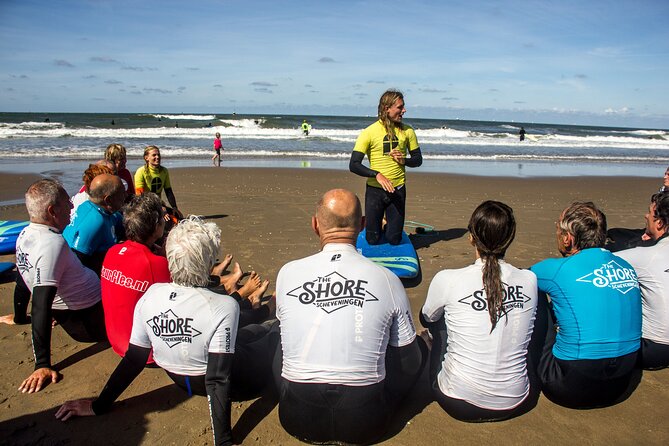
The best part of this experience is its small six-person maximum per instructor, which gives a first-time surfer a fair chance to get help instead of waiting through a crowd. You begin on Scheveningen’s broad sandy beach, learn the basic movements on land, then take a soft board into the North Sea to try catching a wave.
I like that the board, wetsuit, and personal skillsheet are included, so you do not need to arrive with specialist gear. I also like the friendly, patient teaching style associated with instructor Nils, who is described as giving clear explanations and encouragement. The main drawback is timing: lessons run only from April 1 through October 24, and the sea must provide suitable conditions.
In This Review
- Key points at a glance
- Starting at Scheveningen Beach
- Learning the basics before the water
- Taking the soft board into the North Sea
- What the two-hour format really gives you
- Choosing the right session time
- Is the $45.77 price fair?
- Who will enjoy this lesson most?
- Booking, cancellations, and bad weather
- A practical plan for the rest of your day
- Should you book Surfing at The Shore?
- FAQ
- Where does the surfing lesson begin and end?
- How long does the experience last?
- How many people are in each group?
- Is surfing equipment included?
- When does the activity operate?
- What happens if the weather or waves are unsuitable?
- Can I cancel for a refund?
Key points at a glance
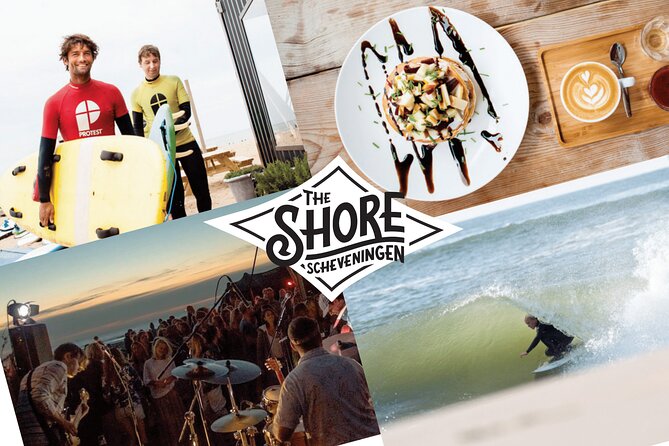
- Two hours at Scheveningen Beach: The lesson begins and ends at The Shore, Strandweg 2.
- Small classes: Each instructor works with no more than six people.
- Beginner-friendly equipment: A soft board and wetsuit are supplied.
- Certified instruction: You learn basic surfing skills before entering the water.
- Seasonal schedule: Sessions operate from April through October, with several times each day.
- Weather backup: Poor conditions can mean a new date, a refund, or stand-up paddleboarding or skating.
Starting at Scheveningen Beach

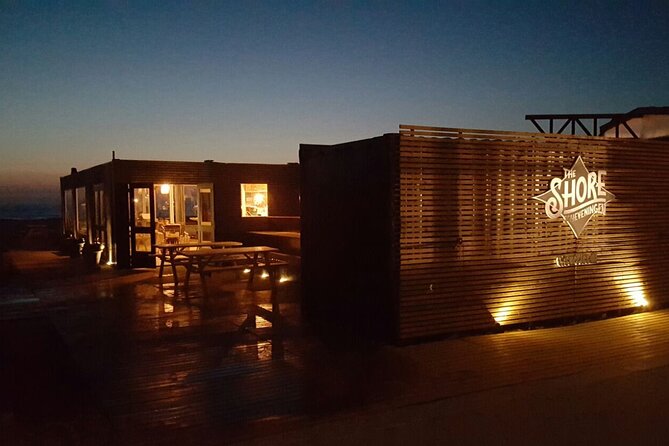
The Shore surf school sits at Strandweg 2 in Scheveningen, the seaside district of The Hague. This is not a remote beach lesson that requires a long trip outside the city. You meet at the surf school, receive your equipment there, and return to the same point when the two-hour session ends.
Scheveningen has a modern resort feel, with a broad sandy beach and plenty of places to eat and drink. That makes the setting useful for a half-day plan. You can schedule the lesson, stay by the sea afterward, or buy food and drinks at The Shore’s organic cafe or elsewhere along the waterfront.
The meeting point is especially convenient if you are already visiting The Hague. The activity is near public transportation, though hotel pickup and drop-off are not included. You should plan to make your own way to Strandweg 2 and allow enough time to find the surf school before your start time.
The school operates from April 1 to October 24. That seasonal limit matters. Scheveningen may be a popular beach destination, but this particular lesson is not presented as a winter activity. If your visit falls outside those dates, do not assume the school will be open for this experience.
A few more The Hague half-days to weigh up
- The Hague: Mauritshuis Entrance Ticket
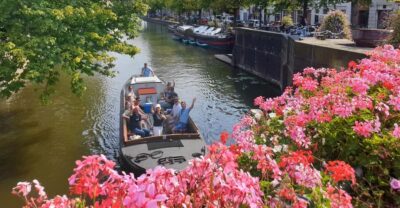
★ 4.7 · 2,706 reviews - The Hague: City Canal Cruise
★ 4.6 · 2,024 reviews - The Hague: Madurodam Miniature Park Entry Ticket
★ 4.6 · 1,559 reviews
Learning the basics before the water
Your session lasts about two hours, and the lesson begins on the sand. This is where you learn the basic body position and movements needed to get from lying on the board to standing on it. That ground work may feel simple, but it is valuable for a first lesson because you can concentrate on the sequence without also handling moving water.
The instructor is certified and teaches in a fun, safety-minded way. One instructor identified as Nils is described as explaining the essential steps clearly and offering praise when a learner struggles. That kind of encouragement matters more than polished technique during a first attempt. Surfing asks you to repeat the same movement several times, and a calm teacher can keep the lesson from becoming discouraging.
The included personal skillsheet is another useful touch. It gives you something to take away from the lesson, rather than leaving you with only a vague memory of what to do next time. The available information does not specify its exact format or how much detail it contains, so treat it as a learning aid, not a full training course.
You will use a soft board, the standard practical choice for beginners. It is more forgiving than a hard board and suited to learning the basics in a supervised setting. The supplied equipment is reported to be in good condition, including both the boards and wetsuits.
Taking the soft board into the North Sea
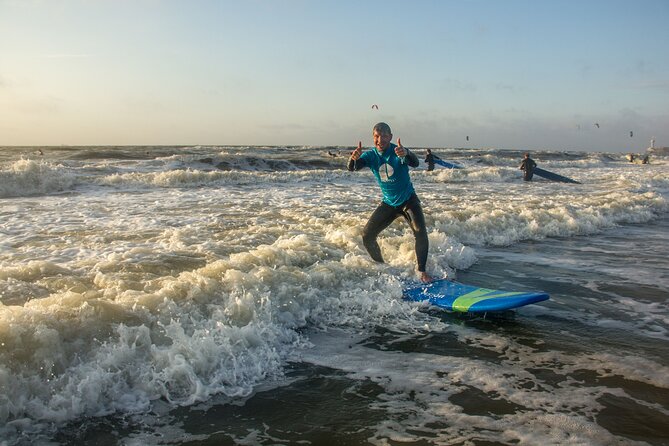
Once the land instruction is finished, you carry your board into the water and practice catching waves. This is the moment the lesson becomes less predictable. The North Sea is not a swimming pool, and conditions can change enough that the instructor may spend part of the session helping you read the water and choose a suitable wave.
The goal is not to become an accomplished surfer in two hours. A realistic aim is to understand the basic position, learn how to handle the board, and get a few chances to stand up or catch a small wave. Some people may manage more than that, while others will spend most of the lesson getting used to the timing and balance.
That uncertainty is part of the experience, but it is also the reason the school requires favorable wave conditions. If the weather or sea does not cooperate, the activity may be canceled. You are then offered an alternative date, a full refund, or another activity, such as stand-up paddleboarding or skating.
The small group helps here. With no more than six students assigned to an instructor, you should receive more attention than you would in a large beach class. You will still share the lesson, so it is not private coaching, but the ratio is well suited to beginners who need several corrections and repeated attempts.
What the two-hour format really gives you
Two hours is enough for an introduction, but not enough to cover every part of surfing. You will spend time getting equipped, learning on the beach, walking into the water, trying the technique, and receiving corrections. That leaves a useful but limited amount of time for actual wave practice.
This format works best if you want to test surfing without committing to a full course. You get a clear introduction and a chance to decide if the sport suits you. If you already surf regularly, the lesson may feel too basic, unless you mainly want equipment and a local session.
The school allows you to rent surfing equipment after the lesson, so you can stay in the water longer if you have the energy and confidence. That rental is not included in the lesson price. You should ask The Shore for the current rental terms and available equipment when arranging the session, since those details are not provided here.
An extra rental can make the experience better value for someone who catches the surfing bug quickly. It is less useful if you are visiting Scheveningen for only a short time or if the lesson leaves you tired. The initial two hours should be viewed as an introduction, not as a guaranteed route to independent surfing.
Same city, a completely different afternoon:
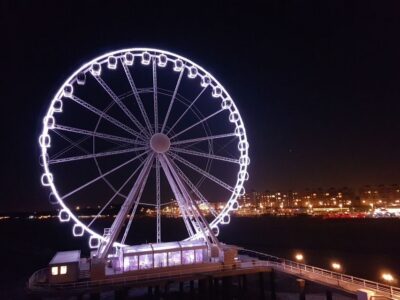
- The Hague: The Pier SkyView Ticket with Drink and Snack
★ 4.4 · 1,398 reviews - The Hague: Hop-on Hop-off Old-Fashioned Heritage Tram Tour
★ 4.4 · 1,083 reviews - The Hague: Escher in The Palace Museum Ticket
★ 4.6 · 896 reviews - Oranjehotel World War II Prison Entrance Ticket
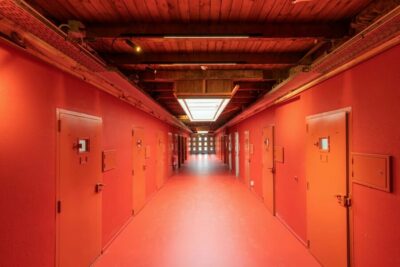
★ 4.6 · 708 reviews
Choosing the right session time
During the high season, from May through August, weekday lessons run at 11 am to 1 pm, 2 pm to 4 pm, and 7 pm to 9 pm. Weekend choices are broader: 10 am to noon, 1 pm to 3 pm, 3 pm to 5 pm, and 5 pm to 7 pm.
In the low season, April and September through October, weekday sessions are offered from 11 am to 1 pm, 2 pm to 4 pm, and 5 pm to 7 pm. Weekend hours remain the same as in high season.
You are asked to state your preferred time when joining the lesson. That preference is useful, but it should not be treated as a promise until the school confirms the session. Wave conditions may affect the final plan.
I would choose a late morning or early afternoon session if you want to combine surfing with sightseeing in The Hague. A 7 pm weekday slot in summer gives you more time in the city first, but you should remember that the activity still depends on conditions. Weekend sessions offer the widest choice, though they may also be the most popular.
The seasonal schedule is worth checking before you build your day around the lesson. A winter visit cannot rely on this activity being available, and an old booking page or third-party calendar may not reflect the operating dates.
Is the $45.77 price fair?
At about $45.77 per person, the price includes the two-hour lesson, board, wetsuit, personal skillsheet, and all taxes, fees, and charges. For someone starting from zero, that is a reasonable package because the cost of renting a board and wetsuit separately is not added to the initial lesson.
The value comes mainly from the equipment and group size. A large class with supplied gear could offer a cheaper introduction, but it might give you less individual help. Here, the six-person maximum per instructor makes the price easier to justify, especially if you want instruction rather than simply time on the beach.
The price does not include food, drinks, transportation, hotel pickup, or any rental after the lesson. The Shore’s cafe can handle refreshments after your session, but you pay separately. You should also allow for the possibility that you will want extra equipment rental, since two hours may leave you eager for more.
For a first taste of surfing during a Hague visit, I see the price as fair. It is less compelling for experienced surfers who already own equipment and know the basics. In that case, a simple rental may be more suitable, if available for your dates.
Who will enjoy this lesson most?
This activity is aimed squarely at beginners. You do not need to arrive with surfing experience, and most people can participate. The certified instructor, soft board, wetsuit, and beach-based teaching make the setup approachable.
It suits you if you want:
- A first attempt at surfing in a supervised setting
- A short outdoor activity during a stay in The Hague
- Equipment included in the initial cost
- A small group instead of a crowded class
- The option to continue with a rental afterward
It may not suit you if you want private coaching, a full multi-day course, or a guaranteed number of successful rides. Surfing depends on balance, timing, and sea conditions. Even with a good instructor, your first session may involve more falling than standing.
The activity also requires a degree of flexibility. The school can cancel when conditions are poor, and the replacement options may change your plans. That is a sensible safety policy, but it means you should avoid booking the lesson immediately before an important train, flight, or timed attraction.
Service animals are allowed, and the activity is near public transportation. The provided information says most people can participate, but it does not give detailed guidance about mobility access, changing facilities, or specific physical requirements. If you have a concern in those areas, contact The Shore before booking.
Booking, cancellations, and bad weather
You receive confirmation at the time of booking, and the experience offers free cancellation up to 24 hours before the scheduled start. Cancel at least 24 hours ahead to receive a full refund.
Changes or cancellations made within 24 hours are not accepted for a refund. The cut-off uses local time in The Hague, so check the exact deadline rather than relying on your departure time or home time zone.
Weather-related cancellation works differently. If poor weather or poor wave conditions stop the lesson, you are offered another date, a refund, or an alternative activity. The alternatives listed are stand-up paddleboarding or skating.
That policy protects you from losing money when the sea is unsuitable, but it does not guarantee that an alternative will fit your schedule. If the lesson is a key part of your visit, leave some room in your itinerary for a new date.
A practical plan for the rest of your day
The lesson starts and finishes at the same beach location, so you can keep the rest of your day simple. Plan your route to Scheveningen, complete the lesson, then decide if you want food, drinks, or more time beside the sea.
The Shore’s organic cafe provides a convenient place to buy refreshments after the lesson. Coffee and tea are not included, and food and drinks are purchased separately. That is a small point, but you should expect to pay for anything you want after the session.
If you plan to rent equipment after class, ask about it before the lesson ends. You will then know if the right equipment is available and how long you can keep it. Do not assume the post-lesson rental is part of the $45.77 price.
Scheveningen also works well as a change of pace from museums and city streets. You get an active outing without leaving The Hague, and the beach setting gives the experience a local seaside character rather than making it feel like a standard indoor class.
Should you book Surfing at The Shore?
Book it if you want a low-commitment first surf lesson with equipment included and a maximum of six students per instructor. The certified teaching, soft boards, wetsuits, and option to rent afterward make it a sensible introduction for beginners.
I would be especially comfortable recommending it to someone staying in The Hague between April and October who can keep their schedule flexible. The price is reasonable for the instruction and equipment, and the small class improves the odds of receiving useful personal feedback.
Think twice if your visit is in winter, if you need a guaranteed activity in fixed weather, or if you already know how to surf. For everyone else, this is a practical way to meet the North Sea on active terms, with enough support to make a first attempt feel manageable.
FAQ
Where does the surfing lesson begin and end?
The lesson begins at The Shore, Strandweg 2, 2586 Den Haag, Netherlands, in Scheveningen. It ends back at the same meeting point.
How long does the experience last?
The surf lesson lasts approximately two hours.
How many people are in each group?
Each surf instructor teaches a maximum of six people.
Is surfing equipment included?
Yes. The price includes a surfboard, wetsuit, and personal skillsheet, along with taxes, fees, and charges.
When does the activity operate?
The experience operates from April 1 through October 24. Session times vary between the high season from May through August and the low season in April and September through October.
What happens if the weather or waves are unsuitable?
You can choose an alternative date, receive a refund, or take an alternative activity such as stand-up paddleboarding or skating.
Can I cancel for a refund?
You can cancel up to 24 hours before the experience start time for a full refund. Cancellations or changes made less than 24 hours before the start are not accepted for a refund.
Just added around The Hague
- 3 Course Walking Dinner in Delft with Guided Tours in Between★ 5.0 · 3 reviews
- Private Tour of Vermeer’s Delft + Tickets to Vermeer Museum★ 5.0 · 3 reviews
- Private Tour of The Hague, Delft and Rotterdam with Lunch★ 5.0 · 3 reviews
- Discover Historical Delft with an Audio Guide★ 5.0 · 3 reviews
- The Hague Self-Guided Audio Tour★ 5.0 · 3 reviews
- Surprise Walk of The Hague with a Local★ 4.5 · 3 reviews
- Private Tour of Rotterdam and The Hague including Transfer★ 5.0 · 3 reviews
- Delft: City Walk with Audio Guide in 7 Languages on your Phone★ 5.0 · 4 reviews
The Hague Tours, compared.



Hop-on Hop-off Old-Fashioned Heritage Tram Tour
Read our review →
Oranjehotel World War II Prison Entrance Ticket
Read our review →
Browse the lists this tour appears in