
Reviewed · AMSTERDAM ARCHITECTURE TOURS
Rotterdam Must Do Tour: Highlights, History, WW2 and Architecture
Rotterdam’s story is written in concrete, steel, wood, and glass. This two-hour walking tour links the city’s wartime destruction with the bold rebuilding that followed, taking you from Rotterdam Centraal to the Cube Houses, Markthal, Oude Haven, and other major sights.
I like the route for two clear reasons: the WWII and reconstruction context gives the architecture real meaning, and the small group limit of 15 should make it easier to ask questions. The price, about $29.41 per person, is also fair for a guided introduction to a city that can feel scattered at first.
The main caution is time. Two hours is enough for an excellent overview, not a slow examination of every building. One person found the tour rushed after a delayed cruise arrival, while another felt a guide did not explain the Markthal and nearby buildings in enough detail. Guide quality and pace may vary.
In This Review
- Key points before you book
- Why Rotterdam makes such a good walking-tour subject
- Starting at Rotterdam Centraal and the Groot Handelsgebouw
- West-Kruiskade and the Lijnbaan
- Crossing the Luchtsingel into a changing district
- The Nieuwe Delftse Poort and Rotterdam’s lost medieval center
- The Laurenskerk, Rotterdam’s medieval survivor
- Markthal: the tour’s biggest visual payoff
- Oude Haven and the Cube Houses
- How the guides shape the experience
- Price, pace, and who gets the best value
- Should you book the Rotterdam Must Do Tour?
- FAQ
- How long is the Rotterdam Must Do Tour?
- Where does the tour start?
- Where does the tour end?
- What language is the tour offered in?
- How many people can join the tour?
- Are food and drinks included?
- Can I enter the Laurenskerk?
- What happens if I need to cancel?
Key points before you book
- Rotterdam’s rebuilding story: Learn how the 1940 bombing reshaped the city and led to landmarks such as the Lijnbaan and Groot Handelsgebouw.
- A strong architecture route: See the Cube Houses, Markthal, Luchtsingel, Rotterdam Centraal, and other striking modern buildings.
- Small-group format: The maximum group size is 15, a useful middle ground between a private walk and a large city crowd.
- Several guide styles: Edwin, Susan, Michel, Ed, John, Tony, and Stephan have led tours, with praise especially focused on clear history and personal storytelling.
- Central start point: Meet at Stationsplein 10 outside Rotterdam Centraal, then return to the same meeting point.
- Good first look, not a full museum visit: Food, drinks, and interior admissions are not included, though the Laurenskerk can be entered free of charge.
Why Rotterdam makes such a good walking-tour subject
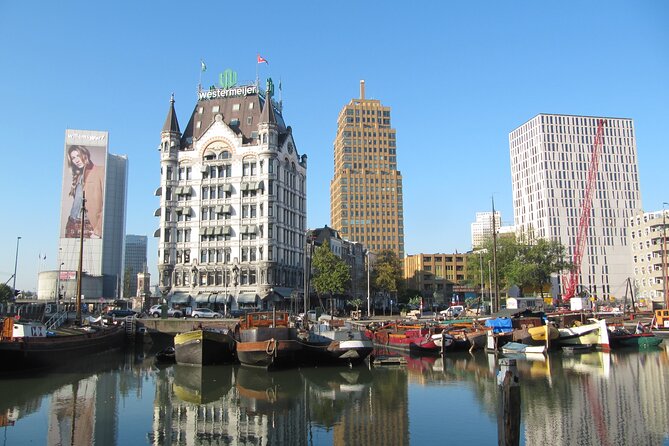
Rotterdam is not a city that reveals itself in one postcard view. Much of the central area was destroyed during the Second World War, and the rebuilding favored modern planning over a careful return to the old street plan.
That gives the city a look unlike Amsterdam, Delft, or Utrecht. You will see wide streets, large-scale buildings, experimental housing, public art, and a busy port city determined to move forward. The tour’s best feature is the way it connects those pieces.
A guide can point out why the Lijnbaan matters, not just where to shop. You can see how the Groot Handelsgebouw represented a fresh start after the bombing, then compare that early postwar work with the playful design of the Cube Houses and the giant arch of the Markthal.
The tour also includes small details that are easy to miss on your own. The Nieuwe Delftse Poort, for instance, is not the original medieval gate. The reconstructed steel version sits near its former location, offering a reminder that Rotterdam’s old city survives in fragments, copies, and memories as much as in original buildings.
More Architecture Tours in Rotterdam
- Rotterdam: Architectural Highlights Guided Walking Tour
★ 4.8 · 215 reviews - Rotterdam Walk: Hilights, Gems, Architecture & WWII | 2 or 3hrs
★ 5.0 · 149 reviews - Rotterdam Architecture Highlights Walking Tour
★ 5.0 · 66 reviews
Starting at Rotterdam Centraal and the Groot Handelsgebouw
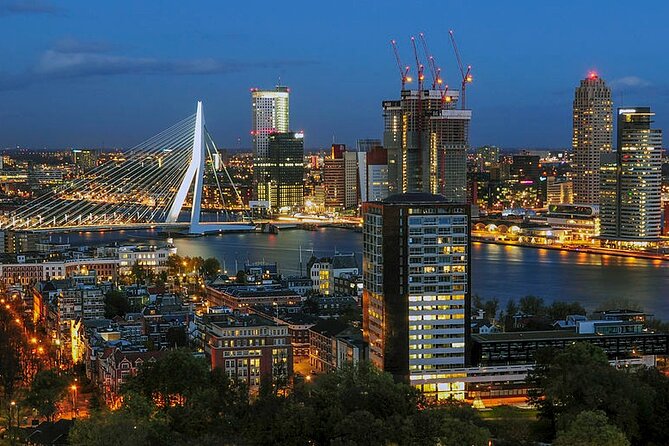
The meeting point is Stationsplein 10, by Rotterdam Centraal Station. This is a practical place to begin, especially if you arrive by train or are using the station as your base for a day in Rotterdam.
The first part introduces the city’s architecture through the station itself. Rotterdam Centraal is a modern gateway, and the guide uses it to set up the larger story of a city shaped by rebuilding and new design.
From there, the walk reaches the Groot Handelsgebouw. Completed in 1953, it was one of the first major buildings constructed after the wartime bombing. That date matters. It places the building at the start of Rotterdam’s postwar recovery, before the city became known for the more daring structures seen today.
I would pay attention here to the contrast between purpose and appearance. The Groot Handelsgebouw was built for business and commerce, but it also became a symbol of a city trying to function again. A guide such as Edwin, who has been praised for explaining reconstruction after WWII, can make this part much more than a quick photograph.
The stop is listed at about 10 minutes, so do not expect an extended architectural lecture. It works best as a short introduction to the city’s recovery.
West-Kruiskade and the Lijnbaan
The route continues through the West-Kruiskade and Kruiskade shopping streets. These streets add a more everyday side of Rotterdam after the opening architectural lesson.
You will then reach the Lijnbaan, the city’s main pedestrian shopping street. It opened in 1953 in the new shopping district, after the old commercial center was destroyed in the bombing.
The Lijnbaan is important because it was not simply rebuilt as another traditional street. It was designed as a pedestrian shopping area, part of a new postwar vision for the center. This makes it a useful place to consider how planning changed after the war.
The stop may feel less dramatic than the Cube Houses or Markthal, but it helps explain the city’s structure. I like this section because it shows that Rotterdam’s modern identity is not only about unusual buildings. It is also about how people move through public space and how commerce was reorganized.
If you want time to shop, you will need to return later. The tour is designed for orientation, not browsing.
Crossing the Luchtsingel into a changing district
The Luchtsingel is one of the route’s more unusual stops. This wooden pedestrian bridge runs for 390 meters and connects Rotterdam North with the center.
Its value is not just visual. The bridge helped connect an area that had suffered from vacancy and neglect with the more active central districts. On a short tour, it gives you a glimpse of how Rotterdam uses public design to repair connections between parts of the city.
The wooden structure also breaks up the hard concrete and glass associated with central Rotterdam. It is a good place to ask how a city can bring life back to a neglected area without relying only on large commercial buildings.
The listed visit is around 10 minutes, so you may walk only part of the bridge or use it as one section of a longer route. The exact pace likely depends on the guide and group. Susan has been praised for making the city feel personal and for pointing out useful shopping ideas, while John has been noted for his pride in Rotterdam and enthusiasm for its stories. Those personal touches can make a short stop more memorable.
More Sightseeing Tours in Rotterdam
- Rotterdam: Harbor Sightseeing Cruise
★ 4.3 · 7,599 reviews - Rotterdam: 1-Hour Sightseeing Splash Tour
★ 4.5 · 3,299 reviews - Rotterdam: 2.5-Hour Highlights Bike Tour
★ 4.7 · 399 reviews - Rotterdam: RIB Speedboat Sightseeing Cruise
★ 4.8 · 192 reviews
The Nieuwe Delftse Poort and Rotterdam’s lost medieval center
The Nieuwe Delftse Poort offers a compact lesson in what Rotterdam lost. The original Delftse Poort was a city gate, with the last version built in 1764. About fifty years later, a steel reconstruction designed by artist Cor Kraat was erected close to the original site.
That detail is worth knowing before you arrive. You are not looking at an intact old gate. You are looking at a modern reconstruction that keeps the memory and location of a vanished landmark alive.
For me, this is where the tour’s title makes sense. WWII is not treated as a separate history stop. It is tied to the city’s buildings, missing landmarks, and later decisions about how Rotterdam should look.
The stop is brief, around 10 minutes. If you want a detailed account of the original gate, ask your guide directly. The small group format should make that possible, provided the pace is not too quick.
The Laurenskerk, Rotterdam’s medieval survivor
The Grote of Sint-Laurenskerk, usually called the Laurenskerk, is the only remaining part of medieval Rotterdam’s city center. After so much modern construction, its presence is powerful.
The church is Protestant and can also be entered free of charge. That makes it one of the best opportunities on the route to pause inside an older building rather than viewing the city only from the pavement.
The listed stop is about 10 minutes, which is enough for a short look but not a full visit. If the church is open when you arrive, I would take advantage of the free entry, even if that means returning after the tour for a longer visit.
This stop gives the walk a needed change of mood. The early route focuses on rebuilding, shopping, and public design. The Laurenskerk brings you back to the city that existed before the bombing, or at least to the one surviving structure that helps you imagine it.
Markthal: the tour’s biggest visual payoff
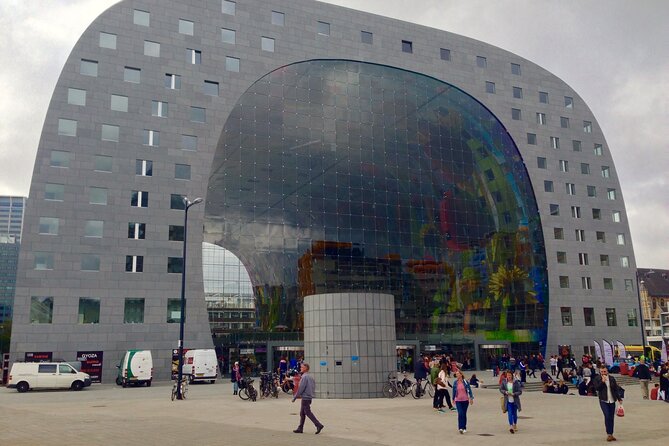
The Markthal is likely to be one of the most memorable stops. Designed by MVRDV, it has a large horseshoe-shaped arch clad in gray natural stone.
Inside, the ceiling carries an enormous artwork filled with enlarged fruits, vegetables, seeds, fish, flowers, and insects. Even if you are not interested in architecture, the scale makes the building hard to ignore.
The Markthal is also a food market with restaurants, but food and drinks are not included in the tour price. You can look around during the walk, then decide if you want to return for a meal or snack.
The stop is listed at about 30 minutes, longer than most of the other stops. That gives you more time to take in the interior, but expectations matter. This is still a walking tour, not a guided food tasting or a detailed architectural tour of MVRDV’s design.
One weakness reported about the experience is that a guide did not explain the Markthal and nearby buildings in enough depth. If the building interests you, ask about its horseshoe form, its artwork, and how the market fits into Rotterdam’s modern center. The guide may offer more detail when prompted.
Oude Haven and the Cube Houses
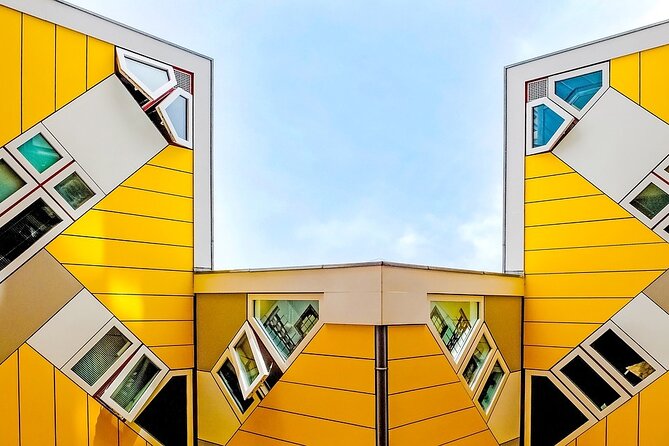
The route ends its main sightseeing with the Oude Haven, or Old Harbour, a historic area on the north side of the Maas. It has become a popular city-center area, and it is home to Rotterdam’s famous Cube Houses.
The contrast here is excellent. The harbor suggests Rotterdam’s older working identity, while the Cube Houses represent its willingness to experiment with housing and urban form.
The Cube Houses are one of the city’s signature sights, but a short exterior visit cannot explain every design choice. You will get the strongest value from this stop if you look beyond the novelty of tilted yellow cubes. Notice how the houses change your sense of walls, windows, streets, and ordinary domestic space.
The stop is listed at about 20 minutes. That is enough to see the complex and hear the basic story, but not necessarily enough for a long interior visit. The tour does not list an admission ticket to a Cube House museum or interior, so plan on seeing the area from the public route unless your guide says otherwise.
The Oude Haven also gives the walk a pleasant finish. After the broad avenues and large postwar buildings, this area brings water, older harbor associations, and a more social city setting into the picture.
How the guides shape the experience
The tour is sold as a local-guide walk, and the guide makes a real difference. Edwin has been praised for explaining Rotterdam’s history and architecture clearly, especially the city’s reconstruction after WWII. Michel has been described as informative and easy to get along with.
Susan’s style appears especially personal. She has been praised for making the city feel like a friend was showing it around, while also offering practical ideas about gifts and shopping. Ed has been noted for entertaining people with lesser-known facts, and John for his clear affection for Rotterdam.
Tony’s role in one delayed-arrival case also shows useful flexibility. When a cruise arrival ran late, he helped arrange a way for the person to reach the guide, Susan, and the shortened tour still covered most of the important sights at a faster pace.
That does not guarantee the same response in every situation. A separate account describes a changed starting point and a guide who gave too little detail at some stops. Confirm your meeting point and arrive early, especially if you have a ship, train, or other fixed departure.
Price, pace, and who gets the best value
At about $29.41 per person, the tour offers reasonable value if you want a guided overview rather than a private walk. You are paying for local narration, route planning, and the ability to connect places that may seem unrelated when visited alone.
The maximum group size is 15. That is small enough to feel more personal than a large coach excursion, but it is not the same as having a private guide. The tour also offers different start times, which helps if you are fitting Rotterdam between trains, a cruise schedule, or another activity.
I would book it if you have only one day in Rotterdam, especially early in your visit. The route gives you a useful map of the center and shows where you may want to return for food, shopping, church time, or a closer look at the buildings.
I would be more cautious if you want a slow architecture seminar. The two-hour format covers a lot of ground, and most stops are short. The tour is also less suited to someone who wants included food, museum entry, or extended time inside each landmark.
Most people can participate, the route is near public transportation, and service animals are allowed. Confirmation is provided at booking. Food and drinks are extra. Free cancellation is available up to 24 hours before the start time, but changes or cancellations inside that window are not refunded. The tour also requires a minimum number of participants, so a cancellation by the operator may lead to another date or a full refund.
Should you book the Rotterdam Must Do Tour?
Book this walk if you want Rotterdam’s main sights explained through war, rebuilding, and architecture, rather than collected as a series of quick photographs. The route is especially useful for first-time visitors, cruise passengers, and anyone who finds Rotterdam’s modern center hard to read without context.
The strongest parts are the postwar story, the variety of buildings, the small group limit, and the chance to see the Markthal, Luchtsingel, Laurenskerk, Oude Haven, and Cube Houses in one compact outing. The 4.8 rating and 95 percent recommendation figure also suggest a strong overall experience, though the lower-scoring account is a useful warning that guide style and detail can differ.
If you need a leisurely pace, have mobility concerns, or want a long visit inside the Markthal or Laurenskerk, use this as an introduction and plan extra time afterward. At $29.41, it is a sensible way to get your bearings fast, provided you accept that the city’s biggest stories will be told in broad strokes.
FAQ
How long is the Rotterdam Must Do Tour?
The tour lasts approximately two hours.
Where does the tour start?
It starts at Stationsplein 10, 3013 AJ Rotterdam, Netherlands, at Rotterdam Centraal Station.
Where does the tour end?
The activity ends back at the meeting point.
What language is the tour offered in?
The tour is offered in English.
How many people can join the tour?
The maximum group size is 15 travelers.
Are food and drinks included?
No. Food and drinks are not included in the tour price.
Can I enter the Laurenskerk?
Yes. You can also go inside the Laurenskerk for free.
What happens if I need to cancel?
You can cancel up to 24 hours before the experience start time for a full refund. Cancellations or changes made less than 24 hours before the start time are not refunded.
More Rotterdam Highlights Tours
- Rotterdam: Highlights & Gems Walking Tour with Dutch Local
★ 5.0 · 133 reviews - Rotterdam: City Highlights Guided Bike Tour
★ 4.8 · 112 reviews - Rotterdam Bike Tour – all the Highlights
★ 5.0 · 105 reviews - Dordrecht: Highlights and Hidden Gems Walking Tour
★ 4.7 · 84 reviews
More Architecture Walks in Rotterdam
- Amsterdam: Canal House Museum ‘Willet-Holthuysen’ Ticket
★ 4.3 · 194 reviews - The rise of Haarlem: Culture, History, Art and Architecture Walking Tour
★ 5.0 · 59 reviews - Learn to Make Dutch Pancakes in a Beautiful Amsterdam Canal House
★ 4.5 · 47 reviews - Amsterdam: Craft Dutch Pancakes in Charming Canal House
★ 4.6 · 41 reviews
Just added around Rotterdam
- Rotterdam: Breweries and Water Taxi Tour★ 4.7 · 23 reviews
- Rotterdam: National Museum of Photography Entrance Ticket★ 3.8 · 24 reviews
- Rotterdam Highlights Private Walking Tour★ 5.0 · 26 reviews
- Private Tour: Rotterdam Walking Tour Including Harbor Cruise★ 4.5 · 27 reviews
- Rotterdam Tour with Cube House Admission★ 4.4 · 27 reviews
- Cultural Walking Tour in Rotterdam★ 5.0 · 28 reviews
- Rotterdam: Food Tour by Bike★ 4.8 · 31 reviews
- Private Customizable Day Trip From Rotterdam★ 4.5 · 31 reviews
Amsterdam Architecture Tours, compared.
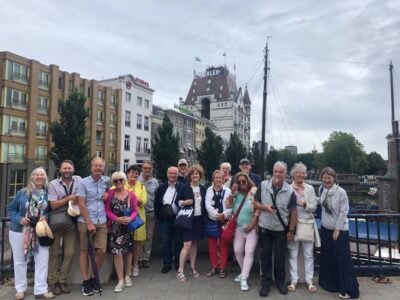
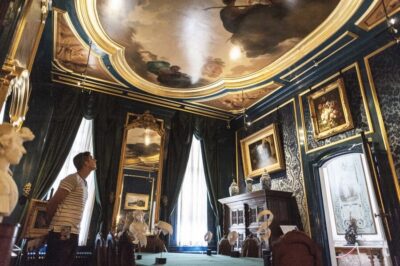
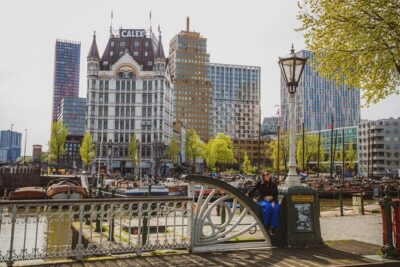
Rotterdam Walk: Hilights, Gems, Architecture & WWII | 2 or 3hrs
Read our review →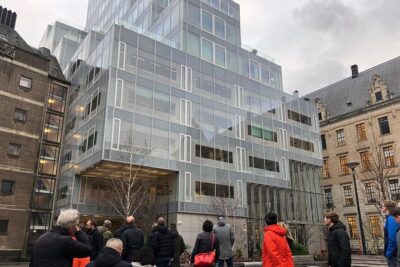
The rise of Haarlem: Culture, History, Art and Architecture Walking Tour
Read our review →
Learn to Make Dutch Pancakes in a Beautiful Amsterdam Canal House
Read our review →
Browse the lists this tour appears in