
Reviewed · AMSTERDAM ARCHITECTURE TOURS
The rise of Haarlem: Culture, History, Art and Architecture Walking Tour
Haarlem reveals itself best on foot, and this tour gives you more than a parade of pretty facades. Over two and a half hours, you move from the grand Grote Markt to quiet almshouse courtyards, windmills, museums, and wartime stories. Guide James Johnson brings along historical images on a tablet, a useful touch when old Haarlem is hard to picture from the street alone.
I like the small maximum of six people, which leaves room for questions and can turn the walk into a private-style experience. I also like the mix of architecture and human stories, from the Golden Age to the Dutch resistance and Corrie ten Boom.
The main catch is the distance: about 4 kilometers, or 2.5 miles, with little chance to sit down. Sunday visitors cannot enter the Hofjes, and the courtyards close at 5pm, so timing matters.
In This Review
- Key points to know before booking
- Why Haarlem makes such a good walking-tour subject
- Grote Markt and the Grote Kerk of Sint Bavo
- Haarlem’s architecture, read street by street
- The secret viewpoint and Haarlem’s visual character
- Molen Adriaan and the city’s working past
- Teylers Museum, the Frans Hals connection, and art in Haarlem
- Hofjes and the quiet side of Haarlem
- Haarlem during the Second World War
- How James Johnson shapes the experience
- Price, timing, and physical demands
- Who should book this Haarlem walk?
- Should you book The rise of Haarlem?
- FAQ
- Where does the tour begin?
- How long is the walking tour?
- How far does the group walk?
- What happens if I want to see a Hofje?
- Are museum and cathedral admissions included?
- What is the cancellation policy?
Key points to know before booking
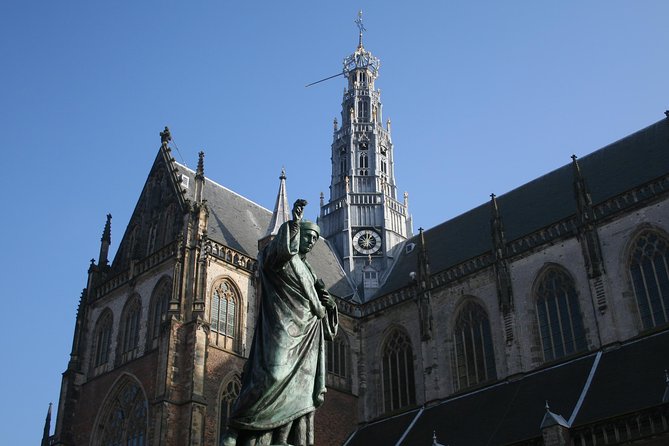
- Start at Grote Markt 17: The tour begins in the center of Haarlem, beside the city’s grandest square and the Grote Kerk of Sint Bavo.
- James Johnson leads the walk: He focuses on history, art, architecture, culture, and Haarlem during the Second World War.
- A tiny group changes the experience: With no more than six people, you can ask questions without shouting across a crowd.
- The Hofje visit depends on timing: Almshouse courtyards are closed to public viewing on Sundays and after 5pm.
- The tour covers 4 kilometers: The route is flat, but it is not a short introduction around one square.
- Museum interiors are not included: You can visit the Grote Kerk, Frans Hals Museum, or Teylers Museum separately if you want more time inside.
Why Haarlem makes such a good walking-tour subject
Haarlem is close enough to Amsterdam for an easy day trip, yet it has a calmer scale and a strong personality of its own. It was an old North Sea trading port, and its central streets still show the wealth, faith, craft, and civic ambition that shaped the city over many centuries.
That makes it a rewarding place for a walking tour. You are not simply looking at old buildings. You are learning why the buildings look different from one another, how religious change affected the city, and how Haarlem moved from its medieval beginnings into the Dutch Golden Age.
I particularly like the tour’s broad range. Some city walks stay with famous buildings and leave you with a blur of dates. This one connects architecture to daily life, painting, religion, local personalities, and the Second World War. It gives you a useful framework for exploring on your own afterward.
The walk begins at Grote Markt 17, right in Haarlem’s historic core. Several tour times are offered, so you can place it near the start of your stay and use James’s suggestions for later meals, drinks, museums, and sights.
More Walking Tours in Haarlem
- Haarlem: City Highlights Walking Tour
★ 4.5 · 32 reviews - Haarlem Old Town Private Walking Tour
★ 5.0 · 24 reviews - 2 Hours Walking Tour Throughout History & Highlights of Haarlem
★ 4.5 · 18 reviews
Grote Markt and the Grote Kerk of Sint Bavo
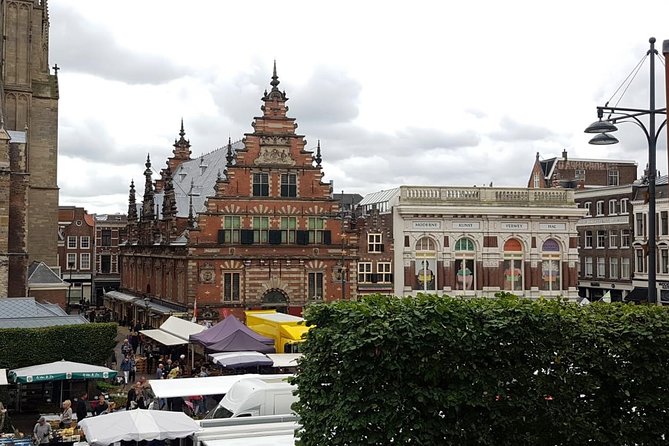
The Grote Markt is the natural opening scene. This large historic square gathers several of Haarlem’s most important civic and religious buildings, including the Grote Kerk of Sint Bavo and the Town Hall’s Gravenzaal.
Expect the guide to use the square as a visual introduction to Haarlem’s past. The buildings here help explain how the city’s religious and civic powers once shared the same center. Their scale also gives you a quick sense of Haarlem’s former importance as a commercial town.
The Grote Kerk is a major highlight from the outside, especially if you enjoy architectural details and photography. The walking tour does not include entry to the cathedral, so allow separate time if you want to see the interior. That is not a flaw in the tour, but it is worth knowing before you arrive. A guide can explain a building in context, but you may want a quiet visit inside afterward.
The square is also a practical meeting point. It is near public transportation, easy to identify, and convenient for continuing your day after the walk ends. The activity finishes at a different location, but the exact endpoint is not specified, so you should check your booking details before planning a tight connection.
Haarlem’s architecture, read street by street
One of the strongest reasons to choose this tour is James Johnson’s focus on architecture. He does not treat the buildings as decoration. He points out styles, changes, and details that are easy to miss when you walk through town alone.
Haarlem gives you several periods to compare. Medieval structures, Golden Age prosperity, later civic buildings, and canal-side homes all appear within a compact area. You may find yourself looking up at rooflines, doorways, brickwork, and formal facades with a better sense of what you are seeing.
James also uses a tablet to show photographs and historical material. That can be especially helpful when discussing buildings that have changed, streets that once looked different, or events that are not visible today. A before-and-after image often makes a stronger point than a long explanation.
This is a good match for you if you like learning how cities work. It is less suited to anyone who wants only a quick list of photo stops. The route covers many places, and the guide’s explanations are a central part of the experience.
The secret viewpoint and Haarlem’s visual character
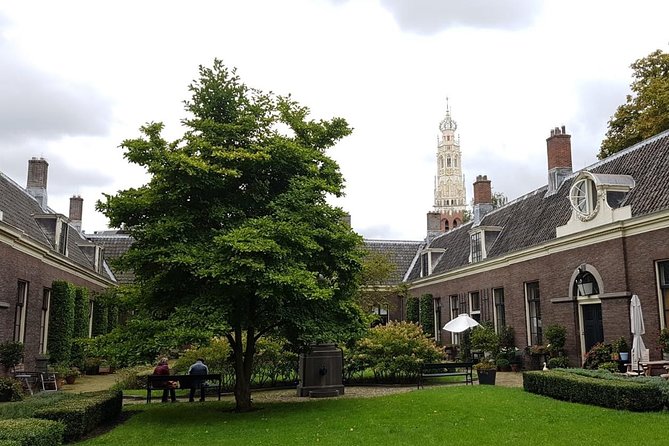
The tour includes a secret spot with wide views of Haarlem. The exact location is not given in the tour details, which is part of the appeal but also means you should not expect a named landmark or a formal observation deck.
This stop adds a change of pace after the close streets of the center. From a higher or more open position, you can better understand how the old town fits together. It is also useful for photography, especially if you want more than close-ups of canal houses and church details.
The viewpoint is one of the tour’s distinctive features because it is not simply another famous square. James also shares advice on places to eat, drink, and explore, so use this moment, or the walk afterward, to ask for suggestions that match your interests.
Do keep your expectations sensible. The tour promises a special viewing place, but not a particular height, panorama, or weather condition. In rain or low cloud, the view may be less dramatic. The walking experience still has value, but photographers should keep their plans flexible.
More architecture walks in Haarlem:
- Rotterdam: Architectural Highlights Guided Walking Tour
★ 4.8 · 215 reviews - Amsterdam: Canal House Museum ‘Willet-Holthuysen’ Ticket
★ 4.3 · 194 reviews - Rotterdam Walk: Hilights, Gems, Architecture & WWII | 2 or 3hrs
★ 5.0 · 149 reviews - Rotterdam Architecture Highlights Walking Tour
★ 5.0 · 66 reviews
Molen Adriaan and the city’s working past
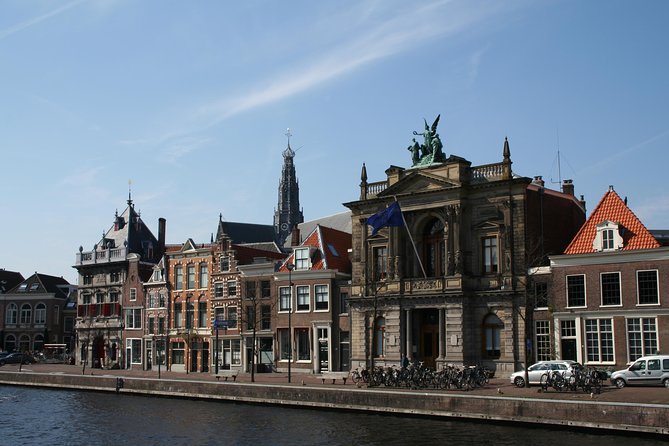
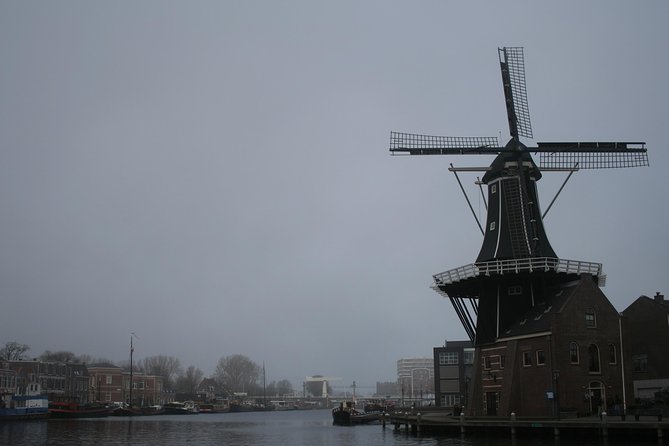
Molen Adriaan Windmill brings a familiar Dutch image into a broader story. It is not presented as an isolated postcard stop. Instead, it helps connect Haarlem’s identity to work, trade, water, and the practical systems that supported an old port city.
The windmill is also a useful contrast to the formal buildings around Grote Markt. Haarlem’s story is not only about churches, town halls, and wealthy merchants. It is also about production and the everyday economy that kept the city moving.
The tour does not include a separate admission ticket for the windmill, and the walk is built around outdoor visits and explanations. If you want to tour the interior, check separately for opening information. On this experience, the value comes from seeing the mill as part of Haarlem’s urban story.
Teylers Museum, the Frans Hals connection, and art in Haarlem
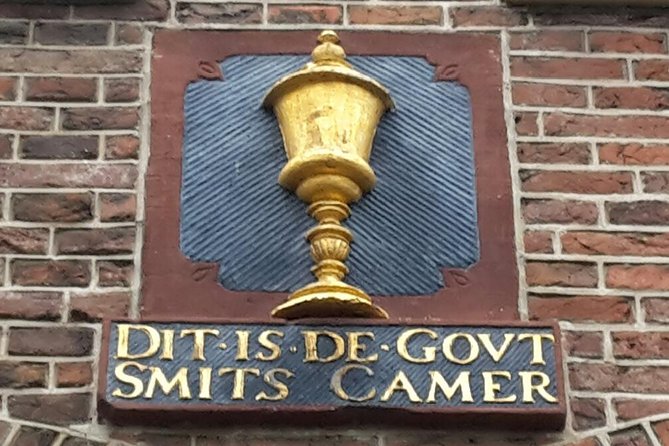
Haarlem has a strong artistic identity, and the tour gives art a proper place beside architecture and political history. Teylers Museum is one of the important stops or landmarks on the route. The city’s connection with painting is also discussed, including the world associated with Frans Hals.
The Frans Hals Museum is not included as an interior visit. You can add it independently if you want a longer look at Haarlem’s art. The walking tour helps you decide if that extra museum time fits your interests, rather than asking you to spend the entire day indoors.
That division works well for many people. A guide-led walk is best for connections and orientation, while a museum visit lets you set your own pace. You can stop in front of a painting, read labels, or return to a room without holding up the group.
If art and photography are your main interests, this tour gives you a useful starting point. You will see where the city’s artistic story fits into its streets and institutions. Just remember to budget separately for museum entry and time.
Hofjes and the quiet side of Haarlem
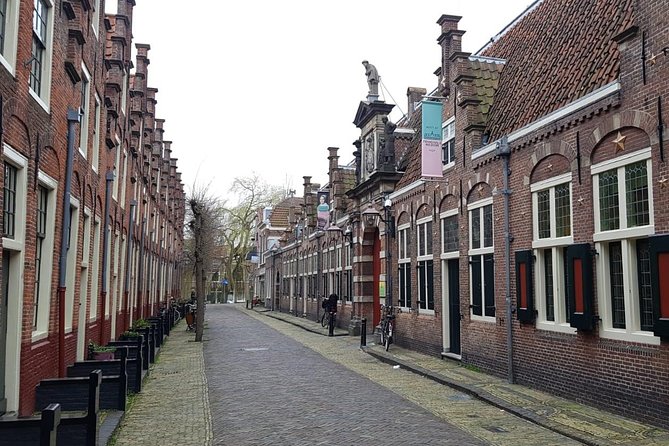
The Hofje, or almshouse courtyard, is among the most appealing parts of the route. Behind an unassuming entrance, these small compounds can contain a walled garden, tidy homes, and a sense of calm that feels far removed from the market square.
This is where the tour moves from grand public Haarlem to intimate everyday Haarlem. The courtyards tell you something about charity, community, and the way cities made room for people who needed support. They are also excellent places for architectural details and careful photographs.
There are two important restrictions. The Hofjes are closed for public viewing on Sundays, and they close daily at 5pm. The summer tours that begin at 5pm do not enter them. If this stop matters to you, book a weekday or Saturday time before 5pm.
The guide can still discuss Haarlem’s Hofjes when an interior visit is not possible, but that is not the same as walking through the garden. I would treat the schedule as a real booking decision, not a minor footnote.
Haarlem during the Second World War
The wartime section gives the tour emotional weight. Haarlem’s past is not limited to medieval trade and Golden Age art. James also explains the effect of Nazism on local people and brings attention to Dutch resistance stories.
A particularly memorable part for many visitors is the material connected with the women’s resistance movement and Corrie ten Boom. Her home and story offer a personal way into the period, making the history easier to grasp than a string of dates and military facts.
The tour may point out or discuss these places and stories, but it does not promise admission to every museum or home. The Corrie ten Boom House, for example, should be treated as a separate attraction unless your booking information says otherwise.
I value this part because it prevents Haarlem from becoming a pleasant but shallow old-town stroll. The city’s beautiful streets also witnessed fear, courage, and loss. Hearing that story while standing in the places connected with it gives the rest of the walk more depth.
How James Johnson shapes the experience
The guide is a major part of this tour’s appeal. James Johnson is described as a native English speaker, and his style combines clear explanations with humor, patience, and room for questions.
That matters in a group this small. You can ask why a building looks a certain way, request another example, or pause over a topic that interests you. A large group often turns a history walk into a one-way speech. Here, the format allows more conversation.
James’s strongest subjects are architecture, painting, political history, religious history, and Haarlem during the Second World War. He also offers practical local advice. One useful suggestion is Huis Barnaart, an Empire-style canal home from the 19th century. It requires a reservation, so ask about it early if you want to add it to your Haarlem plans.
He may also suggest Huis Bartolotti in Amsterdam, another historic canal home that requires advance booking. That tip is especially useful if Haarlem is part of a wider Netherlands itinerary.
The tone appears to suit curious adults who enjoy detail without needing an academic lecture. If you prefer a fast-paced tour with little explanation, this may feel slow. If you like asking questions and making connections, the small group is a real advantage.
Price, timing, and physical demands
At $55, the tour is not the cheapest way to see Haarlem, but the price is reasonable if you want a focused introduction from a specialist guide. You are paying for about two and a half hours, a maximum group of six, local recommendations, and a route that connects places you might not find on your own.
The value is strongest when you take it early in your stay. James’s advice can shape the rest of your visit, from museum choices to places for a beer afterward. A private walking tour would usually cost more, so a small shared group offers a useful middle ground.
The route covers about 4 kilometers and is generally easy and flat, but it is still a sustained walk over cobbled streets. It is not recommended if you have difficulty walking. Wear shoes with firm support, and bring rain protection. One tour continued successfully in rainy weather, but wet cobbles and changing conditions can affect comfort.
A mobile ticket keeps the booking simple. The tour includes the walk, an English-speaking certified guide, and fees and taxes. Tips are not included, so plan to tip separately if you feel the guide earned it.
Free cancellation is available up to 24 hours before the start time. Inside that window, the payment is not refunded and changes are not accepted.
Who should book this Haarlem walk?
I would choose this tour if you want to understand Haarlem rather than simply photograph it. It fits first-time visitors, day trippers from Amsterdam, architecture fans, art lovers, and anyone who enjoys a guide who can handle detailed questions.
It is also a good choice for solo visitors and couples. A group capped at six keeps the conversation personal, and in quieter seasons the group may be even smaller. That can create a private-tour feel without the full private-tour cost.
Families with young children may find the length and historical detail demanding, though the route itself is flat. Visitors using wheelchairs or anyone who finds cobbles difficult should ask for more specific access information before booking, since the tour is not recommended for people with walking difficulties.
Should you book The rise of Haarlem?
Book it if you want a well-rounded first look at the city, especially if art, architecture, and wartime history matter to you. James Johnson’s clear English, tablet images, local tips, and willingness to answer questions are the tour’s strongest assets.
Choose a morning or earlier afternoon departure if the Hofjes are a priority. Add separate time for the Grote Kerk, Frans Hals Museum, Teylers Museum, or Corrie ten Boom House, since the walking tour does not include every interior.
For $55, this is a sound investment in your first few hours in Haarlem. It gives you the stories behind the streets, then leaves you better prepared to explore at your own pace.
FAQ
Where does the tour begin?
The tour begins at Grote Markt 17, 2011 RG Haarlem, Netherlands.
How long is the walking tour?
The experience lasts approximately 2 hours and 30 minutes.
How far does the group walk?
The route covers about 4 kilometers, or 2.5 miles. It is generally flat, but the tour is not recommended for people who have difficulty walking.
What happens if I want to see a Hofje?
The Hofjes are closed to public viewing on Sundays and close daily at 5pm. Summer tours beginning at 5pm do not enter the Hofjes.
Are museum and cathedral admissions included?
No. The walking tour includes the guide, the walk, and fees and taxes, but admission to places such as the Grote Kerk or Frans Hals Museum is not included.
What is the cancellation policy?
You can cancel up to 24 hours before the start time for a full refund. Cancellations or changes made less than 24 hours before the experience are not accepted and are not refunded.
More History Walks around Haarlem
- Amsterdam Food and Cultural Tour with Tastings
★ 5.0 · 2,442 reviews - Rotterdam: Kinderdijk UNESCO World Heritage Entry Ticket
★ 4.6 · 1,477 reviews - The Hague: Hop-on Hop-off Old-Fashioned Heritage Tram Tour
★ 4.4 · 1,083 reviews - Rotterdam: Harbor Cruise on a Historic Ship
★ 4.2 · 812 reviews
Just added around Haarlem
- Haarlem Highlights Bike Tour★ 4.1 · 26 reviews
- Highlight Bike Tours Haarlem★ 4.5 · 26 reviews
- Guided Food Tour Haarlem (4-8 guests) – Old City★ 5.0 · 45 reviews
- Haarlem: Self-Drive Private Electric Boat Rental★ 4.7 · 59 reviews
- Haarlem: De Adriaan Windmill Tour + Open Canal Cruise★ 4.6 · 66 reviews
- Private Haarlem Canal Cruise with Captain (Electric Boat)★ 5.0 · 71 reviews
- Haarlem: Frans Hals Museum Entrance Ticket with Audio Guide★ 4.4 · 79 reviews
- Haarlem: Dutch Windmill & Spaarne River Sightseeing Cruise★ 4.1 · 152 reviews
Amsterdam Architecture Tours, compared.
Rotterdam Walk: Hilights, Gems, Architecture & WWII | 2 or 3hrs
Read our review →

Learn to Make Dutch Pancakes in a Beautiful Amsterdam Canal House
Read our review →
Rotterdam Must Do Tour: Highlights, History, WW2 and Architecture
Read our review →Browse the lists this tour appears in