
Reviewed · WORKSHOPS
The Hague: Beginner’s Surf Lesson
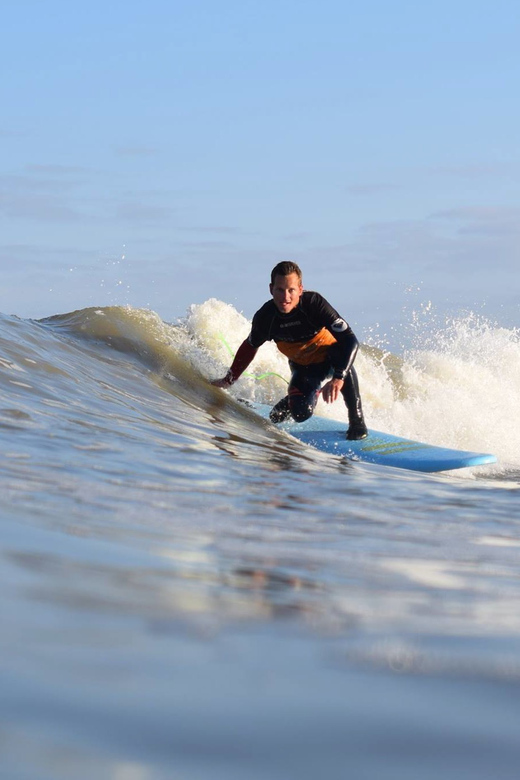
Scheveningen gives you a proper North Sea introduction to surfing, with your first lesson taught from the sand to the break. You start in a group of no more than six, learn how to handle the board and read the waves, then try to stand up in real seawater. It is active, friendly, and a little humbling in the best way.
I like the small class size, which gives the instructor room to correct your stance instead of shouting over a crowd. I also like the practical setup: warm wetsuits, a soft-top board, changing rooms, showers, lockers, and a €15 rental credit for another session. The main consideration is simple: surfing depends on the sea, and two hours can feel short when you are learning from scratch.
In This Review
- Key points at a glance
- Starting at Strandweg 3 in Scheveningen
- The first lesson begins on dry sand
- Learning to read the North Sea
- Your first attempt in the water
- What the small group changes
- Warm equipment for a cool sea
- Is $45 a good price?
- How long two hours really feels
- Who will enjoy this lesson most?
- Practical booking advice before you go
- Should you book the Scheveningen surf lesson?
- FAQ
- Where does the surf lesson begin?
- Where does the activity end?
- How long does the lesson last?
- What languages does the instructor speak?
- How many people are in each group?
- What equipment is included?
- Are changing facilities provided?
- What should I bring?
- Is there a minimum age?
- Does the activity include any credit for another rental?
Key points at a glance
- Small groups of six or fewer: You get more direct help with board control, balance, and timing.
- A real first-wave lesson: The session moves from beach instruction into the water, with the goal of standing on a wave.
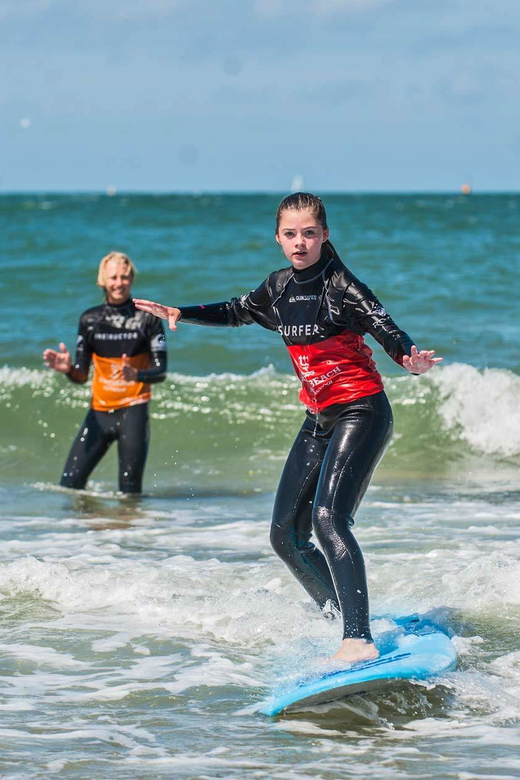
- Warm North Sea gear included: Wetsuit and cap are provided, with gloves and boots available in winter.
- Instructors speak Dutch and English: Teachers such as Ayoub, Gijs, and Connor have been singled out for friendly, clear instruction.
- €15 rental credit included: Use it after the lesson when you are ready to practice again.
- Age limit and simple packing list: You must be at least 16, and you need swimwear and a towel.
Starting at Strandweg 3 in Scheveningen
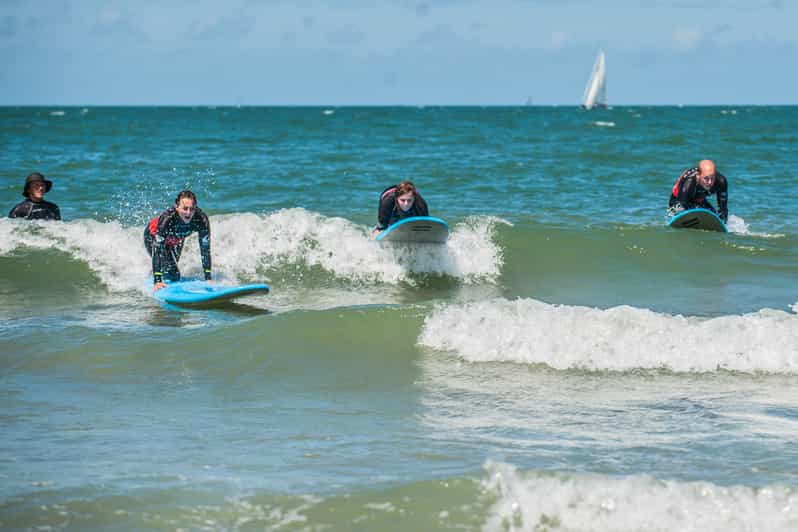
The lesson begins at Hart Beach Quiksilver Surfschool, at Strandweg 3, 2586JK Scheveningen, in The Hague. You finish back at the same meeting point, so there is no need to arrange a second pickup location or figure out where to leave your gear afterward.
Scheveningen is The Hague’s seaside district, and this activity makes a good change of pace from museums, government buildings, and city streets. You are still in the city, but your two hours are given over to salt water, sand, wind, and the basic challenge of staying upright on a moving board.
Plan around changing time, not just the stated two-hour lesson. You will need to arrive ready to change into the provided equipment, and you should bring your own swimwear and towel. The surf school supplies the large items, but it does not supply those personal basics.
More workshops and classes in The Hague:
- Amsterdam: Traditional Dutch Syrup Waffle Making Workshop
★ 4.8 · 4,093 reviews - Amsterdam Traditional Dutch Syrup Waffle Making Workshop
★ 5.0 · 960 reviews - Amsterdam: Bols Cocktail Experience and Cocktail Workshop
★ 4.8 · 666 reviews
The first lesson begins on dry sand
The opening part takes place on the beach. This is where the instructor explains how to stay safe, how to carry and control the board, and how to move through the water without making a poor decision in the first few minutes.
That beach briefing matters. A beginner’s surf lesson is not simply a matter of lying on a board and waiting for a wave. You need to understand where to go, how to position the board, how to keep it from swinging into someone else, and how to return safely after a missed attempt.
You also work through the basic movements before the water makes them harder. The instructor explains how to lie on the board, how to prepare for takeoff, and how to move your feet into a standing position. On land, your body understands the instructions. In the water, you have to remember them while the board moves beneath you.
That is why the small group is useful. With six students or fewer, the teacher can watch individual attempts and offer corrections. You may still spend time waiting for a suitable wave, but you are not lost in a large class.
Learning to read the North Sea
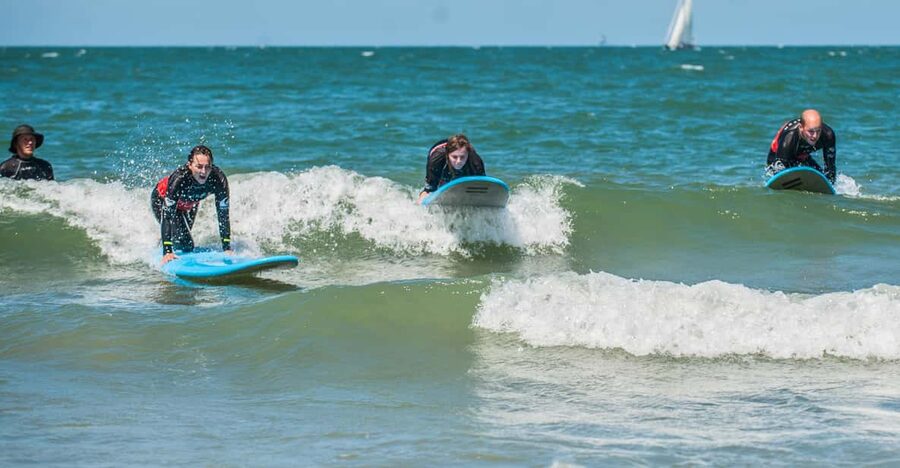
The lesson introduces several simple surf techniques, including how to judge a wave and when to begin your takeoff. For a first-timer, the timing can be harder than the standing itself. Start too soon and the wave passes under you. Start too late and the board may not pick up enough speed.
Your instructor helps you connect the pieces: look at the wave, keep the board pointing the right way, paddle at the right moment, then rise quickly and keep your weight centered. These steps sound tidy on the beach. In the water, they happen fast.
I like that the lesson includes wave reading rather than treating the ocean as a random obstacle. You are learning a skill you can use later, not simply attempting a one-time stunt. Even if you stand for only a few seconds, you begin to understand why some waves work and others do not.
The soft-top board is also a sensible choice for beginners. It is designed for early practice and is less intimidating than a narrow performance board. You still need to handle it carefully, but the equipment is suited to learning basic balance and control.
Your first attempt in the water
Once the beach instruction is complete, you take the board into the sea and begin working on the real task: catching a wave. The instructor explains how to go out safely, how to keep the board under control, and how to position yourself for an approaching wave.
Your first attempts may be messy. That is part of the lesson, not a sign that you are doing badly. You might miss the wave, stand too slowly, lose your balance, or ride only a short distance. The useful part is getting another chance and applying one clear correction at a time.
The goal is not polished surfing in two hours. The goal is to feel the board accelerate under you and learn what it takes to get upright. Catching even one small wave can make the earlier beach exercises suddenly make sense.
The instructors are described as friendly and professional, with Ayoub, Gijs, and Connor named among the teachers connected with the experience. Connor is associated with a fun teaching style that still keeps the instruction focused. Ayoub and Gijs are also noted for being especially helpful. Since staff assignments can vary, you should not book on the assumption that one particular teacher will lead your class.
A few more The Hague half-days to weigh up
- The Hague: Mauritshuis Entrance Ticket
★ 4.7 · 2,706 reviews - The Hague: City Canal Cruise
★ 4.6 · 2,024 reviews - The Hague: Madurodam Miniature Park Entry Ticket
★ 4.6 · 1,559 reviews - The Hague: The Pier SkyView Ticket with Drink and Snack
★ 4.4 · 1,398 reviews
What the small group changes
A class capped at six people is one of the strongest features here. Surfing requires frequent correction, and beginners often cannot tell why one attempt worked while the next one failed. A teacher who can watch closely may spot a foot position, paddle rhythm, or board angle that you cannot feel yourself.
The group format also gives the lesson a social side without turning it into a crowd scene. You share the first attempts, the falls, and the occasional good ride. That can make the learning curve feel less serious, especially when everyone is still working out the same basic movement.
There is a limit, though. Six people is small, not private. You will still share equipment space and take turns in the water. If you want constant one-to-one coaching, a private lesson would be a different product, and this activity does not promise that.
For most first-timers, the compromise is sensible. You get personal instruction at a lower price than a private session, while still having enough room for the instructor to keep track of you.
Warm equipment for a cool sea
The school provides a soft-top surfboard, a warm wetsuit, and a cap. In the winter months, gloves and boots are available if needed. This is important in Scheveningen, where the North Sea is not known for tropical water.
You do not need to pack specialist surf gear. Bring swimwear to wear under the wetsuit and a towel for afterward. Separate changing rooms let you change before and after the lesson, while hot showers are a welcome practical touch once you come out of the water.
Lockers are provided for personal belongings. That means you can keep your essentials secured while you are on the beach or in the sea, rather than trying to watch a bag from the water. Still, bring only what you need and follow the school’s instructions for storing valuables.
The equipment package gives this lesson better value than the headline price alone suggests. A beginner would otherwise need a board, wetsuit, and changing facilities, and those costs can quickly add up. Here, the main personal expenses are your swimwear, towel, and getting to the meeting point.
Is $45 a good price?
At $45 per person, the lesson is reasonably priced for a two-hour introduction that includes instruction and the main equipment. You are not paying only for access to the beach. The price covers a qualified instructor, a soft-top board, wetsuit, cap, changing rooms, hot showers, and lockers.
The included €15 rental credit adds a useful second step. You can use it after the lesson when you decide to practice again. That matters because a first session can teach you the movement, but repetition is what makes the movement feel less foreign.
Read the credit carefully at the time of booking or arrival, since the supplied details say it can be used whenever it suits you after the lesson but do not specify every rental condition. Treat it as a helpful bonus, not as a promise of a free second lesson.
The price is best for someone who wants a genuine introduction rather than a sightseeing activity with a few minutes of surfing added. You should be prepared to work, get wet, lose your balance, and spend part of the session listening to instruction. If that sounds like fun, the value is strong.
How long two hours really feels
Two hours gives the class time to cover safety, basic technique, equipment handling, and water practice. It is long enough to try several attempts, but it is not a full day of surfing or a multi-session course.
Changing into the wetsuit and gathering the equipment may take part of the scheduled time. That is normal for this kind of activity, so do not expect two uninterrupted hours standing on a board. The beach briefing is part of what you are paying for, and skipping it would make the water portion less useful and less safe.
The session may also feel physically demanding. Paddling, lifting the board, getting up repeatedly, and swimming back into position all take effort. You do not need previous surf experience, but you should be ready for an active lesson.
Starting times vary, so check availability before building the rest of your day around it. Since the activity ends where it begins, you can plan a meal or a walk along Scheveningen afterward without arranging transport from another location.
Who will enjoy this lesson most?
This is aimed at first-time surfers and people with little or no experience. You do not need to own equipment, know surf terminology, or arrive with a polished technique. The instructor starts with the basics and takes you through the process in order.
It suits adults and older teenagers who are at least 16 years old. The stated age rule is firm, so families with younger children should not assume that a child can join simply because they are comfortable in the water.
I would choose this for a solo visitor who wants an active morning, a couple looking for something more memorable than another café stop, or friends who do not mind laughing at their first attempts. It also works for someone who has tried surfing once before and wants a structured refresher.
You may want to choose another activity if you dislike cold water, want a dry sightseeing experience, or need a guaranteed result. No beginner lesson can promise that you will stand for long, since wave conditions, timing, and confidence all play a part.
Practical booking advice before you go
The lesson is taught in Dutch and English. If you need instruction in another language, the provided information does not promise it, so this is worth checking before booking.
You must be at least 16. Bring swimwear and a towel. The school provides the board, wetsuit, cap, and, during winter, gloves and boots if needed.
The activity allows free cancellation up to 24 hours before the start time, with a full refund. You can also reserve now and pay later, which helps if your schedule in The Hague is still changing. Check the available starting times before you reserve, since the duration is fixed at two hours but the start time is not.
The overall rating is 4.7 from 78 ratings, and the strongest praise centers on kind, helpful instruction and a good mix of fun and professionalism. One useful practical tip is to book through the surf school directly if that option is available to you, since one person specifically preferred doing so rather than using a third-party booking channel.
Should you book the Scheveningen surf lesson?
Book it if you want to do something active in The Hague and like the idea of learning a real skill, even if your first ride lasts only a few seconds. The small class, warm equipment, clear safety briefing, and €15 rental credit make this a well-rounded introduction at $45.
The main caution is to keep your expectations sensible. You are buying a beginner lesson, not a guaranteed long ride or a private coach. You will need to bring swimwear and a towel, meet at Strandweg 3, and accept that the North Sea may test your balance.
For a first attempt at surfing, this is a practical choice with enough support to make the experience approachable. If you are 16 or older, comfortable getting wet, and willing to keep trying after a few falls, I would put this near the top of an active The Hague day.
FAQ
Where does the surf lesson begin?
The lesson begins at Hart Beach Quiksilver Surfschool, Strandweg 3, 2586JK Scheveningen, The Hague.
Where does the activity end?
The activity ends back at the same meeting point.
How long does the lesson last?
The lesson lasts two hours.
What languages does the instructor speak?
Instruction is available in Dutch and English.
How many people are in each group?
The group is limited to six participants.
What equipment is included?
The school provides a soft-top surfboard, a warm wetsuit, and a cap. Gloves and boots are available if needed during the winter months.
Are changing facilities provided?
Yes. Separate changing rooms, hot showers, and lockers for personal belongings are included.
What should I bring?
Bring swimwear and a towel.
Is there a minimum age?
Yes. You must be at least 16 years old to take part.
Does the activity include any credit for another rental?
Yes. The lesson includes a €15 rental credit that can be used after the lesson.
Just added around The Hague
- The Hague: Street Art Tour by Bike★ 4.8 · 30 reviews
- Vermeer Centrum Delft Museum Admission Ticket★ 4.0 · 45 reviews
- The Hague Tower Guided Tour★ 4.5 · 45 reviews
- Walking Tour of Delft – The City of Orange and Blue★ 5.0 · 50 reviews
- Scheveningen Beach: 2-Hour Surf Experience for Adults★ 4.8 · 50 reviews
- The Hague: One Way Boat Ticket to or from Delft★ 4.5 · 52 reviews
- The Hague: Courtyard Walking Tour★ 4.5 · 71 reviews
- The Hague: Glowgolf Glow in the Dark Indoor Minigolf★ 4.1 · 89 reviews
Workshops, compared.

Traditional Dutch Syrup Waffle Making Workshop
Read our review →Amsterdam Traditional Dutch Syrup Waffle Making Workshop
Read our review →

3-Course Meal in Historic 1st Class Waiting Rooms
Read our review →
Amsterdam Light Festival Winter Walk with Stroopwafel Workshop
Read our review →
Distilling Class @ Spirited Union Rum Co. (Amsterdam)
Read our review →
Cocktail workshop @ Spirited Union Rum Co. (Amsterdam)
Read our review →
Browse the lists this tour appears in