
Reviewed · WALKING TOURS
Groningen: Walking Tour with Local Guide
Groningen’s story is unusually easy to read on foot. In just 1.5 kilometers, this tour links a medieval harbor, a student quarter, Renaissance buildings, Jewish heritage, and the modern Forum Groningen. I especially like the compact route and the way it connects old Groningen with the city young people live in today.
I also like the finish at the Forum, where you can ride the escalators to a 45-meter-high platform for broad city views. The main caution is weather: the walk goes ahead in cold or slippery conditions, and some stops, including the Pepergasthuis, are not included on Sundays.
In This Review
- Key points to know before you book
- Starting at Forum Groningen, where old meets new
- New Market Square and the Martini Tower
- Civic power around the Grote Markt
- Churches, students, and changing city life
- The oldest harbor and an 800-year step backward
- Folkingestraat and Groningen’s Jewish past
- Finishing with the Forum’s 45-meter view
- What the guides add to the walk
- Price, pace, and who gets good value
- Weather, footwear, and small planning choices
- Should you book the Groningen walking tour?
- FAQ
- Where does the Groningen walking tour begin?
- Where does the tour end?
- How long is the walking tour?
- How far do you walk?
- How large can the tour group be?
- Which languages are available?
- Is the tour wheelchair accessible?
- What sights are included?
- Is the Pepergasthuis included every day?
- How much does the tour cost?
- Can you cancel for a refund?
- Do you have to pay when booking?
Key points to know before you book
- A short route with a long timeline: Cover about 1.5 kilometers while moving through roughly 1,000 years of Groningen’s past.
- The Martini Tower anchors the walk: Learn why Groningen’s old grey tower matters to the city and its skyline.
- Modern and medieval Groningen meet: Begin at Forum Groningen, then move through squares, churches, civic buildings, and the old harbor.
- Student life is part of the story: The city has about 70,000 students among its 235,000 residents, so bikes and youthful energy are part of the setting.
- Local guides make the difference: Guides including Margret and Wessel have led lively walks with historical, cultural, and present-day details.
- Sunday planning matters: The Pepergasthuis is not part of the route on Sundays, and the stated guide languages are Dutch and German, while the experience overview also lists English.
Starting at Forum Groningen, where old meets new
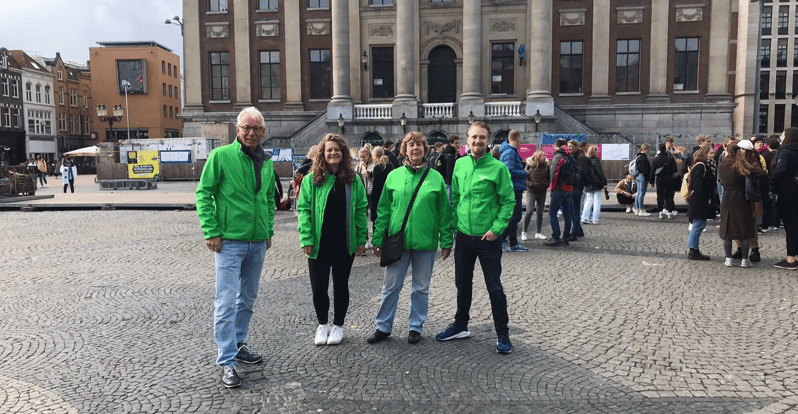
The meeting point is inside Forum Groningen, in front of the VVV store at the yellow counter. This is a smart place to begin because Forum is not an old monument pretending to be modern. It is a genuine part of present-day Groningen, built around technology, culture, and current affairs.
Your guide uses the building as a doorway into the city’s future before taking you into its past. That contrast gives the walk a useful shape. You are not simply collecting old façades. You are seeing how a northern Dutch city carries its past while making room for a large student population and new cultural spaces.
The group can contain up to 25 people. That is small enough to keep the walk moving and large enough to create a little social energy. Still, 25 is not an intimate private tour. If you want to ask many questions, stay near the guide and speak up when the group pauses.
The tour lasts 1.5 hours. That timing suits an arrival day, a morning orientation, or a quick introduction before exploring on your own. The pace is designed for a short city-center walk rather than a museum visit, so you should expect outdoor storytelling and views rather than long indoor stops.
More walking tours in Groningen:
- Anne Frank’s Story – Guided Walking Tour through Amsterdam
★ 5.0 · 11,619 reviews - Amsterdam: Life of Anne Frank and World War II Walking Tour
★ 4.8 · 10,467 reviews - Absolutely Amsterdam – the Essential Introductory Walking Tour
★ 5.0 · 3,629 reviews
New Market Square and the Martini Tower
From Forum Groningen, the route heads toward the New Market Square and the Martini Tower. The tower is one of Groningen’s key visual markers, and the guide gives it more meaning than a quick photograph from below can provide.
The Martini Tower is an old grey structure with plenty to explain about the city. Its position helps you understand the center as a connected place, not a collection of unrelated sights. As you walk, keep looking back toward it. The tower helps you judge where you are, especially when streets open into squares and then tighten again.
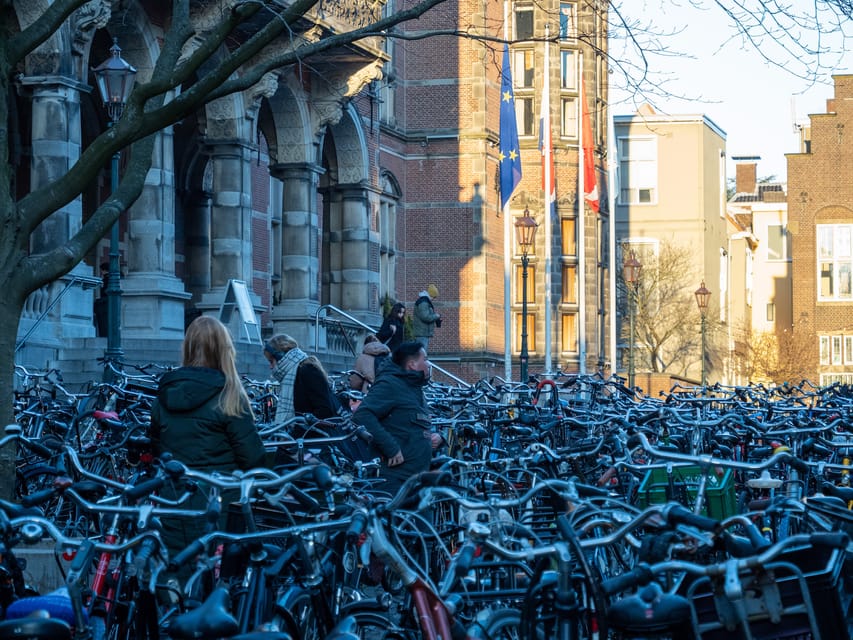
The New Market Square also shows the city’s current side. Groningen is known for its bicycles, and you should expect them to be part of the walk rather than background decoration. Bike traffic can shape how you cross streets and where you stand during explanations. Pay attention, and do not stop in the middle of a cycle route for a photograph.
The bicycle culture is one of the tour’s useful lessons. It tells you something about daily life here that a list of monuments cannot. Groningen is a university city with around 70,000 students, and their presence affects the rhythm of the center, the shops, the cafés, and the streets.
Civic power around the Grote Markt
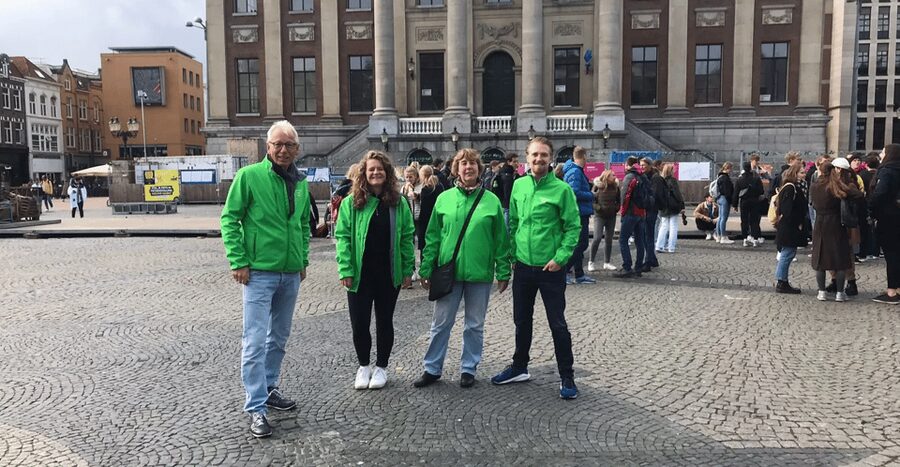
The walk continues through places connected with Groningen’s political and civic life. You see the office of the Commissioner of the King, the former palaces of 17th and 18th-century regents, and the City Hall on the Grote Markt.
These stops help explain who shaped the city and how authority was displayed. A square such as the Grote Markt is more than an attractive open space. It is where civic identity becomes visible through grand buildings, public offices, and the steady movement of daily life.
I like this part of the route because it gives you a better way to look at architecture. Instead of seeing an impressive façade and moving on, you can ask who paid for it, who worked there, and what kind of city it represented. The guide also connects the old buildings to Groningen today, keeping the story from becoming a dry parade of dates.
The Gold Office is another stop along the route. Its name alone invites a question, and the guide places it within the wider story of Groningen’s public and commercial past. Details like this are especially useful if you plan to continue sightseeing on your own. You leave with landmarks to recognize and questions to ask, not just a set of photographs.
Churches, students, and changing city life
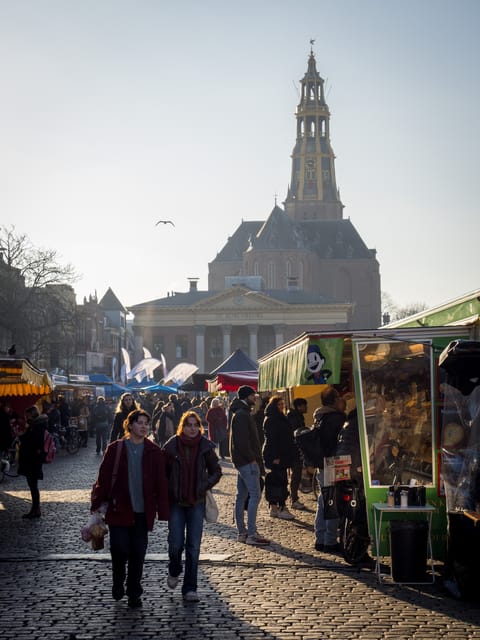
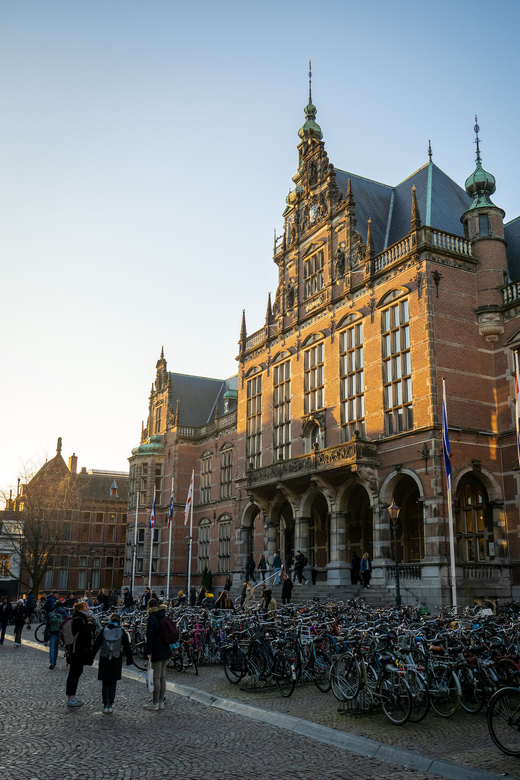
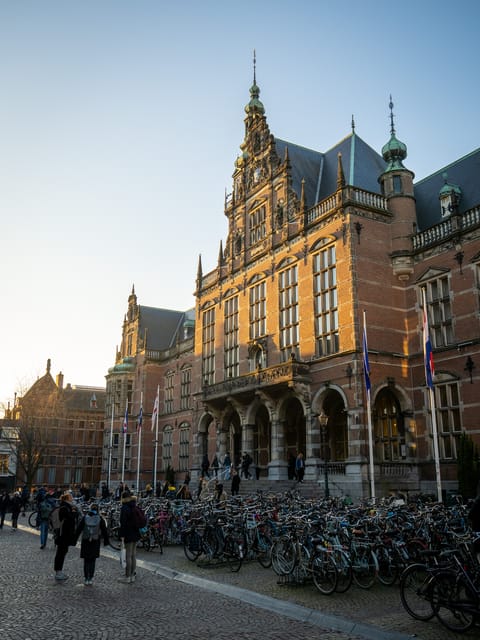
The Academic Building brings the university into the walk. Groningen’s student population is large enough to shape the city in a visible way, and the university helps explain why the center feels youthful alongside its older buildings.
The tour does not treat student life as a separate attraction. It places it beside the old churches, squares, and civic structures. That is the right approach. You see a city where academic life, shopping, nightlife, and long-established institutions occupy the same compact center.
The yellow tower of the A-church adds another strong visual stop. Its color gives the church a different character from the grey Martini Tower, and the two towers help you read Groningen’s skyline. The guide also uses churches to place you in the city’s earlier centuries, when religion shaped public life and movement through the streets.
The tour is not a church-interior program, so do not book it expecting extended visits inside every building. Its value comes from seeing the buildings in relation to the streets and from hearing how they fit into the city’s story.
A few more Groningen half-days to weigh up
- Groningen: City Canal Cruise
★ 4.3 · 895 reviews - Groningen: Climb the Martinitower
★ 4.5 · 365 reviews - Groningen: Terrace Boat Experience with a Cozy Bar
★ 4.1 · 307 reviews - Groningen: Open Boat City Canal Cruise
★ 4.7 · 250 reviews
The oldest harbor and an 800-year step backward
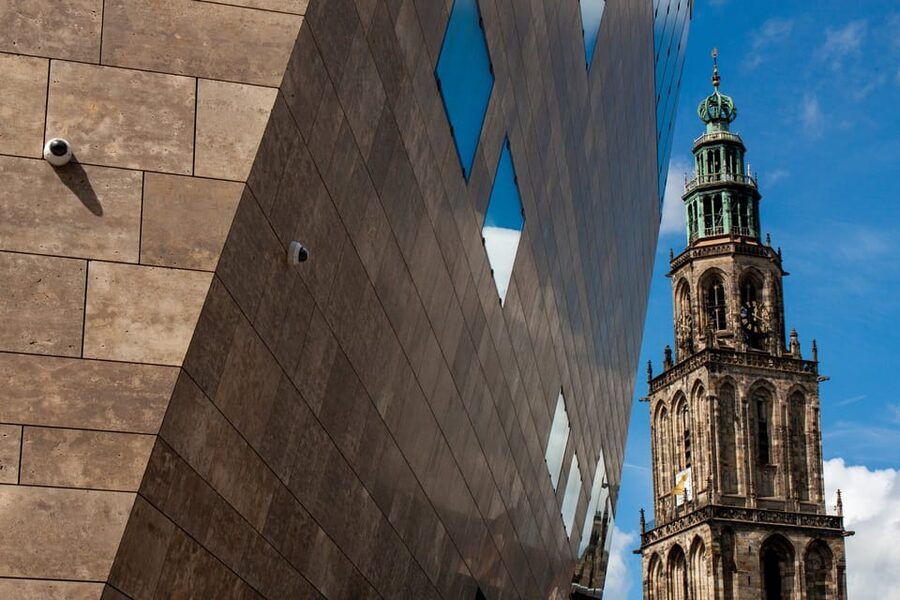
One of the most atmospheric parts of the walk is the old harbor. Here, the route takes you back about 800 years, when water routes mattered greatly to Groningen’s growth.
Harbors are useful history lessons because they show how a city worked. A church or town hall can tell you about faith or government, but a harbor points to trade, transport, work, and the movement of people and goods. As you look around, try to picture the city before modern roads and bicycles became its main visual signs.
The harbor stop also helps break up the architectural sequence. After squares and official buildings, you get a sense of Groningen as a working city. That variety is one reason the 1.5-kilometer route feels fuller than its distance suggests.
You will hear, see, and smell the city as you walk. That wording matters. This is not a silent stroll between postcard views. Street life remains part of the experience, and the guide’s job is to help you notice how the present sits on top of older layers.
Folkingestraat and Groningen’s Jewish past
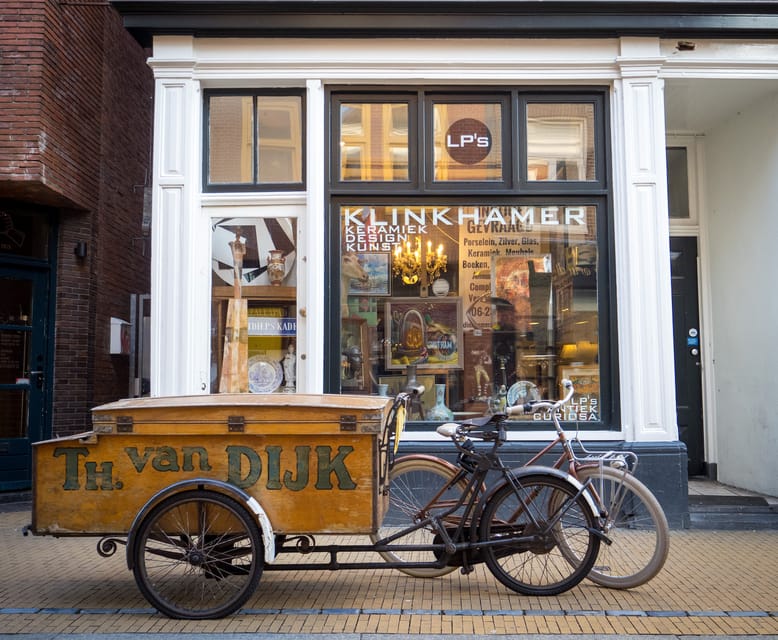
Folkingestraat adds a more personal and difficult part of the city’s story. The street is linked with Groningen’s Jewish history, giving the tour a chance to move beyond architecture and civic pride.
This is an important inclusion. A good city walk should not only point out attractive squares and buildings. It should also show the communities that shaped the city and the histories that require care. The guide brings that Jewish past into the route while keeping it part of the larger city story.
Folkingestraat is also a useful place to slow down mentally. Shops, restaurants, and ordinary street activity continue around you, but the historical meaning of the street changes how you see it. I recommend paying attention to the guide here rather than treating the stop as a quick passage between larger monuments.
The route also includes the Pepergasthuis, but not on Sundays. This old refuge once sheltered pilgrims who came to worship a relic of Saint John the Baptist, until the end of the 16th century. If visiting this site matters to you, choose a day other than Sunday. That small scheduling detail can affect how complete the historical route feels.
Finishing with the Forum’s 45-meter view
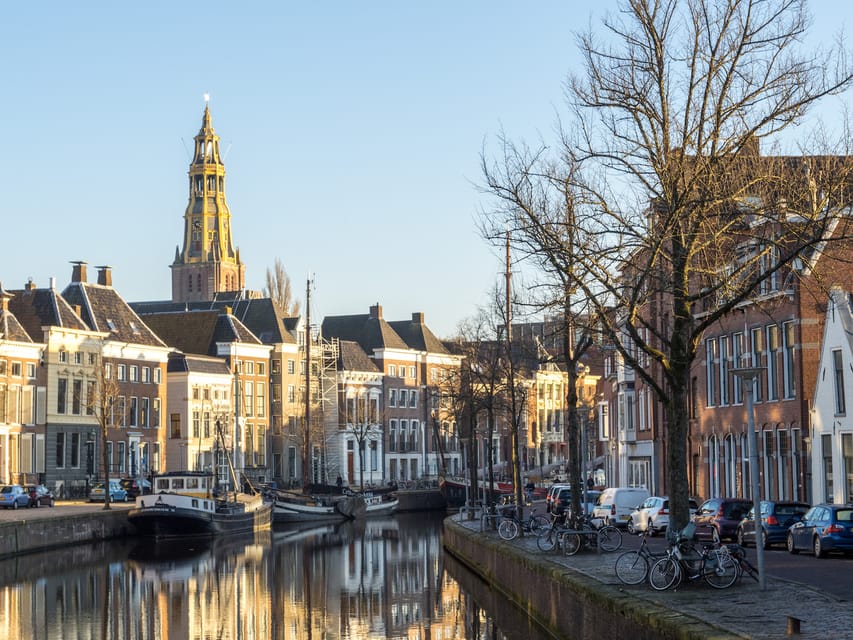
The walk returns to Forum Groningen, which makes the end convenient for further exploring. You can use the electric escalators to reach the 45-meter-high platform and see the city from above.
This final view gives the whole tour a helpful finish. From street level, Groningen can feel like a series of turns, squares, towers, and narrow routes. From the platform, you can place those pieces together. The Martini Tower, church towers, rooftops, and modern city spaces become part of one picture.
The platform is not included as a separate tower climb. Instead, it is a chance to explore Forum’s height after the guided portion ends. That distinction matters if your main goal is a formal monument visit. The reward here is a broad view connected to a modern cultural building.
I would save a little time after the official ending rather than rushing away. The return to Forum means you can continue looking around while the route is still fresh in your mind. It is also a practical place to decide where to shop, have a beer, or enjoy a glass of wine, all activities the tour helps you locate in the center.
What the guides add to the walk
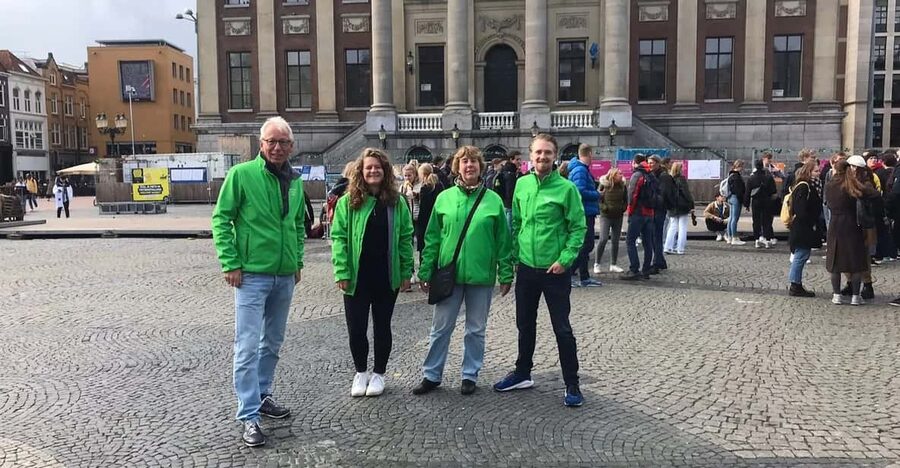
The provider is Groningen Gidsenteam, and the experience depends heavily on the individual guide. Margret has led a small, relaxed group with an unusually engaging presentation. Wessel has combined historical and cultural information with current details and unusual facts.
Those examples point to the tour’s strongest feature: local connection. A guide who cares about Groningen can make a familiar square feel like a place with living meaning. The best moments are likely to come when the guide links a building to present-day life, rather than simply reciting its construction date.
The tour is listed for Dutch, German, and English in the main experience information. The activity details specifically identify German and Dutch as live guide languages, so check your chosen departure carefully if English is essential. This is a practical point worth confirming before payment.
The guide’s enthusiasm also matters in poor weather. A winter walk can be cold, and icy streets have made the route less comfortable at times. Good storytelling helps, but it does not replace warm clothing and shoes with a firm grip.
Price, pace, and who gets good value
At $22 per person, this is fairly priced for a 1.5-hour guided introduction, especially if you are new to Groningen. The route covers major landmarks, civic history, religious buildings, Jewish heritage, student life, and the modern Forum. You are paying for orientation and local context, not admission to a series of ticketed sights.
The value is strongest if you have limited time. You can cover the central sights in one compact walk, then return to the places that interest you. It also works well at the start of a longer stay because you learn where the main squares, churches, harbor, shopping streets, and cafés fit together.
The value is weaker if you prefer to move at your own pace or spend long periods inside monuments. The group may include up to 25 people, and the tour keeps to a set 1.5-kilometer route. You will see many places, but you will not have a long stop at each one.
Free cancellation up to 24 hours before the start and the reserve-now, pay-later option make planning easier. Wheelchair access is available, though the route still takes place on city streets, so you may want to confirm the practical details for your departure.
Weather, footwear, and small planning choices
Groningen’s center is compact, but the tour is outdoors. Wear shoes suited to a 1.5-kilometer walk and take extra care in winter. Cold and slippery conditions have affected the experience, and enthusiasm from the guide cannot make icy paving safe.
Arrive inside Forum Groningen with enough time to find the VVV store and its yellow counter. The meeting point is indoors, which is useful in bad weather and removes some of the uncertainty that comes with finding a street corner.
If you want the full route, avoid Sunday because the Pepergasthuis is not included then. If you want English, verify the language at booking because the supplied details list both English in the overview and Dutch and German in the live-guide information.
I would also think about timing. Since the tour ends at Forum, you can follow it with the 45-meter platform, more Forum activities, or independent time in the center. That makes the tour easy to fit into a day without sending you across town at the end.
Should you book the Groningen walking tour?
Book it if you want a clear first look at Groningen and like your sightseeing tied to local life. The tour covers far more than the Martini Tower, while the short distance keeps the experience manageable. The combination of old harbor, civic buildings, churches, Jewish history, student culture, and Forum’s modern view gives you a useful picture of the city.
I would especially recommend it for first-time visitors, short stays, and anyone who wants help choosing where to shop, eat, drink, and explore afterward. It is also a good fit if you enjoy guides who add personal energy. Margret and Wessel show the kind of warm, engaged presentation you may encounter.
Think twice if you want a private walk, extensive interior visits, or a completely flexible route. Also check the language and Sunday details before booking. For $22, this is a practical way to get oriented, provided you bring suitable shoes and accept that the city is best experienced at street level, in all its weather.
FAQ
Where does the Groningen walking tour begin?
The tour begins inside Forum Groningen, in front of the VVV store at the yellow counter.
Where does the tour end?
The walk ends back at Forum Groningen.
How long is the walking tour?
The tour lasts 1.5 hours.
How far do you walk?
The route covers about 1.5 kilometers.
How large can the tour group be?
The group can include a maximum of 25 people.
Which languages are available?
The main experience information lists Dutch, German, and English. The live-guide details specifically list German and Dutch, so confirm the language for your chosen departure if English is important.
Is the tour wheelchair accessible?
Yes, the activity is listed as wheelchair accessible.
What sights are included?
The route includes Forum Groningen, the New Market Square, Martini Tower, the Commissioner of the King’s office, former regents’ palaces, City Hall on the Grote Markt, the Gold Office, the Academic Building, the A-church, the old harbor, and Folkingestraat.
Is the Pepergasthuis included every day?
No. The Pepergasthuis is not part of the tour on Sundays.
How much does the tour cost?
The listed price is $22 per person.
Can you cancel for a refund?
Yes. You can cancel up to 24 hours in advance for a full refund.
Do you have to pay when booking?
No. The reserve-now, pay-later option lets you book your place without paying immediately.
Just added around Groningen
- e-Scavenger hunt Groningen: Explore the city at your own pace★ 4.5 · 28 reviews
- Groningen: Terrace Boat Experience with a Cozy Bar: 1.5 Hours★ 5.0 · 29 reviews
- Groningen: City canal cruise (with unlimited drinks)★ 4.8 · 29 reviews
- Groningen: Terrace Boat Experience with a Cozy Bar: 1 hour★ 4.5 · 35 reviews
- Groningen: Evening Cheese and Wine cruise★ 4.9 · 54 reviews
- Groningen: City Highlights Bike Tour★ 4.8 · 59 reviews
- Historical Canal Tour★ 5.0 · 60 reviews
- Groningen: Open Boat City Cruise★ 4.5 · 154 reviews
Walking Tours, compared.
Anne Frank’s Story – Guided Walking Tour through Amsterdam
Read our review →
Life of Anne Frank and World War II Walking Tour
Read our review →
Absolutely Amsterdam – the Essential Introductory Walking Tour
Read our review →
Anne Frank Walking Tour – Guided in EN/DE/IT/ES
Read our review →
Anne Frank Walking Tour Amsterdam Including Jewish Cultural Quarter
Read our review →Browse the lists this tour appears in