
Reviewed · WALKING TOURS IN AMSTERDAM
Amsterdam Small-Group Walking Tour
Amsterdam’s story gets most interesting where the polished postcard city meets its rougher edges. This $20 small-group walk links grand squares, old lanes, the Red Light District, Jewish Amsterdam, and quiet courtyards while explaining how a muddy settlement became a global trading power.
I like the limited group of 10 and the way guides such as Rob, Claire, Karl, Pia, and Toni mix facts with dry humor and local advice. I also like that the route returns to Beursplein, giving you a useful map of central Amsterdam before you set out on your own. The main drawback is the amount of walking, and the route may feel brisk or exposed in cold, wet weather.
In This Review
- Key points at a glance
- Why this walk works as an Amsterdam introduction
- Beursplein and the making of Amsterdam
- Dam Square, the Nieuwe Kerk, and the Royal Palace
- Zeedijk and Nieuwmarkt: old lanes with complicated stories
- The Jewish Cultural District and Zuiderkerk
- Begijnhof and a quieter side of the center
- The Flower Market and Muntplein
- What the small group changes
- Pace, weather, and practical comfort
- Is $20 good value?
- Who should book this Amsterdam walk?
- Should you book it?
- FAQ
- How long does the Amsterdam walking tour last?
- Where does the tour begin?
- Where does the tour end?
- How much does the tour cost?
- How many people can join the group?
- Which languages are available?
- Are museum entrance fees included?
- Are food and drinks included?
- What should I bring?
- Is the tour wheelchair accessible?
Key points at a glance
- A strong first-day orientation: The circular route covers central Amsterdam’s main sights in about 2.5 hours.
- History with its rough edges included: Expect frank discussion of prostitution, drug policy, religious tolerance, Nazi occupation, and Jewish life.
- Small groups make a difference: With no more than 10 people, guides can answer questions and adjust the pace.
- Good range of stops: You see Dam Square, the Royal Palace, Zeedijk, Begijnhof, the Flower Market, and more.
- Useful local advice: Guides can suggest places to eat, drink, shop, and continue exploring.
- Low price, useful payoff: At $20, it is an inexpensive way to understand the city before paying for museums or other attractions.
Why this walk works as an Amsterdam introduction
Amsterdam can be confusing at first. The center is compact, but its streets, canals, squares, churches, former almshouses, and tourist districts all tell different parts of the story. A good first walk helps you see how they connect.
This tour gives you that framework. You move from Beursplein near the busy center through Dam Square, the old eastern lanes, the Jewish Cultural District, Begijnhof, and the Flower Market before returning to where you began. You do not enter a long list of museums, so the experience is about place, context, and conversation rather than indoor sightseeing.
I would book it near the start of your stay. Afterward, you will know where Dam Square sits in relation to the canals, how to reach the old center, and which areas deserve more of your time. The guide also offers tips for food and drinks, and several guides have helped people find a café to warm up or take a break.
The format is informal. Guides including Ilyan, Rob, Laura, Toni, Claire, Karl, Pia, Richard, Eduardo, and others have led this route. The exact personality changes with the guide, but the strongest pattern is clear: expect a friendly walk built around stories, questions, and humor rather than a memorized speech.
More Walking Tours in Amsterdam
- Anne Frank’s Story – Guided Walking Tour through Amsterdam
★ 5.0 · 11,619 reviews - Amsterdam: Life of Anne Frank and World War II Walking Tour
★ 4.8 · 10,467 reviews - Absolutely Amsterdam – the Essential Introductory Walking Tour
★ 5.0 · 3,629 reviews
Beursplein and the making of Amsterdam
Meet at Beursplein 1, in front of the Cafe Bistro near the bull figure. Look for a blue umbrella or an Amsterdam Guides & Tours logo tag. This is a practical meeting point in the middle of the old city, but give yourself enough time to find the guide among pedestrians and street activity.
The tour begins around Beursplein, with about 20 minutes of explanation. The focus is how Amsterdam grew beside the Amstel River from a small settlement into one of Europe’s major trading centers during the Dutch Golden Age.
This opening matters because Amsterdam’s narrow streets and tall canal houses can otherwise seem like a collection of attractive buildings. Your guide connects the city’s wealth to merchants, shipping, trade, artists, and newcomers from many parts of the world. You get a working explanation of why the city developed the way it did.
I especially value this part for first-time visitors. It gives you a basic timeline before the tour turns to more sensitive subjects. Guides also tend to add odd details and lesser-known stories, which helps the information stick.
Dam Square, the Nieuwe Kerk, and the Royal Palace
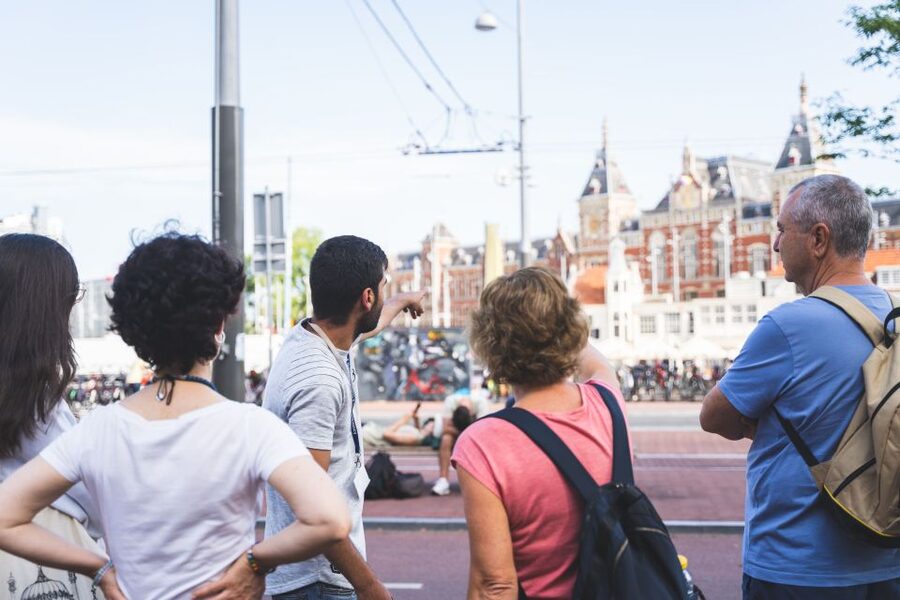
Dam Square gets roughly 10 minutes, followed by short photo stops at the Nieuwe Kerk and Royal Palace. This is the grand public heart of Amsterdam, and it is also one of the busiest places on the route.
The square helps show the contrast between Amsterdam’s merchant past and its royal present. The church and palace are close together, so you can take in the setting without spending tour time on formal interior visits. The guide explains what you are seeing, then gives you a chance to take photos.
Do not expect a full palace tour. Entrance fees are not included, and the schedule allows only about five minutes at each photo stop. That is not a weakness if your aim is orientation. It is a limitation if you want detailed architectural study or time inside the buildings.
For many people, this is the most familiar part of the walk. The value comes from hearing how the buildings fit into the city’s wider story instead of simply snapping a picture and moving on.
Zeedijk and Nieuwmarkt: old lanes with complicated stories
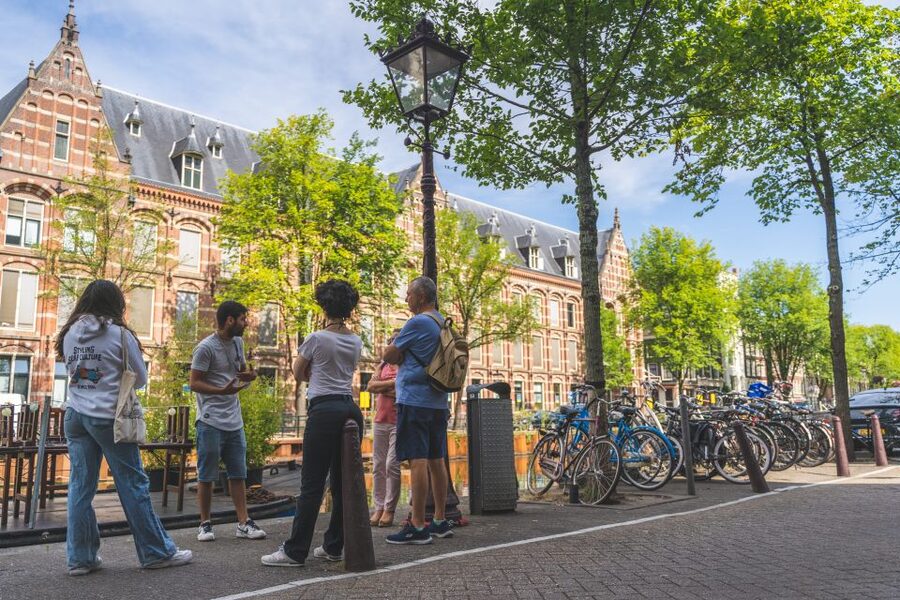
The walk continues to Zeedijk Street for about 10 minutes, then Nieuwmarkt Square for around 15 minutes. These stops shift the mood from formal civic spaces to older streets and neighborhood life.
Zeedijk is part of Amsterdam’s historic center and lies close to the Red Light District. Here, the guide can explain how prostitution developed in the city and how Amsterdam’s approach differs from the laws and customs you may know at home. The subject is handled as part of the city’s social history, not just as a tourist spectacle.
The tour also discusses Dutch drug policy, including the city’s well-known approach to decriminalization. This is useful because Amsterdam’s reputation often rests on simplified ideas about sex, drugs, and tolerance. A good guide gives you more context and helps separate policy from myth.
At Nieuwmarkt, the discussion broadens again. You may hear about the city’s trade, defenses, changing neighborhoods, and the ways Amsterdam has reused old spaces. The route includes some of the most photographed parts of the center, but the emphasis is on what happened there and why it still matters.
This section may not suit every child or every visitor. The subjects are frank, and the Red Light District is a working neighborhood, not a theme park. Keep your camera away from windows and listen to the guide’s advice about respectful behavior.
Same city, a completely different afternoon:
- Amsterdam: Van Gogh Museum Ticket
★ 4.7 · 52,054 reviews - Amsterdam Classic Saloon Boat Cruise with Drinks and Cheese
★ 5.0 · 31,825 reviews - Amsterdam Luxury Canal Cruise + Unlimited Drinks & Bites option
★ 5.0 · 30,518 reviews - Amsterdam: Heineken Experience Ticket
★ 4.6 · 30,055 reviews
The Jewish Cultural District and Zuiderkerk
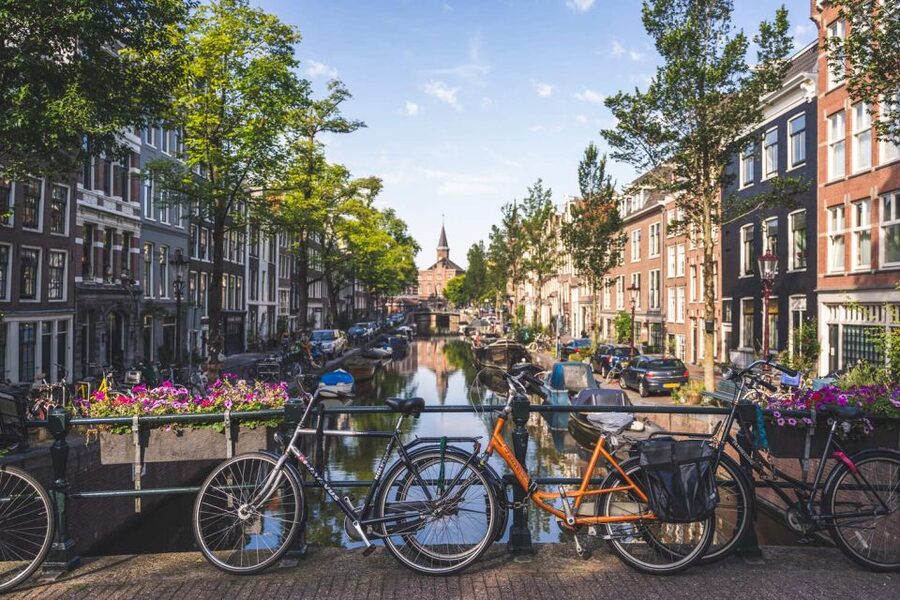
The tour then reaches the Jewish Cultural District for about 10 minutes, followed by a photo stop at Zuiderkerk. This is one of the most important parts of the walk because it turns Amsterdam’s story toward the 20th century and the Nazi occupation.
You will hear about Jewish life in Amsterdam and the devastating loss of Jewish residents during World War II. The topic may be presented alongside the story of Anne Frank, helping you place her experience within the wider history of the city rather than treating it as an isolated tale.
The short stop at Zuiderkerk is mainly for viewing and photographs. Do not confuse this walking tour with an Anne Frank House visit. No museum entrance is included, and the route does not replace time inside the house or other memorial sites.
Still, the walking context has real value. Streets and buildings make history physical. You are not only hearing dates. You are moving through the part of Amsterdam where communities lived, worshiped, worked, and suffered.
I would give this section your full attention. The lighter jokes elsewhere on the walk are balanced by a serious account of the city’s darkest chapter. That balance is one reason the tour feels more useful than a simple sightseeing loop.
Begijnhof and a quieter side of the center

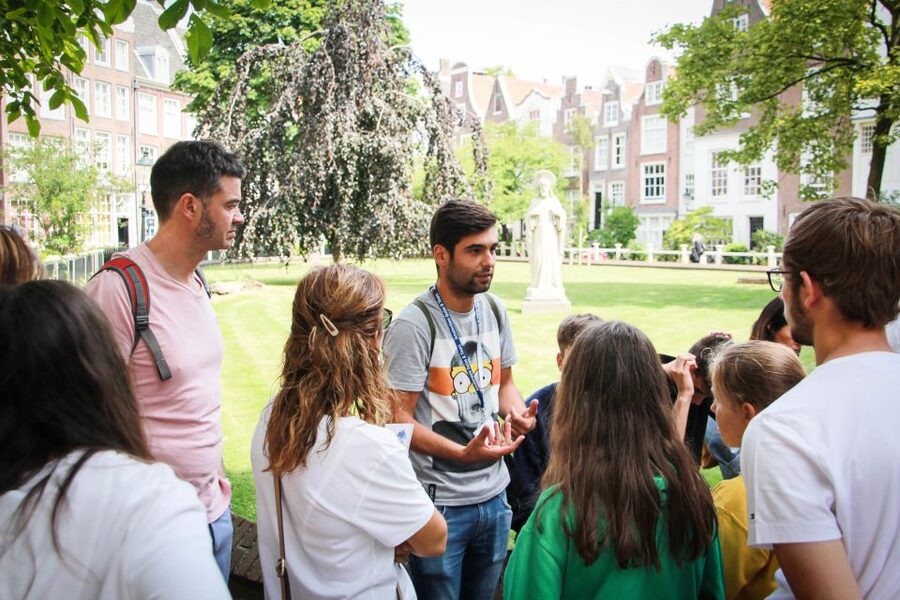
Begijnhof receives about 20 minutes, one of the longer stops. This enclosed courtyard is easy to miss if you are racing between Amsterdam’s major sights, and it provides a welcome pause after the busy center.
The setting introduces another side of Dutch religious and social history. You walk through a quieter space of historic homes and hear why the courtyard matters. The guide may also point out details that you would likely pass without noticing.
Because this is a residential and reflective place, respectful behavior matters. Keep your voice low and follow the guide’s instructions. The atmosphere is very different from Zeedijk and Dam Square, which makes the route feel varied rather than repetitive.
Several guides have also left room for people to look around or ask extra questions. That flexibility is easier with a group of 10 than with a large coach party. If you are interested in architecture, faith, or daily life in old Amsterdam, use this stop to ask questions.
The Flower Market and Muntplein
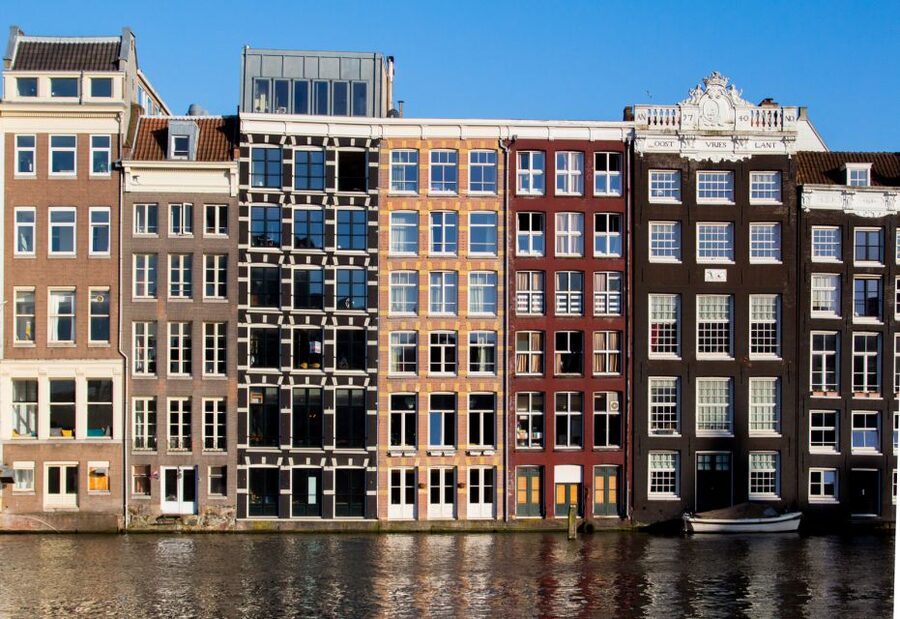
The Amsterdam Flower Market is allotted about 20 minutes, the final substantial visit before a short photo stop at Muntplein. This gives the tour a lighter finish after the serious history of the Jewish Cultural District.
The market is a classic central Amsterdam stop. It is useful for seeing the city’s long connection with flowers, plants, trade, and souvenirs, but it is also a commercial place. I would treat it as a chance to look, browse, and ask the guide what is genuinely local rather than assuming every product makes a good souvenir.
Muntplein then brings you back into the traffic and canals of central Amsterdam. The photo stop is brief, but the location helps you understand the city’s street layout and gives you another reference point for later walks.
Finally, the group returns to Beursplein. That circular route is convenient. You are not left in an unfamiliar neighborhood, and you can easily continue toward a museum, café, shopping street, or canal walk.
What the small group changes

The group limit is 10 people. That does not guarantee a private tour, but it is small enough for a real exchange with the guide. In quieter travel periods, the group may be much smaller. One January tour had only two participants, creating a very personal experience with time to stop, talk, and ask questions.
This is especially useful if you want food recommendations or practical help planning the rest of your visit. Pia, for example, has been praised for answering questions about restaurants, shopping, and bathroom stops. Rob and Richard have also given eating suggestions, while other guides have pointed people toward cafés.
The guide’s style will shape your experience. Karl is known for humor and unusual facts. Claire has led relaxed, fact-filled walks and adapted well to rainy weather. Toni has encouraged questions and conversation, while Rob has been praised for his friendly delivery and broad understanding of Amsterdam.
That variety is worth keeping in mind. You are booking the route and the small-group format, not a guaranteed performance by one named guide. The activity is offered in English and Spanish, so check the available language when choosing a time.
Pace, weather, and practical comfort
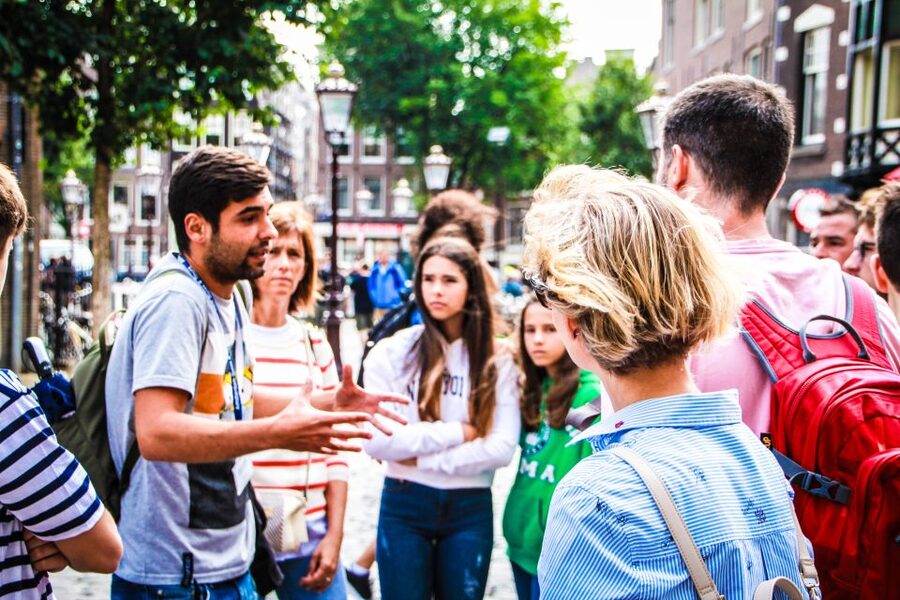
You will be on your feet for about 2.5 hours. Wear comfortable shoes, bring a drink, and dress for changeable Dutch weather. Rain and cold wind have not stopped the tour, but they can affect your comfort, especially during explanations in open squares.
The pace is generally described as easy or well judged, though the experience still involves steady walking. You may pause for photos and short looks around, but this is not a seated sightseeing experience.
There is an important accessibility detail to clarify before booking. The activity is marked wheelchair accessible, yet the information also says it is not suitable for people with mobility impairments. Since the route involves extended walking, uneven city streets may be a concern. If you use a wheelchair or have limited mobility, contact the provider before paying so you can confirm whether the current route works for you.
Food, drinks, museum tickets, and transport to or from Beursplein are not included. That keeps the price low, but you should plan your own meal and attractions around the tour.
Is $20 good value?
At $20 per person, this is a strong value if you want a broad introduction rather than a specialist tour. A guide spends roughly 150 minutes giving you orientation, history, local context, and practical suggestions. You also see a wide spread of central Amsterdam without paying separate admission fees.
The value is highest on your first day, when you are still trying to understand the city. A good guide can prevent you from spending your whole visit in the same tourist corridors. You will know which places deserve a return visit and which sights can be covered quickly.
The price does not buy museum access, a canal cruise, food, or private attention. If you already know central Amsterdam well, the general route may repeat familiar ground. If you want an in-depth tour of the Anne Frank story, Dutch art, Jewish heritage, or the Red Light District, choose a specialist experience instead.
Still, the mix is hard to fault at this price. You get major sights, quieter corners, serious history, odd facts, and local advice in one compact walk.
Who should book this Amsterdam walk?
I would recommend it to first-time visitors, solo travelers who want an easy start, couples, and small families with older children who can handle the subject matter and walking time. It also suits anyone who prefers stories and conversation to a long audio guide.
Book it early in your stay if you want help with orientation. The return to Beursplein makes it easy to carry on with your own plans, and the guide can suggest places to eat or areas to explore next.
You may want something else if you dislike group tours, have serious mobility limits, or want to spend most of your time inside historic buildings. The tour moves at a useful overview level, not an academic one. It covers difficult subjects, but it does not give each one the time of a dedicated museum visit.
Should you book it?
Yes, if you want an affordable and lively first look at Amsterdam. The combination of a 10-person limit, central route, clear historical range, and practical local tips gives you more than a basic photo walk.
Book with realistic expectations. You will walk outdoors, share the guide with a small group, and see some places only from the street. In return, you get a useful city framework and a guide who can make Amsterdam’s odd contradictions easier to understand. A 4.7 rating from 995 bookings supports the tour’s strong reputation, but the real decision comes down to fit: for most first-time visitors, this is a sensible way to begin.
FAQ
How long does the Amsterdam walking tour last?
The tour lasts approximately 2.5 hours. The route and stories can vary depending on the guide and the needs of the group.
Where does the tour begin?
The tour begins at Beursplein 1. The guide waits in front of the Cafe Bistro, next to the bull figure, with a blue umbrella or an Amsterdam Guides & Tours logo tag.
Where does the tour end?
The tour returns to Beursplein 1.
How much does the tour cost?
The listed price is $20 per person.
How many people can join the group?
The group is limited to 10 participants.
Which languages are available?
The tour is offered in English and Spanish. Check the available language when selecting your time.
Are museum entrance fees included?
No. Entrance fees to museums and other attractions are not included.
Are food and drinks included?
No. Food and drinks are not included. The guide can recommend local places to eat and drink.
What should I bring?
Bring comfortable shoes and a drink. The activity involves walking outdoors.
Is the tour wheelchair accessible?
The activity is marked wheelchair accessible, but it is also described as unsuitable for people with mobility impairments. If mobility is a concern, confirm the current route with the provider before booking.
Just added around Amsterdam
- Amsterdam: Food and Canal Tour★ 4.6 · 22 reviews
- Discover Deventer with an Outside Escape city game tour!★ 4.5 · 23 reviews
- Segway City Tours Amsterdam★ 4.3 · 23 reviews
- Amsterdam Canal Cruise in Classic Salon Boat With Drinks and Cheese★ 4.0 · 22 reviews
- Historical Walking Tour, private with local Dutch guide★ 5.0 · 23 reviews
- Utrecht Food Tour on a Bicycle with local guide★ 5.0 · 23 reviews
- Amsterdam: Captain For a Day 2-Hour Boat Rental★ 4.9 · 23 reviews
- Amsterdam Small-Group Breakfast Morning Cruise★ 5.0 · 23 reviews
Walking Tours in Amsterdam, compared.
Anne Frank’s Story – Guided Walking Tour through Amsterdam
Read our review →
Life of Anne Frank and World War II Walking Tour
Read our review →
Absolutely Amsterdam – the Essential Introductory Walking Tour
Read our review →

Anne Frank Walking Tour – Guided in EN/DE/IT/ES
Read our review →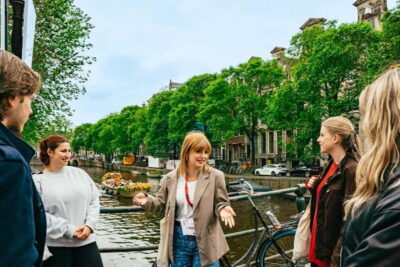
Anne Frank Walking Tour Amsterdam Including Jewish Cultural Quarter
Read our review →Browse the lists this tour appears in