
Reviewed · WALKING TOURS IN AMSTERDAM
Amsterdam: Small-group Guided Walking Tour (French/English)
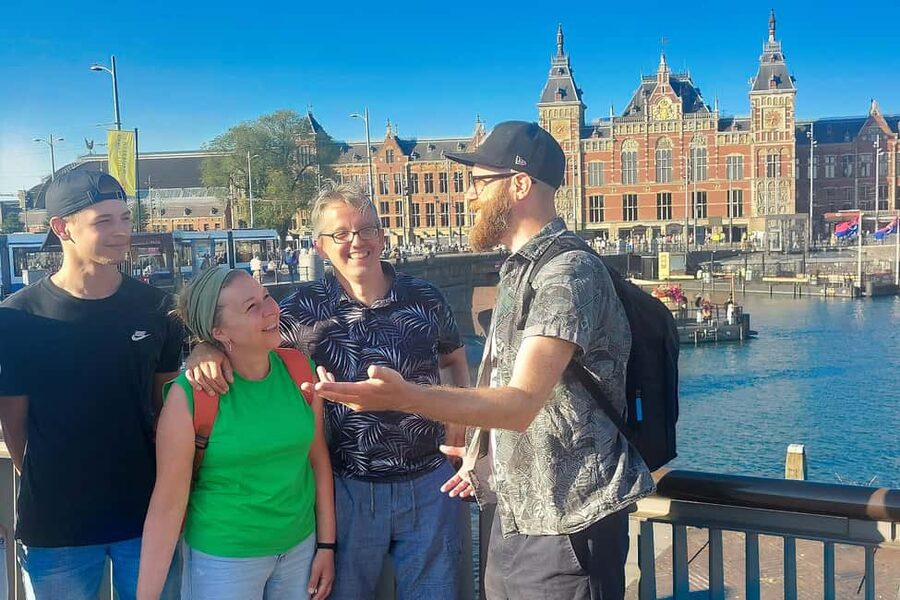
Amsterdam’s story comes alive through its details on this walking tour: a crooked canal house, a hidden Catholic church in an attic, tulip mania, and the city’s shift from fishing village to global trading port. Guide Chris, also called Christian in one booking, keeps the walk friendly, funny, and packed with useful local context.
I like the small-group format, which gives you room to ask questions instead of listening to a speech from the back of a crowd. I also like the practical follow-up: Chris provides links and suggestions for restaurants, cafés, bars, shops, boats, and sights. The main consideration is pace. This is a broad city-center orientation, not a slow museum visit, and most stops are viewed from outside.
In This Review
- Key points to know before booking
- Why this walk works as a first look at Amsterdam
- Meeting Chris behind Amsterdam Centraal
- From the Dancing Houses to the oldest streets
- Secret religion at Our Lord in the Attic
- Chinatown, De Waag, and the Dutch trading past
- Dam Square and the Royal Palace
- Crossing the canal belt toward Anne Frank House
- Westerkerk and the Jordaan finish
- What you are really getting for $33
- Pace, language, weather, and group size
- Who should book this Amsterdam walk?
- Should you book it?
- FAQ
- How long does the Amsterdam walking tour last?
- What languages are available?
- Where does the tour meet?
- How can I identify the guide?
- Does the tour enter Anne Frank House?
- Are food and drinks included?
- Is the tour wheelchair accessible?
- Can I cancel or pay later?
Key points to know before booking
- See 21 central sights in 2 to 3 hours, from Amsterdam Centraal to the Jordaan.
- Hear stories behind the buildings, including tulip mania, Dutch daily life, the VOC, and Anne Frank.
- Choose English or French, with private and small-group options available.
- Get useful follow-up links for food, drinks, shopping, boat trips, and more sightseeing.
- Expect photo stops rather than long visits inside, including at the Royal Palace and Anne Frank House.
- Bring good shoes and rain gear, since Amsterdam weather can change quickly.
Why this walk works as a first look at Amsterdam
I see this tour as a strong first-day choice. It gives you a working map of the old center while explaining why Amsterdam looks the way it does. You move from the station and waterfront into the oldest streets, across the canal belt, and finally toward Jordaan.
That route matters. Amsterdam can feel like a maze of canals and narrow lanes, especially when you first arrive. A guide helps connect the pieces: trade created wealth, wealth paid for canals and tall houses, religion shaped secret interiors, and modern Amsterdam grew around the old city rather than replacing it.
The guide’s style is a major part of the appeal. Chris is described as friendly, humorous, and easy to talk with, with a strong command of local stories and small details. He uses visual aids for certain historic sights, answers questions, and offers recommendations without turning the walk into a sales pitch.
At $33 per person, the value is good if you want orientation and context in one sitting. You are not paying for admission to a museum or palace. You are paying for a local guide who can help you make sense of a large number of sights, point out details you might miss, and save you time deciding what to do next.
More Walking Tours in Amsterdam
- Anne Frank’s Story – Guided Walking Tour through Amsterdam
★ 5.0 · 11,619 reviews - Amsterdam: Life of Anne Frank and World War II Walking Tour
★ 4.8 · 10,467 reviews - Absolutely Amsterdam – the Essential Introductory Walking Tour
★ 5.0 · 3,629 reviews
Meeting Chris behind Amsterdam Centraal
The starting point is behind Amsterdam Centraal Station, beside the water where the white and blue ferries leave for Amsterdam North. Look for Pancakes Amsterdam at the IJ and the large white and blue D ferry halte sign near the bike lane.
This is a busy area, so allow a few minutes to find the exact meeting point. The guide is described as wearing glasses, a beard, and a baseball hat. That identifying detail is useful near the station, where bikes, ferries, pedestrians, and trams can make a simple meeting feel less simple.
The walk begins with a short look at Amsterdam Centraal. The station is more than a transport hub. It sets up the city’s relationship with water, trade, travel, and expansion. From here, you are quickly on foot in the historic center.
The route is wheelchair accessible, but Amsterdam’s old streets can still include crowded sidewalks, bridges, and uneven sections. If mobility is a concern, ask in advance about the day’s exact route, since the itinerary can change for construction, local conditions, or your interests.
From the Dancing Houses to the oldest streets
One of the first photo stops is the Dancing Houses, the narrow, leaning canal houses that make Amsterdam look slightly tipsy. Their unusual angles are a good introduction to the city’s older buildings and the practical challenges of building on soft ground.
You then pass the Basilica of Saint Nicholas, a grand church near the station. Its presence gives you an early look at Amsterdam’s religious story and the contrast between monumental public buildings and tight residential streets.
Zeedijk Street brings the walk into one of the city center’s oldest lanes. Today it is known for food, nightlife, and Amsterdam’s Chinatown, but the street also helps explain the city’s long connection with sailors, trade, immigration, and changing urban life.
The Major Alida Bosshardt Statue adds a human story to the route. The statue honors a Dutch Salvation Army figure associated with work in the city. It is a small stop, but this kind of detail keeps the tour from becoming a parade of famous buildings only.
Secret religion at Our Lord in the Attic
Our Lord in the Attic Museum is one of the most memorable stops because it reveals what Amsterdam’s houses can hide. The museum occupies a former private Catholic church built inside a canal house, a reminder that religious life once had to take place discreetly.
You stop for an explanation and photos rather than a full interior visit. That distinction matters. If the museum interests you, treat this walk as an introduction and return later for the paid visit. The guide can explain why the site matters, while the museum itself gives you time to explore its rooms and construction.
Nearby, the Oude Kerk offers another sharp contrast. This is Amsterdam’s oldest building, located beside the Red Light District. The setting places centuries of worship next to the city’s modern adult entertainment trade, a contrast that says a great deal about Amsterdam’s ability to hold different identities in the same small area.
Burgwallen Oude Zijde, the old side of the city, continues the historical thread. You see the dense street pattern, old façades, canals, and busy lanes that grew from the medieval settlement. The guide’s stories are especially useful here because the buildings can look similar until someone points out the clues.
Same city, a completely different afternoon:
- Amsterdam: Van Gogh Museum Ticket
★ 4.7 · 52,054 reviews - Amsterdam Classic Saloon Boat Cruise with Drinks and Cheese
★ 5.0 · 31,825 reviews - Amsterdam Luxury Canal Cruise + Unlimited Drinks & Bites option
★ 5.0 · 30,518 reviews - Amsterdam: Heineken Experience Ticket
★ 4.6 · 30,055 reviews
Chinatown, De Waag, and the Dutch trading past
Amsterdam Chinatown gives the route a modern multicultural edge. It is not treated as a separate museum stop, but as part of the city’s ongoing story. You see how Amsterdam’s center has changed through migration, commerce, food, and daily life.
De Waag is one of the most striking buildings on the route. Once part of the city’s defenses and later linked with guilds and trade, it now operates as a restaurant. The stop works well for photos and historical context, though it is not a meal break, so plan food separately.
The VOC stop brings up the Dutch East India Company and Amsterdam’s role in overseas trade. This is an important point for understanding the city’s wealth, but it also deserves a clear-eyed explanation. Trade built canals, warehouses, and grand houses, while the company’s activities were tied to colonial power and exploitation. A good guide can present both the impressive commercial achievement and its human cost.
You also see the Narrowest House in Europe, one of those compact Amsterdam sights that rewards close attention. The point is not only the photo. Narrow façades reflect old tax systems and the high value of space along the canals, though the guide will provide the specific story and context during the stop.
Dam Square and the Royal Palace
Dam Square is the city’s main civic stage. Here you see the Royal Palace, the National Monument area, and the large open space that connects several parts of central Amsterdam.
The Royal Palace is a highlight from the outside. Its scale and formal design contrast with the narrow houses seen earlier. The tour does not include palace admission, so plan a separate visit if you want to see the interior.
Magna Plaza follows as another architectural point of interest. The former post office is now a shopping center, and its grand design makes it worth a quick look even if shopping is not on your list.
This part of the walk can be crowded. Keep your belongings secure, watch for bikes, and stay close enough to hear the guide. The open square offers a little breathing room, but the surrounding streets quickly tighten again.
Crossing the canal belt toward Anne Frank House
Torensluis Bridge brings you into the canal belt, the area shaped by Amsterdam’s great seventeenth-century expansion. The canal ring is a UNESCO World Heritage site, and the walk helps you read it as a planned system rather than a collection of pretty views.
The canal houses tell practical stories. Their narrow fronts, steep staircases, large windows, and hooks at the roofline reflect limited space, taxes, trade, and the need to move goods without carrying them through tight interiors. I find this kind of explanation more useful than simply hearing that the canals are beautiful.
Grachtengordel, or the canal belt, is one of the best sections for photographs. You get reflections, bridges, old façades, and the changing rhythm of the streets. The route is still moving, so you will not have unlimited time at every viewpoint.
Anne Frank House is approached as a place of memory and history, not as a museum visit. You stop for context and photos from outside. Admission to the house is not included, and timed tickets are required separately, so do not assume this tour gets you inside.
The guide also discusses Anne Frank’s story as part of Amsterdam’s wartime past. That can be a valuable introduction before a museum visit, but the subject is serious. The walking-tour format gives you background; the house itself requires more time and quiet attention.
Westerkerk and the Jordaan finish
Westerkerk is the final major landmark before the walk reaches Jordaan. Its tower is one of the most recognizable features along the canal belt, and its location near Anne Frank House ties together religion, architecture, wartime memory, and the canal district.
The Jordaan gives the tour a softer finish. Its lanes, canals, and former working-class character help show a different side of central Amsterdam. You are no longer looking only at official monuments. You get a feel for neighborhood streets, homes, cafés, and the everyday city behind the postcard views.
The tour ends with practical guidance for continuing on your own. Chris can suggest places to eat, drink, shop, take a boat, or explore. Specific food advice has included bitterballen, a useful tip if you want to try a classic Dutch snack without spending much time choosing a place.
One nice touch is the guide’s willingness to help you find a nearby area after the formal walk ends. That sort of extra orientation can be especially useful if you have just arrived and are still learning how Amsterdam’s canals and streets fit together.
What you are really getting for $33
The price is reasonable for a 2 to 3-hour guided walk covering this much ground. You get a local English or French-speaking guide, a structured route, historical explanation, and personal recommendations. The small-group or private format can also make it easier to ask about your own interests.
The value drops if you expect entry to several attractions. Food, drinks, and museum tickets are not included. This is an outside-looking tour, so budget separately for Our Lord in the Attic Museum, the Royal Palace, Anne Frank House, or any other site you want to enter.
The route also covers a lot of ground. That is useful for a first overview, but it means you may want to return to the Oude Kerk, canal belt, Jordaan, or Dam Square later. Think of the tour as a well-organized introduction, not a replacement for exploring Amsterdam at your own speed.
Pace, language, weather, and group size
The walk is suitable for people who want a comfortable but active city outing. Wear comfortable shoes, carry water, and bring an umbrella and weather-appropriate clothing. Amsterdam rain can turn a pleasant walk into a damp one quickly.
English and French are available. Private and small-group options are offered, so check the booking choice carefully if group size matters to you. The experience can be adjusted when possible for personal interests, construction work, or other unexpected changes.
I would book this early in an Amsterdam visit. The food, café, boat, and sightseeing suggestions are most useful when you still have time to act on them. The tour also gives you enough orientation to choose which districts deserve a longer return visit.
The cancellation terms are flexible: you can cancel up to 24 hours ahead for a full refund, and reserve now while paying later. That helps if your arrival plans are still shifting.
Who should book this Amsterdam walk?
I recommend it for first-time visitors, short-stay visitors, and anyone who wants the city explained rather than simply photographed. It suits couples, families, and curious solo walkers who prefer conversation and questions over a large crowd.
It is also a good choice if you speak French and want a tour in that language, or if you want a private or small-group setting. The guide’s humor, visual aids, local stories, and practical links make the experience useful beyond the final stop.
I would choose another format if you want long museum visits, a food tasting, or a relaxed stroll with only a few sights. This tour is broad, active, and information-heavy. You see a great deal, but you should be ready to keep walking and save the interiors for later.
Should you book it?
Book this tour if you want to get your bearings fast and understand how Amsterdam’s trade, religion, architecture, migration, and daily life connect. At $33, it offers solid value for a focused introduction, especially when Chris’s recommendations help shape the rest of your stay.
Skip it only if you dislike guided walks or want to spend your time inside museums. For most first visits, the route gives you a useful base, a long list of places to revisit, and a clearer sense of what makes Amsterdam more than a pretty set of canals.
FAQ
How long does the Amsterdam walking tour last?
The tour lasts 2 to 3 hours. Starting times vary, so check availability when booking.
What languages are available?
The live guide is available in English or French.
Where does the tour meet?
Meet behind Amsterdam Centraal Station, beside the water where the white and blue ferries leave for Amsterdam North. The meeting point is next to Pancakes Amsterdam at the IJ, near the large D ferry halte sign and the bike lane.
How can I identify the guide?
The guide is described as wearing glasses, a beard, and a baseball hat. The guide is named Chris, with Christian used in one booking reference.
Does the tour enter Anne Frank House?
No. Anne Frank House is included as an exterior stop with guided information and a photo opportunity. Admission is not included.
Are food and drinks included?
No. Food and drinks are not included, but the guide provides recommendations for restaurants, cafés, bars, and Dutch foods.
Is the tour wheelchair accessible?
Yes, the activity is listed as wheelchair accessible. The route may change because of construction, local conditions, or personal interests when possible.
Can I cancel or pay later?
Yes. You can cancel up to 24 hours in advance for a full refund. A reserve-now, pay-later option is also available.
Just added around Amsterdam
- Amsterdam: Food and Canal Tour★ 4.6 · 22 reviews
- Segway City Tours Amsterdam★ 4.3 · 23 reviews
- Amsterdam Canal Cruise in Classic Salon Boat With Drinks and Cheese★ 4.0 · 22 reviews
- Discover Deventer with an Outside Escape city game tour!★ 4.5 · 23 reviews
- Historical Walking Tour, private with local Dutch guide★ 5.0 · 23 reviews
- Utrecht Food Tour on a Bicycle with local guide★ 5.0 · 23 reviews
- Amsterdam: Captain For a Day 2-Hour Boat Rental★ 4.9 · 23 reviews
- Amsterdam Small-Group Breakfast Morning Cruise★ 5.0 · 23 reviews
Walking Tours in Amsterdam, compared.
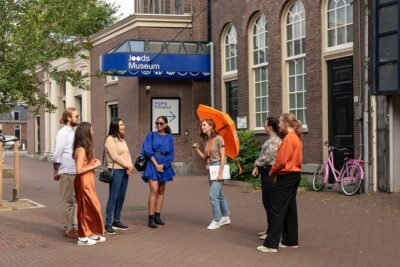
Anne Frank’s Story – Guided Walking Tour through Amsterdam
Read our review →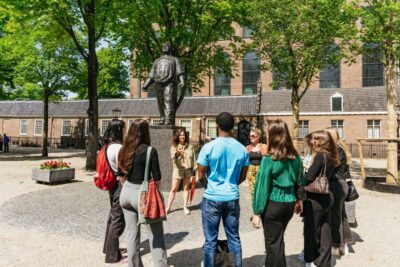
Life of Anne Frank and World War II Walking Tour
Read our review →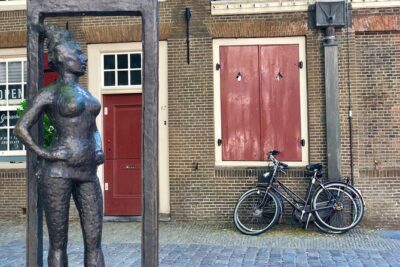
Absolutely Amsterdam – the Essential Introductory Walking Tour
Read our review →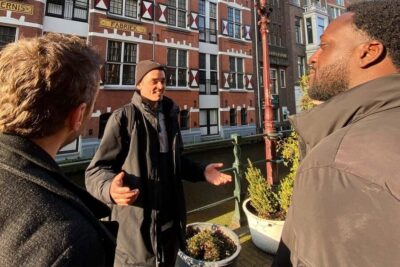

Anne Frank Walking Tour – Guided in EN/DE/IT/ES
Read our review →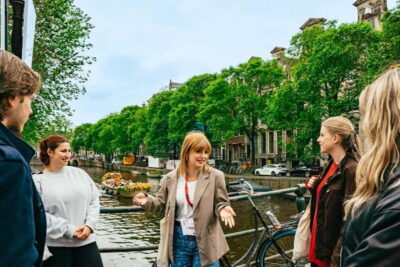
Anne Frank Walking Tour Amsterdam Including Jewish Cultural Quarter
Read our review →Browse the lists this tour appears in