
Reviewed · ANNE FRANK & JEWISH HERITAGE TOURS
Amsterdam: National Holocaust Museum Entry Ticket
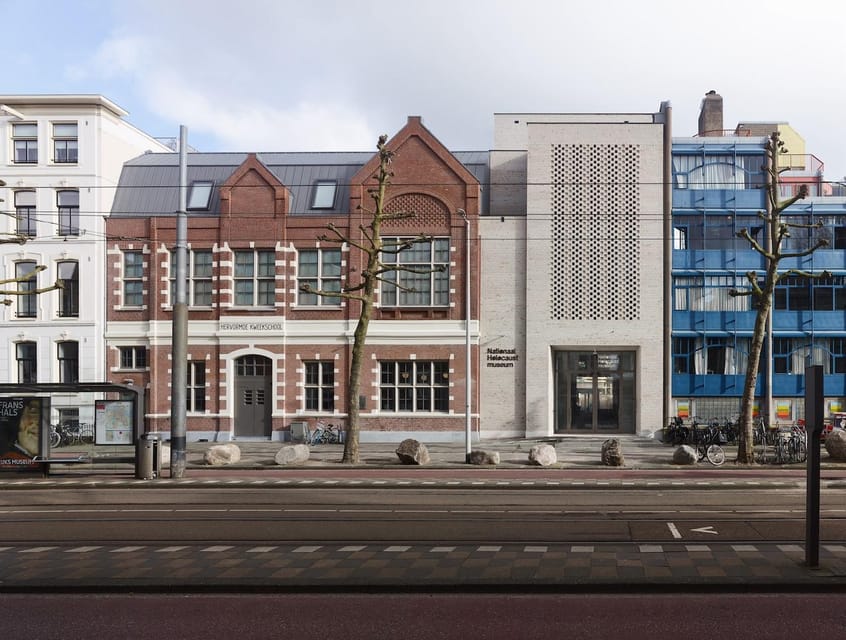
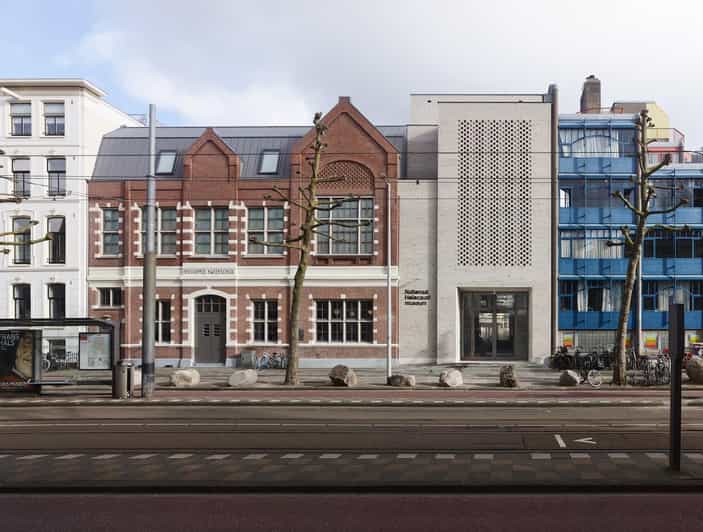
The most important part of this visit is the building itself. The National Holocaust Museum occupies the former Hervormde Kweekschool, a school that became part of a desperate rescue effort while Jewish children were held in the adjacent daycare before deportation. I like that the museum connects large events to real people, homes, schools, families, and names. I also like the calm, self-guided format, which lets you stop when a story needs time.
The main drawback is the sheer amount of material. You can easily need several hours, and some displays may be hard to see because of reflections or narrow viewing points. Plan carefully, especially near closing time, and do not treat this as a quick stop between canals and cafés.
In This Review
- Key points to know before you go
- Why this museum belongs on an Amsterdam itinerary
- Entering the former Hervormde Kweekschool
- The first rooms: Jewish life before the war
- How persecution became a system
- Personal accounts, artifacts, and interactive holograms
- Henriëtte Pimentel and the children at the daycare
- The Hollandsche Schouwburg memorial
- Liberation and the question of memory
- How much time should you allow?
- Is the $24 ticket good value?
- Who will get the most from this visit?
- Booking flexibility and practical details
- Should you book it?
- FAQ
- What does the National Holocaust Museum ticket include?
- How long is the ticket valid?
- How long does a visit take?
- Is the museum wheelchair accessible?
- Is photography allowed?
- Can I cancel my booking?
- Can I pay later?
Key points to know before you go
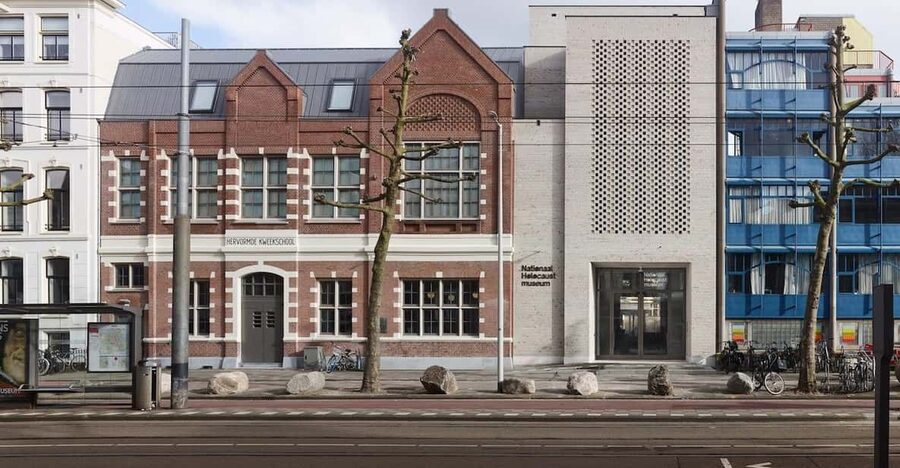
- The former Hervormde Kweekschool gives the museum a direct link to the rescue of Jewish children.
- Your ticket also includes the Hollandsche Schouwburg National Holocaust Memorial.
- The displays cover Jewish life before the war, Nazi persecution, liberation, and Dutch memory culture.
- Interactive holograms allow you to ask questions and hear recorded answers from historical figures.
- The museum is self-paced, but the amount of reading and listening can fill half a day.
- A $24 ticket is reasonable if you use both sites and allow enough time for the material.
Why this museum belongs on an Amsterdam itinerary
Amsterdam is full of grand museums, canal houses, and easy pleasures. The National Holocaust Museum asks something different of you. It asks you to slow down and look closely at how ordinary life was stripped away, step by step, from Dutch Jews during the Second World War.
Before the war, Jewish and non-Jewish people in the Netherlands lived alongside one another with the same legal rights. The museum begins with that everyday reality. This matters because the Holocaust did not begin with deportation trains. It began with discrimination, registration, exclusion, confiscation, and rules that made neighbors into targets.
The museum then follows the Nazi occupation and the destruction of Jewish life. About three-quarters of the Jewish population in the Netherlands was killed. Across Europe, the Nazis murdered approximately six million Jews. Those figures are essential, but numbers alone can make history feel remote. The museum works hard to give victims recognizable faces and individual stories.
I find that approach more useful than a display that only lists dates and military events. You see the human cost of policy. You also see how the Netherlands dealt with the Holocaust afterward, including the place of this history in Dutch national memory culture. That final subject is important. Remembering is not just about looking backward. It is also about asking how a country tells the story of what happened.
More Entry Tickets in Amsterdam
- Amsterdam: Van Gogh Museum Ticket
★ 4.7 · 52,054 reviews - Amsterdam: Heineken Experience Ticket
★ 4.6 · 30,055 reviews - Amsterdam: Rijksmuseum Entry Ticket
★ 4.7 · 25,535 reviews
Entering the former Hervormde Kweekschool
The museum’s setting is not a neutral container. The Hervormde Kweekschool was a school, and during the occupation it became connected to the nearby Jewish daycare, which the Nazis used as a gathering and deportation point for Jewish children.
Henriëtte Pimentel, the daycare director, helped hundreds of children escape. Some were moved through the Kweekschool. Knowing this before you enter changes the way you read the rooms. A classroom or corridor is no longer just an old interior. It becomes part of a network of danger, courage, secrecy, and hurried decisions.
The building gives the museum a close, personal scale. You are not simply being asked to absorb a national story from a distance. You are following what happened in a particular Amsterdam neighborhood and in places where children, teachers, parents, and rescuers had to make impossible choices.
The museum does not turn this history into a heroic adventure. That is one of its strengths. Rescue is presented alongside fear, loss, betrayal, and the machinery of deportation. Pimentel’s work is vital, but it does not erase the terrible fact that most Dutch Jews did not survive the Holocaust.
The first rooms: Jewish life before the war
Start slowly in the sections about Jewish life before the Second World War. These rooms help you see people as citizens with jobs, families, beliefs, routines, and connections to their neighbors.
This opening is easy to hurry past because the later galleries carry such emotional weight. I would not skip it. The museum wants you to understand what was destroyed, not just who was murdered. The story is about the loss of homes, communities, schools, traditions, relationships, and a shared future.
Photographs, written accounts, and objects help build this picture. You may find yourself spending more time with a single portrait than with a large panel of background information. That is the point. A face gives the history a human scale.
The presentation is restrained rather than theatrical. It does not need dramatic decoration. The facts are already severe, and the museum allows them to do their work. Some people may find the amount of reading demanding, but the clear labels make it possible to choose your pace.
How persecution became a system
The museum explains the gradual process by which Nazi rule targeted Jews. It shows how restrictions and administrative measures built toward deportation and murder.
This part can be difficult because it reveals how destruction was organized. The Holocaust was not only a series of isolated acts of violence. It depended on laws, records, orders, transport systems, forced cooperation, and the steady removal of rights.
The museum’s value lies in showing those stages clearly. You can trace how normal life was narrowed, then broken. A person who had lived freely could be denied work, education, movement, property, and safety. Eventually, deportation became the next step.
The exhibits do not avoid the atrocities. At the same time, the presentation is controlled and respectful. You should expect upsetting photographs, personal accounts, and objects connected to persecution. This is not a light museum visit, and it is best approached with a quiet frame of mind.
More Museum Tours in Amsterdam
- Moco Museum Amsterdam Entrance Tickets with Banksy & More
★ 4.4 · 10,088 reviews - Amsterdam: The Upside Down Museum Entrance Ticket
★ 4.4 · 9,506 reviews - Amsterdam: Red Light Secrets Museum Entry Ticket
★ 4.2 · 5,722 reviews - Amsterdam’s Weirdest Museum: Believe It or Not!
★ 4.5 · 4,086 reviews
Personal accounts, artifacts, and interactive holograms
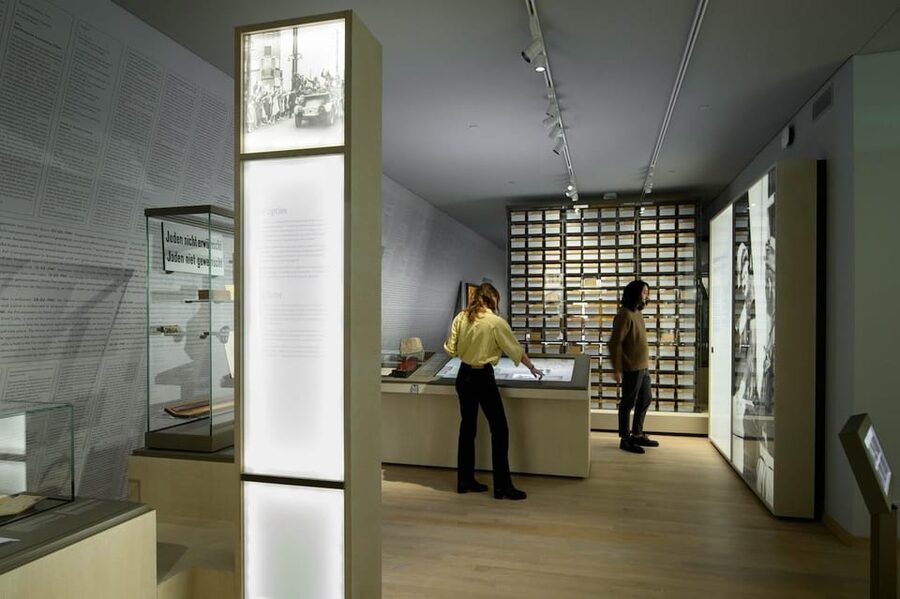
The museum uses personal testimony to keep the history close. Written accounts and audio material add voices to the objects and photographs. An audio guide can add useful context throughout the visit, although one reported problem was that some English accounts switched to Dutch. If you rely on audio, check the language as you go.
The interactive holograms are one of the more unusual features. You can ask questions and receive recorded answers from the people represented. This gives the visit a conversational quality without turning it into an entertainment show.
I like the idea because it gives you a way to engage with testimony at your own speed. You can ask about a person’s experience rather than simply read a fixed caption. The format may not work for everyone, and you might need to wait if several people want to use the same station. Still, it offers a memorable way to connect with individual lives.
Artifacts include suitcases, portraits, and other objects tied to the period. Some displays are carefully arranged and easy to follow. One practical issue is lighting. Reflections on glass cabinets can make certain objects difficult to see, including some suitcases and portraits. If an item matters to you, move around the case and try a different angle rather than giving up immediately.
Henriëtte Pimentel and the children at the daycare
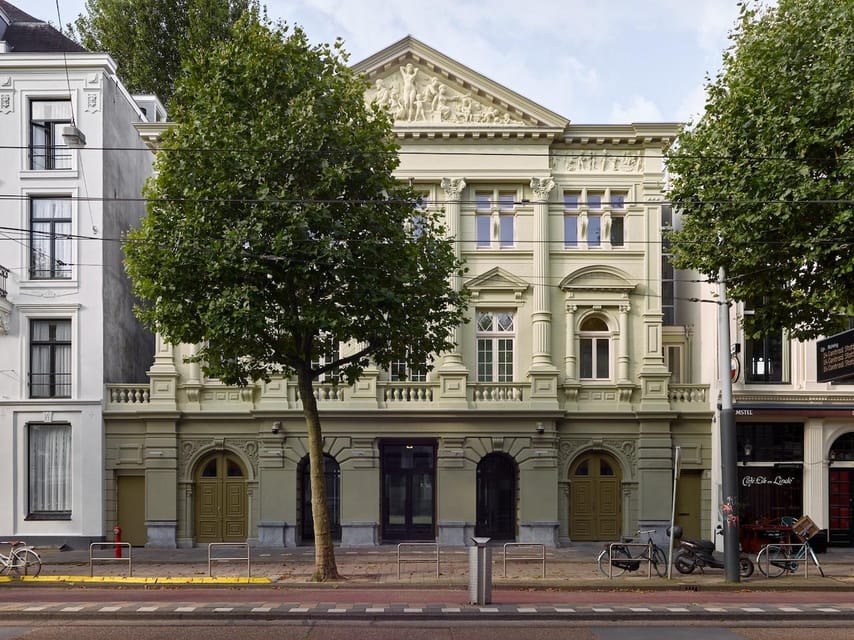
The link between the museum and the neighboring daycare is among the most powerful parts of the visit. Jewish children were brought to the daycare before deportation. Henriëtte Pimentel helped hundreds escape, including through the Kweekschool.
This story adds an important layer to the museum. You learn about persecution, but you also see the choices people made inside a system designed to remove choice. Adults had to decide when and how children could be moved. Families faced the agony of separation, often without knowing what would happen next.
The museum does not suggest that rescue made the surrounding horror less terrible. Instead, it shows what resistance could look like in a confined urban setting. Sometimes it involved a dramatic act. Sometimes it meant finding a route, hiding a child, passing information, or taking a risk at the right moment.
Give this section time. It is one of the places where the building, the objects, and the story reinforce one another most strongly.
The Hollandsche Schouwburg memorial
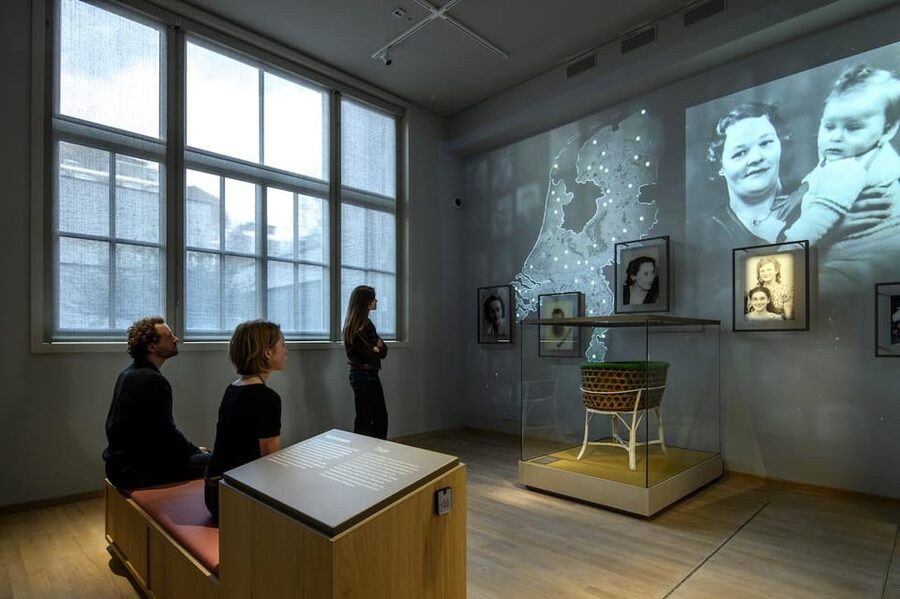
Your ticket also includes entry to the Hollandsche Schouwburg National Holocaust Memorial. Treat it as a separate part of the visit, not just an extra room to check off.
The Hollandsche Schouwburg was used during the occupation as a holding place for Jewish people before deportation. The memorial gives the persecution a second location and helps you understand how Amsterdam’s Jewish population was gathered, confined, and sent away.
The two sites work well together. The National Holocaust Museum offers a broad account of Jewish life, persecution, survival, and memory. The Hollandsche Schouwburg brings you to a place associated directly with waiting, separation, and deportation.
Because the ticket is valid for seven days from first activation, you do not have to force both places into one rushed afternoon. That flexibility adds real value. You can visit the museum when you have several hours, then see the memorial on another day when you are ready for a quieter, shorter visit.
The available information does not give a detailed timed route between the two locations, so check the practical arrangements when you receive your booking information. The key point is to protect enough time for both sites.
Liberation and the question of memory
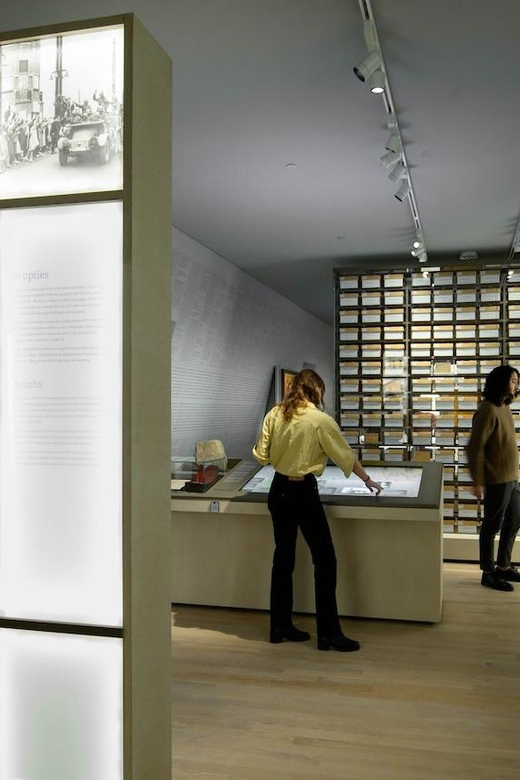
The museum continues beyond the occupation and the murder of Europe’s Jews. It also examines liberation and how the Holocaust was handled in Dutch national memory culture.
This is a necessary ending. Liberation did not instantly repair families, neighborhoods, or communities. Survivors returned to a changed country, often without parents, children, homes, possessions, or a clear place in public life.
The memory section asks how the Holocaust was remembered, discussed, or left aside. That makes the museum relevant beyond the wartime story. You are encouraged to consider the responsibilities of museums, schools, governments, and citizens when confronting a national past.
I appreciate that the museum includes this chapter rather than ending with liberation. A museum about the Holocaust should explain not only what happened, but also how later generations chose to remember it. The final galleries may feel less immediately dramatic, yet they are among the most useful for understanding why this museum exists today.
How much time should you allow?
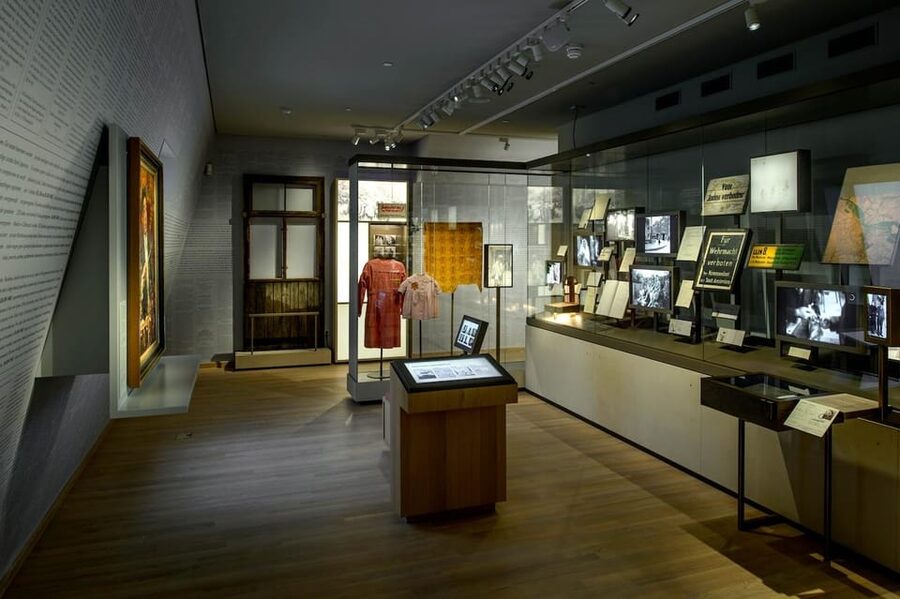
Do not plan this as a one-hour attraction. Several hours is a sensible target, and half a day is better if you want to read the labels, listen to the audio material, use the interactive stations, and pause with the personal accounts.
The museum can feel overwhelming because there is so much to absorb. That is not necessarily a flaw. It means you should manage your attention.
A practical approach is to make one careful pass through the main sections, then return to the objects or testimonies that stayed with you. If you try to read every line at the same speed, you may run out of energy before reaching the sections about liberation and memory.
Closing time is another concern. The museum closes promptly, and you may be asked to leave right at closing. Arriving late in the day can leave you frustrated, especially if you have paid for entry and still have several galleries to see. Start early or reserve a generous block of time.
The building can also become crowded around small exhibits. Some viewing points allow only two people at once, which can create a queue. If a particular display is busy, you may need to wait or return later.
Is the $24 ticket good value?
At $24 per person, this is not a casual bargain attraction. Its value depends on how much time and attention you give it.
The price includes the National Holocaust Museum and the Hollandsche Schouwburg memorial. Since the ticket remains valid for seven days after first activation, you can split the experience across your Amsterdam stay. That is useful if a single visit feels too heavy or if your schedule is full.
You are paying for a serious museum visit, not a guided walking tour or a short photo stop. There is no named guide attached to this experience. Instead, the museum provides its own exhibitions, written interpretation, personal accounts, and audio material. If you prefer a live guide to explain the history and answer questions in real time, this may feel less personal.
If you want a well-organized account that you can explore privately, the price is fair. The presentation is clear, the historical setting matters, and the second memorial site strengthens the ticket. The café is also a useful place to pause, though the main value remains the exhibitions.
Who will get the most from this visit?
I recommend this museum to adults, older children, students, teachers, and anyone who wants to understand the Holocaust in the Netherlands rather than only see Amsterdam’s famous sights.
It suits you if you like museums that ask for reading and reflection. It also works well for people who prefer to move independently, since you can spend extra time with one testimony and pass more quickly through familiar background.
Families should decide in advance how much detail younger children can handle. The subject is painful, and the displays may include disturbing images and accounts. The interactive holograms could help older children engage with the material, but the museum is not designed as a light family attraction.
Those with a personal connection to Jewish history may find the visit especially affecting. You should also leave room afterward for a quiet walk or meal. This is not the kind of museum I would pair with a packed schedule of more major attractions.
The museum is wheelchair accessible. Photography is allowed, but you should keep it respectful. Do not treat the objects, names, or memorial spaces as ordinary sightseeing backdrops.
Booking flexibility and practical details
You can cancel up to 24 hours before the scheduled visit for a full refund, and you can reserve now while paying later. That helps if your Amsterdam plans are still moving around.
The meeting point is the National Holocaust Museum. The ticket is valid for seven days from its first activation, not seven days of continuous museum access. Use that period to visit both included locations at a pace you can manage.
There is no stated fixed tour duration. In practice, allow several hours for the museum and additional time for the Hollandsche Schouwburg. The exact amount depends on how much you read, how long you spend with the audio material, and how busy the small exhibits are.
Should you book it?
Book this if you want a serious, personal account of Jewish life and persecution in the Netherlands, and if you can give the subject proper time. The former school, the story of Henriëtte Pimentel, the child rescue efforts, the personal artifacts, and the second memorial site make this far more than a standard history display.
Do not book it as a rushed filler activity. You may miss important sections, face queues at narrow displays, or leave feeling that the museum gave you too much information too quickly.
For $24, the ticket makes the most sense when you visit both sites and use the seven-day validity. Go early, bring patience, and plan a quiet period afterward. If you are prepared for a sobering visit, this is one of Amsterdam’s most important museums.
FAQ
What does the National Holocaust Museum ticket include?
The ticket includes entry to the National Holocaust Museum and the Hollandsche Schouwburg National Holocaust Memorial.
How long is the ticket valid?
The ticket is valid for seven days from the first time you activate it.
How long does a visit take?
No fixed visit length is stated. You should allow several hours, and half a day may be suitable if you want to read and listen to the displays carefully.
Is the museum wheelchair accessible?
Yes, the museum is wheelchair accessible.
Is photography allowed?
Yes, photography is allowed. You should photograph the exhibits and memorial spaces respectfully.
Can I cancel my booking?
Yes. You can cancel up to 24 hours in advance for a full refund.
Can I pay later?
Yes. The reserve now and pay later option allows you to hold your place without paying at the time of booking.
More Museums and Galleries in Amsterdam
- Amsterdam: Van Gogh Museum Ticket and City Canal Cruise
★ 4.6 · 3,899 reviews - Amsterdam: Rembrandt House Museum Entrance Ticket
★ 4.7 · 3,385 reviews - Amsterdam: Van Gogh Museum Ticket & Canal Cruise
★ 4.5 · 3,304 reviews - Amsterdam: NEMO Science Museum Ticket
★ 4.4 · 2,979 reviews
More Anne Frank and Jewish Heritage Walks
- Anne Frank’s Story – Guided Walking Tour through Amsterdam
★ 5.0 · 11,619 reviews - Amsterdam: Life of Anne Frank and World War II Walking Tour
★ 4.8 · 10,467 reviews - Amsterdam: Anne Frank Guided Small Group Walking Tour
★ 4.8 · 2,722 reviews - Amsterdam: Anne Frank Walking Tour – Guided in EN/DE/IT/ES
★ 4.9 · 2,676 reviews
Just added around Amsterdam
- Amsterdam: Food and Canal Tour★ 4.6 · 22 reviews
- Segway City Tours Amsterdam★ 4.3 · 23 reviews
- Amsterdam Canal Cruise in Classic Salon Boat With Drinks and Cheese★ 4.0 · 22 reviews
- Discover Deventer with an Outside Escape city game tour!★ 4.5 · 23 reviews
- Historical Walking Tour, private with local Dutch guide★ 5.0 · 23 reviews
- Utrecht Food Tour on a Bicycle with local guide★ 5.0 · 23 reviews
- Amsterdam: Captain For a Day 2-Hour Boat Rental★ 4.9 · 23 reviews
- Amsterdam Small-Group Breakfast Morning Cruise★ 5.0 · 23 reviews
Anne Frank & Jewish Heritage Tours, compared.
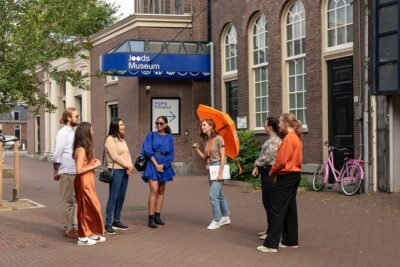
Anne Frank’s Story – Guided Walking Tour through Amsterdam
Read our review →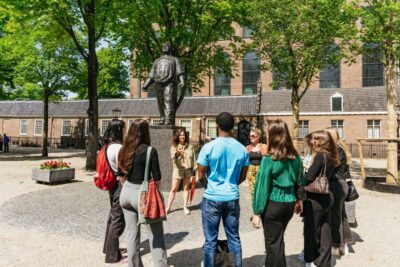
Life of Anne Frank and World War II Walking Tour
Read our review →

Anne Frank Walking Tour – Guided in EN/DE/IT/ES
Read our review →
Anne Frank Walking Tour Amsterdam Including Jewish Cultural Quarter
Read our review →
Anne Frank’s Last Walk & See Anne Frank House in Virtual Reality
Read our review →
Oranjehotel World War II Prison Entrance Ticket
Read our review →Browse the lists this tour appears in