
Reviewed · ANNE FRANK & JEWISH HERITAGE TOURS
Amsterdam in World War II Tour
Amsterdam’s WWII story comes into sharp focus on foot, beginning outside Anne Frank House and continuing through streets where occupation, resistance, deportation, and liberation played out. This is not a museum visit: you stay outdoors, moving between sites with a retired historian who uses period photographs, maps, logbooks, and personal notes to connect today’s city with 1940 to 1945.
I like the small group of no more than eight, which gives you room to ask questions and keeps the pace human. I also like the use of original-looking visual material, including photographs of wartime Amsterdam and copies that some guides provide for you to take home. The main consideration is that this is a serious, sometimes painful walk, and the Anne Frank House itself is not included.
In This Review
- Key points to know before booking
- Why this Amsterdam WWII walk is different
- Starting outside Anne Frank House
- From the Multatuli Statue to Magna Plaza
- Nieuwe Kerk and the street of Mozes en Aäron
- Dam Square, occupation, liberation, and remembrance
- The former city hall at The Grand
- A slow walk through Jewish Amsterdam
- The guides and the small-group format
- Is the $46.44 price good value?
- Who should book this tour?
- Booking, timing, and practical details
- Should you book the Amsterdam in World War II Tour?
- FAQ
- Where does the Amsterdam in World War II Tour start?
- Where does the tour end?
- Does the tour include entry to Anne Frank House?
- How long does the tour last?
- How many people can join the tour?
- Who leads the tour?
- What happens if the weather is poor?
Key points to know before booking
- Begins outside Anne Frank House: The tour opens with the German attack, Jewish refugees, and Anne Frank’s story, but museum admission is not part of the experience.
- Led by retired historians: Peter, Ben, and the other guides bring academic training and a clear personal commitment to Amsterdam’s occupation history.
- Small and slow-paced: The group limit is eight, and the walking speed is adjusted so the slowest person can keep up.
- Covers more than Jewish history: You also learn about German troops, Dutch civil servants, resistance, recruitment, the May 1945 shootings, and national remembrance.
- Uses photographs and maps: Period images help you compare present-day streets with Amsterdam under German rule.
- Ends near the Holocaust Names Monument: The finish is close to the Portuguese Synagogue and not far from city hall, making it easy to continue exploring the former Jewish quarter.
Why this Amsterdam WWII walk is different
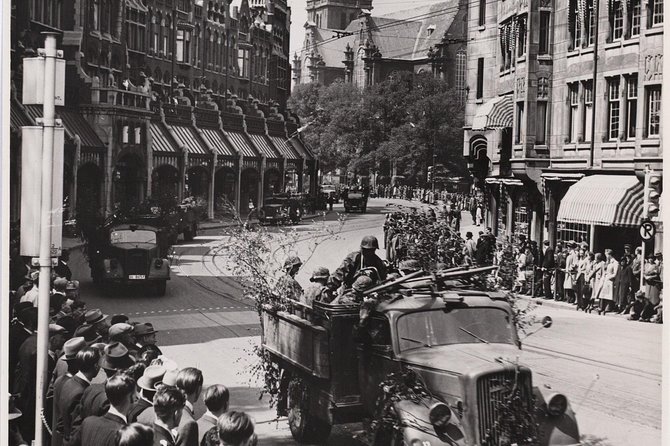
Amsterdam has plenty of general history walks, but this one keeps its attention on the German occupation of the Netherlands from 1940 through 1945. That narrow focus is its strength. You are not being rushed from one famous sight to another with a few wartime facts added along the way.
Instead, Peter, Ben, or one of the other retired historians builds a story as you walk. The emphasis is on how the occupation changed ordinary places. A post office becomes part of a story about Dutch employees executed by the Germans. A square used for shopping and festivals becomes the setting for recruitment, violence, public memory, and mourning.
I would choose this tour if you want context rather than a quick introduction. The guides are praised for bringing photographs, maps, logbooks, and other documents into the walk. That matters because Amsterdam’s wartime traces are not always obvious. You need someone to show you what has changed and explain what you are looking at.
The mood is solemn, but the walk is not described as grim every minute. Ben, in particular, is noted for adding ordinary Amsterdam stories along the way, giving the group a little breathing room without treating the occupation lightly. That balance can make a difficult subject easier to follow.
More Anne Frank and Jewish heritage walks:
- Anne Frank’s Story – Guided Walking Tour through Amsterdam
★ 5.0 · 11,619 reviews - Amsterdam: Life of Anne Frank and World War II Walking Tour
★ 4.8 · 10,467 reviews - Amsterdam: Anne Frank Guided Small Group Walking Tour
★ 4.8 · 2,722 reviews
Starting outside Anne Frank House
The meeting point is Prinsengracht 263, outside Anne Frank House, at 9:30 am. This is a practical starting place because the address is easy to identify, but it also puts the most familiar name in Amsterdam’s WWII story at the front of the tour.
You do not enter the museum. The guide uses the exterior setting to explain the German attack on the Netherlands, the arrival of Jewish refugees, and the wider circumstances surrounding Anne Frank’s family. If you want to visit Anne Frank House separately, you will need a museum ticket and a separate booking.
That distinction is important. Some people may expect a combined museum-and-walking tour because the walk begins there. It is not. The value here is the surrounding history and the way the guide places Anne Frank’s story within the experience of Jewish people, Dutch society, and German occupation.
Starting here also gives the guide a strong way to move from one family’s story to a citywide picture. You begin with a location associated with hiding and persecution, then continue into public spaces where the occupation was visible in a different way.
From the Multatuli Statue to Magna Plaza
The walk continues to the Statue of Multatuli, in the Raadhuisstraat and near the bridge over the Singel. This stop is less about a single wartime monument and more about seeing how Amsterdam changed after the war.
That may sound modest compared with Anne Frank House or Dam Square, but it is useful. A good historical walk needs pauses where you can compare the Amsterdam in front of you with the city that existed during the occupation. The guide explains changes to the area in the years after WWII, helping you notice that the modern street is not a perfect window onto 1940s Amsterdam.
At Magna Plaza, the story becomes more direct. The building is now a shopping mall owned by a Swedish entrepreneur, but during WWII it served as Amsterdam’s post office. Dutch postmen were executed by German authorities, giving this otherwise ordinary commercial site a clear connection to occupation and resistance.
This is the type of stop that makes the tour worthwhile for history-minded visitors. You are not simply looking at a memorial. You are learning how wartime events took place in workplaces and civic buildings that still shape the city today.
The stop is brief, listed at about five minutes, so do not expect a long indoor visit. The guide’s explanation is the point.
Nieuwe Kerk and the street of Mozes en Aäron
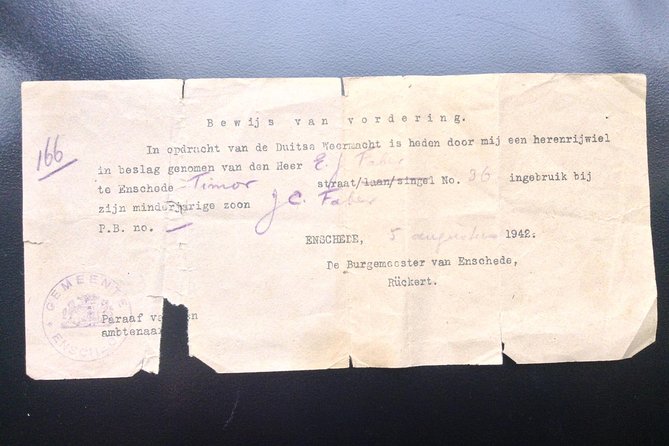
Near Nieuwe Kerk, the guide tells a WWII story connected with the street between the Royal Palace and the church, called Mozes en Aäronstraat. Again, this is a short stop, but it adds another layer to the city center.
The area around the Royal Palace and Nieuwe Kerk is usually associated with ceremony, architecture, and royal history. The tour asks you to see the same stretch of Amsterdam through the pressure of occupation. That change in viewpoint is one of the best features of a focused history walk.
You should expect outdoor storytelling rather than entry into the church. The itinerary gives this stop about five minutes, so the guide is likely using the street as a precise setting for a particular wartime account rather than offering a full architectural tour.
A few more Amsterdam half-days to weigh up
- Amsterdam: Van Gogh Museum Ticket
★ 4.7 · 52,054 reviews - Amsterdam Classic Saloon Boat Cruise with Drinks and Cheese
★ 5.0 · 31,825 reviews - Amsterdam Luxury Canal Cruise + Unlimited Drinks & Bites option
★ 5.0 · 30,518 reviews - Amsterdam: Heineken Experience Ticket
★ 4.6 · 30,055 reviews
Dam Square, occupation, liberation, and remembrance
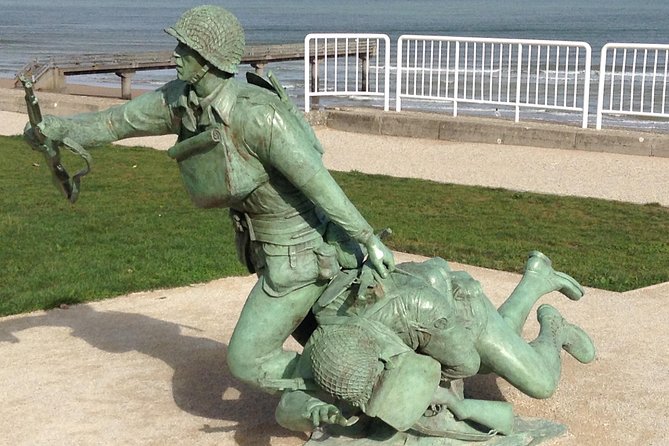
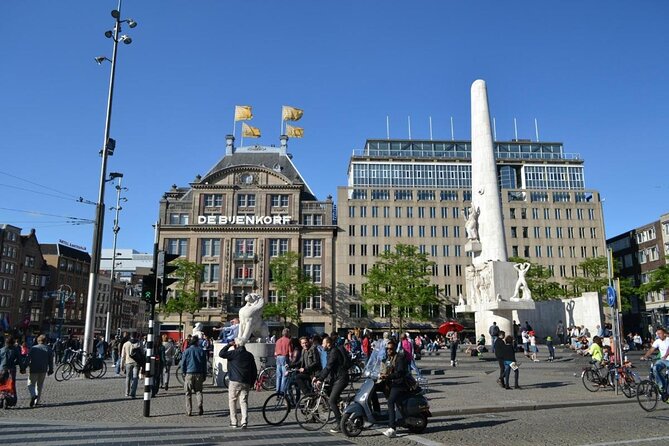
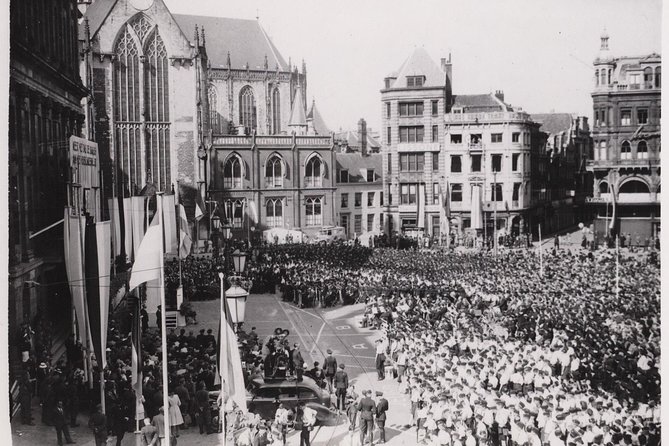
Dam Square receives the longest single stop, about 25 minutes, and it earns that time. The square is the heart of Amsterdam, and several important WWII stories meet here.
You hear about the German occupation and about Dutch volunteers recruited for the crusade against Bolshevism. That detail shows that the Dutch wartime experience was not only a story of victims and resistance. It also involved collaboration, political choices, propaganda, and people who supported or served German aims.
The guide also explains the shooting on May 7, 1945, two days after the German surrender. The timing is a sharp reminder that liberation did not bring an instant end to danger or confusion. Public spaces could still become scenes of violence even after the formal surrender.
Dam Square is also tied to May 4 remembrance and the WWII monument. The tour connects these traditions to the physical place, so you can better understand how Amsterdam remembers the dead and marks the occupation today.
I appreciate this broader approach. A tour focused only on Anne Frank and the Holocaust would leave out major parts of the Dutch wartime story. At Dam Square, you get a clearer sense of public life, political pressure, violence, liberation, and memory.
Because the square is central and busy, it may not feel private or quiet. That is part of the point, but it can make listening harder at times. The guides are praised for projecting their voices and making sure everyone can hear, which helps in an open city space.
The former city hall at The Grand
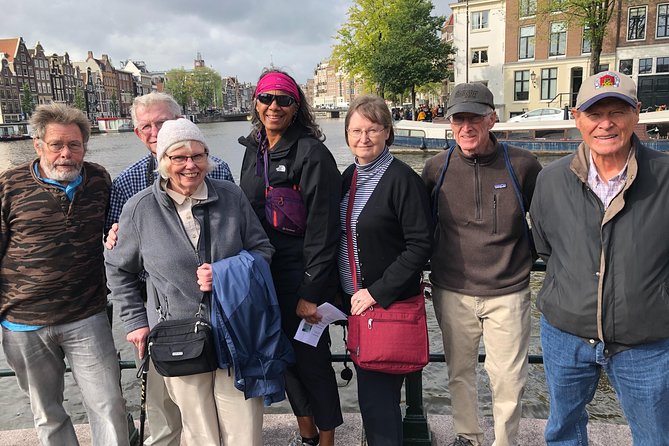
The walk pauses outside Sofitel Legend The Grand Amsterdam, identified here as the former city hall. During WWII, German troops were welcomed by Dutch civil servants on May 15, 1940.
This stop is valuable because it raises uncomfortable questions about administration and cooperation. Occupation was not maintained by soldiers alone. Civil offices, institutions, and local officials also had roles to play, and the welcome given to German troops shows the complicated choices that faced Dutch authorities at the start of the occupation.
The stop lasts about five minutes, so the guide cannot cover every aspect of Dutch government during the war. Still, it provides an important counterpoint to stories of resistance. You see how the occupation entered Amsterdam through official buildings as well as through raids, arrests, and street-level intimidation.
A slow walk through Jewish Amsterdam
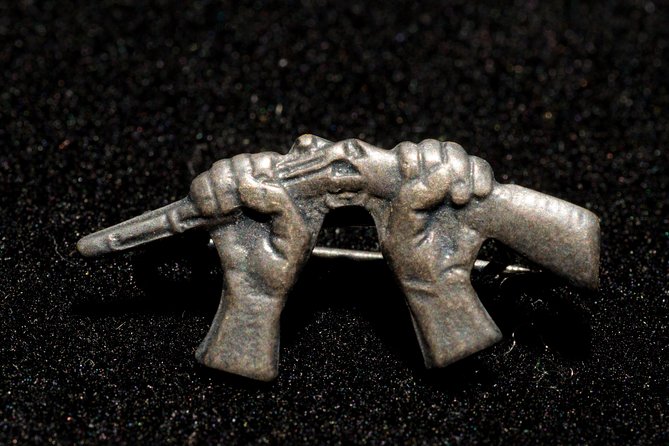
The overall route takes about three to three and a half hours, with roughly two and a half hours devoted to important sites and monuments connected with the Nazi occupation. The walking pace is intentionally slow.
That pace is a real advantage. Peter and Ben are both praised for giving people time to keep up, answer questions, and study the photographs they carry. You are not expected to march across the city while trying to absorb a complicated subject.
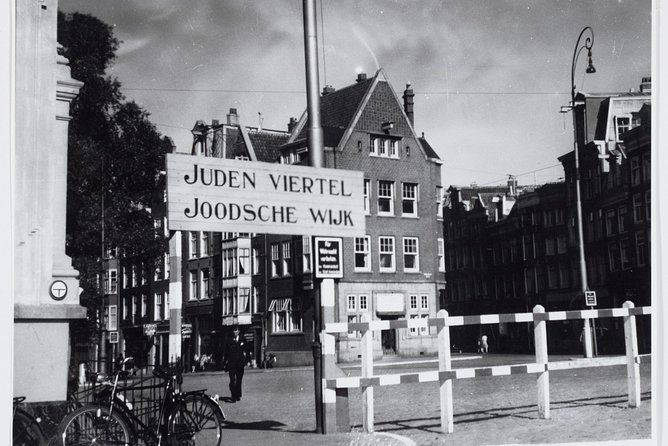
The route reaches the National Holocaust Names Monument at the end, close to the Portuguese Synagogue and not far from city hall. Ending there gives the walk a clear emotional direction. You move from the private story associated with Anne Frank House through public institutions and squares, then finish at a place dedicated to the names of Holocaust victims.
The exact route can take longer than three hours if the group asks many questions. One account describes a three-and-a-half-hour walk that did not feel rushed or tedious. That is a good sign for anyone who prefers discussion, but you should allow extra time before your next appointment.
The tour is near public transportation, and no private transport is included. You walk between the stops. Wear comfortable shoes and prepare for Amsterdam weather, since the experience depends on good conditions and may be rescheduled or refunded if poor weather forces cancellation.
The guides and the small-group format
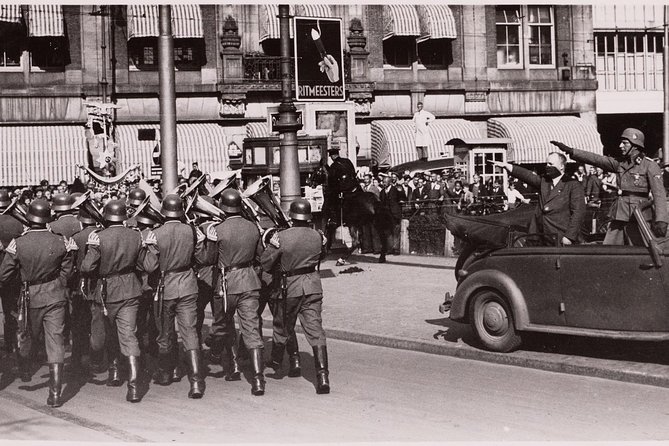
The guides are three retired historians with a special interest in the German occupation of the Netherlands. Peter and Ben are named most often, and each brings a slightly different feel to the walk.
Peter is described as personable, accurate, and especially strong at using photographs linked to Amsterdam. Ben is praised for patience, kindness, clear explanations, and his ability to bring individual stories to life. The information provided does not assign a specific guide in advance, so you should expect Peter, Ben, or the third retired historian rather than book around one particular person.
The group limit is eight. Some departures may be smaller, with only four people, which changes the experience in useful ways. You can ask about a person, building, or event without feeling you are holding up a large crowd.
A small group also makes it easier for the guide to adjust the walking pace and explain material in response to your interests. If you want a polished performance with a fixed script and headphones, this may feel less formal. If you prefer conversation and questions, it should suit you well.
The guides use photos, maps, logbooks, and printed copies. Some participants receive material to take home. These visual aids are more than decoration. They help you see wartime streets as they looked under German rule and make names, dates, and events easier to remember.
Is the $46.44 price good value?
At $46.44 per person, this is not the cheapest way to spend three hours in Amsterdam. You are paying for a specialist subject, a very small group, and a retired historian rather than a general city guide.
I think the price is fair if WWII history is a main reason you want this tour. The walk offers several hours of focused interpretation, and the group size means you are buying access to a conversation, not just a route through the city.
The value is weaker if you want to enter Anne Frank House or see a long list of major Amsterdam attractions. Museum admission is not included, coffee and tea are not included, and the tour remains outdoors. It is best viewed as a specialist history walk, not a general sightseeing bargain.
You can also get more from the price by visiting Anne Frank House separately, if that fits your plans, and by leaving time after the walk for the Holocaust Names Monument, Portuguese Synagogue, and city hall area. The endpoint places you in a useful part of Amsterdam for continuing your own exploration.
Who should book this tour?
I would recommend it most strongly to:
- History buffs who want the Dutch experience of WWII explained in detail.
- Visitors interested in Jewish Amsterdam who want more context than a single museum visit provides.
- People who prefer small groups and the freedom to ask questions.
- Photograph and document enthusiasts who learn best through visual evidence.
- Anyone able to walk slowly for about three hours in changing weather.
- Repeat visitors to Amsterdam who have already seen the main sights and want a more focused subject.
It may be less suitable if you want a lighthearted introduction to the city, dislike discussions of persecution and death, or need a fully indoor activity. It is also not the right choice if you expect to tour Anne Frank House itself.
The subject is heavy, but the guides make room for ordinary details about Amsterdam. That helps keep the walk human rather than turning it into a long list of dates and atrocities.
Booking, timing, and practical details
The tour starts at 9:30 am outside Anne Frank House at Prinsengracht 263. It ends at the National Holocaust Names Monument, postcode 1018 DP, near the Portuguese Synagogue and city hall.
Confirmation is provided when you book. Service animals are allowed, public transportation is nearby, and most people can participate. The advertised group maximum is eight.
You can cancel free of charge up to 24 hours before the start time for a full refund. Changes or cancellations made within 24 hours are not accepted for a refund. The tour requires good weather and a minimum number of participants. If the provider cancels for either reason, you are offered another date or experience, or a full refund.
Since the tour is usually booked about 44 days ahead, I would not leave it until the last minute if your Amsterdam dates are fixed. That is especially true if you want a particular morning during a short stay.
Should you book the Amsterdam in World War II Tour?
Book it if you want a serious, place-based account of Amsterdam under German occupation, especially one that connects Anne Frank, Jewish life, Dutch administration, resistance, recruitment, liberation, and remembrance.
The strongest reasons are the retired historian guides, the small group, the slow pace, and the use of wartime photographs and documents. The main limits are just as clear: no Anne Frank House admission, no private transport, and a long outdoor walk on a difficult subject.
For a general city tour, choose something broader. For a careful WWII experience that helps you understand what Amsterdam’s streets meant between 1940 and 1945, the $46.44 fee is well spent.
FAQ
Where does the Amsterdam in World War II Tour start?
It starts at 9:30 am outside Anne Frank House at Prinsengracht 263, 1016 GV Amsterdam.
Where does the tour end?
The walk ends at the National Holocaust Names Monument, near the Portuguese Synagogue and not far from city hall.
Does the tour include entry to Anne Frank House?
No. The guide begins outside Anne Frank House and discusses the German attack, Jewish refugees, and Anne Frank’s story, but museum admission is not included.
How long does the tour last?
The tour lasts approximately three to three and a half hours. The walking pace is slow.
How many people can join the tour?
The maximum group size is eight people.
Who leads the tour?
The tours are led by one of three retired historians. Peter and Ben are two of the named guides.
What happens if the weather is poor?
The experience requires good weather. If it is canceled because of poor weather, you are offered a different date or a full refund.
Just added around Amsterdam
- Amsterdam: Food and Canal Tour★ 4.6 · 22 reviews
- Segway City Tours Amsterdam★ 4.3 · 23 reviews
- Amsterdam Canal Cruise in Classic Salon Boat With Drinks and Cheese★ 4.0 · 22 reviews
- Discover Deventer with an Outside Escape city game tour!★ 4.5 · 23 reviews
- Historical Walking Tour, private with local Dutch guide★ 5.0 · 23 reviews
- Utrecht Food Tour on a Bicycle with local guide★ 5.0 · 23 reviews
- Amsterdam: Captain For a Day 2-Hour Boat Rental★ 4.9 · 23 reviews
- Amsterdam Small-Group Breakfast Morning Cruise★ 5.0 · 23 reviews
Anne Frank & Jewish Heritage Tours, compared.
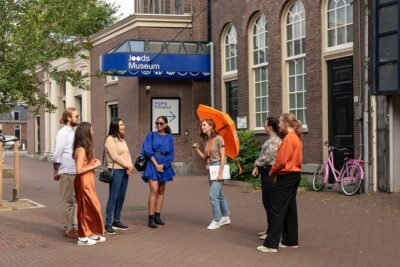
Anne Frank’s Story – Guided Walking Tour through Amsterdam
Read our review →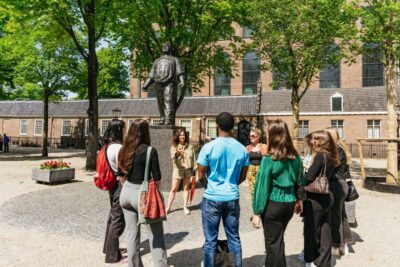
Life of Anne Frank and World War II Walking Tour
Read our review →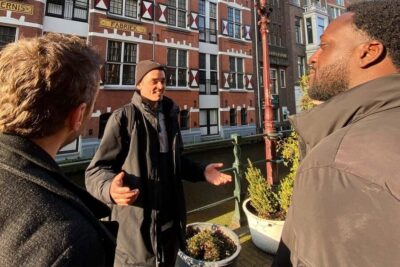

Anne Frank Walking Tour – Guided in EN/DE/IT/ES
Read our review →
Anne Frank Walking Tour Amsterdam Including Jewish Cultural Quarter
Read our review →
Anne Frank’s Last Walk & See Anne Frank House in Virtual Reality
Read our review →
Oranjehotel World War II Prison Entrance Ticket
Read our review →Browse the lists this tour appears in