

Reviewed · WORKSHOPS IN AMSTERDAM
Amsterdam: Traditional Dutch Syrup Waffle Making Workshop
The best part of this 45-minute stroopwafel workshop is that you do not simply buy Amsterdam’s famous caramel waffle. You make it yourself, from rolling the dough to sandwiching warm syrup between two crisp layers. The class takes place behind the Albert Cuyp Market, where the smell of baked dough and caramel gets you in the right mood before you even put on an apron.
I like the clear, hands-on format and the friendly hosts, including Vince, Lisa, Jack, Jay, Roza, and Nicola. I also like the value: you make two very large stroopwafels, enjoy one with coffee or tea, take the other home, and receive a certificate.
The main consideration is space. One class had roughly 20 to 25 people sharing four waffle makers, so some participants waited their turn. If you sit at the back, it may also be harder to hear the instructor. Arrive early and choose your place carefully.
In This Review
- Key things to know before you book
- Making stroopwafels behind Albert Cuyp Market
- A short story behind the Dutch caramel waffle
- Rolling dough and working the traditional iron
- Adding warm syrup and personal toppings
- Coffee, conversation, and the first bite
- One waffle now, one waffle for later
- A good fit for families, couples, and solo visitors
- Timing, cancellations, and small practical details
- Is the stroopwafel workshop worth booking?
- FAQ
- How long does the stroopwafel workshop last?
- How many stroopwafels are included?
- Are coffee and tea included?
- Is the workshop taught in English?
- Do I need baking experience?
- Is the workshop suitable for wheelchair users?
Key things to know before you book
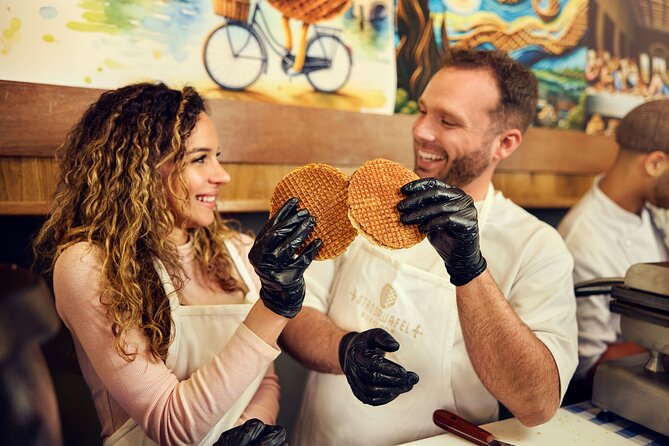
- You make two XL stroopwafels: Eat one fresh and pack the second in a bag for later.
- The class meets behind Albert Cuyp Market: The market is a useful landmark, but signs can be hard to spot when the stalls are open.
- No baking skill is needed: Hosts demonstrate each step, then help as you work.
- The class mixes food and Dutch culture: You hear about the sweet’s 18th-century origins while preparing it.
- Coffee or tea is included: It gives you a pleasant pause while the waffles cool.
- The workshop costs $23 per person: That is a fair price if you want an activity, not just a snack.
Making stroopwafels behind Albert Cuyp Market
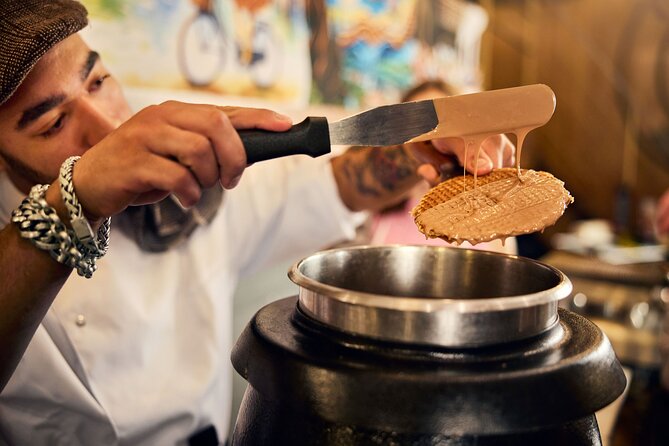
This experience begins in a workshop building behind Amsterdam’s Albert Cuyp Market in the De Pijp area. The location is useful for a half-day plan because you can browse the market before or after class, but do not expect a large street-front shop with an obvious sign. The workshop door opens five minutes before the start time, and I would arrive at least 10 minutes early.
The meeting instructions advise you to enjoy the market if you arrive ahead of schedule. That is good advice. Albert Cuyp Market gives you a quick taste of local food stalls and everyday Amsterdam before you settle into a short cooking class.
If you are driving, allow about 20 minutes extra to find parking. Parking in this part of Amsterdam can be difficult, and arriving at the last second would make the opening introduction stressful. If you cannot find the building, the phone number on your voucher is the best backup.
Once inside, you enter a warm kitchen-style room with aprons, ingredients, waffle irons, and work surfaces. The atmosphere is casual rather than formal. You are here to make a sweet, not train as a pastry chef.
More Workshops in Amsterdam
- Amsterdam Traditional Dutch Syrup Waffle Making Workshop
★ 5.0 · 960 reviews - Amsterdam: Bols Cocktail Experience and Cocktail Workshop
★ 4.8 · 666 reviews - Amsterdam: 3-Course Meal in Historic 1st Class Waiting Rooms
★ 4.5 · 292 reviews
A short story behind the Dutch caramel waffle
The workshop opens with an introduction to the stroopwafel and its place in Dutch food culture. You learn that this specialty dates back to the 18th century, which adds useful context to what might otherwise seem like a simple market snack.
A stroopwafel has two thin, round waffle layers with syrup pressed between them. The contrast matters. The outside should be crisp, while the warm caramel filling gives it a soft, chewy center. That balance is the real lesson of the class.
I appreciate that the history is included without taking over the activity. The information comes alongside the cooking, so you learn why the treat matters while your hands are busy. If you are looking for a quick introduction to a Dutch food tradition, this works better than simply picking up a packaged waffle from a shop.
The hosts keep the opening light and social. Vince is often praised for explaining each step and chatting with the group, while Lisa, Jack, Jay, Roza, Julia, and Nicola have also led sessions. The staff names vary by time and date, but the teaching style is consistent: friendly, practical, and easy to follow.
Rolling dough and working the traditional iron

After the introduction, you put on an apron and follow a demonstration. The instructor shows you how to handle the dough, roll it out, and prepare it for the hot iron.
This is the part where the class becomes more than a tasting. You are not watching a specialist do everything while you stand nearby. You take part in the main steps, and the instructor moves around the room to offer help.
The cooking technique needs some care. The waffle must reach that golden, crisp texture without becoming too hard or too soft. The instructor demonstrates the timing and method, then you get your own turn. You do not need previous baking experience. The process is designed for beginners, and the repeated advice from the class is that even a poor cook can produce a good result.
That makes this a strong choice for families and mixed groups. A teenager can take part without needing advanced skills, and adults can enjoy the small challenge of getting the texture right. One family particularly valued it for children aged 12 and 16, which gives you a useful sense of the age range.
The class can feel busy when several people reach the waffle irons at once. Four irons may serve a group of around 20 to 25 people, so you could have a wait between steps. That pause is not a major problem if you expect a relaxed social class, but it may disappoint you if you want constant cooking action from start to finish.
Adding warm syrup and personal toppings
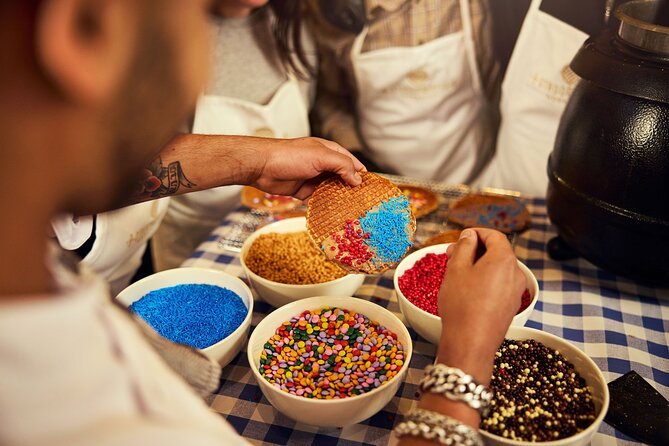
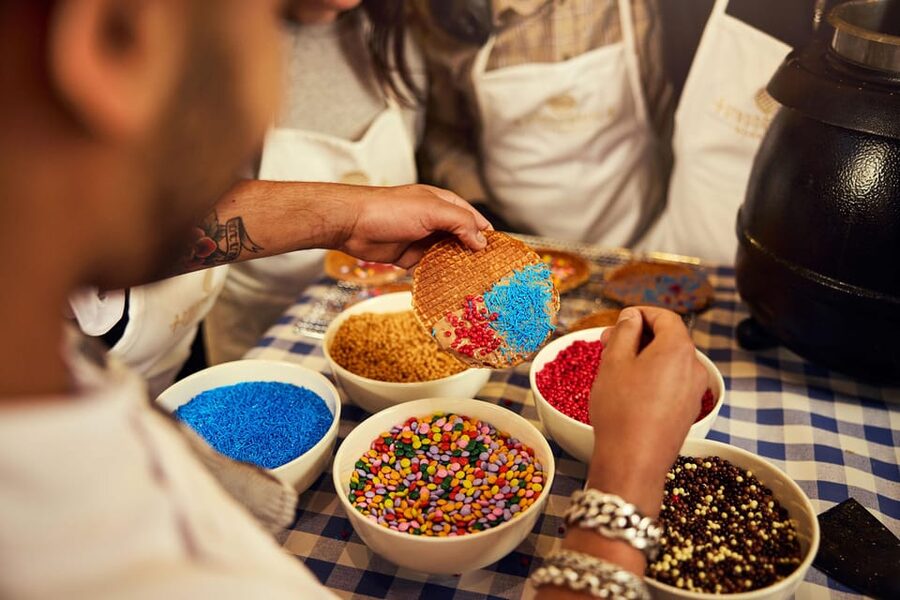
Once your waffle is cooked, the best moment arrives: adding the stroop. The instructor shows you how to place the warm, gooey syrup between the thin waffle layers and seal the sandwich.
The syrup is the heart of the treat. Add too little and the waffle feels dry. Add enough and the caramel binds the layers while still letting the crisp shell hold its shape. You get to see how a familiar Dutch snack is built, rather than treating it as a mystery from behind a bakery counter.
Toppings also add a playful touch. One session included a selection of decorations, allowing participants to finish their waffles according to personal taste. The core treat remains traditional, but the option to add toppings makes the activity more appealing to children and anyone who enjoys a little food presentation.
I would keep in mind that this is a sweet workshop, not a full meal. The two XL waffles are substantial, and the caramel is filling. Extra food and drinks are not included, so plan your market meal separately rather than expecting the class to replace lunch.
More workshops and classes in Amsterdam:
- The Hague: Beginner’s Surf Lesson
★ 4.7 · 78 reviews - Amsterdam Light Festival Winter Walk with Stroopwafel Workshop
★ 5.0 · 66 reviews - Distilling Class @ Spirited Union Rum Co. (Amsterdam)
★ 5.0 · 65 reviews - Cocktail workshop @ Spirited Union Rum Co. (Amsterdam)
★ 5.0 · 58 reviews
Coffee, conversation, and the first bite

While your waffles cool, you can sit down with a cup of coffee or tea. Water is also available, and the workshop has toilets, which are useful practical touches during a day of sightseeing.
This pause gives the class a social side. You can chat with people at your table, compare the shapes and toppings, and enjoy the first waffle while it is still fresh. The group atmosphere is one of the strongest parts of the experience. Hosts such as Franziska have been especially good at making people feel included from the beginning, while others keep the mood lively with jokes and conversation.
The pace is usually described as comfortable rather than rushed. That matters because the process has several small stages, and you want enough time to understand what you are doing. The instructor demonstrates clearly, lets you work, and remains available for questions.
Hearing can be an issue from the back of the room. If the group is full, sit near the demonstration area if possible. Arriving early helps with this, as well as with securing room for your coat and bag. Storage space for jackets and personal items may be limited, so travel light if you can.
Your first bite is also your practical test. A freshly made stroopwafel has a different character from one sitting in a supermarket packet. The shell is crisp, the middle is soft with warm syrup, and the contrast is most noticeable when paired with hot coffee or tea.
One waffle now, one waffle for later
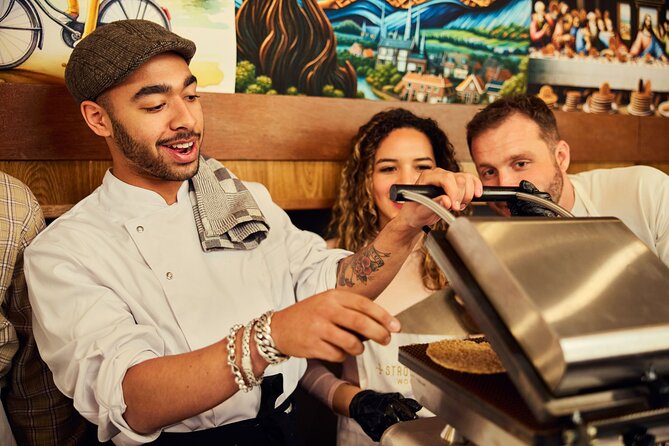
The package includes two XL stroopwafels. You eat one during the workshop and take the second home in a bag.
The size makes the $23 price easier to assess. You are not paying only for a snack. You are paying for an instructor, the ingredients, the use of the equipment, the apron and supplies, the history lesson, a hot drink, two large waffles, and the chance to make them yourself.
Several people compare the cost favorably with buying a single large stroopwafel elsewhere in Amsterdam. Prices at specialty waffle shops can be high, so this class makes sense if you already plan to spend money on the treat and would like an activity attached to it.
Still, value depends on your priorities. If you only want the cheapest possible snack, a market stall or grocery store will cost less. If you want an edible souvenir and a short cultural activity, the workshop gives you more for your money.
The take-home waffle is also practical. You can eat it later during a canal walk, bring it back to your hotel, or save it for the journey home. The bag and certificate add a bit of ceremony without making the class feel formal.
A good fit for families, couples, and solo visitors

I would recommend this workshop most strongly to families, couples, friend groups, and solo visitors who enjoy meeting other people. The task is simple enough for beginners, but active enough to avoid feeling like a lecture.
Families get a shared project and a reward at the end. Couples can split the work and compare results. Friends can turn it into a lighthearted contest over the best shape or topping. Solo visitors have an easy setting for conversation because everyone is working on the same recipe.
The class also works well for a first morning in Amsterdam. It is short, indoors, and easy to pair with Albert Cuyp Market. You can make the workshop part of a wider De Pijp outing instead of giving it a full day of your schedule.
I would think twice if you dislike group activities or have strict food restrictions. The supplied information does not list allergy or dietary alternatives, so ask before booking if that matters to you. The workshop is also not suitable for wheelchair users.
The English instruction is a plus for international visitors. Hosts explain the process in plain language, and the demonstrations make the steps easier to follow. You do not need to understand Dutch to take part.
Timing, cancellations, and small practical details

The activity lasts 45 minutes, with starting times depending on availability. That short length makes it easy to fit between a market visit, museum booking, or canal-area plans.
Book your time with a little breathing room before and after. The cooking itself is timed, and arriving late could mean missing the opening explanation or joining while others are already working. The door opens five minutes before the start, but arriving 10 minutes early is advised.
If a time slot does not reach the minimum number of participants, the provider may contact you about rescheduling. Keep that in mind if your Amsterdam plans are tightly fixed. The booking terms allow free cancellation up to 24 hours before the start for a full refund, and you can reserve now and pay later.
The market can make the entrance harder to identify. Look for the building behind the market stands rather than assuming the workshop is inside a prominent storefront. If you arrive by car, give yourself even more time.
The setup is generally clean and well organized, with aprons, supplies, drinks, toilets, bags, and certificates provided. The main practical weakness is room around the tables and waffle irons during full sessions.
Is the stroopwafel workshop worth booking?
I think you should book it if you want a short, hands-on taste of Dutch culture and you like the idea of eating something you made yourself. The hosts bring the right mix of instruction and humor, and names such as Vince, Lisa, Jack, Jay, Roza, Julia, Nicola, and Franziska appear often in connection with warm, attentive teaching.
The experience is especially good for families and first-time cooking-class participants. It is easy, social, filling, and modestly priced at $23 per person. The certificate, take-home waffle, and hot drink make it feel like more than a quick bakery stop.
Choose another activity if you want a quiet, private lesson, a full meal, or guaranteed personal workspace. Full classes can mean waiting for an iron, and the back of the room may not be ideal for hearing every instruction.
For most visitors, I would make this a simple yes. Pair it with Albert Cuyp Market, arrive early, sit near the front, and bring an appetite for caramel.
FAQ
How long does the stroopwafel workshop last?
The workshop lasts 45 minutes.
How many stroopwafels are included?
You receive two XL stroopwafels. You eat one during the workshop and take the other home.
Are coffee and tea included?
Yes. Coffee or tea is included, and water is also available.
Is the workshop taught in English?
Yes. The instructor teaches in English.
Do I need baking experience?
No. The instructor demonstrates the steps and guides you through rolling, cooking, adding syrup, and finishing the waffles.
Is the workshop suitable for wheelchair users?
No. The activity is not suitable for wheelchair users.
Just added around Amsterdam
- Amsterdam: Food and Canal Tour★ 4.6 · 22 reviews
- Segway City Tours Amsterdam★ 4.3 · 23 reviews
- Amsterdam Canal Cruise in Classic Salon Boat With Drinks and Cheese★ 4.0 · 22 reviews
- Discover Deventer with an Outside Escape city game tour!★ 4.5 · 23 reviews
- Historical Walking Tour, private with local Dutch guide★ 5.0 · 23 reviews
- Utrecht Food Tour on a Bicycle with local guide★ 5.0 · 23 reviews
- Amsterdam: Captain For a Day 2-Hour Boat Rental★ 4.9 · 23 reviews
- Amsterdam Small-Group Breakfast Morning Cruise★ 5.0 · 23 reviews
Workshops in Amsterdam, compared.

Amsterdam Traditional Dutch Syrup Waffle Making Workshop
Read our review →

3-Course Meal in Historic 1st Class Waiting Rooms
Read our review →
Amsterdam Light Festival Winter Walk with Stroopwafel Workshop
Read our review →
Distilling Class @ Spirited Union Rum Co. (Amsterdam)
Read our review →
Cocktail workshop @ Spirited Union Rum Co. (Amsterdam)
Read our review →
Private Dutch Pancake Cooking Class in an Amsterdam Canal Home
Read our review →Browse the lists this tour appears in