
Reviewed · MUSEUMS
Royal Delft: Delftblue Factory and Museum
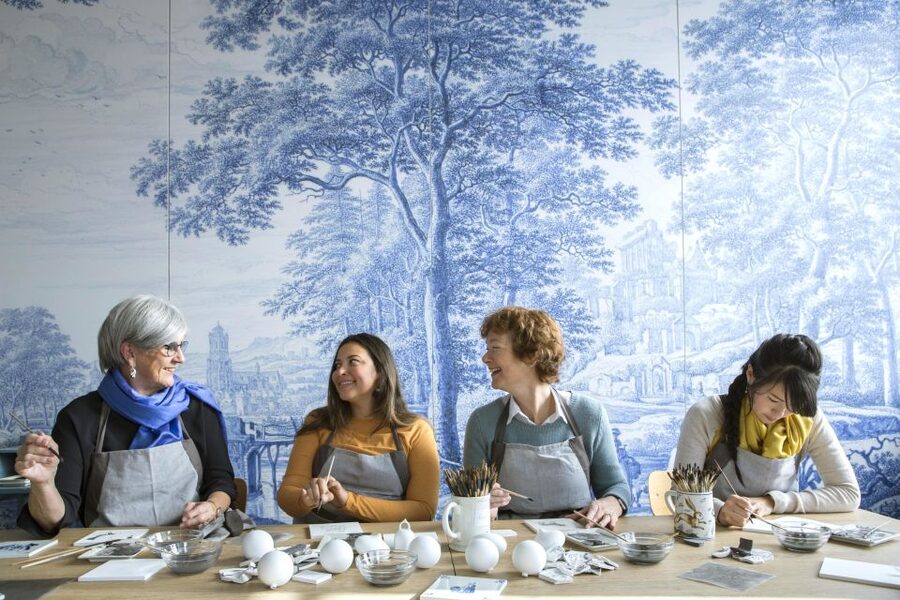
Royal Delft is one of those places where the famous blue-and-white souvenir becomes much more interesting. At this working factory, founded in 1653, you can watch painters apply fine black lines to white earthenware, then see how the kiln turns that paint blue. The museum adds nearly 400 years of Delft pottery, while the factory floor shows that this is still a craft, not just a display.
I like the hand-painted work and the chance to see actual production instead of only finished plates behind glass. I also like the peaceful courtyard garden and Brasserie 1653, a handy place for coffee or lunch after the tour. The main drawback is that this is self-guided, and factory activity can be quiet, especially later in the day.
In This Review
- Key points to know before you go
- Why Royal Delft is more than a pottery shop
- Entering the museum and starting the audio tour
- Seeing antique and modern Delft Blue
- Walking through the factory floor
- The showroom and the real cost of handmade pottery
- Brasserie 1653 and the courtyard garden
- Getting there from Amsterdam, The Hague, or Rotterdam
- How much time should you allow?
- Who will enjoy Royal Delft most?
- Booking, timing, and seasonal details
- Should you book Royal Delft?
- FAQ
- How long does the Royal Delft Experience last?
- What does the $21 ticket include?
- Is a live guide included?
- Which languages are available for the audio guide?
- Can I see people making Delft Blue pottery?
- Is Royal Delft wheelchair accessible?
- How far is Royal Delft from Delft train station?
- Can I walk from Royal Delft to Market Square?
- Is parking available?
- Is food included with admission?
Key points to know before you go
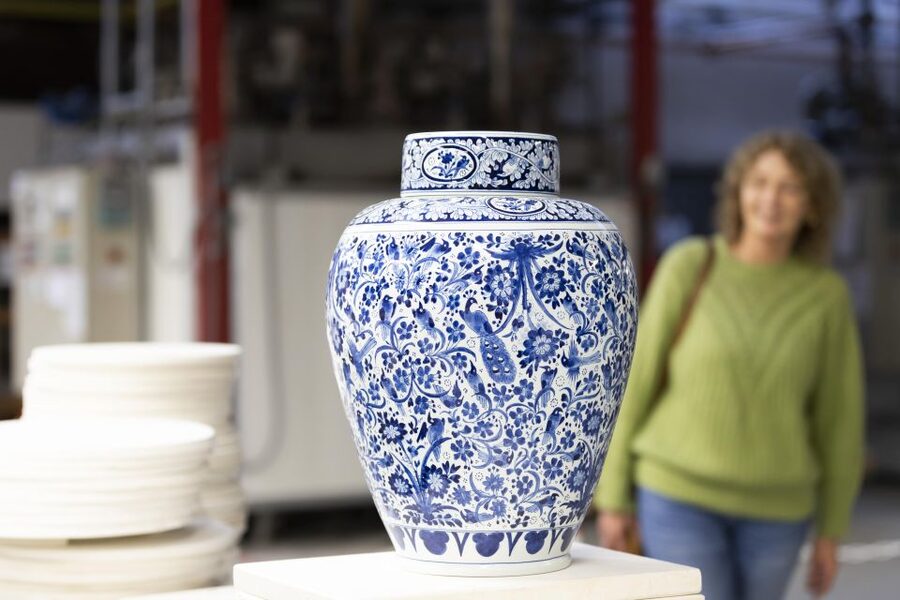
- Watch the paint change in the kiln: Artists apply black-looking decoration that develops its familiar blue color during firing.
- Walk through a working factory: Clay is poured into handmade moulds while painters, sanders, and other craftspeople handle the pieces.
- Use the audio tour at your own pace: Commentary is available in English, Dutch, Spanish, Chinese, French, German, Italian, and Japanese.
- Allow 90 minutes, plus extra time: The official experience lasts about 1.5 hours, but the garden, café, and shop can lengthen your visit.
- Expect high prices in the showroom: The pottery is handmade, and even small Delft Blue pieces can cost more than ordinary souvenirs.
- Reach it easily from Delft: The train station is about a 15-minute walk away, and Market Square is about 20 minutes on foot.
Why Royal Delft is more than a pottery shop
Delft Blue is often reduced to windmills, flowers, and little blue houses. Royal Delft gives you the useful background behind those familiar images. The company has been making Delft Blue in Delft since the seventeenth century, and it is the last original Delft Blue factory from that period still producing pieces by hand.
That distinction matters once you enter the museum. You are not simply looking at old ceramics. You are seeing how a traditional Delft product developed, how its decoration has changed, and how the company continues to make both classic and modern designs.
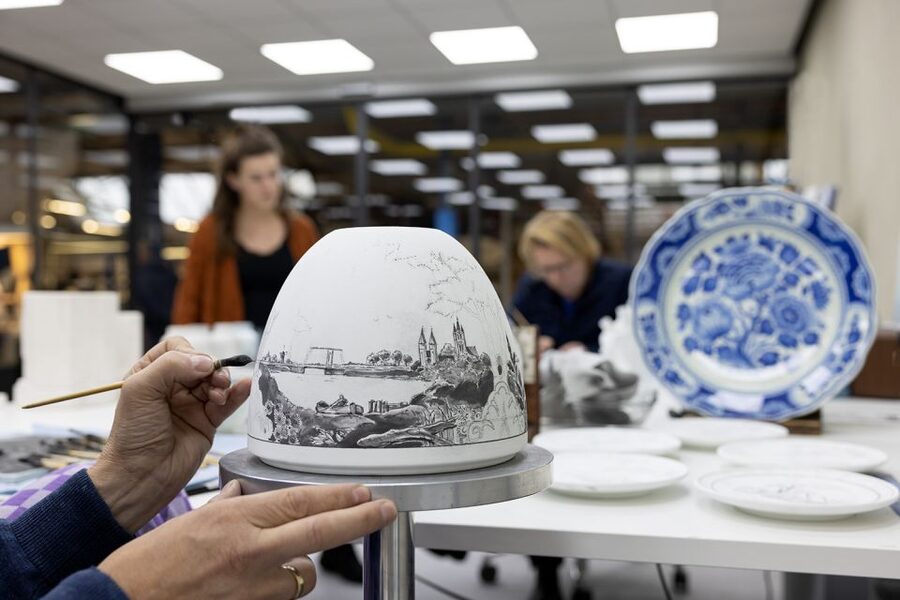
The visit also explains a detail that is easy to miss in a shop window. The artists paint in black on the white pottery. The blue appears after firing in the kiln. Watching the process makes the finished work easier to appreciate, especially when you notice how much decoration depends on steady lines and careful brush control.
I would not call this a large museum. Its strength is the connection between the historical collection and the active production rooms. You see the result, then the method behind it.
More museums and galleries in Amsterdam:
- Amsterdam: Van Gogh Museum Ticket
★ 4.7 · 52,054 reviews - Moco Museum Amsterdam Entrance Tickets with Banksy & More
★ 4.4 · 10,088 reviews - Amsterdam: The Upside Down Museum Entrance Ticket
★ 4.4 · 9,506 reviews
Entering the museum and starting the audio tour
The Royal Delft Experience begins with a self-guided audio tour. You receive an audio device or follow the available information at each section, then move through the displays at your own pace. There is no standard live guide included with the basic ticket, although staff or greeters may introduce you to the route.
The audio tour is offered in eight languages: English, Dutch, Spanish, Chinese, French, German, Italian, and Japanese. English-speaking visitors generally have no trouble following the explanations, and you can pause to look more closely at the objects rather than keeping pace with a group.
The self-guided format is a good fit if you dislike being hurried. You can spend longer with a favorite piece, skip material that feels familiar, or read the display panels instead of listening. The tradeoff is that you cannot ask questions as you go. If you want a conversation about the pottery, the scheduled guided option, when available, is worth checking separately because it is not included in this ticket.
Some visitors have found the audio commentary a little less engaging than a live explanation. I would set your expectations correctly: this is an informative museum visit with an audio guide, not a lively workshop talk. It works best when you treat it as a flexible introduction to the craft.
Seeing antique and modern Delft Blue
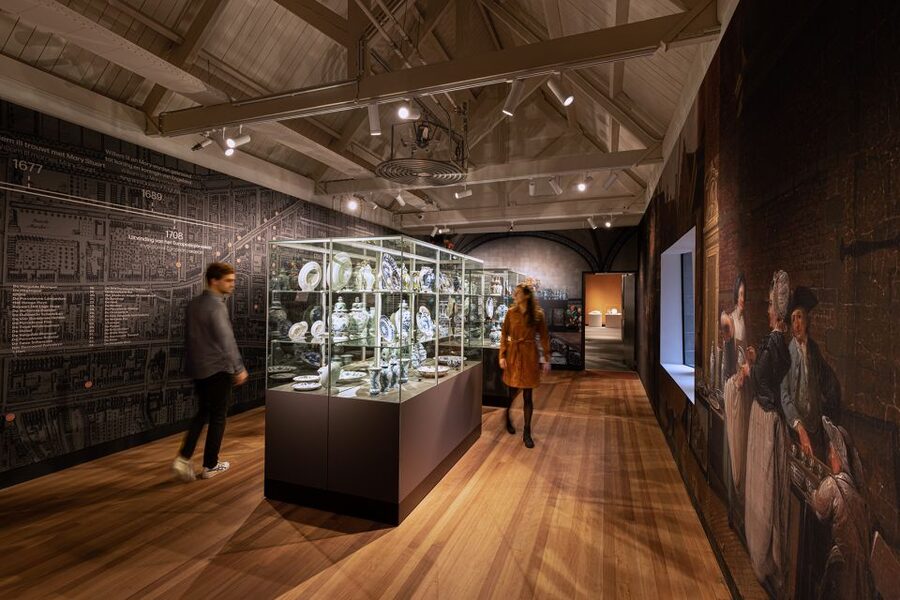
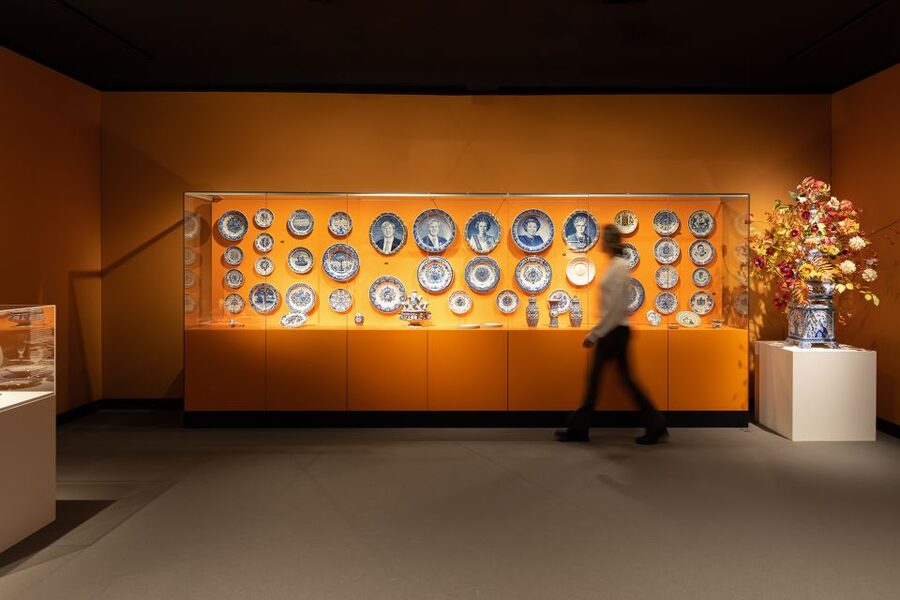
The museum collection includes antique and modern Delftware, so you can compare old patterns with current designs. The displays help show that Royal Delft is not locked into a single souvenir style. Alongside traditional plates and tiles, you may see more contemporary work that uses the familiar blue in new ways.
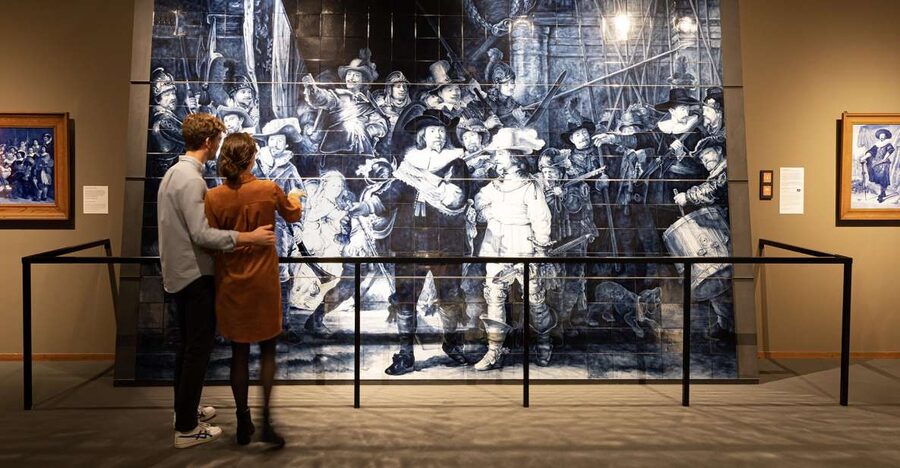
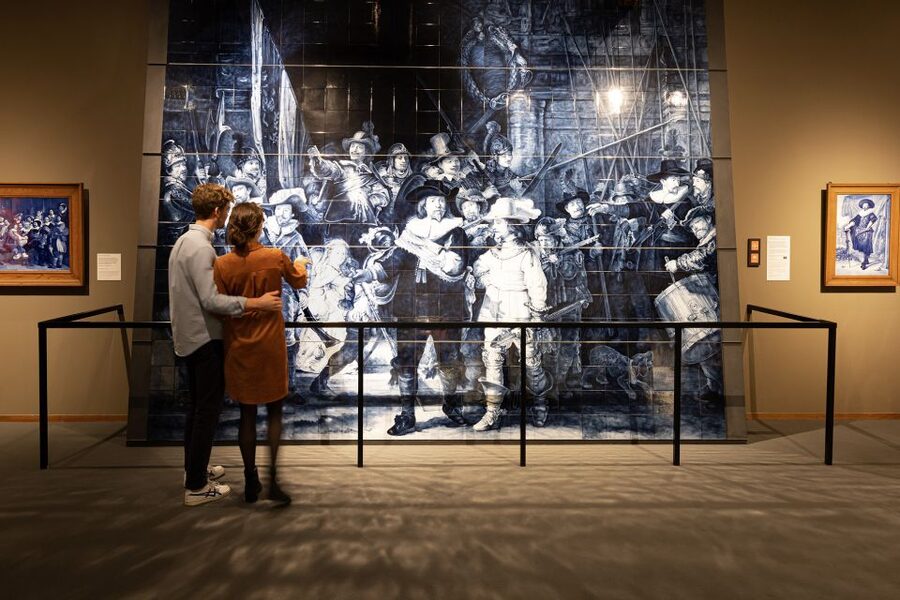
One memorable display is a life-size tiled version of Rembrandt’s The Night Watch. It gives you a clear idea of how Delft Blue can move beyond small household objects. A single tile is delicate; hundreds of tiles together can reproduce a major painting on a much larger scale.
The collection is especially useful for first-time visitors to Delft because it puts local ceramics in context. You begin to notice why the blue-and-white style is so closely linked with the city, and why hand-painted pieces command a higher price than mass-produced Delft-style souvenirs.
Do not rush the older pieces. Look at the fine lines, repeated borders, and small changes in color. The work can appear simple from a distance, but the detail becomes clear when you stand close.
Walking through the factory floor
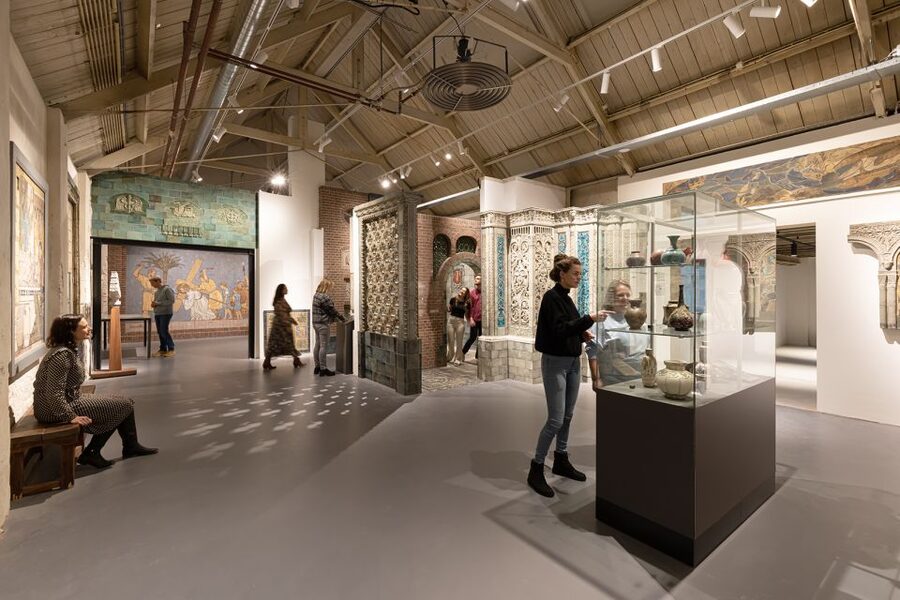
The factory is the heart of the visit. Here you can see clay poured into handmade moulds, pieces prepared for firing, and pottery being finished by hand. The route lets you look into the actual production process instead of watching only a film about it.
The most rewarding sight is usually a painter at work. A brush moves across the white surface with remarkable control, adding lines and curves that must be placed correctly the first time. You may also see someone sanding a newly made pitcher or handling another stage of preparation.
Factory activity varies. On one afternoon, you might find several craftspeople at work. On another, you may see only one or two people. One of the most useful practical tips is to visit in the morning if watching the artists is your main reason for coming, since activity can be quieter later in the day.
There may also be demonstrations in a separate room. Do not assume that a listed demonstration means a spoken presentation. At least one scheduled session consisted of an artist painting a vase without addressing the audience. That can still be interesting to watch, but it is not the same as an interactive talk with questions and explanations.
The factory is clean and well organized, with clear directions through the rooms. You should be able to follow the process without confusion, but the amount of live action is partly a matter of timing.
A few more Amsterdam half-days to weigh up
- Delft: Canal Cruise with Guided Commentary
★ 4.4 · 990 reviews - Delft: Entrance Ticket for the Old and New Churches
★ 4.4 · 229 reviews - Delft: Vermeer Centrum Delft Museum Entry Ticket
★ 4.6 · 189 reviews - Delft: City Center Walking Tour
★ 4.7 · 88 reviews
The showroom and the real cost of handmade pottery
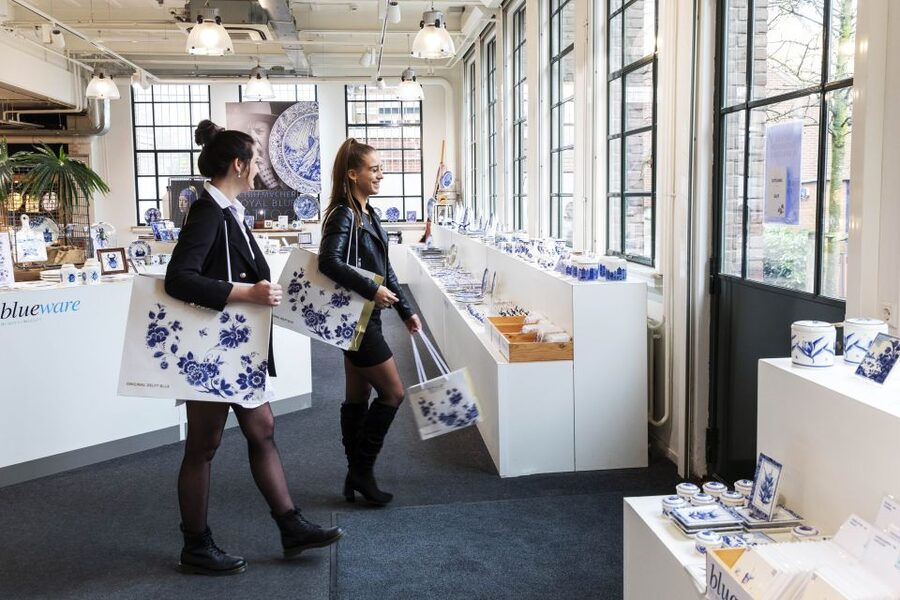
The showroom displays Royal Delft’s full range of classic and modern hand-painted pieces, along with souvenirs. It is a pleasant final stop because you have just seen how the pottery is made, so the price tags make more sense.
At about $21 per person, the experience offers reasonable value if you care about Dutch design, traditional crafts, or the history of Delft. You receive entry to both museum and factory, plus the audio tour and free Wi-Fi. The visit is not a bargain attraction for someone who wants only a quick look at blue pottery, but it compares well with other specialized museum experiences when you spend time with both sections.
The pottery itself is another matter. Handmade Delft Blue is expensive, and several people are surprised by the prices in the shop. That is not a complaint about poor value. It reflects the labor involved in shaping, preparing, painting, and firing each piece.
You do not need to buy anything to enjoy the visit. If you do want a keepsake, the showroom offers a broad choice, from smaller souvenirs to more serious pieces. Staff can wrap, pack, and ship purchases home, which is helpful if you do not want to carry ceramics through the rest of your trip.
I would avoid buying in a rush. First look around Delft’s other shops so you know what sort of Delftware you want. Then return to Royal Delft if the handmade work appeals to you and the cost fits your budget.
Brasserie 1653 and the courtyard garden
After the factory, Brasserie 1653 overlooks a pleasant courtyard garden. You can stop for coffee, tea, high tea, lunch, or a snack. Meals and drinks are not part of the admission price, but the café gives you a comfortable reason to stay longer.
The garden is a nice counterpoint to the concentration of the painting rooms. After watching artists work with tiny brush movements, sitting outdoors with a drink can make the visit feel less rushed.
This is also useful if you are building a half-day in Delft. Royal Delft is outside the busiest center, so you can have your museum visit, take a break in the garden, and then walk toward Market Square. The walk to the square takes about 20 minutes, while Delft station is about 15 minutes away on foot.
Getting there from Amsterdam, The Hague, or Rotterdam
Royal Delft is at Rotterdamseweg 196, in Delft. From The Hague or Rotterdam, the train journey takes about 30 minutes. From Amsterdam, allow about 1.5 hours by train, so the factory works better as part of a full Delft visit than as a quick side trip from Amsterdam.
From Delft station, walking takes about 15 minutes. Market Square is about 20 minutes away on foot, making it practical to combine Royal Delft with the historic center. Public buses stop nearby, and a canal boat or Delft City Shuttle can take you into town quickly.
If you are driving, free parking is available around the building. Still, check the route before setting out, especially if your day includes the old center as well. Walking from the factory lets you connect the visit with Delft’s streets and squares rather than treating the factory as an isolated stop.
The experience is wheelchair accessible. One family used it with a wheelchair and found the staff helpful and the route manageable. If accessibility is important for your group, the building’s accessible design is a genuine advantage.
How much time should you allow?
The stated duration is 1.5 hours, including the roughly one-hour audio tour. That is enough for a steady visit through the museum and factory, with time to watch the workers and browse the shop.
I would allow closer to two hours if you want to sit in the garden or stop at Brasserie 1653. Add more time if you plan to buy pottery or join a separate workshop. A tile-painting workshop has been available at Royal Delft, with finished tiles sent to participants later, but it is not included in the standard entry ticket.
The museum is not so large that you need an entire day. Its strength is focus. You can learn the basic story, watch the production process, and continue into Delft without museum fatigue.
If seeing painters is your top priority, arrive earlier in the day. If you mainly want the museum and the building, your timing is less important.
Who will enjoy Royal Delft most?
I recommend Royal Delft to anyone interested in ceramics, Dutch design, traditional manufacturing, or the story behind a famous souvenir. It also works well for families, since the factory gives children something active to watch instead of asking them to study display cases for a long time.
The audio guide helped one family member who normally dislikes museums, but your mileage may vary if you prefer live conversation. The self-guided system gives you freedom, yet it can feel quiet and less interactive.
Art lovers should make time for the larger tile displays and the detailed hand painting. Shoppers will appreciate the showroom and shipping service, although the cost of genuine handmade pottery may be a shock.
I would be less enthusiastic if you have only a few hours in Delft and are choosing between the factory and the city center. Royal Delft sits outside the main square, and the factory experience requires enough time to justify the walk or ride. If Delft Blue is a special interest, it is worth the detour. If not, you may prefer to focus on the old town.
Booking, timing, and seasonal details
Admission is listed at $21 per person and includes entry, the one-hour audio tour, and free Wi-Fi. Guided tours are not included, and meals and drinks cost extra. One purchaser found that buying at the door could be cheaper, so check the current price before booking online rather than assuming advance purchase is always the best deal.
The activity offers free cancellation up to 24 hours before the visit and reserve-now, pay-later booking. That is useful if your Delft day depends on changing train plans.
Royal Delft closes at 4 p.m. on December 24 and December 31. It closes all day on December 25, December 26, and January 1. Check the opening hours before traveling during the holiday period.
Should you book Royal Delft?
Book it if you want to see Delft Blue being made, not just displayed. The combination of museum, working factory, hand painting, showroom, and garden makes the admission worthwhile for craft-minded visitors.
Go in knowing that the basic tour is self-guided, factory activity may be limited, and the pottery is costly. Visit in the morning for the best chance of seeing more artists at work, allow about 90 minutes for the main route, and add café time if you want a slower stop.
For a first visit to Delft, Royal Delft gives you a clear look at one of the city’s best-known traditions. It is not a flashy attraction, but it is precise, local, and grounded in real work. That makes it a strong choice for your Delft day, especially if you value seeing how an object is made as much as admiring the finished piece.
FAQ
How long does the Royal Delft Experience last?
The experience lasts about 1.5 hours, including the one-hour audio tour. You should allow extra time for the showroom, garden, café, or shopping.
What does the $21 ticket include?
The ticket includes entry to Royal Delft, the one-hour audio tour, and free Wi-Fi.
Is a live guide included?
No. The standard ticket includes a self-guided audio tour. Guided tours are not included.
Which languages are available for the audio guide?
The audio guide is available in Spanish, Chinese, Dutch, English, French, German, Italian, and Japanese.
Can I see people making Delft Blue pottery?
Yes. The route passes through the factory, where you may see clay poured into handmade moulds, pieces prepared, and artists painting earthenware by hand.
Is Royal Delft wheelchair accessible?
Yes, the experience is wheelchair accessible.
How far is Royal Delft from Delft train station?
The factory is about a 15-minute walk from Delft train station.
Can I walk from Royal Delft to Market Square?
Yes. Market Square is about a 20-minute walk from Royal Delft.
Is parking available?
Yes. Free parking is available around the building.
Is food included with admission?
No. Meals and drinks are not included. Brasserie 1653 serves coffee, tea, high tea, lunch, and snacks in the courtyard setting.
Just added around Amsterdam
- Amsterdam: Food and Canal Tour★ 4.6 · 22 reviews
- Segway City Tours Amsterdam★ 4.3 · 23 reviews
- Amsterdam Canal Cruise in Classic Salon Boat With Drinks and Cheese★ 4.0 · 22 reviews
- Discover Deventer with an Outside Escape city game tour!★ 4.5 · 23 reviews
- Historical Walking Tour, private with local Dutch guide★ 5.0 · 23 reviews
- Utrecht Food Tour on a Bicycle with local guide★ 5.0 · 23 reviews
- Amsterdam: Captain For a Day 2-Hour Boat Rental★ 4.9 · 23 reviews
- Amsterdam Small-Group Breakfast Morning Cruise★ 5.0 · 23 reviews
Museums, compared.

Moco Museum Amsterdam Entrance Tickets with Banksy & More
Read our review →


Amsterdam’s Weirdest Museum: Believe It or Not!
Read our review →

Browse the lists this tour appears in