
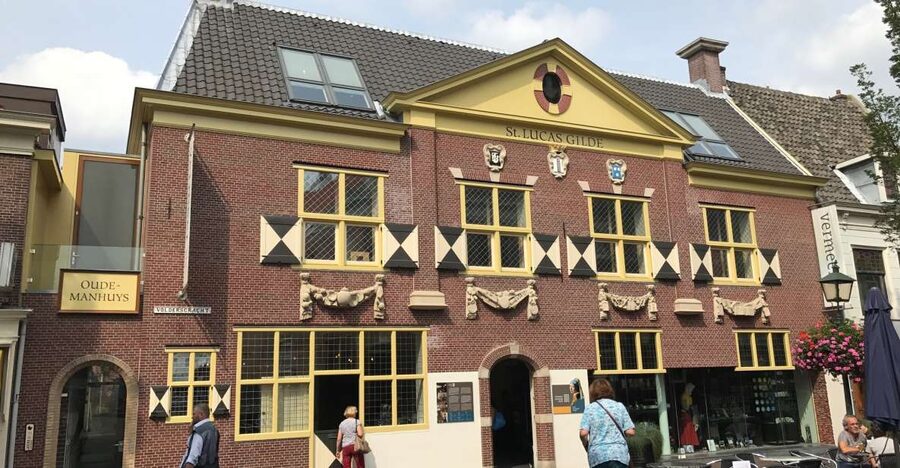
Reviewed · REMBRANDT & DUTCH MASTERS TOURS
Delft: Vermeer Centrum Delft Museum Entry Ticket
Johannes Vermeer left behind only a small number of known paintings, but this Delft museum gathers reproductions of all 37 in one compact visit. You can follow the artist’s life, study his careful use of light and perspective, and see how his paintings connect to the city where he lived.
I like the full-size reproductions, since they let you compare Vermeer’s subjects and style in one place. I also like the hands-on displays, especially the camera obscura and goggle boxes, which turn a quiet art lesson into something you can test for yourself. The main drawback is simple: these are reproductions, not the original paintings, and the complete visit usually takes only about an hour.
In This Review
- Key points to know before you go
- Why Vermeer belongs in Delft
- Starting in the former Guild of St. Luke building
- Seeing all 37 reproductions together
- Using the camera obscura and optical displays
- Reading the hidden love messages
- How much time should you allow?
- Is $14 good value?
- Practical details that affect your visit
- Who will enjoy Vermeer Centrum Delft?
- Should you book this Delft museum visit?
- FAQ
- How long does a visit to Vermeer Centrum Delft take?
- Are the paintings at the museum original Vermeers?
- What languages are available for the audioguide?
- Is the museum wheelchair accessible?
- Can I bring food, drinks, or large bags?
- Can I cancel my ticket?
Key points to know before you go

- All 37 paintings in one place: See full-size reproductions of Vermeer’s known works rather than moving between museums.
- A former Guild of St. Luke building: Begin your visit in a historic setting connected to Delft’s artistic world.
- Hands-on optical displays: Use 17th-century lenses, goggle boxes, and a camera obscura to explore Vermeer’s working methods.
- Love messages exhibition: Look at objects and small details that carry romantic meaning in Vermeer’s paintings.
- Eight audioguide languages: Choose Dutch, English, German, French, Spanish, Italian, Japanese, or Chinese.
- A short, focused visit: Plan on roughly one hour, making this easy to fit into a day in Delft.
Why Vermeer belongs in Delft
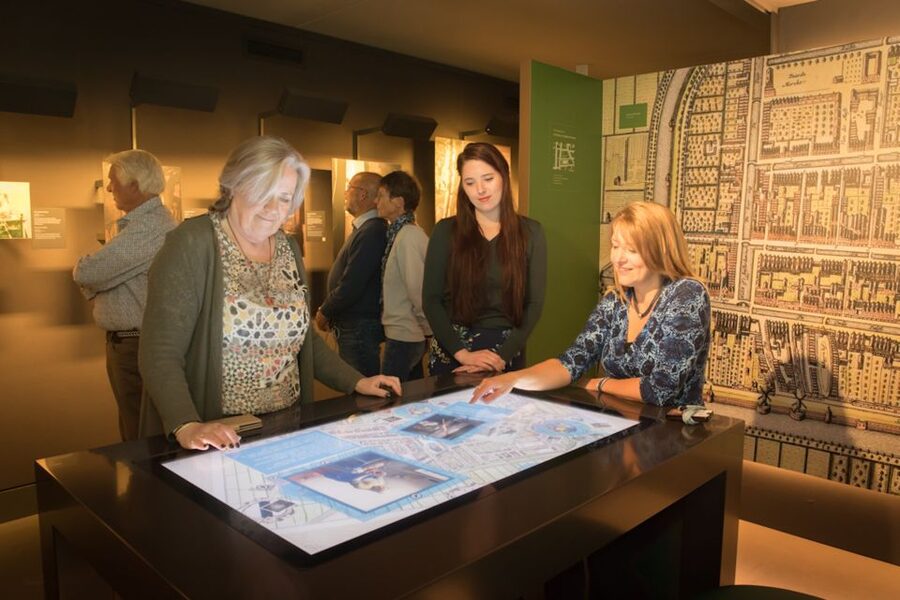
Vermeer Centrum Delft is not an art museum filled with original canvases. It is a study center and interpretive museum built around reproductions, explanation, and hands-on learning. That distinction matters when you decide if the $14 admission is right for you.
Vermeer is closely linked to Delft, and the museum uses that connection as the starting point. You are not simply looking at a row of famous images. You are also learning about the painter’s family, the city where he worked, and the 17th-century setting that shaped his art.
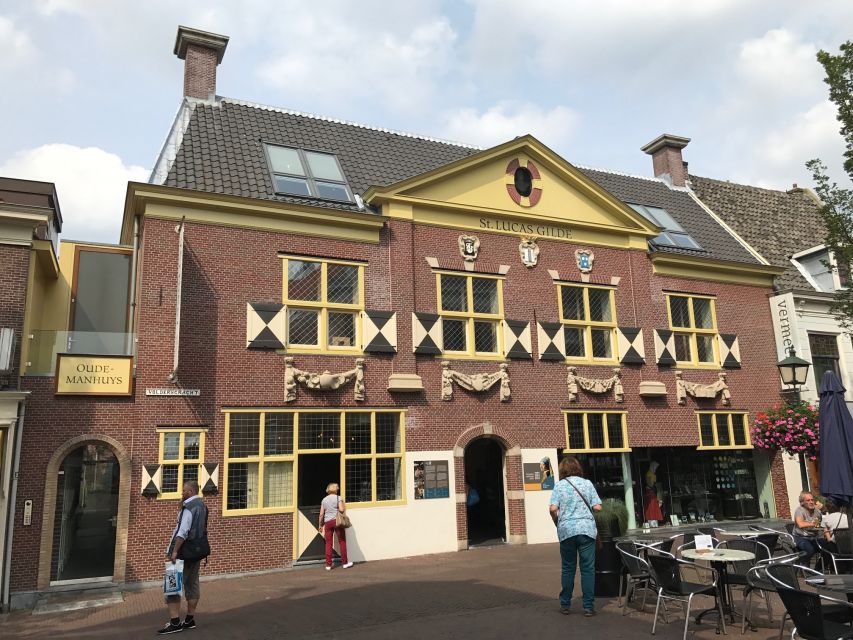
The museum occupies a former Guild of St. Luke building. That gives the visit a useful sense of place before you even reach the exhibits. You begin in a building associated with Delft’s artists, then move through displays that explain how Vermeer worked and what his paintings may have meant.
I find this format especially useful if you know Vermeer mainly from one or two paintings, such as Girl with a Pearl Earring. Seeing 37 reproductions together helps you notice his repeated interests: domestic rooms, quiet figures, maps, musical instruments, letters, and carefully arranged light.
More Rembrandt and Dutch Masters days:
- Amsterdam: Rembrandt House Museum Entrance Ticket
★ 4.7 · 3,385 reviews - The Hague: Mauritshuis Entrance Ticket
★ 4.7 · 2,706 reviews - Amsterdam: Fabrique des Lumières Dutch Masters Ticket
★ 4.6 · 2,373 reviews
Starting in the former Guild of St. Luke building
When you arrive, a volunteer welcomes you and helps you get oriented. You receive an audioguide, then begin in the basement with a short film about Vermeer and Delft in the 17th century.
This opening is brief, but it gives the rest of the museum a clear frame. The film connects Vermeer to his home city and sets up the period before you study the paintings themselves. I suggest paying attention here rather than rushing upstairs, since the museum is small and the introduction helps explain what follows.
The audioguide is included in the admission price. You can listen in Dutch, English, German, French, Spanish, Italian, Japanese, or Chinese. Since the visit is compact, the guide gives you a way to control the pace. You can spend more time with paintings that interest you and move faster through familiar material.
The welcome is one of the pleasant parts of this experience. The museum is described by visitors as friendly and informative, and the volunteer-led arrival suits the small, personal character of the place. Do not expect the formal scale of a major national museum. Expect a friendly introduction and a focused presentation.
Seeing all 37 reproductions together
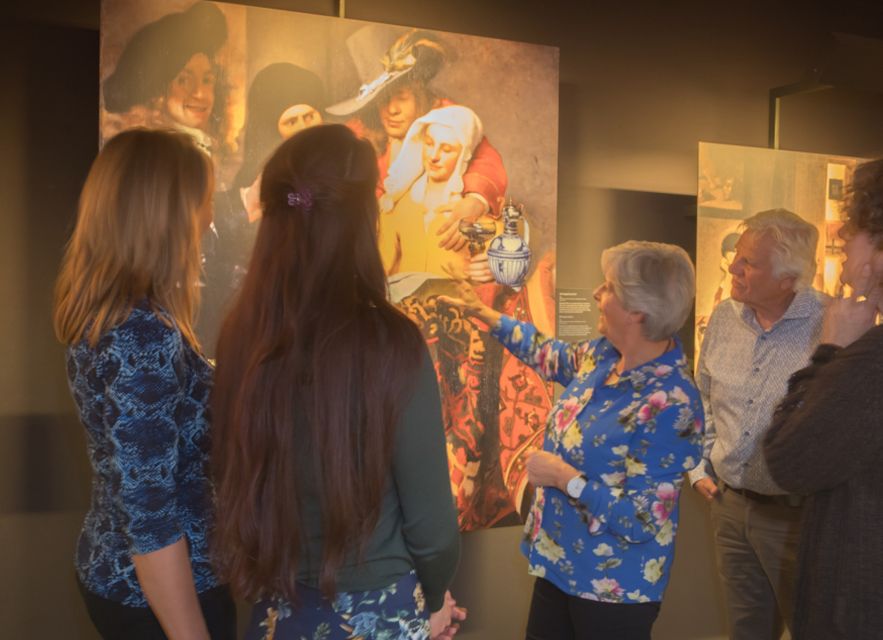
The central reason to visit is the collection of 37 full-size reproductions. They allow you to see the full range of Vermeer’s known work in one setting, which is difficult to do in a single day elsewhere.
The reproductions are valuable for comparison. Instead of remembering a painting from a postcard or a screen, you can stand in front of it at full scale and compare its composition with the others nearby. Look at the way Vermeer places people in rooms, how he uses windows and walls, and how small objects guide your attention.
This is also a good place to learn about Vermeer’s family and working life. The museum does not treat the paintings as isolated masterpieces. It places them within the life of a Delft artist and within the city that appears in his work.
I would not describe the display as a substitute for seeing original Vermeer paintings. Reproduction quality can never replace the surface, scale, and material presence of an original. Still, the chance to view all 37 images together gives this museum a purpose that a single original painting in a large collection cannot provide.
If you are already an art specialist, you may want more original works and more technical detail. If you are curious about Vermeer but have limited time, this arrangement is efficient. You get a broad look at the artist without planning a museum-to-museum route.
Using the camera obscura and optical displays
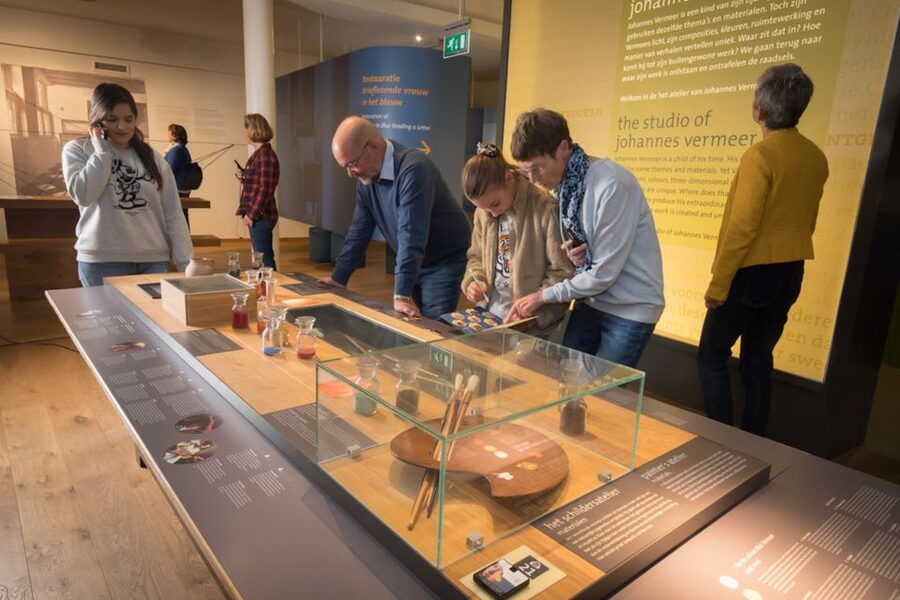
The first floor focuses on Vermeer’s working method. This is where the visit becomes more active, with 17th-century lenses, goggle boxes, and a camera obscura.
The camera obscura helps explain how an image can be projected and how light, color, and perspective can change the way a scene appears. You can play with these ideas rather than only hearing about them through the audioguide.
The goggle boxes offer another hands-on way to think about perspective. They give you a sense of how a framed interior can appear to stretch into space. The museum also invites you to step into a Vermeer painting, an engaging feature for families and for anyone who prefers seeing an idea in action.
I like this section because it answers a question that often comes up when looking at Vermeer: how did he achieve such precise effects? The displays do not turn that question into a final answer, and they should not be treated as proof of every detail in his process. They do, however, make the discussion of lenses, color, and perspective easier to understand.
This floor is likely to be the most memorable part for children and casual art lovers. It also gives serious students a useful visual demonstration of the issues they are studying. The limitation is space. Because the museum takes about an hour to visit, these displays are introductory rather than a long workshop.
More museums and galleries in Amsterdam:
- Amsterdam: Van Gogh Museum Ticket
★ 4.7 · 52,054 reviews - Moco Museum Amsterdam Entrance Tickets with Banksy & More
★ 4.4 · 10,088 reviews - Amsterdam: The Upside Down Museum Entrance Ticket
★ 4.4 · 9,506 reviews - Amsterdam: Red Light Secrets Museum Entry Ticket
★ 4.2 · 5,722 reviews
Reading the hidden love messages
The second floor presents the exhibition Love messages from Vermeer. Here the museum shifts from technique to symbolism, asking you to consider the meaning of objects and details in the paintings.
Vermeer’s interiors can look calm and ordinary at first glance. A letter, a musical instrument, or another household object may seem like simple decoration. This exhibition encourages you to look again and consider how such items can suggest romance, longing, courtship, or private communication.
I find this a useful second look at the paintings. After studying how Vermeer may have handled light and perspective, you begin to notice how he built meaning into the room. The exhibition helps you read the paintings as scenes with emotional clues, not just as attractive interiors.
Keep in mind that symbolism can invite interpretation. The displays give you a way to think about the objects, but you should not expect every detail to have one unquestionable meaning. That open quality is part of the fun, especially if you enjoy discussing art after you leave.
This section also gives the visit a change of pace. The basement introduces Delft and Vermeer’s period. The main display presents the 37 reproductions. The first floor explains methods. The second floor asks what the paintings may be saying. The sequence makes sense and keeps the hour from feeling like one long wall of pictures.
How much time should you allow?
The museum estimates a visit of approximately one hour. That timing is useful for planning a day in Delft, especially if you want to combine art with a walk through the city.
You can move through the museum faster if you already know Vermeer’s work. If you listen closely to the audioguide and spend time with the optical displays, you may want the full hour. The museum’s one-day validity gives you flexibility within the day, but the stated visit length remains short.
A compact visit is both an advantage and a limitation. It is easy to fit between other activities, and you are unlikely to feel trapped in a long lecture. On the other hand, anyone hoping for an entire afternoon of galleries will find the museum too brief.
I would plan this as a focused stop rather than the only activity of your day. Give yourself enough time to listen, examine the reproductions, and use the displays without rushing. Then leave room for Delft itself, which provides the setting behind the museum’s story.
Is $14 good value?
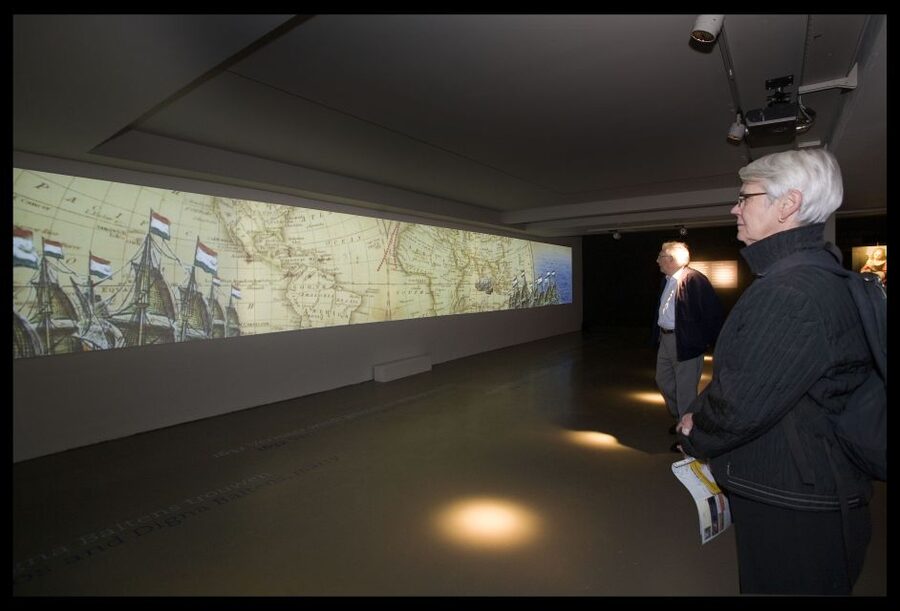
At $14 per person, the ticket is reasonably priced for a specialized museum with an audioguide and interactive displays. The value comes from the combination of all 37 full-size reproductions, the historical setting, and the explanation of Vermeer’s methods.
The price is easier to justify if you want context rather than only original art. You are paying for a structured introduction to Vermeer’s life, Delft, painting techniques, and visual symbolism. The audioguide in eight languages also makes the experience accessible to a wide range of visitors.
The calculation changes if originals are your priority. Since the paintings here are reproductions, you should not book this expecting the same experience as a major fine-art collection. The museum works best as an interpretive visit, especially for people who want to understand how Vermeer’s pictures were made and read.
For families, the camera obscura and goggle boxes add value beyond a standard display. For a couple or solo visitor with a strong interest in Dutch Baroque painting, the chance to see all 37 works together may be the main reason to pay the admission.
Practical details that affect your visit
Food and drinks are not allowed inside, and large bags or luggage are not permitted. If you are carrying substantial luggage, plan around that before arriving because the museum is not set up as a place to bring large belongings.
The museum is wheelchair accessible. The audioguide is included, so you do not need to budget extra for the main interpretive material. Starting times vary, so check availability when booking.
The ticket can be cancelled up to 24 hours in advance for a full refund, and a reserve-now, pay-later option is available. Those terms are useful if your Delft plans depend on changing train times or weather, but the main practical point is to keep the museum’s short duration in mind.
The museum ends with a gift shop. It is a small final stop rather than a major part of the visit, but it gives you a chance to browse before returning to Delft’s streets.
Who will enjoy Vermeer Centrum Delft?
I would recommend this museum to first-time Vermeer visitors, families, casual art lovers, and anyone who wants a clear introduction without committing to a long museum session. The combination of reproductions and optical displays gives you both visual pleasure and a basic understanding of technique.
It also suits visitors who want to connect art with place. Vermeer lived and worked in Delft, and the museum’s setting and introductory film help you keep that connection in view.
You may want to skip it if your only goal is to see original paintings. You may also find it too basic if you already know Vermeer’s work well and prefer extended scholarly analysis. The museum is designed for access and explanation, not for a large collection of original objects.
For most people, I would place it early in a Delft visit. Afterward, you will have a better sense of what to notice in the city and a clearer understanding of why Vermeer’s quiet rooms and careful light have lasted so well.
Should you book this Delft museum visit?
Book it if you want to see all 37 of Vermeer’s paintings represented in one place, learn about his working methods, and enjoy a visit that takes about an hour. The camera obscura, goggle boxes, and Love messages from Vermeer exhibition give the museum more substance than a simple reproduction gallery.
Skip it if original canvases are essential to your plans. At $14, the ticket offers fair value for an informative, accessible introduction, but its strength is interpretation rather than authenticity of the artworks themselves.
For a short Delft itinerary, this is a sensible choice. You get a friendly welcome, an audioguide in your preferred language, a clear look at Vermeer’s life and art, and a few hands-on displays that make the ideas easier to grasp.
FAQ
How long does a visit to Vermeer Centrum Delft take?
The museum takes approximately one hour to visit. Your pace may vary depending on how long you spend with the audioguide, reproductions, and interactive displays.
Are the paintings at the museum original Vermeers?
No. The museum presents full-size reproductions of all 37 of Johannes Vermeer’s paintings.
What languages are available for the audioguide?
The audioguide is available in Dutch, English, German, French, Spanish, Italian, Japanese, and Chinese.
Is the museum wheelchair accessible?
Yes, Vermeer Centrum Delft is wheelchair accessible.
Can I bring food, drinks, or large bags?
Food and drinks are not allowed, and luggage or large bags are not permitted inside.
Can I cancel my ticket?
Yes. You can cancel up to 24 hours in advance for a full refund. A reserve-now, pay-later option is also available.
Just added around Amsterdam
- Amsterdam: Food and Canal Tour★ 4.6 · 22 reviews
- Segway City Tours Amsterdam★ 4.3 · 23 reviews
- Amsterdam Canal Cruise in Classic Salon Boat With Drinks and Cheese★ 4.0 · 22 reviews
- Discover Deventer with an Outside Escape city game tour!★ 4.5 · 23 reviews
- Historical Walking Tour, private with local Dutch guide★ 5.0 · 23 reviews
- Utrecht Food Tour on a Bicycle with local guide★ 5.0 · 23 reviews
- Amsterdam: Captain For a Day 2-Hour Boat Rental★ 4.9 · 23 reviews
- Amsterdam Small-Group Breakfast Morning Cruise★ 5.0 · 23 reviews
Rembrandt & Dutch Masters Tours, compared.
Rembrandts Experience Amsterdam Admission Ticket
Read our review →
Rembrandt House Museum Amsterdam Entrance Ticket
Read our review →
Van Gogh and Rembrandt Immersive Experience Entry
Read our review →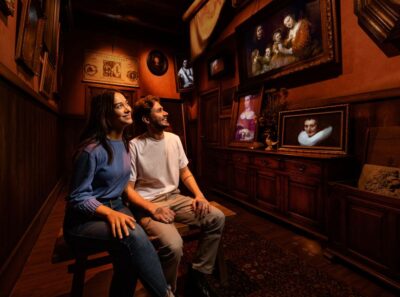
Rembrandts Immersive Experience Admission Ticket
Read our review →
Private Rijksmuseum Tour- The Dutch Masters, Rembrandt & Vermeer
Read our review →Browse the lists this tour appears in