
Reviewed · HISTORICAL TOURS
LGBTQI+ History Tour of Amsterdam
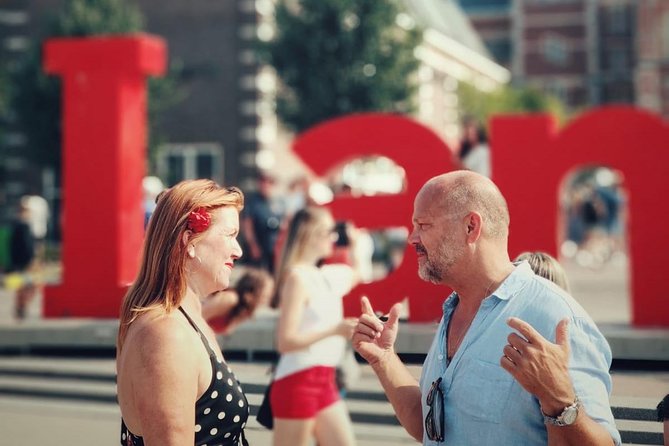
Amsterdam’s LGBTQI+ story is written into ordinary streets, canal houses, public squares, and bars. This two-hour walk with Henk, who lived through the early years of the city’s gay movement, connects those places with the people and struggles behind them. It is less a sightseeing march than a conversation about rights, memory, courage, and loss.
I especially like the small-group format, capped at 15 people, and the way the tour links gay history with Amsterdam’s wider development. Henk also brings personal experience, humor, Dutch poetry, and thoughtful answers to difficult questions. The main drawback is that two hours goes quickly, and several stops are viewed from outside rather than visited indoors.
In This Review
- Key points to know before booking
- Why this walk adds something new to Amsterdam
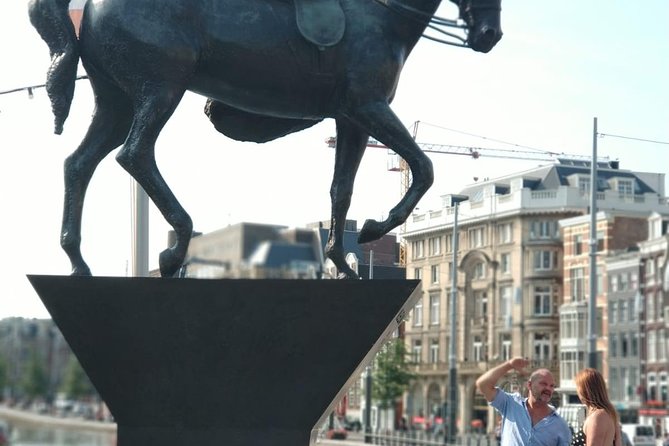
- Starting at the Gay Monument on Westermarkt
- Canal houses and Amsterdam’s 17th-century plan
- The Royal Palace and gay life in the 17th century
- Dam Square, public space, and difficult questions
- Through the red-light district and leather street
- Chinatown and the story of Zeedijk
- Henk’s guiding style and the small-group setting
- Is $42.33 a fair price for two hours?
- Practical advice for the morning walk
- Should you book the LGBTQI+ History Tour of Amsterdam?
- FAQ
- Where does the LGBTQI+ History Tour of Amsterdam start?
- Where does the tour end?
- What time does the tour begin?
- How long does the tour last?
- Is palace admission included?
- What is the cancellation policy?
Key points to know before booking
- The Gay Monument begins the story: Spend about 30 minutes learning why Amsterdam became home to the world’s first monument honoring gay victims of past, present, and future persecution.
- Henk adds personal perspective: His connection to the beginning of the gay movement gives the walk a human voice, not just a list of dates.
- Central Amsterdam is the classroom: The route passes 17th-century canal houses, Dam Square, the Royal Palace, the red-light district, leather street, and Chinatown.
- You finish at Café ’t Mandje: The walk ends at Zeedijk, at a bar linked with Bet van Beeren and Amsterdam’s early LGBTQI+ social life.
- Allies are welcome: You do not need to identify as LGBTQI+ to take part. The tour is designed to be open and welcoming to straight allies.
- Bring practical basics: You get the guide, but not water or other supplies. Wear walking shoes and plan for Amsterdam’s changeable weather.
Why this walk adds something new to Amsterdam
Amsterdam offers plenty of familiar ways to see the city: canal boats, grand museums, old churches, and the famous central squares. This tour gives you a different lens. It asks you to look at the same streets and notice who was allowed to gather there, who had to remain discreet, and how public attitudes changed over time.
That approach is useful even if you already know some LGBTQI+ history. The tour places it within the story of Amsterdam itself, tying social change to architecture, religion, politics, war, art, and everyday life. You are not simply moving from one rainbow-marked site to another.
Henk’s role matters here. He is not presented as a distant academic guide. He shares personal memories from the period when the gay movement was taking shape in Amsterdam, along with anecdotes and reflections on the present. That gives the walk a directness that a standard city tour usually cannot provide.
The tone can also become serious. The tour addresses persecution, the impact of war, the AIDS crisis, and the long effort to secure civil rights. Henk balances those subjects with warmth, humor, and occasional poetry, but you should expect more than a light stroll through colorful nightlife.
More History Tours in Amsterdam
- Amsterdam Food and Cultural Tour with Tastings
★ 5.0 · 2,442 reviews - Amsterdam: Haunted History and Ghost Walking Tour
★ 4.5 · 488 reviews - Amsterdam High-End Dutch Food & History Tour – Up to 8 guests
★ 5.0 · 482 reviews
Starting at the Gay Monument on Westermarkt
The meeting point is Westermarkt 2L, beside the Gay Monument. This is the emotional and historical starting point, and the tour allows about 30 minutes here.
The monument honors gay victims of persecution in the past, present, and future. Henk explains how the Netherlands came to have the first monument of its kind in the world. That opening gives the rest of the walk a clear purpose: you are learning not only about places where LGBTQI+ people lived and socialized, but also about remembrance and the continuing need to protect rights.
I like the choice of starting here because it prevents the tour from becoming a simple parade of bars and nightlife sites. You begin with memory and public recognition. From there, the later stops make more sense, since you can see them as part of a longer movement from secrecy and danger toward visibility and legal rights.
This is also where Henk’s personal connection is likely to have the most weight. He can relate broader events to lived experience, making the history easier to grasp. If you have questions about the monument, the movement, or present-day LGBTQI+ life in Amsterdam, this is a good time to ask them.
Canal houses and Amsterdam’s 17th-century plan
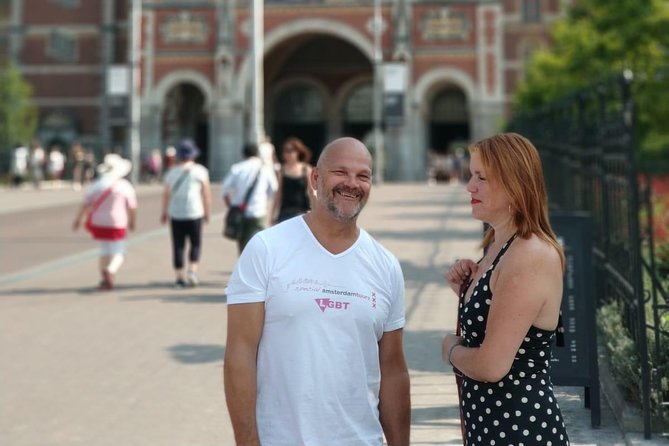
From Westermarkt, the group walks along the canals toward Dam Square. The route uses Amsterdam’s famous streets and houses as a backdrop for a discussion of the city’s 17th-century planning.
You will look at the narrow canal houses and hear why Amsterdam’s layout is considered an early example of large-scale city planning. This part is not a separate admission stop, but it helps place LGBTQI+ life inside the physical city. The canals were not just pretty scenery. They shaped movement, neighborhoods, commerce, privacy, and social contact.
The route also gives you a chance to look up. Amsterdam’s old houses can be easy to rush past when you are focused on taking photographs or following a map. With Henk pointing out the urban structure, the walk becomes more than a direct line between the monument and Dam Square.
Expect regular walking on city streets rather than a museum-style presentation. The tour lasts around two hours, so the pace needs to keep moving. If you prefer long stops with time to examine interiors, this experience may feel brisk.
The Royal Palace and gay life in the 17th century
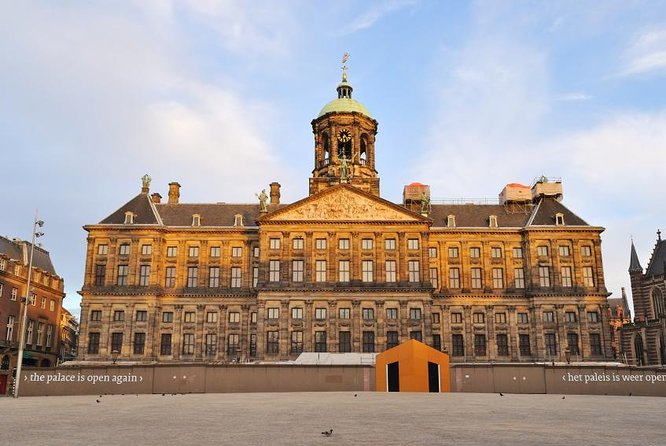
At the Royal Palace Amsterdam, Henk explains the building’s origins and its connection to gay life in the 17th century. You see the palace from the route, but palace admission is not included, and there is no time to visit the interior during the tour.
That limitation is worth understanding before you book. The palace is used as a historical reference point, not as a full attraction visit. If you want to tour its rooms, you should plan a separate visit.
Still, the stop adds useful context. The Royal Palace and Dam Square represent public power, ceremony, and the official face of Amsterdam. Connecting that setting with LGBTQI+ life in the 17th century shows that same-sex relationships and gender expression cannot be separated from the broader story of Dutch society.
This is one of the tour’s strengths: it does not confine LGBTQI+ history to venues that are openly identified as gay. Henk brings the subject into the center of Amsterdam, where architecture and civic life provide part of the evidence.
More history walks around Amsterdam:
- Rotterdam: Kinderdijk UNESCO World Heritage Entry Ticket
★ 4.6 · 1,477 reviews - The Hague: Hop-on Hop-off Old-Fashioned Heritage Tram Tour
★ 4.4 · 1,083 reviews - Rotterdam: Harbor Cruise on a Historic Ship
★ 4.2 · 812 reviews - Leiden: Cruise through the Historic City Center with Guide
★ 4.6 · 445 reviews
Dam Square, public space, and difficult questions
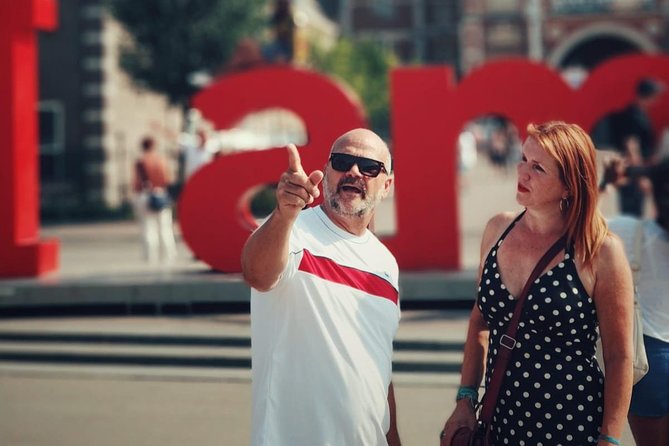
Dam Square is the city’s central gathering place. The stop lasts about 10 minutes, so Henk keeps the focus tight, covering the square’s long history and its LGBTQI+ connections.
The short visit works as a transition between the palace area and the older streets beyond it. You may find the square crowded with ordinary city activity, which makes the discussion of public space especially relevant. Visibility is not only about monuments or bars. It is also about who can meet, protest, celebrate, or simply move through the city without hiding.
Do not expect a long architectural lecture here. The value is in the connection between a familiar public square and the social history being discussed. Henk’s style, based on questions, stories, and personal reflections, seems better suited to this setting than a memorized speech.
Through the red-light district and leather street
The walk then continues through the red-light district, including Amsterdam’s leather street. Henk can explain more about the red-light district if you ask, so this is a useful section for questions rather than a formal stop with a fixed presentation.
The area can raise complicated issues about sex work, privacy, commerce, identity, and the way Amsterdam is presented to visitors. The LGBTQI+ angle adds another layer, especially through the discussion of leather culture and the venues associated with it.
This portion may appeal most to people who want social history rather than a polished postcard view of Amsterdam. It is also a reminder that the city’s LGBTQI+ past was not confined to one neighborhood or one type of venue.
At the same time, the red-light district is an active urban area, not a quiet memorial site. You should be comfortable walking through a place known for adult businesses and public curiosity. Henk is available to explain details, but you can also keep your questions general if that is more comfortable.
Chinatown and the story of Zeedijk
The final stretch leads through Chinatown and along Zeedijk. The tour discusses how this was once considered one of Amsterdam’s roughest streets, and why German soldiers were not allowed in this part of the city during the Second World War.
That wartime detail gives the route another unexpected turn. The walk is not only about gay bars and legal rights. It shows how neighborhoods can carry several histories at once: immigrant life, wartime restrictions, nightlife, policing, and LGBTQI+ community.
The discussion then turns to Amsterdam’s historic gay bar culture. The route ends at Café ’t Mandje, at Zeedijk 63, a short walk from Central Station. The bar is connected with Bet van Beeren and is presented as one of the city’s oldest gay bars. One account also describes it as one of the oldest lesbian-owned bars in Amsterdam, with the new owner sometimes meeting visitors.
The ending is well chosen. After beginning at a monument for victims, you finish at a place associated with community, gathering, and everyday social life. The tour does not simply say that LGBTQI+ history happened in Amsterdam. It shows you where people met and how those spaces helped create belonging.
You should note that the tour ends at the bar rather than including a drink or a full interior visit as part of the listed price. If you want to stay for a drink afterward, you are already in a convenient location.
Henk’s guiding style and the small-group setting

The guide can make or break a history walk, and Henk is central to this experience. His approach combines historical facts with personal anecdotes, literature, art, politics, and Dutch poetry. He also answers questions during the walk and can suggest places to visit afterward.
Several specific qualities make the format appealing. Henk is described as warm, funny, caring, and direct, while still giving difficult subjects the attention they deserve. One particularly practical touch was his use of a rainbow umbrella to shelter someone from drizzle, a small example of the personal care that suits a walking tour.
The group size is limited to 15 people. That is not a private tour, but it is small enough for Henk to respond to questions and maintain a conversation. If the group reaches its maximum, you should expect a little less individual attention than on a private walk.
Straight allies are welcome, and the tour is suitable for people of different genders, gender expressions, and sexual orientations. You do not need specialist background knowledge. Henk’s job is to explain the setting and invite discussion, not to test you.
The emotional tone is another factor. This can be a moving experience, particularly when the subject turns to AIDS and the loss of loved ones. If you are looking only for jokes and nightlife recommendations, this may feel heavier than expected. If you want an honest account of how rights were won and how much remains at stake, that seriousness is part of the value.
Is $42.33 a fair price for two hours?
At $42.33 per person, this is not the cheapest way to spend two hours in Amsterdam. You are paying for a guided, small-group experience rather than a self-guided walk, and the price includes the host but not drinks, palace admission, or other attractions.
The value comes from access to a focused subject and to Henk’s personal perspective. You could walk past the Gay Monument, Dam Square, the leather street, and Café ’t Mandje on your own. What you would not have is the thread connecting those places, or the chance to ask someone who experienced the movement’s early years what changed.
For visitors who have already taken a canal cruise or general city tour, this is a useful addition. It covers only a small part of central Amsterdam geographically, but it adds material that standard sightseeing often leaves out. For LGBTQI+ visitors, it can make the city feel more legible and personal. For allies, it offers a clear way to understand the struggle behind rights that are sometimes treated as inevitable.
I would consider the price fair if you value a specialist guide and a conversation-based walk. It is less attractive if you mainly want paid entry to buildings or a long list of photo stops.
Practical advice for the morning walk
The tour starts at 11:00 a.m. at Westermarkt and lasts about two hours. Wear comfortable walking shoes and bring your own water, since those basics are not supplied.
Amsterdam weather can turn wet, and the experience requires good weather. If poor conditions cancel the walk, you are offered another date or a full refund. The same applies if the minimum number of participants is not reached.
Confirmation arrives when you book. The tour is near public transportation, and the ending on Zeedijk is within walking distance of Central Station. Service animals are allowed, and most people can participate.
You can cancel for a full refund up to 24 hours before the start time. Cancellations or changes made inside that 24-hour window are not refunded or accepted, so leave yourself some flexibility.
Because the tour is generally booked well in advance, often around 26 days ahead, I would not leave it until the last morning of your Amsterdam stay. Booking early is especially sensible if you want this to be one of your first activities in the city. The route can give you useful ideas for places to return to afterward.
Should you book the LGBTQI+ History Tour of Amsterdam?
Book it if you want Amsterdam explained through people, memory, and social change, not just canals and grand buildings. Henk’s first-hand connection to the gay movement, his humor, and his willingness to discuss painful subjects give the tour a clear sense of purpose.
It is a particularly good choice for LGBTQI+ visitors, curious allies, students of social history, and anyone who has already seen Amsterdam’s usual sights. You should be ready to walk, listen, ask questions, and accept that some stories will be moving.
Skip it if you want a palace interior, a museum visit, or a purely lighthearted city stroll. For everyone else, the combination of the Gay Monument, central Amsterdam, wartime neighborhood history, leather culture, and Café ’t Mandje makes this a meaningful use of two hours.
FAQ
Where does the LGBTQI+ History Tour of Amsterdam start?
It starts at Westermarkt 2L, 1016 DW Amsterdam, near the Gay Monument.
Where does the tour end?
The tour ends at Café ’t Mandje, Zeedijk 63, 1012 AS Amsterdam. The ending point is within walking distance of Amsterdam Central Station.
What time does the tour begin?
The scheduled start time is 11:00 a.m.
How long does the tour last?
The walking tour lasts approximately two hours.
Is palace admission included?
No. The Royal Palace is viewed and discussed from the route, but admission is not included, and there is no time to visit the interior during the tour.
What is the cancellation policy?
You can cancel up to 24 hours before the start time for a full refund. If poor weather or an insufficient number of participants cancels the experience, you are offered another date or a full refund.
Just added around Amsterdam
- Amsterdam: Food and Canal Tour★ 4.6 · 22 reviews
- Segway City Tours Amsterdam★ 4.3 · 23 reviews
- Amsterdam Canal Cruise in Classic Salon Boat With Drinks and Cheese★ 4.0 · 22 reviews
- Discover Deventer with an Outside Escape city game tour!★ 4.5 · 23 reviews
- Historical Walking Tour, private with local Dutch guide★ 5.0 · 23 reviews
- Utrecht Food Tour on a Bicycle with local guide★ 5.0 · 23 reviews
- Amsterdam: Captain For a Day 2-Hour Boat Rental★ 4.9 · 23 reviews
- Amsterdam Small-Group Breakfast Morning Cruise★ 5.0 · 23 reviews
Historical Tours, compared.
Amsterdam Food and Cultural Tour with Tastings
Read our review →
Kinderdijk UNESCO World Heritage Entry Ticket
Read our review →
Hop-on Hop-off Old-Fashioned Heritage Tram Tour
Read our review →


Amsterdam High-End Dutch Food & History Tour – Up to 8 guests
Read our review →
Cruise through the Historic City Center with Guide
Read our review →
Browse the lists this tour appears in