
Reviewed · VAN GOGH & RIJKSMUSEUM TICKETS
Amsterdam: Van Gogh and Rembrandt Immersive Experience Entry
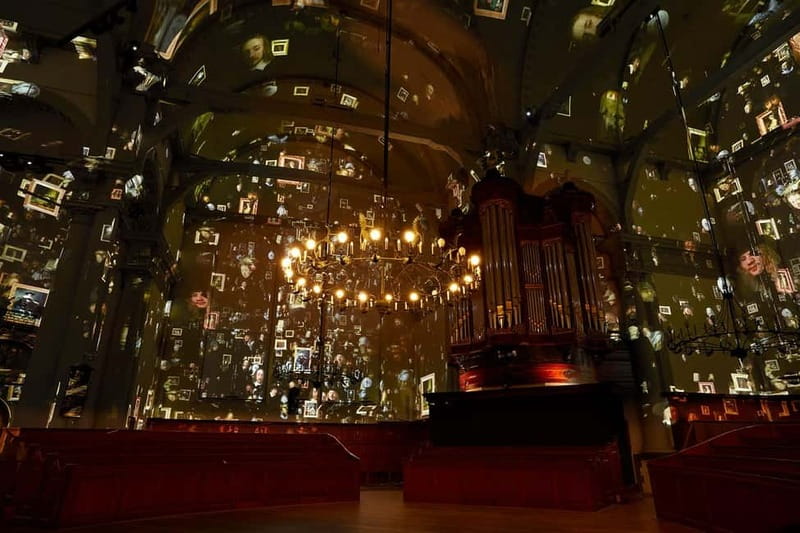
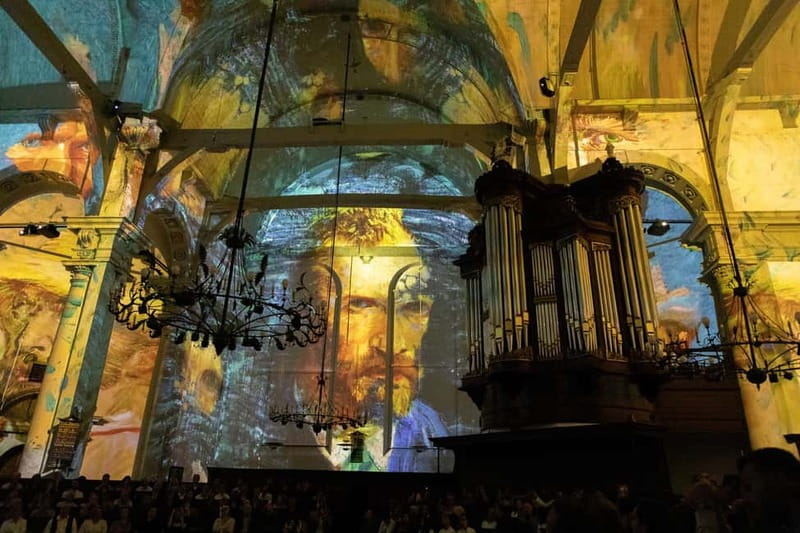
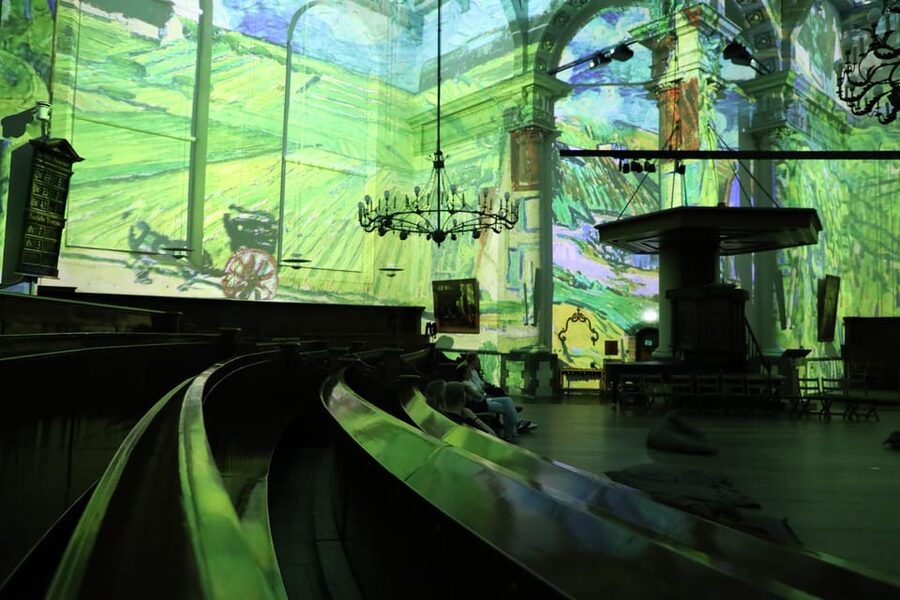
The most striking part of this Amsterdam art experience is the setting: the entire interior of the Noorderkerk becomes a moving canvas. Sunflowers, blossoms, angels, and paintings spread across the church while English narration follows Van Gogh’s fascination with Rembrandt.
I like the thoughtful link between the two artists, and I like the relaxed format, where you can lie on a beanbag or stroll quietly through the church. The main drawback is that the story can be hard to follow at times, especially when the narration shifts between artists and ideas.
In This Review
- Key points to know before you book
- What the Van Gogh and Rembrandt show is really about
- Entering the Noorderkerk in Amsterdam
- How the 45-minute presentation unfolds
- Beanbags, sound, and the best place to sit
- Why the Van Gogh and Rembrandt connection matters
- The sound and light design
- Is $17 a fair price?
- Who will enjoy this experience most?
- Timing, arrival, and practical planning
- How it compares with the Van Gogh Museum
- My verdict: book it for atmosphere and context
- FAQ
- How long does the Van Gogh and Rembrandt experience last?
- Is this the Van Gogh Museum?
- Where does the experience take place?
- Are the presentations available in English?
- Can I sit or lie down during the show?
- Is the venue wheelchair accessible?
- Is the experience suitable for people with epilepsy?
Key points to know before you book
- A national monument becomes the show: The Noorderkerk provides the walls, ceiling, and atmosphere for the projection.
- Van Gogh’s letters guide the story: English recitations from his letters to his brother explain his admiration for Rembrandt.
- You can watch from a beanbag: Cushions in the round central area offer a relaxed view and reportedly clearer sound.
- It lasts 45 minutes: The presentation is short enough to fit into a busy Amsterdam day.
- The price is $17 per person: That is fair for a theatrical art presentation in a historic church, though it is not a substitute for original paintings.
- This is not the Van Gogh Museum: You see projected images and hear a narrated story, not original works in gallery rooms.
What the Van Gogh and Rembrandt show is really about
This is not simply a collection of Van Gogh images set to music. The central idea is the artistic connection between Vincent van Gogh and Rembrandt van Rijn, two Dutch painters separated by time but linked by Van Gogh’s admiration.
Van Gogh became fascinated by Rembrandt’s work. The presentation explains how Rembrandt influenced Van Gogh and how Van Gogh saw something personal and spiritual in the older painter’s art. That gives the show more purpose than a standard picture montage.
You hear passages from Van Gogh’s letters to his brother, recited in English. These letters help present Van Gogh as a person thinking through art, faith, and inspiration. I find this approach useful because it gives you a voice to follow rather than asking you to absorb a string of famous images without context.
The presentation also works for you if you know little about either painter. It offers a straightforward introduction to their connection, without requiring a background in art history. You can learn while watching the projections rather than stopping to read long museum labels.
More Van Gogh and Rijksmuseum tickets:
- Amsterdam: Van Gogh Museum Ticket
★ 4.7 · 52,054 reviews - Amsterdam: Rijksmuseum Entry Ticket
★ 4.7 · 25,535 reviews - Moco Museum Amsterdam Entrance Tickets with Banksy & More
★ 4.4 · 10,088 reviews
Entering the Noorderkerk in Amsterdam
The Noorderkerk is more than a convenient screen for the show. It is a national monument, and its historic interior gives the presentation much of its character.
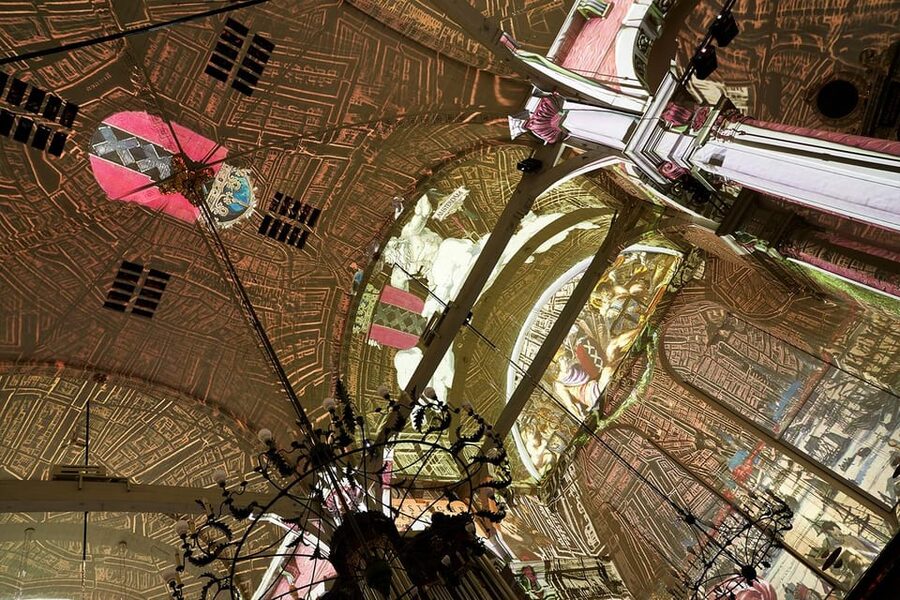
Inside, the projections cover the church walls and ceiling. The architecture remains part of what you see, so the paintings appear across a real sacred space rather than on a flat cinema screen. That contrast between old brickwork, church structure, changing light, and moving artwork is one of the strongest reasons to choose this presentation.
The setting also creates a quiet, reflective mood. You are not walking through a busy gallery or trying to view a painting over someone’s shoulder. Instead, you can settle into the space and let the story unfold around you.
The show is described as the first son-et-lumière, or sound and light presentation, displayed on this scale inside a national monument. That matters because the church is used as a complete viewing environment. The architecture is not just a backdrop at the front of the room.
How the 45-minute presentation unfolds
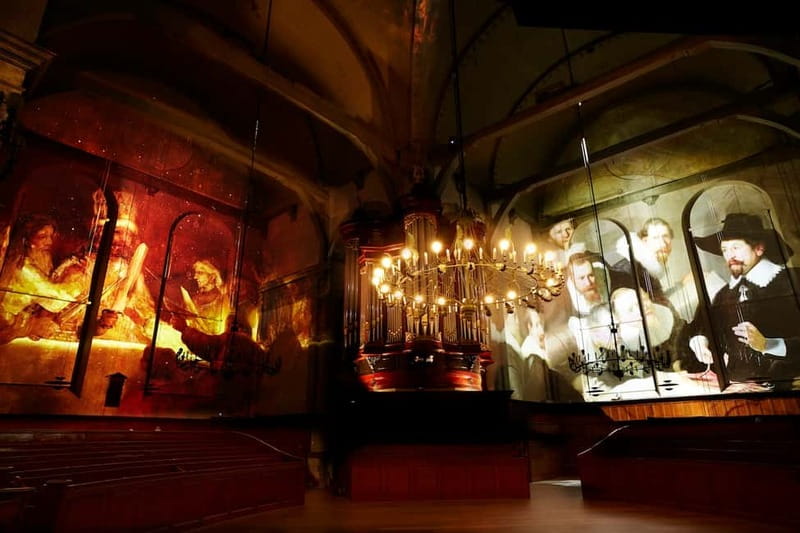
The exact sequence is presented as one continuous show rather than a guided walking tour with several outdoor stops. You enter, find a place to sit or stand, and watch as the story develops around the room.
At first, the presentation introduces the relationship between Van Gogh and Rembrandt. It then connects Van Gogh’s own thoughts with images from both painters. The narration, sound, and projections work together to create a sense of movement from one idea to the next.
You might notice that the experience asks you to listen as much as to look. The images are large and often dramatic, but the letters provide the thread holding the presentation together. If you focus only on the visuals, you may miss some of the explanation about Van Gogh’s admiration for Rembrandt.
The show includes familiar Van Gogh subjects such as sunflowers, along with angels, blossoms, and other changing scenes. Rembrandt’s work is included as part of the comparison, allowing you to see how the presentation places the two artists in conversation.
The format is deliberately simple. There is no long lecture, no need to move between galleries, and no large amount of written material. You receive your ticketed entry and audio description, then take in the presentation at your own pace within the church.
Beanbags, sound, and the best place to sit
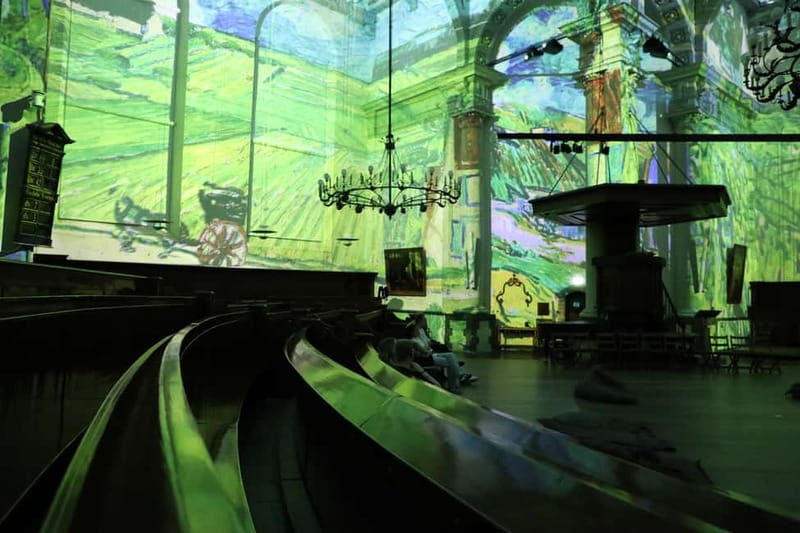
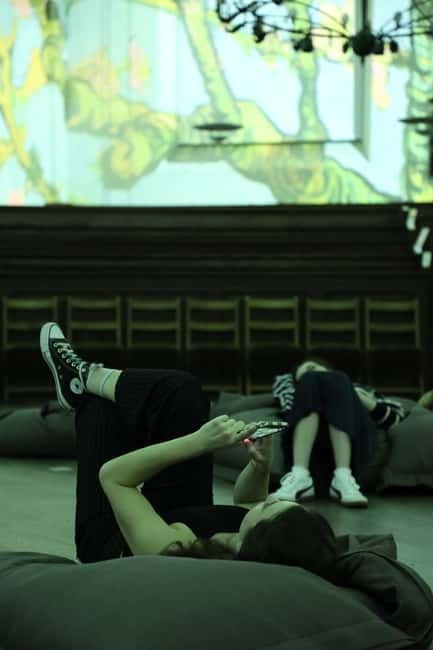
One of the unusual details here is the seating. You can lie on comfortable beanbags on the floor, especially in the round central area, or take a stroll through the church while the show is running.
I would choose the beanbag seating if you want the most restful version of the experience. The central round area is also reported to offer the clearest sound, which is useful because the English narration carries much of the story.
Lying down changes the way you watch the projections. You can look up toward the ceiling and let the images spread over your field of vision. This makes the presentation feel less like a normal film and more like an art installation.
The relaxed seating is also a good fit for families, couples, older children, and anyone who enjoys visual presentations without much walking. It may be less appealing if you prefer a conventional museum visit where you study original works at close range.
You can also move around, but do so quietly and with care for people seated on the floor. If you want to pay close attention to the narration, staying in the central cushion area may be the better choice.
More Rembrandt and Dutch Masters days:
- Amsterdam: Rembrandt House Museum Entrance Ticket
★ 4.7 · 3,385 reviews - The Hague: Mauritshuis Entrance Ticket
★ 4.7 · 2,706 reviews - Amsterdam: Fabrique des Lumières Dutch Masters Ticket
★ 4.6 · 2,373 reviews - Rembrandts Experience Amsterdam Admission Ticket
★ 4.5 · 521 reviews
Why the Van Gogh and Rembrandt connection matters
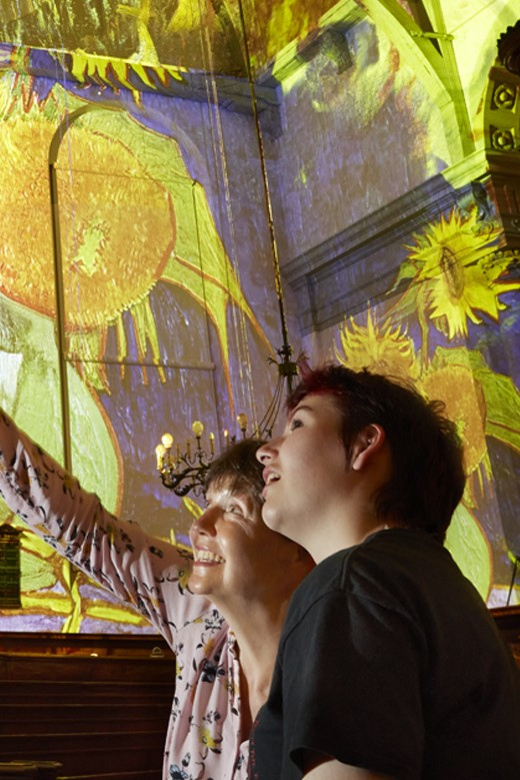
Van Gogh and Rembrandt are often presented separately. Van Gogh is linked with bold color, expressive brushwork, and his years in southern France, while Rembrandt is known for dramatic light, portraits, and seventeenth-century Amsterdam.
This presentation gives you a different way to consider them. Instead of treating them as isolated Dutch icons, it focuses on Van Gogh looking back at Rembrandt. You see how an artist can find a model in an earlier painter and use that influence for his own work.
That connection is especially helpful if you already know Van Gogh’s most famous images but want more context. The letters show that his interest in Rembrandt was not just a matter of copying style. It was part of how Van Gogh thought about art and meaning.
I also like that the show makes room for Rembrandt without turning into a second Van Gogh attraction. The title is accurate: both artists matter, and the comparison is the point.
Still, you should keep your expectations in check. This is not an art-history seminar, and the 45-minute length leaves little room for detailed analysis of individual paintings. You get a broad, accessible story supported by visual spectacle.
The sound and light design
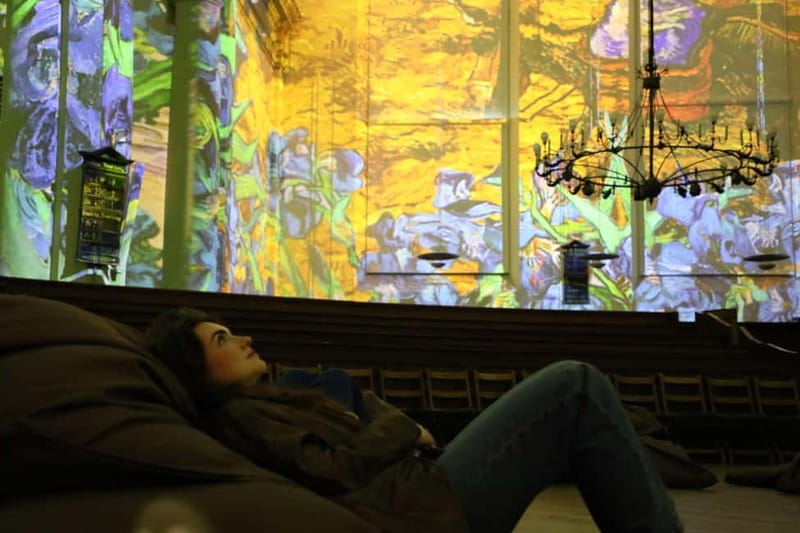
The presentation uses projection, sound, and narration together. The result is closer to a theatrical show than to a standard museum audio tour.
The large images are the main visual attraction. They move across the interior and give you changing views of works by Van Gogh and Rembrandt. The scale can make familiar images feel different, since you see details enlarged across church walls rather than confined to a framed canvas.
Sound provides the emotional pace. English recitations from Van Gogh’s letters explain his ideas and help carry the story from one section to another. If English is not your first language, you may want to choose a seat with good sound rather than sitting at the edge of the room.
The presentation has also had technical adjustments to its projectors and sound system. A temporary equipment issue may still be possible in any projection show, and one part of the ceiling projection was noticed taking time to appear during one presentation. That did not prevent the show from continuing, but it is worth remembering that this is live equipment in a historic building, not a perfectly controlled cinema.
Is $17 a fair price?
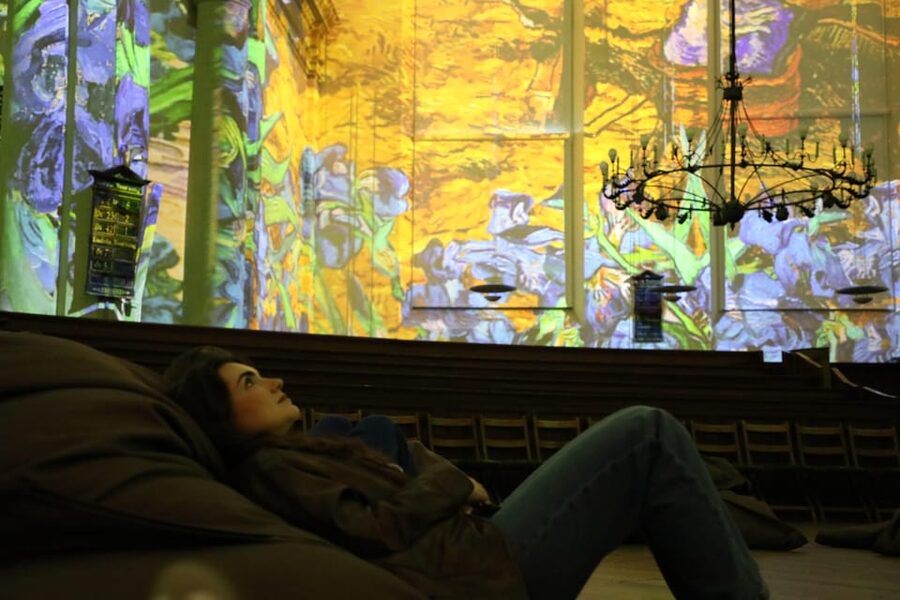
At $17 per person, I consider this a reasonable add-on to an Amsterdam sightseeing day. You receive entry to a 45-minute production in a national monument, with projections, sound, narration, and seating included.
The value depends on what you want from art. If you want original paintings, this price will not replace a museum ticket. You are paying for the setting, the presentation, and the way the works are brought together, not for direct access to Van Gogh’s canvases.
For someone who has already visited the Van Gogh Museum, this offers a different format and a fresh look at Van Gogh’s connection to Rembrandt. For someone with limited time, it gives you an easy introduction to both artists without committing several hours to a museum.
I would be less quick to recommend it if you dislike projection shows or prefer quiet, close study of original art. The experience is designed around large-scale visual effects and atmosphere. That is its strength, but it is also its limit.
Who will enjoy this experience most?
You will likely enjoy the show if you want a short cultural activity with a strong visual element. It works well for first-time visitors who want to understand why Van Gogh and Rembrandt are linked, even if they have little art knowledge.
It also suits families and mixed-age groups. The explanation is easy to follow for much of the show, and the images give children and teenagers something immediate to watch. The beanbags add a casual touch that may appeal to younger visitors and anyone who wants a break from walking.
Couples and solo visitors can both enjoy the format. The quiet church, floor seating, and gentle pace make it suitable for a calm pause during a busy day.
You may want to skip it if you are looking for a traditional guided tour, a detailed chronology of both painters, or a chance to stand close to original works. You should also avoid it if you have epilepsy, since the changing light and projection effects are not considered suitable for people with that condition.
Pets are not allowed, although assistance dogs are permitted. Intoxication, alcohol, and drugs are also not allowed.
Timing, arrival, and practical planning
The show lasts 45 minutes, but your visit begins before the first image appears. You need to check in 10 minutes ahead of your scheduled starting time, and the starting times are strict.
Plan to arrive early rather than cutting it close. A late arrival can be awkward when the room is already dark and people are settled on the floor. The presentation runs at set times, so missing your slot may disrupt the rest of your day.
The experience is closed on Sundays. Check the available starting times when you book, especially if you are building it around a museum visit, canal cruise, or meal.
Dutch and English are the listed languages, and a Dutch or English host or greeter is available. The ticket includes an audio description. Food and drinks are not included, so plan those separately before or after the show.
The venue is wheelchair accessible, which makes this a practical cultural stop for many visitors with mobility needs. Because the presentation includes beanbags and floor seating, you may want to confirm the preferred seating arrangement at arrival if you need a particular position.
Free cancellation is available up to 24 hours in advance for a full refund. You can also reserve now and pay later, which is useful if your Amsterdam schedule is still changing.
How it compares with the Van Gogh Museum
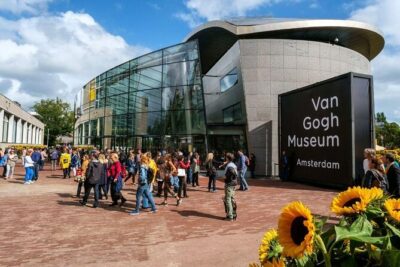
The most important planning note is simple: this is not the Van Gogh Museum.
At the museum, you see original works in a gallery setting and can study them at your own pace. At the Noorderkerk, you see projected versions as part of a timed sound and light presentation. The two activities serve different purposes.
I would choose the museum if Van Gogh is your main reason for visiting Amsterdam and you want to examine paintings closely. I would choose this show if you want to experience the art at a much larger scale and learn about Van Gogh’s admiration for Rembrandt in a relaxed setting.
You can also do both if your schedule and budget allow. The church presentation does not replace the museum, but it can add another layer to your understanding of Van Gogh’s artistic interests.
My verdict: book it for atmosphere and context
I recommend the Van Gogh and Rembrandt presentation if you want a well-priced, 45-minute cultural activity with dramatic visuals and a meaningful setting. The strongest parts are the Noorderkerk itself, the English narration from Van Gogh’s letters, and the way the whole room becomes part of the show.
Book it with the right expectations. You are not visiting a gallery of originals, and the narration may require careful listening to follow who is speaking and how the ideas connect. Choose a central beanbag for the clearest sound, arrive 10 minutes early, and avoid Sunday.
At $17, I think it earns its place on an Amsterdam itinerary, especially after a day of walking. It is a good choice for families, couples, first-time art visitors, and anyone who wants Van Gogh and Rembrandt presented in a fresh, theatrical way.
FAQ
How long does the Van Gogh and Rembrandt experience last?
The presentation lasts 45 minutes. Check the available starting times when booking because entry times are strict.
Is this the Van Gogh Museum?
No. This is a sound and light presentation with projected artwork inside the Noorderkerk. It does not provide access to original works at the Van Gogh Museum.
Where does the experience take place?
It takes place inside the Noorderkerk, a national monument in Amsterdam, in North Holland.
Are the presentations available in English?
Yes. English is one of the listed languages, and Van Gogh’s letters to his brother are recited in English. Dutch is also available.
Can I sit or lie down during the show?
Yes. Comfortable beanbags are available, and you can also stroll through the church. The round central area is advised for clearer sound.
Is the venue wheelchair accessible?
Yes. The experience is wheelchair accessible.
Is the experience suitable for people with epilepsy?
No. The experience is not suitable for people with epilepsy because it uses changing light and projection effects.
Just added around Amsterdam
- Amsterdam: Food and Canal Tour★ 4.6 · 22 reviews
- Discover Deventer with an Outside Escape city game tour!★ 4.5 · 23 reviews
- Segway City Tours Amsterdam★ 4.3 · 23 reviews
- Amsterdam Canal Cruise in Classic Salon Boat With Drinks and Cheese★ 4.0 · 22 reviews
- Historical Walking Tour, private with local Dutch guide★ 5.0 · 23 reviews
- Utrecht Food Tour on a Bicycle with local guide★ 5.0 · 23 reviews
- Amsterdam: Captain For a Day 2-Hour Boat Rental★ 4.9 · 23 reviews
- Amsterdam Small-Group Breakfast Morning Cruise★ 5.0 · 23 reviews
Van Gogh & Rijksmuseum Tickets, compared.
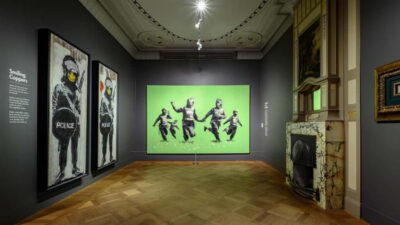
Moco Museum Amsterdam Entrance Tickets with Banksy & More
Read our review →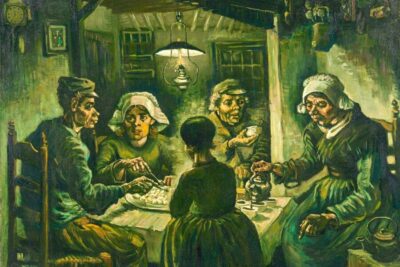
Van Gogh Museum Amsterdam Exclusive Tour w/ Reserved Entry
Read our review →
Moco Museum Amsterdam Admission Ticket with Banksy and more
Read our review →Browse the lists this tour appears in