
Reviewed · AMSTERDAM
Zeeland Zeehonden strand safari NL/DE
The best part of this Zeeland outing is that you do not just look at the beach. You work it. With binoculars for seal watching, search cards, magnifying jars, and either a large trawl net or crab rods, you get a close look at the small world along the North Sea shore. I like the hands-on format and the way the guide turns simple finds into short, memorable lessons. The tour is in Dutch or German, and guide Mark is especially good at keeping children involved.
I also like the seasonal twist. In July and August, you may enter shallow water with the guide and use the big net. In spring and autumn, the focus shifts to crab fishing with rods. The $19 price is fair for two hours of guided activity, though families should note that the same price applies to toddlers, which can make the total feel less attractive for very young children.
In This Review
- Key points to know before booking
- A working beach safari at Neeltje Jans
- Looking for seals along the North Sea
- Summer netting in the shallow water
- Spring and autumn crab fishing
- Shells, plants, and small creatures
- What the guide adds
- How much value do you get for $19?
- What to bring for a comfortable outing
- Who will enjoy this most?
- Meeting point and timing tips
- Should you book the Zeeland Beach Safari?
- FAQ
- Where does the Zeeland Beach Safari meet?
- Where can I park?
- How long does the tour last?
- What languages does the guide speak?
- Are binoculars provided for seal watching?
- Will I definitely see seals?
- What happens during the summer edition?
- What happens during the spring and autumn edition?
- What should I bring?
- Is the tour suitable for wheelchair users?
- What happens if the weather is bad?
- Can I cancel and receive a refund?
Key points to know before booking
- Seal watching is part of the walk: Binoculars help you look for seals resting or moving along the North Sea coast.
- The activity changes with the season: Summer brings shallow-water netting, while spring and autumn use crab rods.
- Children have plenty to do: They can search, hold equipment, examine small catches, and help identify shells and animals.
- Everything is returned to nature: Marine life is handled carefully, observed briefly, and put back where it was found.
- The meeting point takes planning: Park at Parking Beach Neeltje Jans 6, then allow about 10 minutes to walk to Beachbar Atlantis.
- Weather can change the plan: Poor weather may cancel the tour or move it to a forest or dune safari.
A working beach safari at Neeltje Jans
This is a small-scale nature outing on the shore near Neeltje Jans, a place known for its exposed North Sea coast and broad beaches. The setting matters because the beach is not simply scenery here. It is the subject of the tour, with the guide showing you how much life can be found in shallow water, wet sand, rock pools, and washed-up shells.
You meet in front of Beachbar Atlantis. Use that name in Google Maps, since the meeting point is given as Hoogh Pleatweg without a street number. The free parking area is Parking Beach Neeltje Jans 6, about a 10-minute walk away. That walk is easy to overlook when planning, especially with young children or beach gear, so arrive with enough time to park and reach the bar before the starting time.
The tour lasts two hours. That is long enough to make several stops and try the equipment, but short enough to fit into a day of sightseeing around Zeeland. You are not signing up for a long hike. Expect a guided beach walk with stretches of standing, searching, and wading in shallow water during the summer version.
A few more Amsterdam half-days to weigh up
- Seal Safari at UNESCO Site Waddensea from Amsterdam
★ 5.0 · 38 reviews
Looking for seals along the North Sea
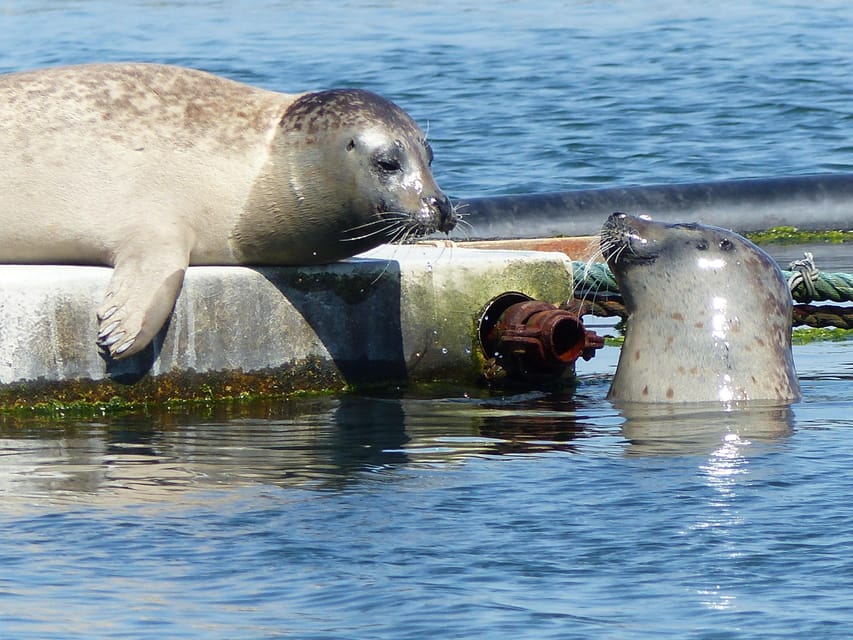
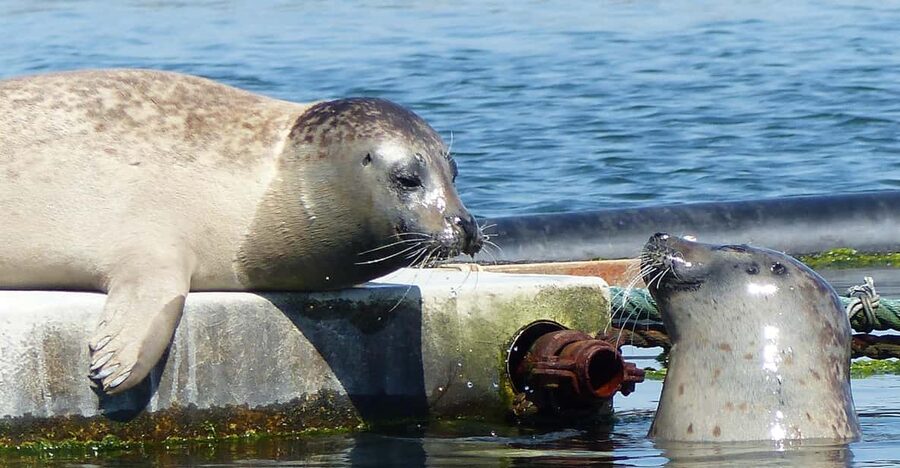
The seals are the headline attraction, but they are wildlife, not a scheduled performance. Your guide uses binoculars to help you look toward the water and shore, then explains the difference between a common seal and a grey seal. You learn what to look for and how these animals fit into the North Sea environment.
That makes the seal portion more rewarding than simply pointing at a distant shape. You get a little help with identification, and the guide can add facts about the animals in their natural setting. Still, keep your expectations sensible. Sightings depend on conditions and animal movements, so there is no guarantee of a close view or a particular number of seals.
Bring your own binoculars if you have them, though binoculars are included. A camera is also listed as a useful item to bring. The best photographs may be distant, so think of this as a chance to watch wildlife rather than a photo shoot.
The guide’s approach is aimed at families and mixed-age groups. Children can look for seals while adults learn the differences between species and hear short facts about North Sea life. The activity works well when your group enjoys asking questions rather than simply ticking off a sighting.
Summer netting in the shallow water
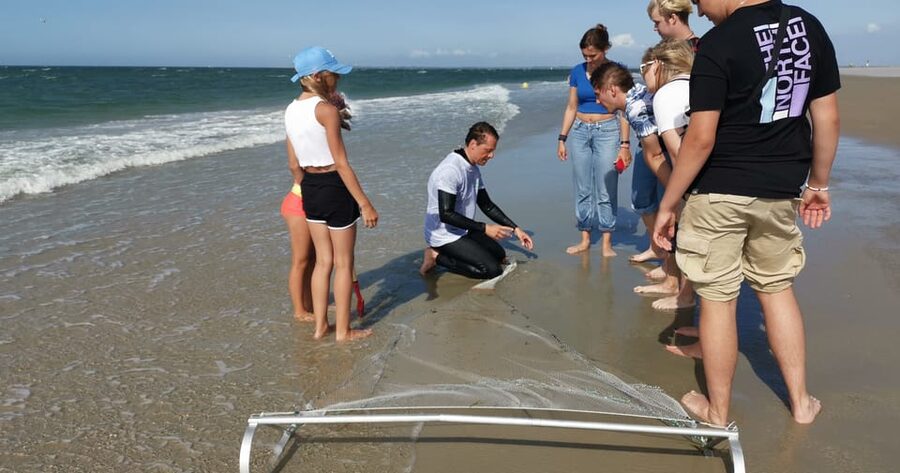
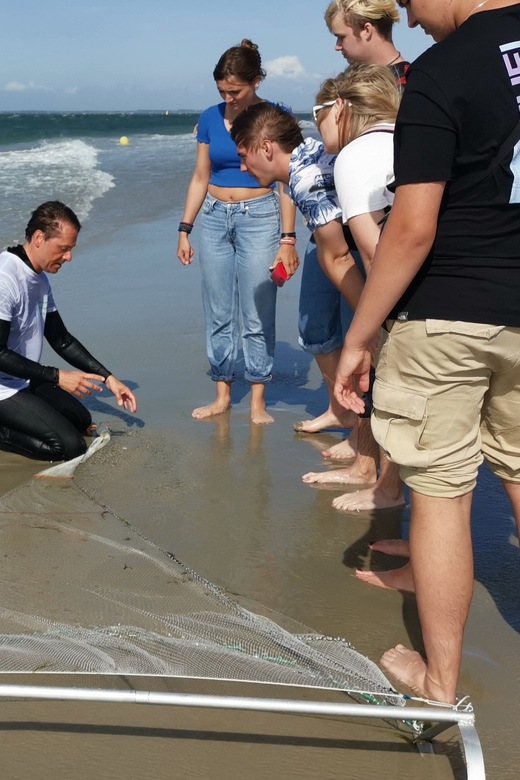
In July and August, the tour uses a large trawl net along the shallow shore. With the guide’s help, you pull the net through the water and examine what it brings up. The net offers a quick look at animals that usually stay below the surface, making the sea feel less distant and more understandable.
This is the wettest version of the activity. Swimwear, a towel, and a complete change of clothes are sensible, not optional extras. The instructions specifically note that it is allowed to go into the water with the guide during the summer edition, so pack for wading even if you do not expect to swim.
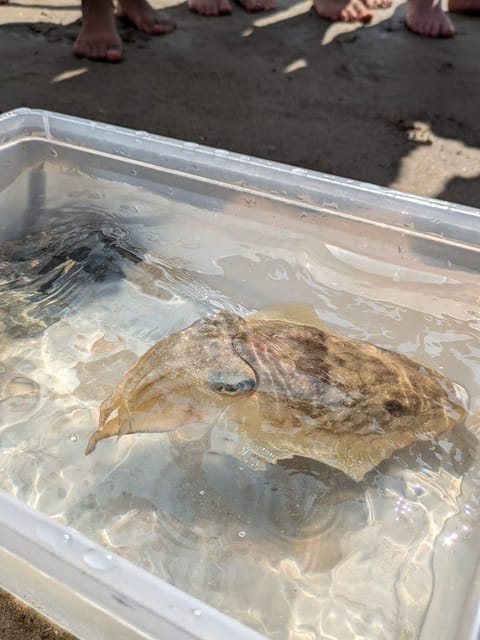
The catch might include small fish such as sand eels, shrimps, crabs, starfish, or other marine life. You might also find shells and, less commonly, animals such as seahorses, cuttlefish, or jellyfish. The wording matters here: these are possible finds, not a promised list. Nature decides what appears in the net.
You examine smaller catches in magnifying jars. Identification cards help you match what you see with the right animal, plant, or shell. This simple equipment is a strength of the tour. A child can hold a jar, compare a shell with a card, and begin to notice details that would otherwise pass by.
The guide also explains how to handle the animals. Everything is treated with care and returned to its natural environment. That is a useful lesson in itself. The point is not to collect beach life, but to observe it and leave it unharmed.
Spring and autumn crab fishing
The spring and autumn version replaces the large trawl net with crab rods. You use the rods to search for the biggest crab, turning the shore into a gentle contest. This gives the tour a clear goal and often keeps children focused during the slower parts of a beach walk.
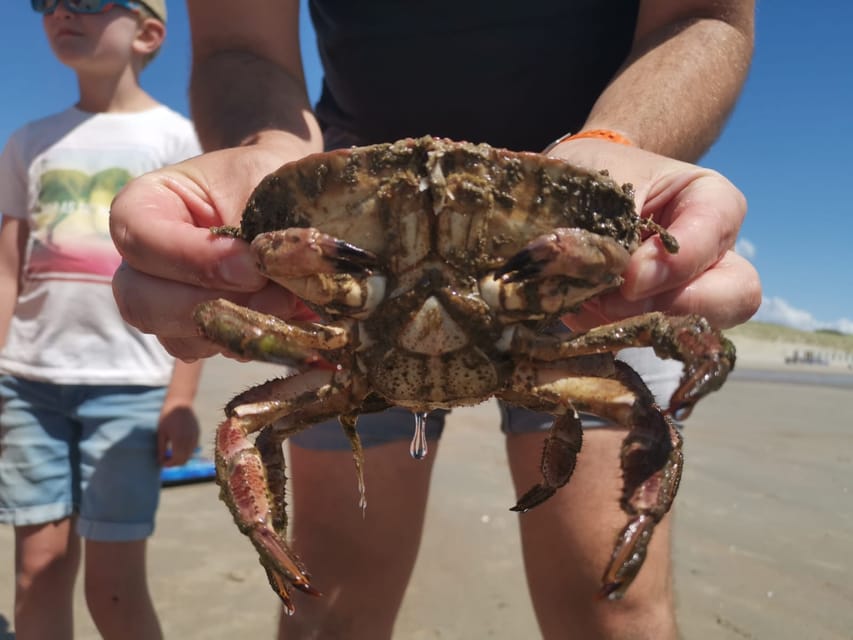
You may encounter different kinds of crabs, including small shore crabs and larger North Sea crabs. The guide can explain how to identify a male crab and why crabs move sideways. You also learn that their sideways movement relates to the way their legs are structured, a small fact that children tend to remember.
The crab activity is not about keeping your catch. The animals are returned safely, and the handling is part of the lesson. One practical benefit is that the activity gives young participants something to do with their hands while the guide talks. That balance between explanation and action helps the two hours pass quickly.
Spring and autumn can feel colder on the coast than the calendar suggests. The operator warns that the beach is always colder, so bring extra warm clothing. You may still want waterproof layers, particularly if the wind picks up. The equipment is supplied, but comfort depends on your clothing.
Same city, a completely different afternoon:
- Amsterdam: Van Gogh Museum Ticket
★ 4.7 · 52,054 reviews - Amsterdam Classic Saloon Boat Cruise with Drinks and Cheese
★ 5.0 · 31,825 reviews - Amsterdam Luxury Canal Cruise + Unlimited Drinks & Bites option
★ 5.0 · 30,518 reviews - Amsterdam: Heineken Experience Ticket
★ 4.6 · 30,055 reviews
Shells, plants, and small creatures
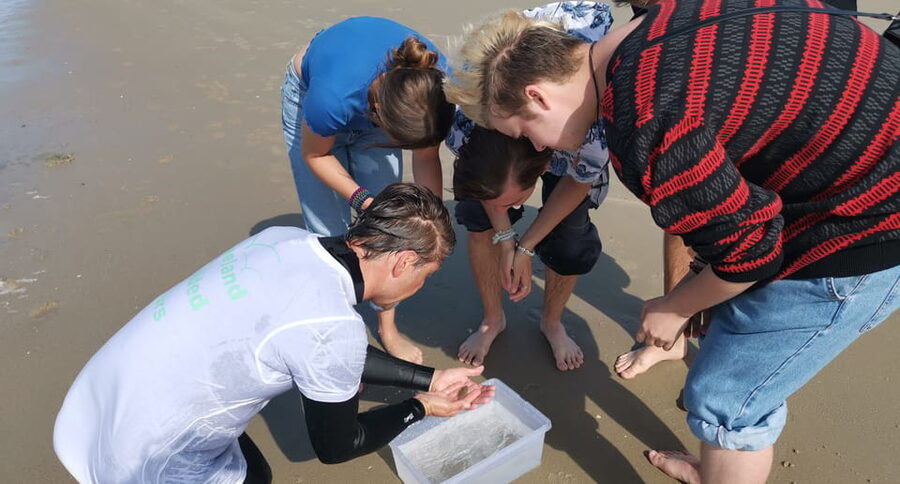
The beach walk covers more than seals and crabs. Your guide helps you identify shells, plants, starfish, shrimps, and small fish. The magnifying jars are useful for tiny finds, while the search cards give the group a simple way to organize what it sees.
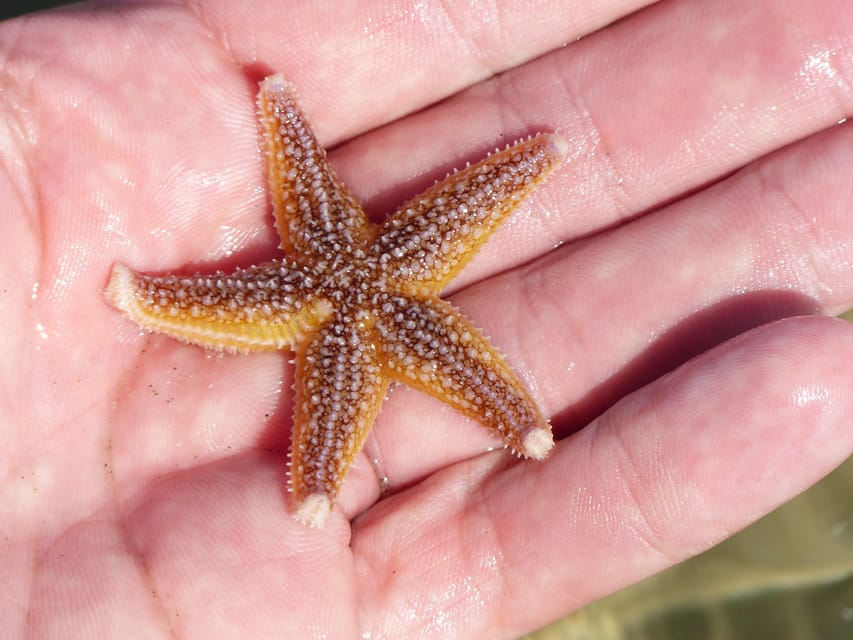
A starfish may be the most familiar discovery, but it becomes more interesting when you learn that it can regenerate a lost arm. Crabs provide another easy lesson, since their sideways walk and different body shapes are visible right away. These are short stories, yet they give children and adults a reason to pay closer attention.
You might find shells that have washed onto the beach, along with marine life hiding under rocks or in sand. Shrimps often stay out of plain sight, and small fish such as sand eels live close to shore. The guide’s role is to connect these small details to the larger North Sea setting without turning the outing into a formal class.
I like this part of the tour because it gives you a new way to read a beach. A shell is no longer just a souvenir, and a crab is not just something moving sideways. You begin to see the shore as a living place, even when the tide appears quiet.
What the guide adds
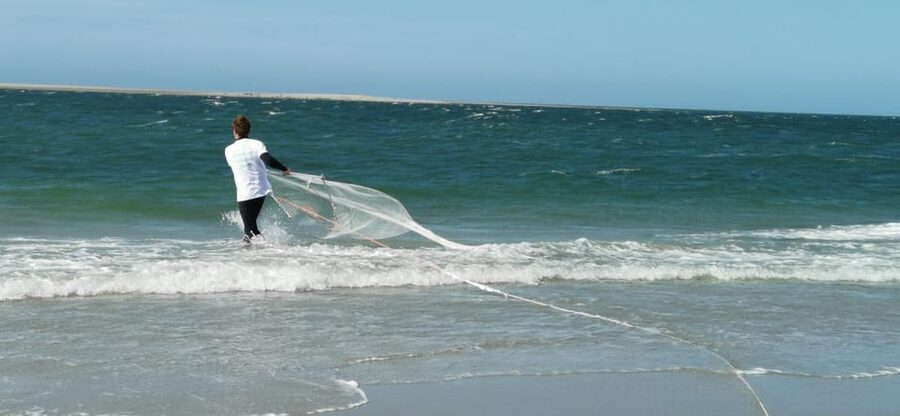
The guide is central to the quality of this activity. The tour is offered in Dutch and German, and the guide explains the animals, plants, and shells in a friendly, accessible way. Mark is named as one guide, and his work with children has earned particular praise for being both entertaining and informative.
You should expect stories and facts throughout the walk rather than a long speech at the start. That is the right approach for a beach activity. The guide can respond to what the group finds, explain a question as it comes up, and keep the pace suited to young and older participants.
The most important thing is that the guide helps you look. Seal watching requires patience. Crab fishing needs a little persistence. Finding a small shrimp or unusual shell can take attention. A good guide turns those pauses into part of the fun, rather than letting the group feel that nothing is happening.
How much value do you get for $19?
At $19 per person, the price is reasonable for a two-hour guided activity that includes the equipment and a live guide. You get binoculars for seal watching, search cards, magnifying jars, and the seasonal fishing equipment. For a child who enjoys practical activities, that can be better value than a short viewing stop with no participation.
The value is strongest for families, school groups, and people who want an introduction to Zeeland’s shore without committing to a full-day nature program. You get a focused outing, and the guide supplies the structure and information.
The main price concern is for families with very young children. The same charge applies to toddlers, even if they take little part in the search or cannot manage the equipment. If your group includes several toddlers, check the total before booking and consider how much of the two hours they are likely to use.
The tour also depends on the weather. Poor conditions may lead to cancellation or a switch to a forest or dune safari. That flexibility can save the day, but it also means you should not plan your entire Zeeland visit around the beach version without a backup.
What to bring for a comfortable outing
Clothing will shape your opinion of this tour more than the price will. The coast can feel colder than expected, so bring warm layers in every season. For the summer edition, add swimwear, a towel, beachwear, and a full change of clothes.
Sunscreen is listed, and biodegradable sunscreen is preferred. A camera is welcome, and you can bring your own binoculars, though binoculars are included. Cash is also listed among the suggested items, so it is sensible to carry a small amount.
A practical packing list includes:
- Warm clothing and an extra layer
- Swimwear and a change of clothes
- Towel
- Sunscreen, preferably biodegradable
- Camera
- Cash
- Your own binoculars, if you prefer them
Wear clothing that can handle sand and splashes. The summer netting session may put you in shallow water, while crab fishing can still involve damp ground and wet equipment. Comfortable beach footwear is a sensible choice, though specific footwear requirements are not provided.
The outing is not suitable for wheelchair users. The beach setting, walking route, and shallow-water activities make this an important limitation to consider before reserving.
Who will enjoy this most?
Families with children are the clearest match. The crab rods, large net, jars, and identification cards give children an active role. They are not expected to stand quietly while an adult guide talks for two hours.
The tour also suits adults who like nature but do not have much background in marine life. You do not need to know the difference between a common seal and a grey seal before arriving. The guide explains the basics and adds small facts that make the shore easier to understand.
School groups can use the activity as a simple outdoor lesson. Individual nature enthusiasts may enjoy it too, especially if they like learning from direct observation. The experience is less suitable if you want a guaranteed close seal encounter, a long walk, or a dry and polished sightseeing stop.
The language choice matters. You should be comfortable following a guide in Dutch or German. No English guide option is provided, so check this carefully if neither language works for your group.
Meeting point and timing tips
Use Google Maps to search for Beachbar Atlantis. The official meeting point is in front of the bar at Hoogh Pleatweg, with no street number given. Parking is free at Parking Beach Neeltje Jans 6, but the walk to the meeting point takes about 10 minutes.
I would arrive early enough to park, gather your beach gear, and walk without rushing. This matters most with children, towels, spare clothes, and equipment. The activity begins at set times, and availability should be checked for the date you want.
The operator allows free cancellation up to 24 hours before the start for a full refund. You can also reserve now and pay later, which is useful when your Zeeland plans depend on weather. These terms give you some room to adjust, but they do not remove the need to check the forecast and prepare for a possible change to the forest or dune safari.
Should you book the Zeeland Beach Safari?
Book this tour if you want an affordable, active introduction to the North Sea shore. The strongest reasons are the seasonal activities, the clear explanations, and the chance to see seals while also learning about less obvious life in the sand and shallow water.
I would especially recommend it for families with school-age children. The outing gives them real tasks, not just a view from a path. Bring warm clothing, accept that seal sightings are wildlife sightings rather than guarantees, and choose the right version for the season.
Think twice if you need wheelchair access, an English-speaking guide, or a fully dry activity. Also calculate the total carefully if you have toddlers, since they are charged the same price. For everyone else, $19 buys two useful hours at the coast, with enough activity and explanation to make the beach feel much more alive.
FAQ
Where does the Zeeland Beach Safari meet?
The meeting point is in front of Beachbar Atlantis at Hoogh Pleatweg. The best way to locate it is to search for Beachbar Atlantis in Google Maps.
Where can I park?
You can park for free at Parking Beach Neeltje Jans 6. From there, it is about a 10-minute walk to Beachbar Atlantis.
How long does the tour last?
The beach safari lasts two hours.
What languages does the guide speak?
The tour is offered with a live guide in Dutch or German.
Are binoculars provided for seal watching?
Yes. Binoculars for watching seals are included, although you may also bring your own.
Will I definitely see seals?
Seal watching is included, but the provided information does not guarantee a sighting or a particular number of seals.
What happens during the summer edition?
In July and August, the guide uses a large trawl net in the shallow water along the coast. Participants may enter the water with the guide, so swimwear is recommended.
What happens during the spring and autumn edition?
In spring and autumn, the activity uses crab rods to search for crabs instead of the large summer trawl net.
What should I bring?
Bring warm clothing, swimwear, a change of clothes, a towel, a camera, sunscreen, biodegradable sunscreen if possible, beachwear, cash, and binoculars if you want to use your own.
Is the tour suitable for wheelchair users?
No. The activity is not suitable for wheelchair users.
What happens if the weather is bad?
In bad weather, the tour may be canceled or changed to a forest or dune safari.
Can I cancel and receive a refund?
You can cancel up to 24 hours before the activity for a full refund. Reserve now and pay later is also available.
Just added around Amsterdam
- Amsterdam: Food and Canal Tour★ 4.6 · 22 reviews
- Segway City Tours Amsterdam★ 4.3 · 23 reviews
- Amsterdam Canal Cruise in Classic Salon Boat With Drinks and Cheese★ 4.0 · 22 reviews
- Discover Deventer with an Outside Escape city game tour!★ 4.5 · 23 reviews
- Historical Walking Tour, private with local Dutch guide★ 5.0 · 23 reviews
- Utrecht Food Tour on a Bicycle with local guide★ 5.0 · 23 reviews
- Amsterdam: Captain For a Day 2-Hour Boat Rental★ 4.9 · 23 reviews
- Amsterdam Small-Group Breakfast Morning Cruise★ 5.0 · 23 reviews