
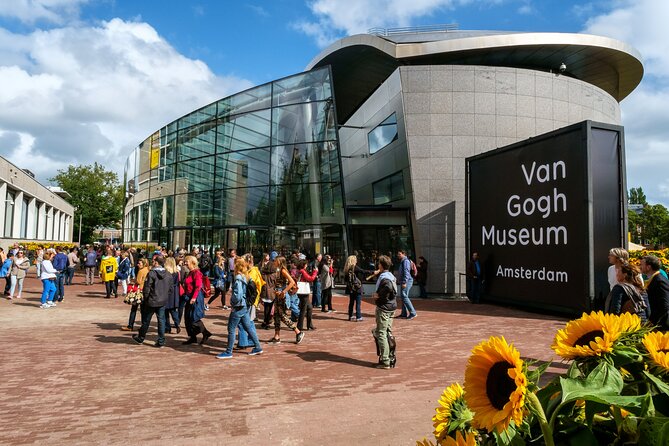
Reviewed · VAN GOGH & RIJKSMUSEUM TICKETS
Van Gogh Museum Amsterdam Small Group Guided Tour
Van Gogh’s paintings make more sense when you see them as a life unfolding, not as a row of famous images. This two-hour museum tour traces his path from dark Dutch studies to the bright, restless canvases of Arles and the final works at Auvers. I like the clear progression, and I like the small group, capped at 14 people, which gives your guide room to answer questions.
I also like the wireless headphone system, especially in a crowded gallery. Guides such as Martina, Claire, Kawika, Marlene, Roland, and Holly have been praised for explaining brushwork, paint, influences, and Van Gogh’s changing state of mind. The main drawback is that the tour moves at a set pace, and some visitors may find the 20-minute focus on self-portraits longer than they prefer. One isolated booking also involved a guide who did not arrive, so keep your meeting details close at hand.
In This Review
- Key points to know before you book
- Why Van Gogh makes more sense in a two-hour story
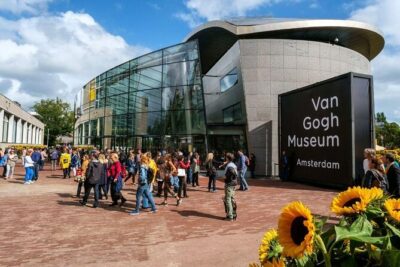
- Meeting at Cobra Café and entering the museum
- Dutch beginnings: peasants, Millet, and The Potato Eaters
- Paris from 1886 to 1888: brighter color and new ideas
- Arles: sunflowers, a bedroom, and the yellow house
- Saint-Rémy: intensity on the third level
- Auvers and the final room
- What the guide adds, and where the tour can miss
- Is $77.43 good value?
- Who should book this Van Gogh Museum tour?
- My booking call
- FAQ
- How long does the Van Gogh Museum guided tour last?
- What does the tour price include?
- Is the tour offered in English?
- How many people can join the tour?
- Are children allowed on the tour?
- Does the tour include special exhibitions?
- Can I stay in the museum after the guided tour?
- Where does the tour begin?
- Where does the tour end?
- Can I cancel for a full refund?
Key points to know before you book
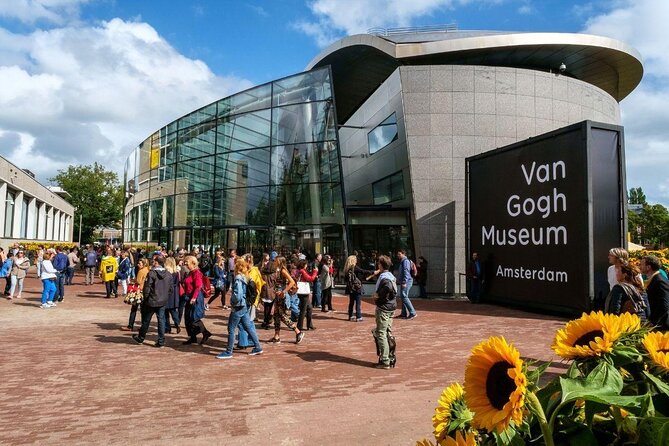
- A chronological visit: See Van Gogh’s work develop from The Potato Eaters through Paris, Arles, Saint-Rémy, and Auvers.
- A maximum of 14 adults: This is a more personal format than a large museum group, but the tour is restricted to people aged 18 and older.
- Two time choices: Pick a morning or afternoon departure, then stay in the museum after the guided portion ends.
- Strong guide-centered experience: Guides including Martina, Claire, Kawika, Marlene, Roland, and Holly have been praised for clear explanations and enthusiasm.
- Permanent collection included: Your ticket covers the two-hour guided visit, while special exhibitions and food are separate.
- About $77.43 per person: The price makes the most sense if you want interpretation, not simply entry to the museum.
Why Van Gogh makes more sense in a two-hour story
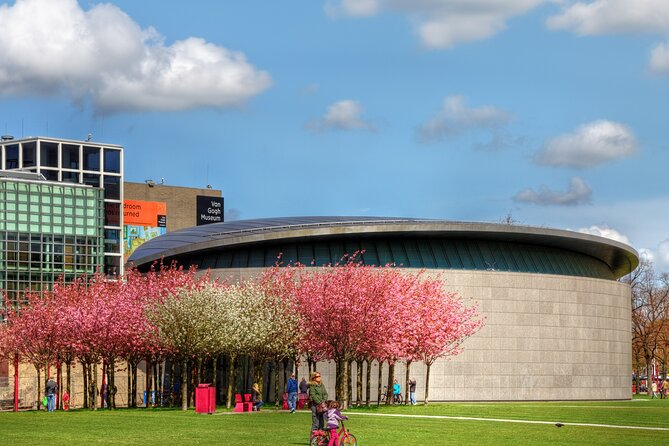
The Van Gogh Museum is not just a place to check off Sunflowers and The Bedroom. Its real strength is the chance to follow one artist across several short, intense periods. You can watch his colors, brushwork, subjects, and confidence change from room to room.
That is where a guide helps. A good guide points out details you might otherwise pass, such as the direction of brushstrokes, the way paint thickness changes across a canvas, or how Van Gogh borrowed ideas from artists he admired. The better guides also connect the paintings to his working life without turning the visit into a dry biography.
This tour is offered in English and uses a wireless whisper system. You can hear the guide without needing to crowd around one person or lose every third sentence to gallery noise. The system has even worked well for a visitor using hearing aids, though individual results can vary.
The group limit of 14 is useful. You are still in a public museum, so this is not a private viewing, but a small group gives the guide a fair chance to respond when you ask about a particular painting. You will also have enough room to step closer when the gallery allows it, then move on without waiting for a bus-sized crowd.
More Museum Tours in Amsterdam
- Amsterdam: Van Gogh Museum Ticket
★ 4.7 · 52,054 reviews - Moco Museum Amsterdam Entrance Tickets with Banksy & More
★ 4.4 · 10,088 reviews - Amsterdam: The Upside Down Museum Entrance Ticket
★ 4.4 · 9,506 reviews
Meeting at Cobra Café and entering the museum
The tour starts at Cobra Café, Hobbemastraat 18, near Museumplein. This is a practical meeting point for the museum district, and it is close to public transportation. Give yourself enough time to find the café and gather before the start, since the museum entry is handled as part of the tour.
The guided visit ends inside the Van Gogh Museum at Museumplein 6. That matters. You do not have to leave when the two-hour explanation finishes. You can remain until closing time and continue through rooms at your own speed, revisit a favorite painting, browse the gift shops, or see the special exhibition if you have arranged that separately.
The tour is for adults aged 18 and older. Most people can take part, and the booking confirmation arrives at the time of reservation. Since the experience is often reserved about 26 days ahead, I would not leave it to the last minute if your Amsterdam dates are fixed.
Dutch beginnings: peasants, Millet, and The Potato Eaters
The first stop focuses on Van Gogh’s self-portraits, then the group moves to the first-floor foyer and his early Dutch period. You will see work by artists who influenced him, including Jean-François Millet and Jules Breton, along with Woman Lifting Potatoes, the portrait wall titled Head of a Peasant Woman, and The Potato Eaters.
This is the dark, earthy Van Gogh many people know less well. The colors are restrained, and the figures look shaped by hard work. That makes this section a useful correction to the idea that Van Gogh sprang into the world fully formed with bright yellow walls and swirling skies.
I like this part because it gives the later paintings a point of comparison. Look at how he handles faces, hands, and rough clothing here. His subjects are ordinary working people, and the guide can show you how his early interest in social reality differs from the more emotional color experiments that come later.
The planned stop is about 20 minutes. That is enough for a focused explanation, but not enough to study every early work at length. If self-portraits are not your main interest, you may find this opening section a little long. Still, skipping the beginning would weaken the story of how Van Gogh learned to see.
Paris from 1886 to 1888: brighter color and new ideas
Van Gogh moved to Paris between 1886 and 1888, and the paintings changed sharply. The tour includes Self-Portrait with Felt Hat, Still Life with Absinthe, In the Café: Agostina Segatori in Le Tambourin, and Garden with Courting Couples.
Here, your guide can help you spot the move away from the heavy browns of his Dutch work. Paris exposed Van Gogh to new painting styles and artists, and his palette became lighter. Shorter marks and stronger color contrasts begin to carry more weight.
Self-Portrait with Felt Hat is especially helpful for seeing this development. Van Gogh used self-portraits as practical studies because he could always find his own face as a model. Across several of them, you can compare his clothing, expression, background, and brushwork rather than treating each image as an isolated celebrity painting.
The café and garden scenes also show him testing modern city life and leisure as subjects. This section is valuable for anyone who wants to understand technique, not just biography. One of the strongest points made by the guides praised in the feedback was how Van Gogh’s life and artistic changes were tied together, rather than presented as separate facts.
Again, you have roughly 20 minutes. That keeps the tour moving, but it also means you should note the titles of anything you want to study later during your free time.
More Van Gogh and Rijksmuseum tickets:
- Amsterdam: Rijksmuseum Entry Ticket
★ 4.7 · 25,535 reviews - Amsterdam: Van Gogh Museum Ticket and City Canal Cruise
★ 4.6 · 3,899 reviews - Amsterdam: Van Gogh Museum Ticket & Canal Cruise
★ 4.5 · 3,304 reviews - Amsterdam: City Canal Cruise and Rijksmuseum
★ 4.5 · 2,129 reviews
Arles: sunflowers, a bedroom, and the yellow house
The Arles section is the visual jolt of the visit. Van Gogh moved to southern France in 1888, and the tour brings you to Sunflowers, Almond Blossoms, The Bedroom, Japanese Paintings, and The Yellow House.
This is where many people feel the emotional pull of the museum most strongly. The colors are bold, but the guide should help you see that they are not simply bright decoration. Van Gogh used color to express warmth, tension, calm, and excitement. The thick marks and strong outlines make ordinary objects feel charged.
The Bedroom rewards close looking. A guide may point out the unusual perspective and the way the room is arranged, including the furniture, walls, and carefully limited color scheme. You can then look at it again after the tour and decide whether the room feels restful, unstable, or both.
The Japanese prints and related copies are another good reason to take this route with an art guide. Van Gogh admired Japanese art and made copies from prints, using them to study composition, flat areas of color, and bold outlines. That influence helps explain why some of his Arles work feels so different from traditional European painting.
Sunflowers is likely to be crowded, so the wireless headset is especially useful here. You can listen while keeping your eyes on the canvas instead of trying to stand directly beside the guide. The group may be encouraged to come closer, but remember that museum traffic still matters. A passionate guide can make the gallery lively, though it is worth leaving space for others.
Saint-Rémy: intensity on the third level
On level three, the tour turns to Van Gogh’s period at Saint-Rémy-de-Provence. The selected works include another Almond Blossoms, Wheatfield with a Reaper, Iris, and Pietà, based on Delacroix.
The paintings here carry a different kind of force. The marks can feel more urgent, and familiar subjects become active through color and motion. A field is not merely a field. Flowers are not merely flowers. The guide’s job is to help you connect those visual choices to Van Gogh’s continuing search for a personal style.
Iris is a good example of how a simple subject can become a study in line, shape, and contrast. Pietà also gives you a chance to see Van Gogh responding to another artist rather than working in isolation. That connection is easy to miss if you rush from famous title to famous title.
This stop lasts about 20 minutes. The move to the third level may split the group’s energy after the bright Arles rooms, but it also gives the visit a useful pause. If you have limited art background, this is where a guide’s explanations about influences and working methods can make the greatest difference.
The museum is large enough that two hours cannot cover every important canvas. Think of this as a guided backbone. You will see a carefully chosen sequence, then fill in the gaps on your own.
Auvers and the final room
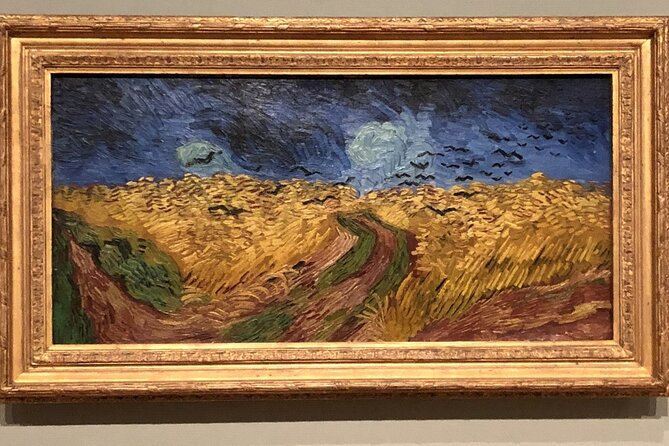
The final stop is the Auvers room, also on level three, with Tree Roots and Wheatfield with Crows. The planned discussion lasts about 15 minutes.
These works bring the tour to Van Gogh’s final period. The selection is brief, but it gives the visit a strong ending because you have just watched the artist change through several stages. At this point, the benefit of seeing the collection in order becomes clear: the earlier Dutch studies, Paris experiments, Arles color, and Saint-Rémy intensity all sit behind these final paintings.
Tree Roots deserves close attention. It is not the kind of image you understand by standing back for two seconds. The surface, lines, and tangled forms ask you to look at how paint itself carries feeling.
Wheatfield with Crows is familiar to many people, but a guide can help you avoid reducing it to a simple symbol of sadness. Focus first on the composition, movement, and color. Then consider the biographical context. The best guides keep both parts in view.
The shorter final stop also leaves time for questions and for you to continue independently. If this is a lifetime visit, do not rush out after the guide says goodbye. The museum allows you to stay until closing.
What the guide adds, and where the tour can miss
The guide is the main reason to choose this experience over visiting with an audio guide. Strong guides such as Martina, Claire, Kawika, Marlene, Roland, and Holly have been praised for clear pacing, humor, visual examples, and the ability to explain Van Gogh’s technique without burying you in art terms.
Martina has used an iPad to show additional images and facts. Kawika has connected paint types and application methods to Van Gogh’s emotional effect, while Roland received praise for keeping a good pace in a crowded museum. Marlene has been noted for waiting for group members and returning to paintings they did not want to miss.
Guide quality can vary. One person rated the experience poorly because the guide did not arrive, leaving the group unable to enter with the supplied tickets. That appears to be an isolated service failure against a much larger pattern of positive feedback, but it is still a fair risk to acknowledge. If anything goes wrong, contact the provider through the booking service right away.
You should also know what this is not. It is not a quiet, private session with unlimited time at every painting. It is a structured group tour in a busy museum. If you prefer total freedom, an audio guide and independent entry may suit you better.
Is $77.43 good value?
At $77.43 per person, this is not the cheapest way to see the museum. The price is easiest to justify if you want a human guide to explain the artistic changes and help you use your limited museum time well.
You are paying for admission to the permanent collection, a two-hour guided route, an English-speaking guide, and the small-group format. You are not paying for food, drinks, or a special exhibition. The special exhibition can be visited afterward at your own pace, but it is not part of the guided portion.
I see the value in the structure. A self-guided visit lets you stay longer at one painting, but it also leaves you to decide what matters in a museum packed with works and background material. Here, you get a chronological framework and can then spend the rest of your visit returning to Sunflowers, The Bedroom, Iris, or whichever painting caught you off guard.
For a first visit, the extra cost can be worthwhile. For a repeat visit, I would compare the price with your own interests. If you already know Van Gogh well and prefer slow, solitary looking, book regular museum admission or an audio guide instead.
Who should book this Van Gogh Museum tour?
I would choose this tour if you want the main story of Van Gogh in a compact format. It suits adults who enjoy art but do not want to decode every painting alone. It also works well for couples or friends with different levels of interest, since a lively guide can give context to someone who is less drawn to museums.
The tour is a good fit if you want:
- A clear account of Van Gogh’s development
- Help noticing brushwork, color, and artistic influences
- A small group rather than a large guided crowd
- The option to remain inside after the two-hour visit
- Morning or afternoon scheduling
I would hesitate if you want to see every gallery at your own pace, spend half an hour with one painting, or bring anyone under 18. The tour is adults-only, and the fixed schedule will always involve some compromise.
Free cancellation is available up to 24 hours before the start time for a full refund. Inside that window, cancellations and changes are not accepted for a refund, so check your plans before booking.
My booking call
Book it if this is your first Van Gogh Museum visit and you want more than a parade of famous paintings. The chronological route, wireless headsets, small group, and time to stay afterward give you both guidance and freedom.
Skip it if you are already comfortable reading art on your own or strongly dislike moving with a group. At this price, the guide must matter to you. The right guide can turn The Potato Eaters, Sunflowers, and Wheatfield with Crows into parts of one human and artistic story. That is the real value here.
FAQ
How long does the Van Gogh Museum guided tour last?
The guided tour lasts approximately two hours.
What does the tour price include?
The price includes admission to the permanent collection, a two-hour guided tour, a live guide in the selected language, and the wireless whisper system.
Is the tour offered in English?
Yes. The experience is offered in English.
How many people can join the tour?
The group has a maximum of 14 travelers.
Are children allowed on the tour?
No. This experience is available only to adults aged 18 and older.
Does the tour include special exhibitions?
No. Special exhibitions are not included in the guided tour. You can visit them afterward at your own pace if you have access.
Can I stay in the museum after the guided tour?
Yes. The tour ends inside the Van Gogh Museum, and you can stay until closing time to explore independently.
Where does the tour begin?
The tour begins at Cobra Café, Hobbemastraat 18, 1071 ZB Amsterdam.
Where does the tour end?
The tour ends inside the Van Gogh Museum at Museumplein 6, 1071 DJ Amsterdam.
Can I cancel for a full refund?
Yes, if you cancel at least 24 hours before the experience start time. Cancellations made less than 24 hours before the start time are not refunded.
More Museums and Galleries in Amsterdam
- Amsterdam: Red Light Secrets Museum Entry Ticket
★ 4.2 · 5,722 reviews - Amsterdam’s Weirdest Museum: Believe It or Not!
★ 4.5 · 4,086 reviews - Amsterdam: Rembrandt House Museum Entrance Ticket
★ 4.7 · 3,385 reviews - Amsterdam: NEMO Science Museum Ticket
★ 4.4 · 2,979 reviews
Just added around Amsterdam
- Amsterdam: Food and Canal Tour★ 4.6 · 22 reviews
- Segway City Tours Amsterdam★ 4.3 · 23 reviews
- Amsterdam Canal Cruise in Classic Salon Boat With Drinks and Cheese★ 4.0 · 22 reviews
- Discover Deventer with an Outside Escape city game tour!★ 4.5 · 23 reviews
- Historical Walking Tour, private with local Dutch guide★ 5.0 · 23 reviews
- Utrecht Food Tour on a Bicycle with local guide★ 5.0 · 23 reviews
- Amsterdam: Captain For a Day 2-Hour Boat Rental★ 4.9 · 23 reviews
- Amsterdam Small-Group Breakfast Morning Cruise★ 5.0 · 23 reviews
Van Gogh & Rijksmuseum Tickets, compared.


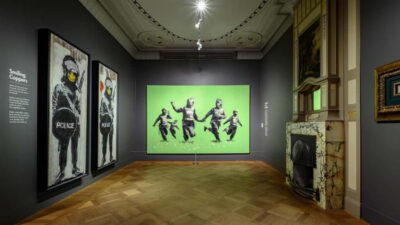
Moco Museum Amsterdam Entrance Tickets with Banksy & More
Read our review →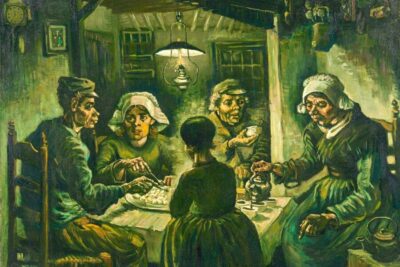


Van Gogh Museum Amsterdam Exclusive Tour w/ Reserved Entry
Read our review →
Moco Museum Amsterdam Admission Ticket with Banksy and more
Read our review →Browse the lists this tour appears in