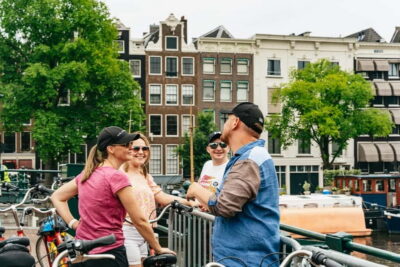
Reviewed · TOURS
Rude Bastards Tour of Amsterdam (CYHIT)
Amsterdam’s past gets a rude, funny makeover on this 2.5-hour walking tour from Centraal Station to the Waag. You move through old streets, Dam Square, Begijnhof, the Bloemenmarkt, and Rembrandt’s former home while your guide mixes city history with sharp jokes, bad language, and stories that serious tours often leave out.
I like the small group limit of 15, which should make it easier to hear the guide and ask questions. I also like the route itself: it links major sights with less obvious stops, including Cafe Karpershoek and the Nieuwezijds Gay Sauna. The main consideration is the humor. This is not the right choice if you want a quiet, polished, family-style history walk.
In This Review
- Key points at a glance
- A rude introduction to Amsterdam at Centraal Station
- Cafe Karpershoek and Amsterdam’s beer-soaked beginnings
- The Nieuwezijds Gay Sauna and the city’s oldest layers
- Dam Square and Damstraat through changing centuries
- Begijnhof and a quieter side of the city
- Rembrandt’s house and the artist behind the legend
- Amsterdam Museum and the final city overview
- A quick look at the Bloemenmarkt
- Ending at the Waag in Nieuwmarkt
- What the $3.48 price really offers
- Who will enjoy the rude approach
- Practical details before you book
- Should you book the Rude Bastards Tour?
- FAQ
- Where does the Rude Bastards Tour of Amsterdam start?
- What time does the tour begin?
- Where does the tour end?
- How long does the tour last?
- How large is the group?
- Are museum admission tickets included?
- Can I cancel for a refund?
Key points at a glance

- A cheeky route through central Amsterdam: Walk from Centraal Station to the Waag with stops at Dam Square, Begijnhof, the Bloemenmarkt, and more.
- Guides bring personality: Maja is specifically praised for interactive storytelling, enthusiasm, wit, and helpful city advice.
- Small groups matter: The tour accepts no more than 15 people, giving it a more personal feel than a large street-corner crowd.
- History comes with bad jokes: Expect strong language, irreverent observations, and stories about beer, sex, art, religion, and city life.
- A useful first-day orientation: The route covers several central landmarks in one walk and finishes near Nieuwmarkt.
- Very low listed price: At $3.48 per person, it offers remarkable value if you are comfortable with the tone and outdoor walking.
A rude introduction to Amsterdam at Centraal Station
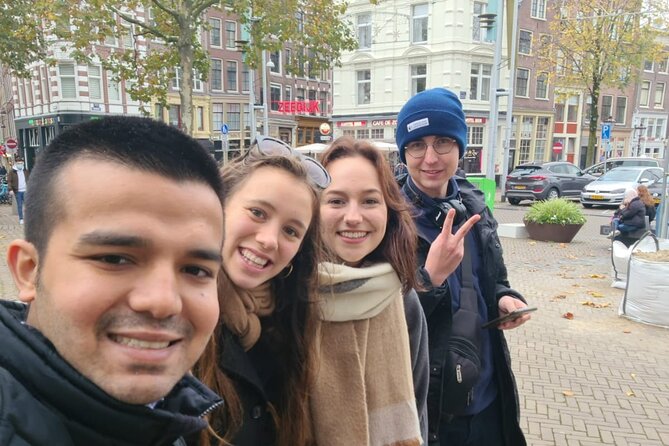
The tour begins at noon near Loetje on Stationsplein, close to Amsterdam Centraal Station. This is a practical starting point because many people arrive in the city by train, and the area is easy to reach by public transport.
The first 25 minutes are used for introductions, an explanation of the tour, and a broad look at Amsterdam. That opening matters. Instead of rushing straight to a monument, your guide sets up the city as a place shaped by trade, religion, pleasure, protest, and practical urban life.
This is also where you can decide if the style suits you. The tour is deliberately politically incorrect. Bad language and bad jokes are part of the product, not an occasional surprise. If you prefer dry facts and formal commentary, you may find the tone tiring over two and a half hours.
If you enjoy a guide who talks directly to the group, the format should work better. Maja is praised for being interactive, thoughtful, enthusiastic, and wry. Those qualities are useful on a city walk because they turn a string of street corners into a connected story.
A few more Amsterdam half-days to weigh up
- Amsterdam: Van Gogh Museum Ticket
★ 4.7 · 52,054 reviews - Amsterdam Classic Saloon Boat Cruise with Drinks and Cheese
★ 5.0 · 31,825 reviews - Amsterdam Luxury Canal Cruise + Unlimited Drinks & Bites option
★ 5.0 · 30,518 reviews
Cafe Karpershoek and Amsterdam’s beer-soaked beginnings
The next stop is Cafe Karpershoek, one of the city’s old drinking places. You spend about 15 minutes here learning why the location matters and how it connects to Amsterdam’s character.
One specific detail gives this stop its flavor: Vrerick Geritssen began selling beer here in 1606, making him the first registered tapper associated with the site. That small fact is more memorable than a list of dates. It helps explain how Amsterdam’s social life was tied to taverns, trade, and everyday drinking.
Your guide also shares local tips during this part of the walk. I value that because a good orientation tour should help you use the city after the tour ends, not only admire it while the guide is speaking.
You do not receive a drink or lunch as part of the price, so think of the cafe as a storytelling stop rather than a scheduled tasting. The attraction is the setting and the tale attached to it.
The Nieuwezijds Gay Sauna and the city’s oldest layers
The stop at the Nieuwezijds Gay Sauna lasts about 10 minutes. The location provides a way to discuss one of the oldest inhabited parts of Amsterdam and what daily life was like in earlier periods.
This is one of the route’s more unusual choices. Many city walks focus only on grand buildings, canals, and famous residents. Here, the guide uses an adult-themed location to talk about the people who lived in the area, how they spent their time, and what has been found beneath the streets.
The subject matter will not suit every group, especially if you are seeking a traditional tour with children. The description clearly signals an adult, irreverent approach. For the right audience, though, this stop adds a more honest sense of Amsterdam’s social past.
The value is not the building alone. It is the contrast between official city history and the private, messy, entertaining lives that took place beside it.
Dam Square and Damstraat through changing centuries
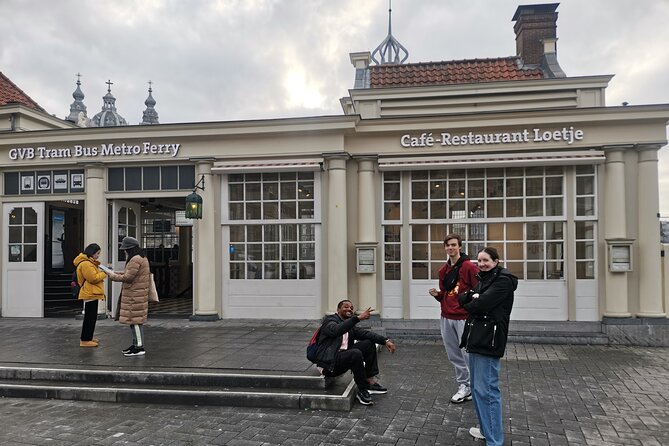
You spend around 20 minutes at Dam Square and Damstraat. This is the most obvious landmark on the route, but the guide aims to make it more than a photo stop.
The talk covers what different centuries contributed to the area, the changes made over time, modern events, and the notable buildings nearby. That broad span gives you a useful framework for understanding why Dam Square feels so central to Amsterdam’s public life.
The benefit of seeing the square with a guide is context. On your own, you may notice architecture, crowds, trams, and street activity without understanding how the place changed. Here, the guide connects the older city to present-day use.
The drawback is that Dam Square can be busy and distracting. Since this is an outdoor walk, you should expect street noise and movement around the group. A small party of up to 15 helps, but you will still need to stay close to the guide.
Same city, a completely different afternoon:
- Amsterdam: Heineken Experience Ticket
★ 4.6 · 30,055 reviews - Amsterdam: Rijksmuseum Entry Ticket
★ 4.7 · 25,535 reviews - Amsterdam: Classic Boat Cruise with Optional Cheese & Wine
★ 4.6 · 22,925 reviews - Amsterdam: Evening Cruise with Optional Wine and Snacks
★ 4.4 · 19,696 reviews
Begijnhof and a quieter side of the city
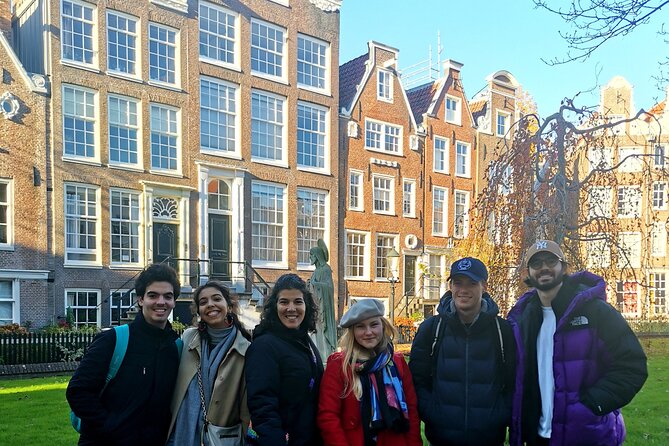
Begijnhof brings a change of mood. The group spends about 15 minutes discussing who lived there, what the site was used for, and how it functions today.
This stop is valuable because it shows a calmer, more enclosed part of central Amsterdam. It also gives the tour a chance to discuss community life and religious history rather than staying with beer, sex, and jokes.
The guide’s irreverent tone can make this kind of location more approachable. You get background without the heavy, formal lecture that can make historic courtyards blur together. At the same time, the short stop means you should not expect an exhaustive account of Begijnhof.
Treat it as a well-chosen introduction. If the site captures your interest, you can return later and spend more time there on your own.
Rembrandt’s house and the artist behind the legend
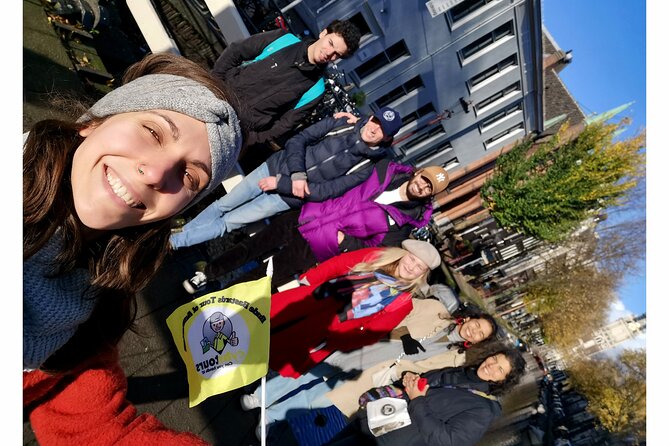
At Museum Het Rembrandthuis, the tour spends about 15 minutes discussing Rembrandt, his talent, and the less tidy parts of his life. Admission to the museum is not included, so this is an exterior and neighborhood stop unless you arrange a separate visit.
That distinction matters. If you want to see the interior, workshops, and collections at Rembrandt’s former home, budget additional time and an entry ticket. The walking tour gives you an overview, not a museum visit.
I like this section because the guide appears to treat Rembrandt as a person, not only as a famous name. Stories about his choices and troubles can make the artist easier to understand than a simple list of masterpieces.
The stop also helps bring the broader city story toward a close. Amsterdam’s commercial success supported artists, merchants, religious institutions, and pleasure districts, and Rembrandt’s life fits into that larger picture.
Amsterdam Museum and the final city overview
The Amsterdam Museum is the next major point, with about 15 minutes spent discussing museums in Amsterdam and the Netherlands, along with the surrounding buildings and area.
Again, museum admission is not included. The stop is best understood as an orientation to the city’s cultural institutions rather than a guided museum entry.
This section may appeal to you if you want help deciding what to visit after the walking tour. You get a sense of how Amsterdam presents its own past and where museums fit into that story. It also keeps the route from becoming only a parade of old buildings.
Because the entire walk lasts about two and a half hours, the guide has to keep each subject moving. You will gain plenty of useful pointers, but you will not receive a full lecture on every museum, neighborhood, or historical period.
A quick look at the Bloemenmarkt
The Bloemenmarkt receives a short five-minute stop. The guide explains how it began and what it has become today.
This is the briefest stop, so expect a quick background note rather than time to browse every stall. Still, the market belongs on a central Amsterdam route because it is one of the city’s best-known commercial sights.
The short timing can be a benefit. You get the story without losing a large part of the walk to shopping. If you want souvenirs or bulbs, you can return later with your own time and budget.
This is also a reminder that the tour is designed as a broad city introduction. It samples many places instead of spending an hour at one attraction.
Ending at the Waag in Nieuwmarkt
The walk ends at the Waag, at Nieuwmarkt 4, after roughly 25 minutes of final discussion and reflection. This gives the tour a clear finish rather than leaving you at a random corner.
The Waag is a fitting endpoint for a walk built around Amsterdam’s mixture of trade, civic life, old buildings, and odd stories. From here, you have completed a route that began at the main station and passed through several central districts and landmarks.
The ending location is useful for planning the rest of your day. You can treat the tour as an orientation and then continue exploring the surrounding area, though the tour does not include lunch or onward activities.
The route also has a practical shape. It starts near Centraal Station and ends elsewhere in the center, so you see more of Amsterdam instead of returning to your starting point.
What the $3.48 price really offers
At $3.48 per person, this is an unusually inexpensive way to spend two and a half hours in central Amsterdam. Even without paid admissions, the route covers a large number of places and includes a local guide throughout.
The strongest value comes from the combination of coverage and personality. You are not paying to enter several attractions, but you are getting an organized route, historical explanation, local tips, and a guide who adds stories you might not find by walking alone.
The low price also comes with a clear limit. This is not a museum pass, food tour, or private guide. Lunch is not included, and tickets for Museum Het Rembrandthuis and the Amsterdam Museum are extra if you want to go inside.
I would see it as a low-cost introduction rather than a complete Amsterdam sightseeing package. If the tour helps you choose which places deserve a later visit, it can save you time and prevent you from wandering past important sites without context.
Who will enjoy the rude approach
This tour suits you best if you like history delivered with personality. It is a good match for adults, friends, couples, and solo visitors who enjoy sarcasm, adult subjects, strong language, and stories that do not sound polished or ceremonial.
It may also suit you if you have only a short time in Amsterdam. The walk covers Centraal Station, Dam Square, Begijnhof, the Bloemenmarkt, Rembrandt’s house, the Amsterdam Museum area, and the Waag in one outing.
You should think twice if you want a quiet architectural walk, a family-friendly activity, or detailed museum access. The humor is central to the experience, and some of the locations involve sexual or socially provocative subjects.
The small group size is a real advantage. With no more than 15 people, you have a better chance of hearing the guide, keeping up, and asking a question without shouting across a large crowd.
Practical details before you book
The start time is 12:00 pm. Your meeting point is Loetje, Stationsplein 10, near Centraal Station. The end point is the Waag at Nieuwmarkt 4.
The experience uses a mobile ticket, and confirmation is provided when you book. It is near public transportation, and service animals are allowed. The stated conditions say most people can participate.
Wear comfortable shoes because the activity is a walking tour lasting about 150 minutes. The supplied details do not specify the exact walking distance, so you should plan for a substantial period on foot rather than a short landmark briefing.
Free cancellation is available if you cancel at least 24 hours before the local start time. A later cancellation or change is not refunded, and the experience requires a minimum number of people. If that minimum is not reached, you are offered another date or experience, or a full refund.
Should you book the Rude Bastards Tour?
Book it if you want Amsterdam history with a wicked sense of humor, a compact central route, and a guide who interacts with the group. The strongest points are the small size, the range of stops, the very low price, and the personal style associated with guides such as Maja.
Skip it if you dislike bad language, adult jokes, or a deliberately politically incorrect tone. You should also choose another activity if entering museums is your main goal, since museum admission is not part of the tour.
For the right audience, this is a smart first walk through Amsterdam. You get the major central sights, some less expected stories, practical tips, and a guide who aims to make the city memorable rather than solemn.
FAQ
Where does the Rude Bastards Tour of Amsterdam start?
The tour starts at Loetje, Stationsplein 10, 1012 AB Amsterdam, near Centraal Station.
What time does the tour begin?
The tour begins at 12:00 pm.
Where does the tour end?
The tour ends at the Waag, Nieuwmarkt 4, 1012 CR Amsterdam.
How long does the tour last?
The walking tour lasts approximately 2 hours and 30 minutes.
How large is the group?
The activity has a maximum of 15 people.
Are museum admission tickets included?
No. Admission to Museum Het Rembrandthuis and the Amsterdam Museum is not included.
Can I cancel for a refund?
Yes. You can cancel at least 24 hours before the start time for a full refund. Cancellations or changes made less than 24 hours before the start time are not refunded.
Just added around Amsterdam
- Amsterdam: Food and Canal Tour★ 4.6 · 22 reviews
- Segway City Tours Amsterdam★ 4.3 · 23 reviews
- Amsterdam Canal Cruise in Classic Salon Boat With Drinks and Cheese★ 4.0 · 22 reviews
- Discover Deventer with an Outside Escape city game tour!★ 4.5 · 23 reviews
- Historical Walking Tour, private with local Dutch guide★ 5.0 · 23 reviews
- Utrecht Food Tour on a Bicycle with local guide★ 5.0 · 23 reviews
- Amsterdam: Captain For a Day 2-Hour Boat Rental★ 4.9 · 23 reviews
- Amsterdam Small-Group Breakfast Morning Cruise★ 5.0 · 23 reviews
Tours, compared.

Zaanse Schans, Edam, Volendam & Marken Bus Tour
Read our review →
Anne Frank’s Story – Guided Walking Tour through Amsterdam
Read our review →
Life of Anne Frank and World War II Walking Tour
Read our review →
Red Light District Tour in German/English/Italian
Read our review →
Guided Zaanse Schans, Windmills & Cheese Tour
Read our review →
Windmill Tour from Amsterdam, Including Volendam & Marken
Read our review →