
Reviewed · MUSEUM TOURS IN AMSTERDAM
Diamond Museum Amsterdam Admission Ticket
The most eye-catching part of this Amsterdam museum is the journey from rough stone to royal jewel. You begin about 200 kilometers below the earth’s surface, then follow the cutting, valuation, and setting of diamonds until they become crowns, jewelry, and wearable art.
I like the museum’s location beside the Rijksmuseum and Van Gogh Museum, which makes it an easy add-on to a Museumplein day. I also like the chance to watch stone polishers and goldsmiths at work, rather than seeing only finished pieces behind glass.
The main drawback is its size. You can see the displays in about an hour, and some exhibits use replicas or glass imitations. The audiovisual material and listening devices may also feel dated, so this is best for a focused, unusual stop rather than Amsterdam’s essential museum experience.
In This Review
- Key points to know before you go
- From 200 kilometers underground to Amsterdam’s display cases
- Museumplein location makes this an easy add-on
- Crowns, famous stones, and wearable art
- Watching polishers and goldsmiths at work
- The diamond-heist game adds a playful break
- How much value do you get for $72?
- Audiovisual material and ticket delivery need attention
- Who will enjoy the Diamond Museum most?
- Plan your visit around the museum’s strengths
- Should you book this Amsterdam diamond experience?
- FAQ
- Where is the Diamond Museum Amsterdam located?
- How long does a visit take?
- What are the museum’s opening hours?
- What does the admission ticket include?
- Are food, drinks, and hotel transfers included?
- Can I watch diamonds being polished?
- What is the cancellation policy?
Key points to know before you go
- The story starts underground: Follow diamonds from their formation deep inside the earth through cutting and valuation.
- Royal jewelry gets the spotlight: Crowns and diamond-covered objects provide the biggest visual payoff.
- Working craftsmanship adds interest: Look for the goldsmiths and polishers creating jewelry near the museum.
- A playful heist game breaks up the exhibits: The activity gives the visit a light Mission Impossible feel.
- Museumplein makes the location convenient: You can pair the museum with the Rijksmuseum or Van Gogh Museum.
- Plan for one to two hours: The visit is compact, which suits a short afternoon stop but may disappoint if you expect a large collection.
From 200 kilometers underground to Amsterdam’s display cases
The Diamond Museum Amsterdam presents diamonds as a long process, not just a finished luxury product. The route begins with how diamonds form far below the earth’s surface over billions of years. From there, you learn how rough stones are cut, polished, graded, valued, and mounted.
That order matters. A diamond on a ring can look simple, but the museum explains the decisions behind its shape and sparkle. You get an introduction to diamond types and the qualities that make one stone more valuable than another.
I find this approach more useful than a room full of glitter with no explanation. If you know little about diamonds, the basic displays give you a framework for understanding what you are seeing. If you already enjoy jewelry, the information on cutting and valuation gives the visit more substance.
The museum also connects diamonds with Amsterdam. Coster Diamonds is associated with famous stones cut by Amsterdam polishers, including the Cullinan, described as the largest diamond ever found, and the Koh-I-Nor, known as the Mountain of Light. These names give the city’s diamond trade a clear place in the story.
The subject is not only geology. It is also commerce, skilled labor, royal display, and changing fashion. The museum touches these areas, though the strongest emphasis remains on diamonds as objects and products.
More Entry Tickets in Amsterdam
- Amsterdam: Van Gogh Museum Ticket
★ 4.7 · 52,054 reviews - Amsterdam: Heineken Experience Ticket
★ 4.6 · 30,055 reviews - Amsterdam: Rijksmuseum Entry Ticket
★ 4.7 · 25,535 reviews
Museumplein location makes this an easy add-on
You will find the museum at Museum Square, between the Rijksmuseum and Van Gogh Museum. That location is its biggest practical advantage. If you are already spending the morning with Rembrandt or Van Gogh, the Diamond Museum can fill a shorter afternoon slot without sending you across town.
The area is served by public transportation, and the museum is open daily from 9 a.m. to 5 p.m., including weekends and holidays. Those hours give you plenty of flexibility, but you still need to keep the closing time in mind if you plan to visit several museums in one day.
I would not build an entire Amsterdam day around this museum alone. Instead, use it as a change of pace between larger art museums. The subject is very different from Dutch painting, and the visit does not demand the same mental energy as a large collection.
The building and galleries are relatively small and can feel cramped. If you have physical limitations, take that seriously when planning. Most people can participate, but the compact layout may be uncomfortable for anyone who needs more room to move.
Crowns, famous stones, and wearable art
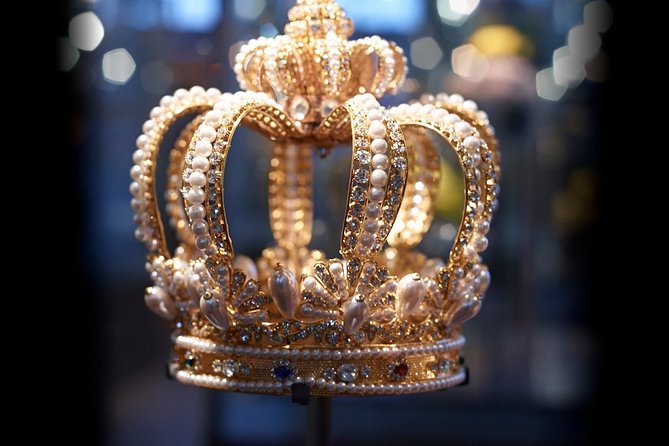
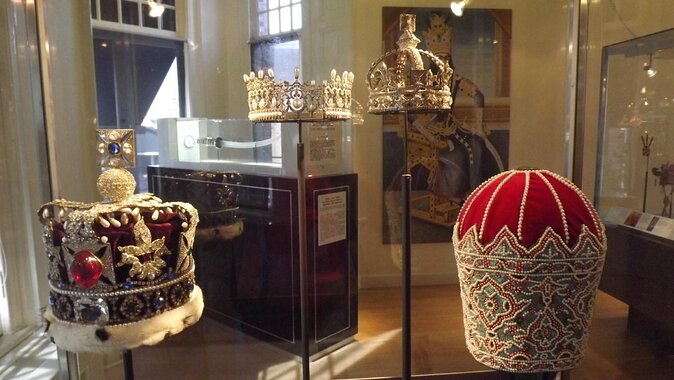
The royal crowns are the collection’s strongest visual attraction. Their formal shapes and heavy use of stones show how diamonds have long been tied to power, rank, and ceremony. Even if you are not especially interested in jewelry, crowns make an immediate impression because they combine craftsmanship with public symbolism.
You will also see diamond artifacts and displays built around famous stones. One unusual highlight is the smallest diamond ever cut, which offers a nice contrast to the grand crowns and large, showy pieces. It reminds you that the museum is interested in precision as much as size.
Another attention-grabber is a diamond-encrusted version of Van Gogh’s Starry Starry Night. The display connects the museum to its Museumplein setting and gives a familiar image a sparkling, jewelry-focused treatment.
Set your expectations carefully. Some objects on display are reproductions or replicas made with glass imitations rather than valuable original diamonds. That means the museum is not a vault filled with priceless stones. Its purpose is partly educational and theatrical, showing how diamond objects look and how they are made.
For me, that makes the explanation beside each object especially important. The visual display catches your eye, while the labels tell you whether you are looking at an original, a replica, or a demonstration piece. Some visitors have found certain content incorrectly titled, so read the information with care.
Watching polishers and goldsmiths at work
The working area adds something you cannot get from a static display. You may watch professional stone polishers and goldsmiths working on jewelry, including modern high-carat pieces. This is the point where the museum’s story becomes physical: tools, hands, patience, and tiny adjustments turn a rough stone into a finished object.
The demonstration is not always a live guided explanation. Depending on the setup, you may see workers at their benches, while other parts of the process are explained through film, text, or displays of tools. One visitor expected a personal demonstration of cutting or setting and instead found a movie and written explanation.
That is a useful warning. If you are booking mainly to watch a full cutting demonstration, the experience may feel less substantial than expected. If you are happy to observe the craft and then learn about it through displays, the workshop area can still be one of the most interesting parts of the visit.
The factory or diamond-polishing area nearby has also been included for some ticket holders. The exact arrangement should be clear when you book, since the museum and the nearby diamond facility are separate buildings. In any case, check whether your admission includes the additional stop before assuming it does.
More Museum Tours in Amsterdam
- Moco Museum Amsterdam Entrance Tickets with Banksy & More
★ 4.4 · 10,088 reviews - Amsterdam: The Upside Down Museum Entrance Ticket
★ 4.4 · 9,506 reviews - Amsterdam: Red Light Secrets Museum Entry Ticket
★ 4.2 · 5,722 reviews - Amsterdam’s Weirdest Museum: Believe It or Not!
★ 4.5 · 4,086 reviews
The diamond-heist game adds a playful break
The museum is not entirely serious. A diamond-heist game near the top of the building gives the visit a playful twist. The activity has a Mission Impossible flavor, and it can be especially useful if you are visiting with children or teenagers who may lose interest in geological explanations.
I like this kind of small interactive feature because it changes the pace. You can look at crowns and read about diamond grading, then take part in something more active. It also helps the museum feel less like a display of luxury items and more like an outing.
Still, the game should be treated as an extra, not the reason to pay for admission. The main experience remains the museum’s exhibits, films, and craft displays. If the game is busy or unavailable during your visit, the core visit is still intact.
How much value do you get for $72?
At $72, this is not a cheap museum admission. The value depends on how you use it. For a dedicated jewelry enthusiast, the royal crowns, diamond artifacts, cutting information, and working craft area may justify the price. For a general sightseer, the visit is more difficult to recommend at that level, particularly because the museum takes only about one to two hours.
The location helps. You can combine the admission with a Museumplein itinerary and avoid spending extra time traveling to a separate attraction. If you have already paid for major museums nearby, however, you may want to compare the total cost of your day before booking another ticket.
The price also needs to be judged against the type of collection. This is not an art museum with many large galleries. It is a compact specialist museum, and part of its appeal comes from presentation, demonstrations, and the subject itself.
I would see the $72 ticket as better value for a traveler who has a strong interest in diamonds, jewelry, royal objects, or Amsterdam’s cutting tradition. If your interest is casual, the price may feel high for a short visit. Families may get more from it if they enjoy the heist game and the novelty of seeing working craftspeople.
Food and drinks are not included, though the short duration means you do not need to plan a meal around the visit. Hotel pickup and drop-off are also not included, but the central location and public transportation access make independent arrival straightforward.
Audiovisual material and ticket delivery need attention
The museum’s educational material is a mixed point. A short film helps introduce the subject, and written explanations cover the formation, cutting, and valuation of diamonds. Interactive rooms add variety, and the overall route is easy to understand.
Some of the audiovisual equipment may be dated. Listening devices have been reported as broken, and the content may not feel fully updated. If you rely on audio for access or prefer a polished multimedia presentation, this could affect your enjoyment.
Language support may also vary. A French-language booklet has not always been available, and the museum is not a guided tour with a named expert leading you from room to room. You should expect a mostly self-guided visit, with displays, films, and whatever staff assistance is available on the day.
There have also been problems with QR codes and admission tickets arriving before the visit. In one case, entry took around 30 minutes while staff searched for the booking, and the visitor was briefly directed to the wrong location. Save your confirmation details and allow extra time if your ticket has not arrived properly.
That is not a reason to avoid the museum, but it is a reason to keep your arrival calm. If you have a timed plan for another Museumplein attraction, do not leave yourself only a few minutes between bookings.
Who will enjoy the Diamond Museum most?
This experience suits you best if you like:
- Jewelry, crowns, luxury objects, or royal history
- Short museums with a clear single subject
- Hands-on craft demonstrations
- Amsterdam’s diamond-cutting tradition
- Unusual attractions beside major art museums
- Family activities with a game as well as displays
It is also a sensible choice on a rainy day when you are already near Museumplein. The visit is indoors, short, and different from the city’s major art collections.
I would be more cautious if you want a large collection of original diamonds or a full live demonstration led by a craft expert. The museum includes replicas and explanatory displays, and the working area may not provide a detailed presentation at the exact moment you arrive.
It may also be a poor match if you have difficulty with cramped interiors. Most people can take part, but the small building is not ideal for everyone with physical challenges.
Plan your visit around the museum’s strengths
Allow one hour if you want the main story, crowns, famous artifacts, and the Van Gogh display. Allow closer to two hours if you want to read the explanations, watch the film, spend time at the workshop area, and try the diamond-heist game.
A practical plan is to visit before or after the Rijksmuseum or Van Gogh Museum. The Diamond Museum’s 9 a.m. opening can work well before a later museum appointment, while the 5 p.m. closing makes it less useful as an evening activity.
Because food, drinks, and transportation are not included, think of this as a self-guided admission rather than a full tour package. The appeal is the location and the compact subject, not personal guiding or a long schedule.
The free cancellation rule gives you some flexibility. You can cancel for a full refund if you do so at least 24 hours before the experience begins. Changes or cancellations inside that window are not accepted for a refund.
Should you book this Amsterdam diamond experience?
Book it if you want a short, unusual stop near the Rijksmuseum and Van Gogh Museum, especially if crowns, jewelry, and skilled polishing interest you. The best parts are the underground-to-jewelry story, the royal displays, the tiny diamond, the Van Gogh-inspired piece, and the chance to see goldsmiths or polishers at work.
Skip it if you expect a huge collection, a museum filled only with authentic high-value diamonds, or a guaranteed personal demonstration. At $72, the compact size and occasional equipment problems make the value uneven for casual visitors.
My practical call: add it to a Museumplein day if you have a genuine interest in diamonds or need a family-friendly change of pace. Otherwise, give your time and money to Amsterdam’s larger museums first.
FAQ
Where is the Diamond Museum Amsterdam located?
It is at Museum Square in Amsterdam, between the Rijksmuseum and the Van Gogh Museum.
How long does a visit take?
The visit takes approximately one to two hours.
What are the museum’s opening hours?
The museum is open daily from 9 a.m. to 5 p.m., including weekends and holidays.
What does the admission ticket include?
The ticket includes entrance to the Diamond Museum Amsterdam.
Are food, drinks, and hotel transfers included?
No. Food and drinks are not included, and hotel pickup and drop-off are not provided.
Can I watch diamonds being polished?
You can watch professional stone polishers and goldsmiths at work creating jewelry. Some parts of the process may also be shown through films, written explanations, or displays of tools.
What is the cancellation policy?
You can receive a full refund if you cancel at least 24 hours before the experience’s start time. Cancellations or changes made less than 24 hours before the start time are not refunded or accepted.
More Museums and Galleries in Amsterdam
- Amsterdam: Van Gogh Museum Ticket and City Canal Cruise
★ 4.6 · 3,899 reviews - Amsterdam: Rembrandt House Museum Entrance Ticket
★ 4.7 · 3,385 reviews - Amsterdam: Van Gogh Museum Ticket & Canal Cruise
★ 4.5 · 3,304 reviews - Amsterdam: NEMO Science Museum Ticket
★ 4.4 · 2,979 reviews
Just added around Amsterdam
- Amsterdam: Food and Canal Tour★ 4.6 · 22 reviews
- Segway City Tours Amsterdam★ 4.3 · 23 reviews
- Amsterdam Canal Cruise in Classic Salon Boat With Drinks and Cheese★ 4.0 · 22 reviews
- Discover Deventer with an Outside Escape city game tour!★ 4.5 · 23 reviews
- Historical Walking Tour, private with local Dutch guide★ 5.0 · 23 reviews
- Utrecht Food Tour on a Bicycle with local guide★ 5.0 · 23 reviews
- Amsterdam: Captain For a Day 2-Hour Boat Rental★ 4.9 · 23 reviews
- Amsterdam Small-Group Breakfast Morning Cruise★ 5.0 · 23 reviews
Museum Tours in Amsterdam, compared.

Moco Museum Amsterdam Entrance Tickets with Banksy & More
Read our review →


Amsterdam’s Weirdest Museum: Believe It or Not!
Read our review →


Browse the lists this tour appears in