Reviewed · TOURS
Amsterdam TulipFields of Holland Tour
The best part of this tour is that it gets beyond the usual roadside photo stop. Guide Leander drives you through the flower-bulb region on rural roads, pauses at several fields, and takes you to places too small for tour buses. I especially like the seven-person limit and the chance to meet a tulip farmer at De Tulperij. You also get a useful serving of Dutch apple pie, coffee, tea, and water along the way.
The main thing to consider is the price: $216.26 per person is a serious half-day expense. You also have only about four and a half hours, so this is focused on flower fields and farming rather than a broad tour of Dutch villages, museums, or windmills.
In This Review
- Key points to know before you book
- Why this small tulip tour feels different
- Leaving Amsterdam for the flower-bulb region
- What you learn among the tulip fields
- De Tulperij and the farmer’s perspective
- Food, comfort, and the four-and-a-half-hour timing
- Is $216.26 per person a fair price?
- Who will get the most from this experience?
- Should you book the Amsterdam Tulip Fields of Holland Tour?
- FAQ
- How long does the Amsterdam Tulip Fields of Holland Tour last?
- Where does the tour begin?
- Where does the tour end?
- How many people can join the tour?
- Is the tour offered in English?
- What is included in the price?
- Is lunch included?
- What places does the tour visit?
- What happens if the weather is poor or the tour does not meet its minimum number?
Key points to know before you book
- Small-group access: The vehicle holds no more than seven travelers, giving the outing a personal feel and making narrow rural roads possible.
- Several field stops: You are not limited to one formal garden. Leander stops at different fields for photographs and changing flower colors.
- A working farm visit: De Tulperij adds practical insight into growing tulips, hyacinths, and daffodils.
- A local guide’s view: Leander explains cultivation, the flower trade, tulip history, and the countryside in a friendly, conversational way.
- Comfortable transport: An air-conditioned vehicle handles the driving from Amsterdam and back.
- Food and drink included: Coffee, tea, bottled water, snacks, and Dutch apple pie are provided. Lunch is not.
Why this small tulip tour feels different
Amsterdam is an easy base for seeing Dutch flowers, but getting to the fields on your own can be awkward. The flower-growing area spreads through the countryside, and the most photogenic spots are not necessarily connected by simple public transport. This tour solves that problem with a small vehicle and a guide who knows the local roads.
The group limit matters. A van carrying seven people can use roads and stops that are not suited to large coaches. It also means you can ask questions without trying to catch a guide’s attention from the back of a bus. The experience is still a group outing, not a fully private tour, but the scale gives it a more personal rhythm.
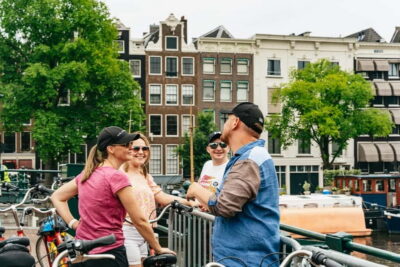
Leander is the guide most closely associated with this experience. He is described as friendly, responsive, accommodating, and well informed about tulips and local farmers. The tone appears to be relaxed rather than formal. You get explanations as you go, with room for conversation and practical questions.
That personal approach is useful here because the flowers are only part of the story. You also learn how the bulbs are grown, how the flower business works, and why the fields are arranged and managed as they are. One of the strongest features is the mix of beauty and working agriculture. This is not simply a trip to admire rows of color.
A few more Amsterdam half-days to weigh up
- Amsterdam: Van Gogh Museum Ticket
★ 4.7 · 52,054 reviews - Amsterdam Classic Saloon Boat Cruise with Drinks and Cheese
★ 5.0 · 31,825 reviews - Amsterdam Luxury Canal Cruise + Unlimited Drinks & Bites option
★ 5.0 · 30,518 reviews
Leaving Amsterdam for the flower-bulb region
The outing begins at Oosterdoksstraat 4, 1011 DK Amsterdam. From there, you ride west into the bulb region in an air-conditioned vehicle. The driving time forms part of the experience, since the city gives way to rural roads and open fields on both sides.
I like having someone else handle the route. You can watch the scenery, take in the changing colors, and listen to explanations instead of worrying about directions or parking. That is especially valuable when you have limited time in Amsterdam and want to fit the flower fields into a half-day.
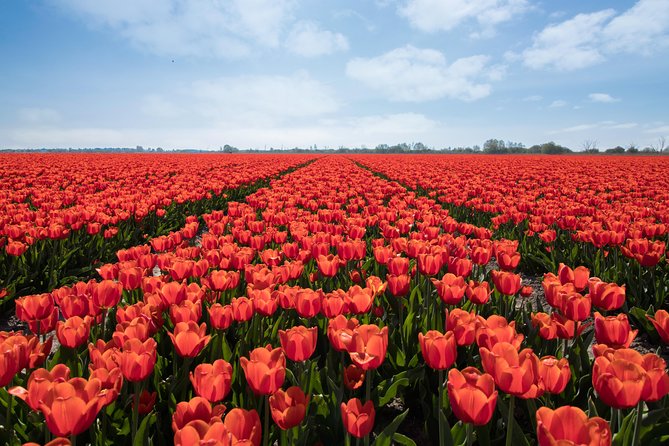
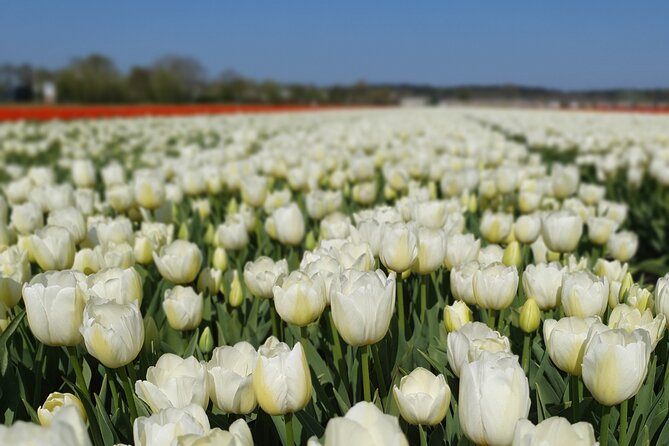
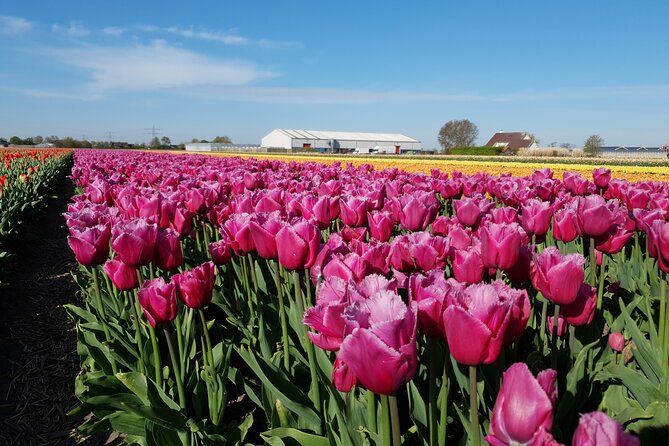
The first portion lasts about two hours, and it is more flexible than a simple point-to-point transfer. Leander makes several stops for photographs and points out fields that large buses cannot reach. The exact selection of fields can vary, but the aim is to show you more than one location and different flower colors.
You should keep your expectations sensible. These are working fields, not all-purpose public parks. Access depends on the farms and the conditions at the time of your visit. The tour provides opportunities to see the flowers close up and take photographs, but you should follow the guide’s instructions around cultivated areas.
Several comments about the experience highlight quiet stops away from the crowds. That is a real advantage if you dislike standing in line for a photograph or sharing a narrow viewpoint with a busload of people. It also gives the countryside a calmer feel. Instead of racing from one famous viewpoint to another, you spend time looking at the fields and hearing how they are maintained.
What you learn among the tulip fields
Leander’s explanations cover the cultivation of tulips, hyacinths, and daffodils. You also hear about tulip history and the business side of the trade. That last point is worth noting because it gives the visit more substance than a photo excursion.
The flower fields are grown for a commercial purpose, and the tour helps you understand the work behind the display. You learn about farming rather than simply seeing a mass of color. For anyone interested in horticulture, local business, or the practical side of Dutch agriculture, this adds real value.
The stops are also well suited to photography. The guide can take you to different fields as colors change across the area, and several parts of the experience allow time to wander near the flowers. One account describes access to hybrid tulips, while another notes that Leander may help take photographs if asked politely. That is a useful point for solo visitors or couples who want a picture together.
Do not expect a professional photo session or guaranteed access to every field. The appeal is the combination of local access, field variety, and time to look around. You still need to make your own photographs, and the precise views depend on what is blooming and available during your visit.
The countryside itself is part of the pleasure. Some experiences also include explanations of windmills seen along the way, including how they fit into the local setting. The tour is not presented as a dedicated windmill excursion, so treat those sightings as an added feature rather than the main reason to book.
De Tulperij and the farmer’s perspective
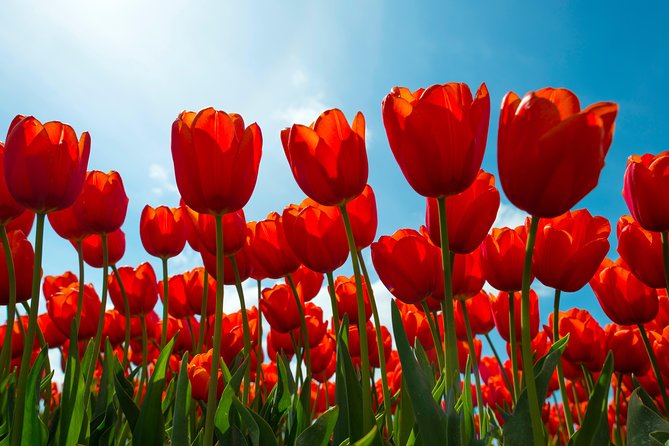
The second main stop is De Tulperij, a tulip bulb farm in the bulb-growing region. About two hours are allocated here, making it more than a quick restroom or souvenir stop.
This is where the tour shifts from scenic viewing to a closer look at flower production. You learn about tulips, hyacinths, and daffodils, and you may meet the farmer connected with the farm. That personal link is one of the most appealing details of the outing. It helps connect the rows of flowers with the people who grow and sell them.
De Tulperij also offers show gardens and tulip fields where you can walk around and take photographs. The format gives you time to explore at your own pace rather than taking only a few hurried pictures beside the vehicle.
The farm visit is especially useful if you want to understand the difference between a flower display and a working bulb farm. You see the attractive side, but you also hear about cultivation and trade. That balance keeps the visit from feeling like a decorative stop with little context.
There is a possible tradeoff in the two-hour allocation. If you mainly want to drive around and photograph as many separate fields as possible, you might prefer more road time. If you like learning how the flowers are produced, meeting someone connected with the farm, and having time to wander, De Tulperij makes the schedule worthwhile.
Same city, a completely different afternoon:
- Amsterdam: Heineken Experience Ticket
★ 4.6 · 30,055 reviews - Amsterdam: Rijksmuseum Entry Ticket
★ 4.7 · 25,535 reviews - Amsterdam: Classic Boat Cruise with Optional Cheese & Wine
★ 4.6 · 22,925 reviews - Amsterdam: Evening Cruise with Optional Wine and Snacks
★ 4.4 · 19,696 reviews
Food, comfort, and the four-and-a-half-hour timing
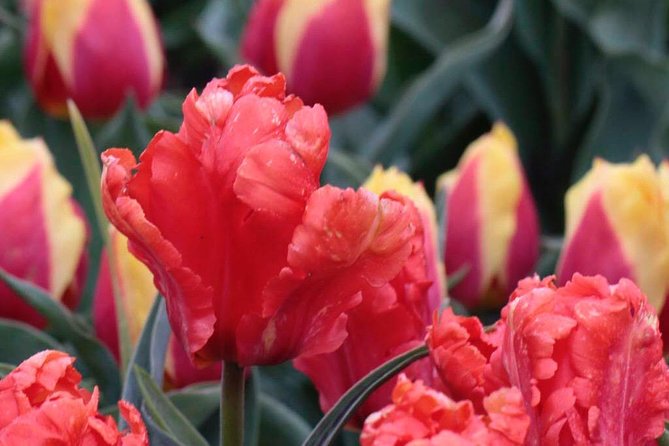
The tour lasts approximately four hours and 30 minutes and returns to the Amsterdam meeting point. Coffee and tea, bottled water, snacks, and Dutch apple pie are included. The pie receives particular praise and is a welcome Dutch touch, especially during a morning or afternoon spent outdoors.
Lunch is not included. Since the outing is under five hours, that is not a major problem for most people, but you should plan to eat before or after the tour. The food provided is a snack, not a meal.
The air-conditioned vehicle is another practical plus. You are not responsible for driving, and you have a comfortable base between stops. The small vehicle also supports the tour’s main advantage: reaching places that are not practical for large buses.
The schedule is compact. You see the flower-bulb region, stop for photographs, visit De Tulperij, and return to Amsterdam in one half-day. That makes it a good fit if you are building a busy city itinerary. The cost is that you will not have time for a long, leisurely stay at every farm or a separate visit to several other Dutch attractions.
The tour is offered in English. Most people can participate, and the meeting point is near public transportation. Confirmation is sent within 48 hours of booking, subject to availability. The experience is usually booked around 96 days in advance, so planning early makes sense if your Amsterdam dates are fixed.
Is $216.26 per person a fair price?
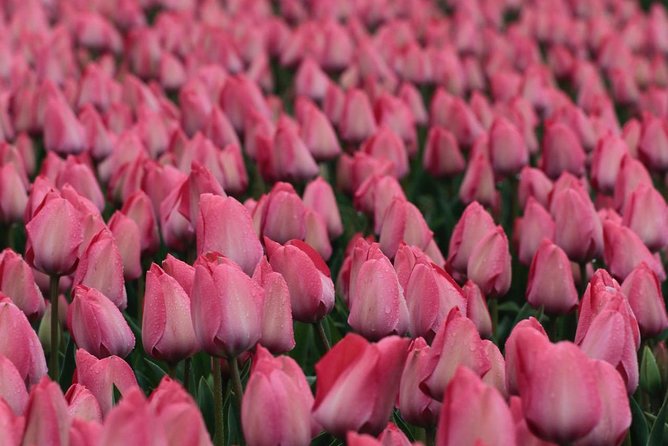
At $216.26 per person, this is not a budget way to see the tulip fields. You are paying for more than transportation. The price covers a small group, an air-conditioned vehicle, a local guide, field stops, the De Tulperij visit, drinks, snacks, apple pie, fees, and the convenience of returning to Amsterdam.
The value depends on what you would otherwise do. If you tried to reach the bulb region without a car, you would need to arrange transport, work out the rural route, and find suitable field access. This tour packages those problems into one half-day. The small group and local access are the parts that justify the premium.
I would not recommend it to someone who only wants a quick photograph among tulips at the lowest possible cost. You are paying for explanations, farm access, and a quieter route, not just a ride to a famous flower view.
For someone who wants a more personal outing and has limited time, the calculation looks better. The group size is far smaller than a standard coach tour, and the schedule combines several rural stops with a substantial farm visit. The included refreshments are pleasant, but they are not the reason to choose this experience.
The rating is 4.9 from 44 reviews, with 98 percent of people recommending it. Those figures suggest a very strong record, though the sample is not huge. The repeated praise centers on the same practical qualities: Leander’s personal style, his explanations, the small group, quiet locations, farmer access, and time for photographs.
Who will get the most from this experience?
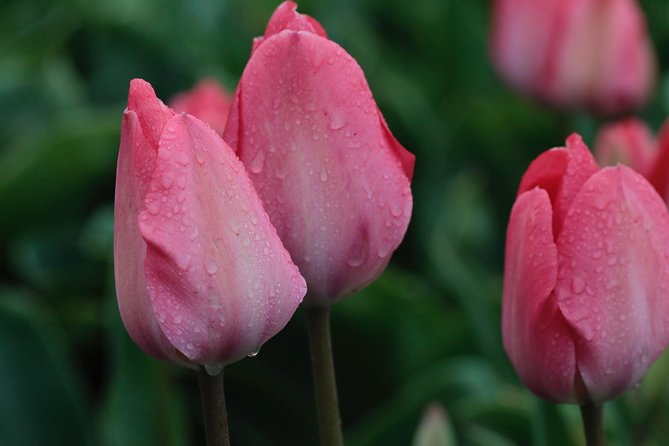
I would choose this tour if you want to see the bulb-growing countryside without renting a car. It suits couples, solo visitors, families, and small groups who prefer a friendly guide and a quiet van to a large commercial coach.
It is also a good match for anyone curious about how flowers are produced. You do not need to be a gardening expert. The explanations cover the basics of cultivation, the flower trade, and the local setting in a way that adds meaning to what you see.
Photographers should like the chance to stop at several fields and visit a farm with show gardens. The small group makes it easier to ask for a picture and spend time framing one. Still, the tour cannot promise a particular flower color, field, or weather condition.
You may want a different plan if your main goal is to visit windmills, explore villages, or spend a full day in the countryside. Windmills can be explained or seen during the route, but they are not the central focus. The same is true of lunch and extended free time.
Good weather matters. If poor weather forces a cancellation, you are offered another date or a full refund. The tour also requires a minimum number of people, and if that number is not reached, you are offered another option or a full refund.
You can cancel for a full refund up to 24 hours before the start time. Changes or cancellations made inside that window are not accepted for a refund, with cut-off times based on local time.
Should you book the Amsterdam Tulip Fields of Holland Tour?
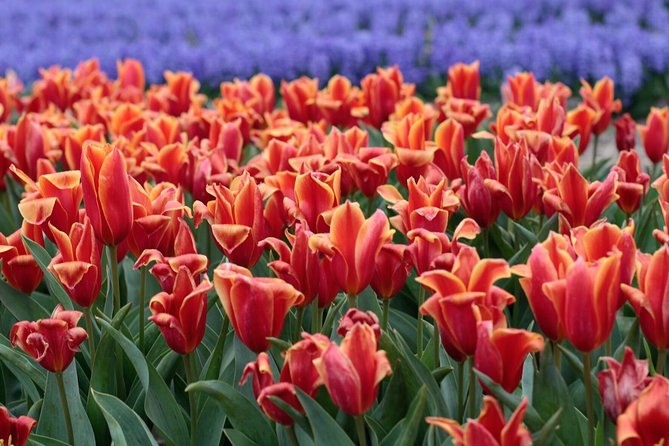
Book it if you want small-group access, local explanations, and several field stops in a single half-day. The strongest reason to go is the combination of rural roads, quieter flower fields, and De Tulperij’s look at real bulb farming.
The price is high, but the tour offers more than a transfer and a quick photo. You get a guide, a group of no more than seven, an air-conditioned vehicle, farmer access, refreshments, and a planned route through places that large buses cannot reach.
I would skip it if you need the cheapest possible flower-field visit or want a broad Dutch countryside tour with a full meal and several major sights. For everyone else, especially visitors without a car who want tulips with context rather than tulips alone, this is a strong choice.
FAQ
How long does the Amsterdam Tulip Fields of Holland Tour last?
The tour lasts approximately 4 hours and 30 minutes and returns to the meeting point in Amsterdam.
Where does the tour begin?
It begins at Oosterdoksstraat 4, 1011 DK Amsterdam, Netherlands.
Where does the tour end?
The activity ends back at the starting meeting point.
How many people can join the tour?
The tour has a maximum of seven travelers.
Is the tour offered in English?
Yes. The tour is offered in English.
What is included in the price?
The price includes an air-conditioned vehicle, coffee and tea, bottled water, snacks, Dutch apple pie, and all fees and taxes.
Is lunch included?
No. Lunch is not included.
What places does the tour visit?
The tour travels through the flower-bulb region, stopping at several fields for photographs, and visits De Tulperij, a tulip bulb farm.
What happens if the weather is poor or the tour does not meet its minimum number?
If poor weather causes cancellation, you are offered a different date or a full refund. If the minimum number of travelers is not met, you are offered a different date or experience, or a full refund.
Just added around Amsterdam
- Amsterdam: Food and Canal Tour★ 4.6 · 22 reviews
- Segway City Tours Amsterdam★ 4.3 · 23 reviews
- Amsterdam Canal Cruise in Classic Salon Boat With Drinks and Cheese★ 4.0 · 22 reviews
- Discover Deventer with an Outside Escape city game tour!★ 4.5 · 23 reviews
- Historical Walking Tour, private with local Dutch guide★ 5.0 · 23 reviews
- Utrecht Food Tour on a Bicycle with local guide★ 5.0 · 23 reviews
- Amsterdam: Captain For a Day 2-Hour Boat Rental★ 4.9 · 23 reviews
- Amsterdam Small-Group Breakfast Morning Cruise★ 5.0 · 23 reviews
Tours, compared.
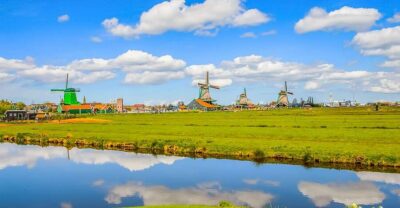
Zaanse Schans, Edam, Volendam & Marken Bus Tour
Read our review →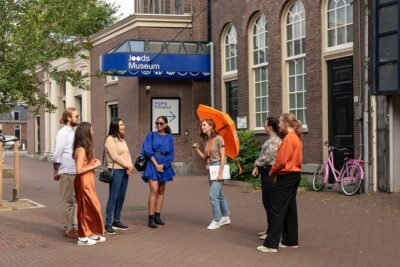
Anne Frank’s Story – Guided Walking Tour through Amsterdam
Read our review →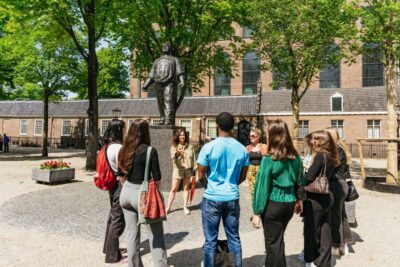
Life of Anne Frank and World War II Walking Tour
Read our review →
Red Light District Tour in German/English/Italian
Read our review →
Guided Zaanse Schans, Windmills & Cheese Tour
Read our review →
Windmill Tour from Amsterdam, Including Volendam & Marken
Read our review →