
Reviewed · VAN GOGH & RIJKSMUSEUM TICKETS
Amsterdam: Rijksmuseum Private Tour
The best part of this private Rijksmuseum tour is the way it turns famous paintings into readable scenes. You look at Rembrandt’s The Night Watch, Vermeer’s quiet interiors, and Frans Hals’s lively portraits while your guide explains what people in the 17th century would have noticed at once. I like the focus on painting methods and hidden meanings, and I like that the guide adjusts the visit to your interests. The drawback is simple: your museum ticket is not included, and a crowded gallery can make the final part feel rushed.
Guide Rolf Schreuder has earned especially warm praise for his energy, humor, and ability to keep children and older adults involved. The tour lasts two hours, which is enough for a clear route through the Dutch Golden Age but not enough to cover the entire museum. Buy your entry in advance, then meet the guide inside at the marked meeting point near the round information counter.
In This Review
- Key points to know before you book
- Why two hours can change your Rijksmuseum visit
- Meeting inside the Rijksmuseum
- Starting with the Rijksmuseum building and its setting
- Reading The Night Watch in the Honorary Gallery
- Vermeer and the power of quiet detail
- Frans Hals and the human face
- From medieval symbols to Dutch everyday life
- How the private format changes the visit
- The $235 price and who gets good value
- Language, timing, and practical fit
- Should you book the Rijksmuseum private tour?
- FAQ
- How long does the Rijksmuseum private tour last?
- Is the Rijksmuseum entrance ticket included?
- Where do I meet the guide?
- Who is the guide?
- What languages are available?
- Is this a private group tour?
- Does the tour include The Night Watch?
- Is the museum wheelchair accessible?
- Can I cancel for a refund?
- Can I reserve now and pay later?
Key points to know before you book
- The Night Watch is the main event: Visit Rembrandt’s huge civic-guard painting in the Rijksmuseum’s Honorary Gallery.
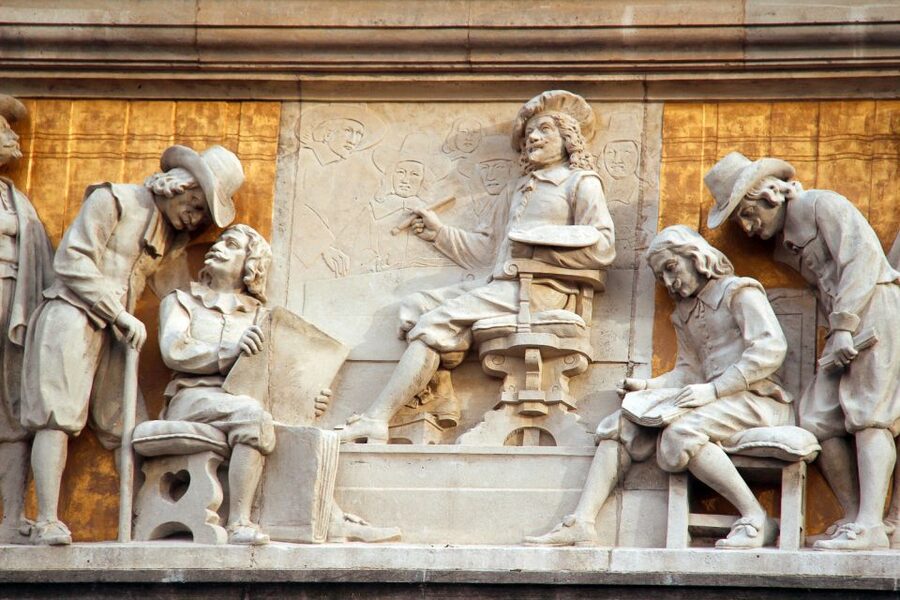
- The guide explains how to read a painting: Look for symbols, gestures, clothing, brushwork, and clues about Dutch society.
- This is a true private tour: The guide can shape the route around your interests, family, or level of art experience.
- Rolf Schreuder is the usual guide: He leads in Dutch, English, or German, with substitute guides possible.
- Admission costs extra: The $235 price covers a private group of up to two, but not the Rijksmuseum ticket.
- Plan for a busy museum: The guide offers advice on making the entry process more manageable, but crowded rooms can affect the pace.
Why two hours can change your Rijksmuseum visit
The Rijksmuseum is large enough to swallow an entire morning, especially if you stop at every famous painting. A private two-hour visit gives you a clear purpose. Instead of wandering from room to room and trying to remember which artist matters most, you follow a guide through selected works from the Dutch Masters of the 17th century.
That focus is useful even if you already know the big names. Rembrandt, Vermeer, and Hals are often presented as isolated geniuses, but this tour places them in the world that made their art possible. Dutch merchants had money for paintings. Town councils and civic groups wanted grand images of themselves. Ordinary households wanted pictures for their walls.
I like that the tour treats paintings as more than decoration. For a 17th-century viewer, an image could work like a book, a news item, or a cartoon. A person who could not rely on schoolbooks or television still encountered lessons about behavior, faith, wealth, vanity, family life, and public duty through art.
Your guide also explains why Dutch painting moved closer to ordinary life. Kings, queens, emperors, Bible scenes, and myths still appeared, but domestic rooms, taverns, markets, civic groups, and working people gained new importance. That shift makes the collection easier to understand, and it gives you something to look for beyond the familiar names.
More Private Tours in Amsterdam
- Rijksmuseum Amsterdam Small-Group Tour with Private Upgrade
★ 4.5 · 1,547 reviews - Van Gogh Museum Tour Reserved Entry Semi Private
★ 5.0 · 1,437 reviews - Private Amsterdam Red Light District and Coffee Shop Tour
★ 5.0 · 763 reviews
Meeting inside the Rijksmuseum
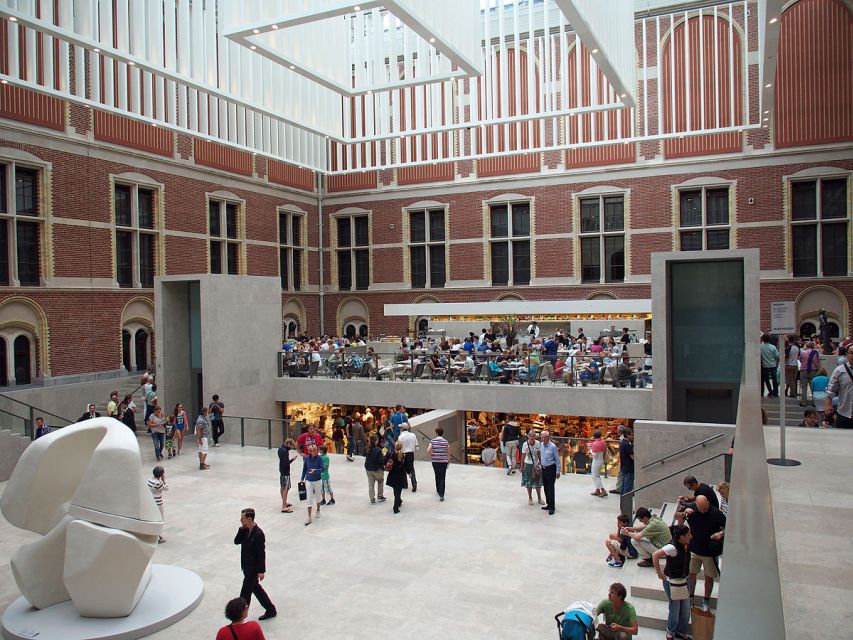
The meeting point requires a little planning. You make your way into the museum first, then look for the round information counter. About 10 meters to the right is a small sign marked meeting point. That is where you meet your guide.
This arrangement is worth noting because it differs from a street-side meeting with a guide who takes you through the entrance. You need to handle the museum entry yourself, and your admission ticket is separate from the tour price. One past booking found the meeting instructions unclear, so I would save the location details on your phone before arriving.
The tour provider gives advice on how to make the line and entry process more bearable. That does not mean you should arrive casually. Check the museum’s available entry times, allow enough time to get through the entrance, and aim to be at the internal meeting point before your scheduled start.
The museum is wheelchair accessible, and one guide arranged a wheelchair for an older family member during a visit. If someone in your group needs assistance, mention it when arranging the tour rather than waiting until you arrive.
Starting with the Rijksmuseum building and its setting
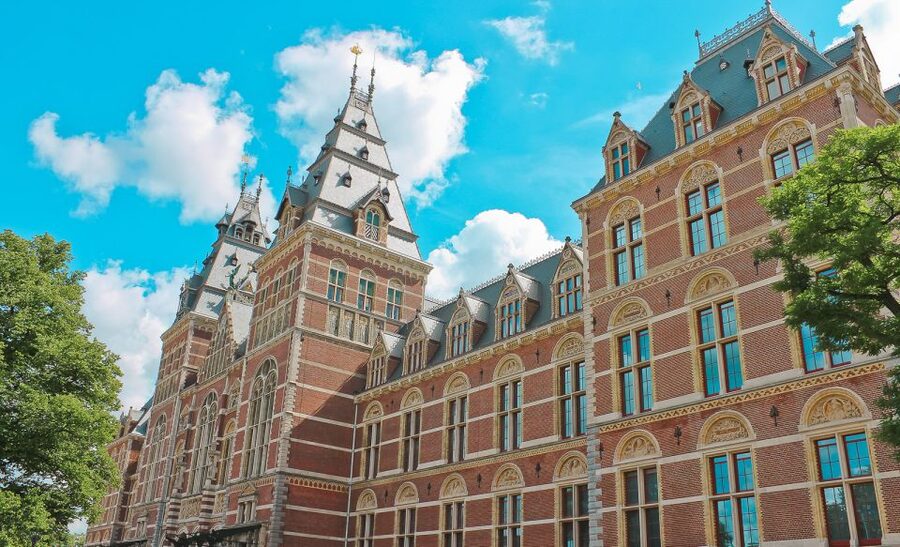
Rolf has sometimes started by discussing the architecture and background of the Rijksmuseum before turning to the paintings. That is a smart opening. The building itself establishes the national importance of the collection, while its grand design helps explain why Amsterdam presents art as part of its public identity.
Do not expect a long architectural lecture. The value is in getting your bearings. Once you understand that you are entering a museum organized around Dutch art and culture, the selected paintings feel less like random highlights.
This opening also works well for families. Children often connect more easily with a building, a city, or a public ceremony before they are asked to study brushwork. Rolf’s approach has kept groups with children aged 10 to 12 engaged for more than two hours, while another family found that even teenage boys stayed interested.
Reading The Night Watch in the Honorary Gallery
The route includes the Honorary Gallery and Rembrandt’s The Night Watch, the painting most visitors expect to see. A guide adds value here because the work can seem overwhelming at first. It is large, crowded with figures, and full of movement, light, uniforms, weapons, and gestures.
Rather than simply pointing out the title, your guide can direct your attention through the composition. You might look at who appears to command attention, how Rembrandt uses light to pull your eye across the scene, and why the group portrait feels more like an unfolding event than a row of posed officials.
This is also where technical discussion becomes useful. You learn how an artist can suggest movement, rank, personality, and drama through paint alone. The painting is not just a record of civic guards. It is a carefully built public image, with people competing for attention inside the same frame.
Crowds matter most around major works such as this. You may need to stand back, wait for a clear view, or listen while positioned at an angle. A private guide can help you concentrate, but cannot remove other people from the gallery. One recent visit felt rushed toward the end because the museum was very crowded and the guide had another appointment afterward. I would choose a start time that leaves breathing room and avoid treating the two hours as a race.
More Van Gogh and Rijksmuseum tickets:
- Amsterdam: Van Gogh Museum Ticket
★ 4.7 · 52,054 reviews - Amsterdam: Rijksmuseum Entry Ticket
★ 4.7 · 25,535 reviews - Moco Museum Amsterdam Entrance Tickets with Banksy & More
★ 4.4 · 10,088 reviews - Amsterdam: Van Gogh Museum Ticket and City Canal Cruise
★ 4.6 · 3,899 reviews
Vermeer and the power of quiet detail
Vermeer offers a useful contrast with Rembrandt. Instead of a large public scene, you encounter paintings built around stillness, light, and ordinary indoor life. The guide explains how a quiet room can hold meaning, and how small details may shape your reading of the scene.
This is where the tour’s attention to hidden meanings pays off. A domestic image may seem simple, but clothing, objects, posture, and the arrangement of figures can suggest relationships and social values. Your guide does not ask you to admire a pretty interior and move on. You are encouraged to ask what the people are doing, what they might represent, and what the original audience could have understood.
The comparison with The Night Watch helps you see Vermeer more clearly. Rembrandt commands a public space with motion and contrast. Vermeer makes you slow down and inspect a private moment. You leave with a better sense of how two major painters could serve very different purposes while working within the same broad period.
Frans Hals and the human face
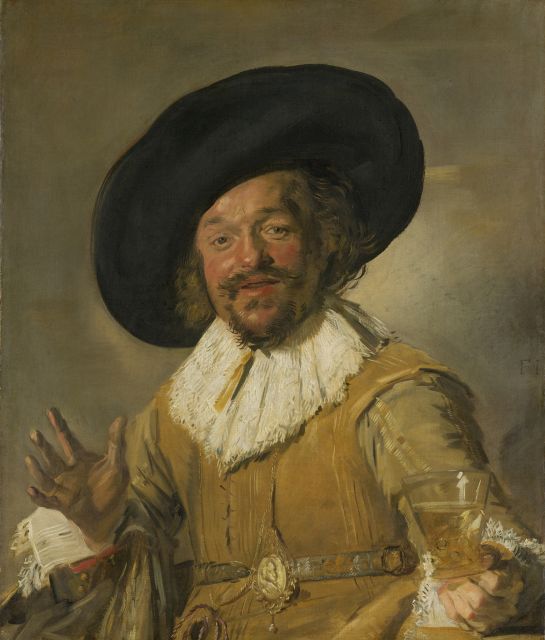
Frans Hals brings another change in mood. His portraits can feel immediate and informal, with faces and expressions that seem less stiff than the formal images of earlier centuries. The guide connects this style to the wider move toward recognizable people and everyday character.
That comparison is important if you are new to art museums. Medieval art can seem remote, symbolic, and bound by rules. Flemish and Dutch Masters introduced fresh ways to show people, places, light, and daily behavior. The point is not that earlier art was lesser. The point is that artists were solving different problems for different audiences.
A guide-led comparison makes the change visible. You can examine how a face is painted, how a figure meets your eye, and how a portrait communicates status without relying on a crown or royal setting. Hals also helps break up a route dominated by solemn civic paintings and domestic interiors.
From medieval symbols to Dutch everyday life
One of the tour’s strongest ideas is the transition from Medieval art to the innovative Flemish and Dutch Masters. Your guide explains how the role of art changed as the Netherlands became a major maritime and commercial power, following the Spanish and Portuguese in control of ocean trade.
That economic rise created new buyers. Art was no longer made mainly for churches, courts, and aristocratic patrons. Merchants, civic groups, and households wanted pictures, too. A painting could show prosperity, record a public role, teach a moral lesson, or simply make a room more pleasing.
I find this social context more useful than a list of dates. It explains why Dutch art contains so many portraits, group scenes, interiors, still lifes, and views of daily activity. It also explains why the paintings can feel close to modern life. You are not only looking at celebrated artists. You are seeing what a successful society chose to display about itself.
The guide’s questions are part of the experience. Rolf has encouraged groups to say what they first notice, compare one work with another, and decide what they like or dislike about a style. That method suits people who do not usually study art. You are not expected to arrive with the right vocabulary.
How the private format changes the visit
A private group is a major advantage for couples, families, and small groups with different interests. You can ask why one work matters, spend more time on an artist you enjoy, or move along when a painting does not speak to you.
This flexibility also helps with mixed ages. An adult may want a technical explanation of paint and composition, while a child may respond better to a story about clothing, gestures, or a strange object in the scene. Guides Rolf and Isabel have both been praised for using humor and present-day comparisons to keep the art approachable.
The private format does not guarantee a completely customized museum route in every case. The museum crowd, guide schedule, and two-hour limit still shape the visit. One family had Rolf as its planned contact but toured with Isabel instead, and found her friendly, engaging, and well organized. It is best to view the named guide as the likely host, not an absolute promise that no substitution will occur.
The $235 price and who gets good value
At $235 for a group of up to two, this is a substantial expense on top of museum admission. For one person or a couple, the price buys direct attention and a focused route rather than a general group experience. If you can add more people within the private-group terms, the per-person cost may become easier to justify, but confirm the booking conditions before paying because the stated base price specifically covers up to two.
I see the value in three cases. First, you have only a short time in Amsterdam and want the major Dutch paintings explained efficiently. Second, your group includes people who might lose interest without a lively guide. Third, you want to ask questions and set the pace instead of following a large crowd.
The value is weaker if you already plan to spend several hours studying the Rijksmuseum on your own, or if your main goal is to see every gallery. Two hours gives you a highlights route and a framework, not a full museum visit. You can stay afterward if your ticket and museum timing allow, but the guided portion itself remains limited.
An Amsterdam Card may be worth considering if you plan to visit several museums and use public transport. The activity information specifically recommends it because it can include museum access and transport, including train service from the airport to central Amsterdam and trams around town. Check the card’s current terms and the Rijksmuseum’s entry requirements before relying on it for this visit.
Language, timing, and practical fit
The tour is available in Dutch, English, and German. State your preferred language when booking, and make sure everyone in your group can follow the same commentary.
The activity is listed as valid for one day, with starting times based on availability, while the actual guided visit lasts two hours. That distinction matters when planning your museum day. You are booking a time slot for a focused tour, not an all-day guided experience.
Free cancellation is available up to 24 hours before the start time, and you can reserve now and pay later. Those terms help if your Amsterdam schedule is still changing, though you should still check the exact conditions attached to your selected date.
I would allow extra time around the appointment. You need to enter the museum, locate the internal meeting point, and manage possible crowds before the tour begins. The more calmly you handle those steps, the more attention you can give to the paintings.
Should you book the Rijksmuseum private tour?
Book it if you want the Rijksmuseum to make sense, not merely to see it. The strongest part is the connection between art technique and Dutch society, especially the way the guide explains why everyday scenes became so important. Rolf Schreuder appears to be a particularly good match for families and curious first-time museum visitors, while Isabel has also led an engaging substitute tour.
I would choose this experience for a couple, a family with older children, or anyone who wants a lively introduction to Rembrandt, Vermeer, Hals, and the Dutch Golden Age. I would skip it if your priority is low cost, a long self-guided visit, or complete control over every gallery.
Bring a little patience for the entrance and the crowds, buy or arrange museum admission separately, and clarify the meeting point before you go. Do that, and the two hours can give you a clear way to look at the Rijksmuseum long after the tour ends.
FAQ
How long does the Rijksmuseum private tour last?
The guided tour lasts two hours.
Is the Rijksmuseum entrance ticket included?
No. The entrance ticket is not included in the tour price.
Where do I meet the guide?
Enter the museum first. Inside, find the round information counter. The meeting point is about 10 meters to the right, beside a small sign that reads meeting point.
Who is the guide?
Rolf Schreuder is the named guide associated with the experience. A substitute guide may lead the tour if Rolf is unavailable. Isabel led one family’s visit in his place.
What languages are available?
The tour can be given in Dutch, English, or German.
Is this a private group tour?
Yes. The experience is offered as a private group tour, with the listed price covering up to two people.
Does the tour include The Night Watch?
Yes. The route includes Rembrandt’s The Night Watch in the Rijksmuseum’s Honorary Gallery.
Is the museum wheelchair accessible?
Yes, the activity information states that the tour is wheelchair accessible.
Can I cancel for a refund?
You can cancel up to 24 hours in advance for a full refund.
Can I reserve now and pay later?
Yes. The booking terms allow you to reserve the tour and pay later.
Just added around Amsterdam
- Amsterdam: Food and Canal Tour★ 4.6 · 22 reviews
- Segway City Tours Amsterdam★ 4.3 · 23 reviews
- Amsterdam Canal Cruise in Classic Salon Boat With Drinks and Cheese★ 4.0 · 22 reviews
- Discover Deventer with an Outside Escape city game tour!★ 4.5 · 23 reviews
- Historical Walking Tour, private with local Dutch guide★ 5.0 · 23 reviews
- Utrecht Food Tour on a Bicycle with local guide★ 5.0 · 23 reviews
- Amsterdam: Captain For a Day 2-Hour Boat Rental★ 4.9 · 23 reviews
- Amsterdam Small-Group Breakfast Morning Cruise★ 5.0 · 23 reviews
Van Gogh & Rijksmuseum Tickets, compared.


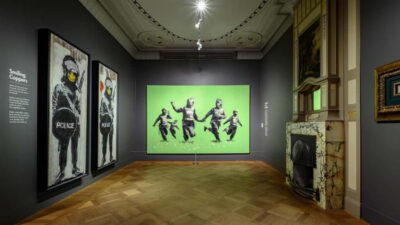
Moco Museum Amsterdam Entrance Tickets with Banksy & More
Read our review →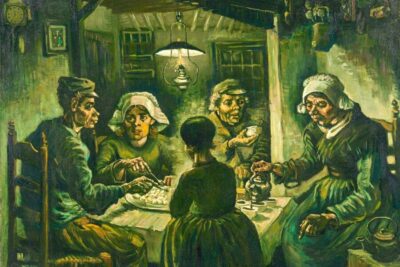



Van Gogh Museum Amsterdam Exclusive Tour w/ Reserved Entry
Read our review →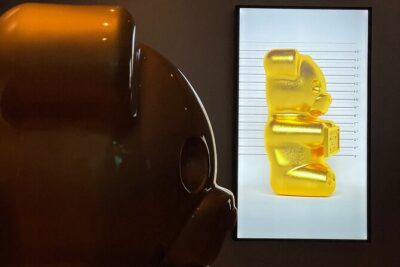
Moco Museum Amsterdam Admission Ticket with Banksy and more
Read our review →Browse the lists this tour appears in