
Reviewed · VAN GOGH & RIJKSMUSEUM TICKETS
Amsterdam: Rijksmuseum Guided Tour and Ticket
The big draw here is the chance to see Rembrandt’s The Night Watch with someone who can explain why the huge painting mattered, not just point it out. You’ll also connect the art to the rise of the Dutch Republic, its merchants, civic groups, and booming middle-class art market. I like the focused two-hour route and the all-day ticket, which lets you keep exploring after the guide leaves.
I also like the attention to small details, from illusionistic still-life tricks to the expressions in Rembrandt’s portraits and the domestic scenes painted by Jan Steen. Guides such as Martina, Claire, Kawika, and Kiran have been praised for clear explanations, humor, and a gift for making teenagers pay attention. The main drawback is time: two hours cannot cover a museum with roughly 8,000 works, and the tour’s fixed start time means you must arrive early.
In This Review
- Key points to know before you book
- Why a guided Rijksmuseum visit can change what you see
- Meeting at Museumplein and entering the museum
- The Dutch Golden Age in two hours
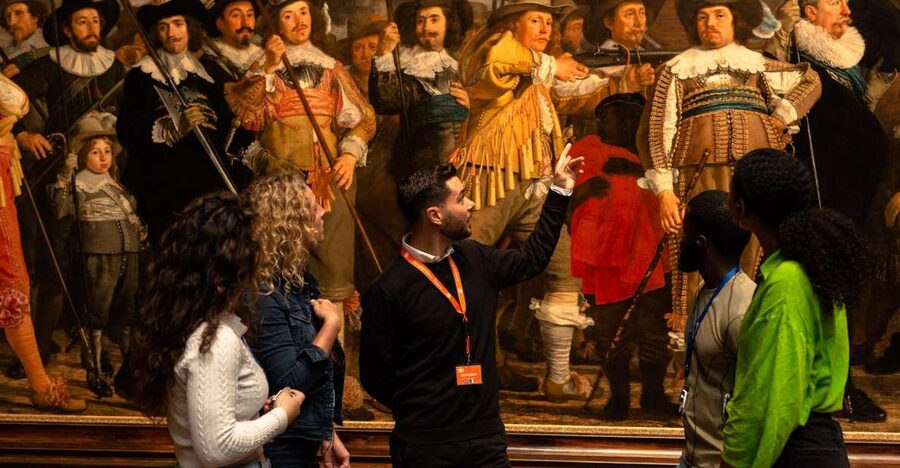
- Rembrandt’s The Night Watch
- Rembrandt’s portraits and Ferdinand Bol
- Vermeer and the art of careful observation
- Still lifes, Jan Steen, and everyday Dutch life
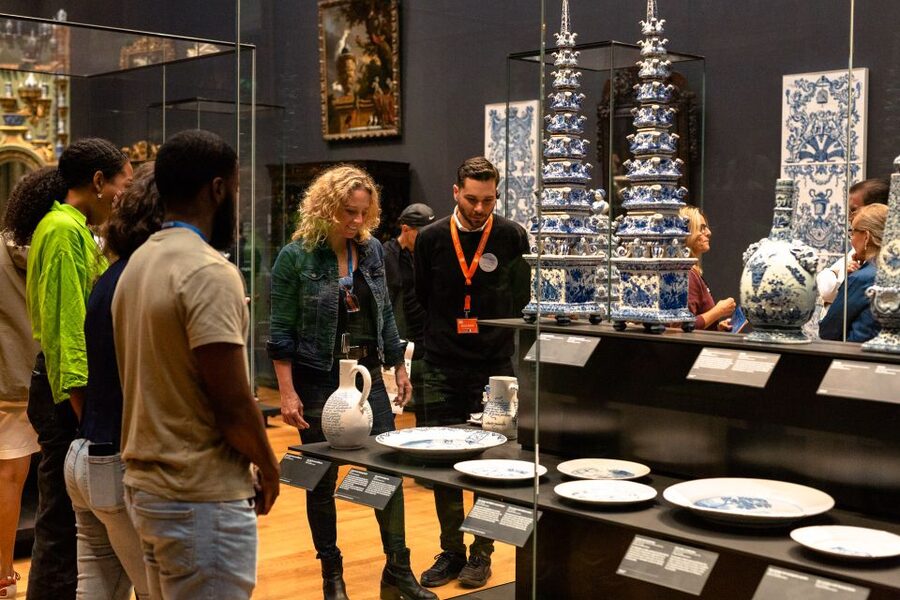
- Delftware and 17th-century dolls’ houses
- The Pierre Cuypers Library
- What the guides add to the visit
- Staying after the guided tour
- Price, timing, and overall value
- Who should book this Rijksmuseum tour?
- Should you book it?
- FAQ
- How long does the Rijksmuseum guided tour last?
- What does the $78 price include?
- Can I stay in the Rijksmuseum after the tour?
- Where does the tour begin?
- What languages are available?
- Can I bring a suitcase or umbrella?
Key points to know before you book
- Rembrandt takes center stage: See The Night Watch and several of his portraits while learning how to read the details.
- The route goes beyond famous paintings: Expect Delftware, 17th-century dolls’ houses, Jan Steen interiors, Ferdinand Bol, and the Pierre Cuypers Library.
- The guide supplies the historical frame: You learn how the new Dutch Republic created one of the world’s largest middle-class art markets.
- Your ticket works all day: Stay inside after the two-hour tour and continue at your own speed.
- Museum timing is strict: If you miss the tour’s start, your entrance ticket expires and you cannot join later.
- Pack light: Large bags, suitcases, oversized luggage, and umbrellas are not allowed inside.
Why a guided Rijksmuseum visit can change what you see

The Rijksmuseum is not a small gallery where you can wander into every room and feel oriented at once. It holds about 8,000 works, covering art and objects from many periods, so a first visit can become a march from one famous name to the next.
This tour gives you a clear thread: the art of the Dutch Golden Age and the society that produced it. Instead of treating Rembrandt, Vermeer, Jan Steen, and Ferdinand Bol as isolated painters, the guide connects them to the growth of the Dutch Republic and its prosperous urban public.
That context matters. The paintings were not made only for palaces or churches. A large market of merchants, civic groups, and middle-class households supported artists, bought pictures, and shaped what appeared on Dutch walls. You begin to see still lifes, portraits, family interiors, and objects as evidence of a changing society.
I find this approach especially useful if you do not normally spend much time in museums. A good guide gives you a way to look. You learn to ask who commissioned a picture, what its objects suggest, why a figure is posed in a certain way, and how an artist creates the illusion of texture, space, or light.
More Entry Tickets in Amsterdam
- Amsterdam: Van Gogh Museum Ticket
★ 4.7 · 52,054 reviews - Amsterdam: Heineken Experience Ticket
★ 4.6 · 30,055 reviews - Amsterdam: Rijksmuseum Entry Ticket
★ 4.7 · 25,535 reviews
Meeting at Museumplein and entering the museum
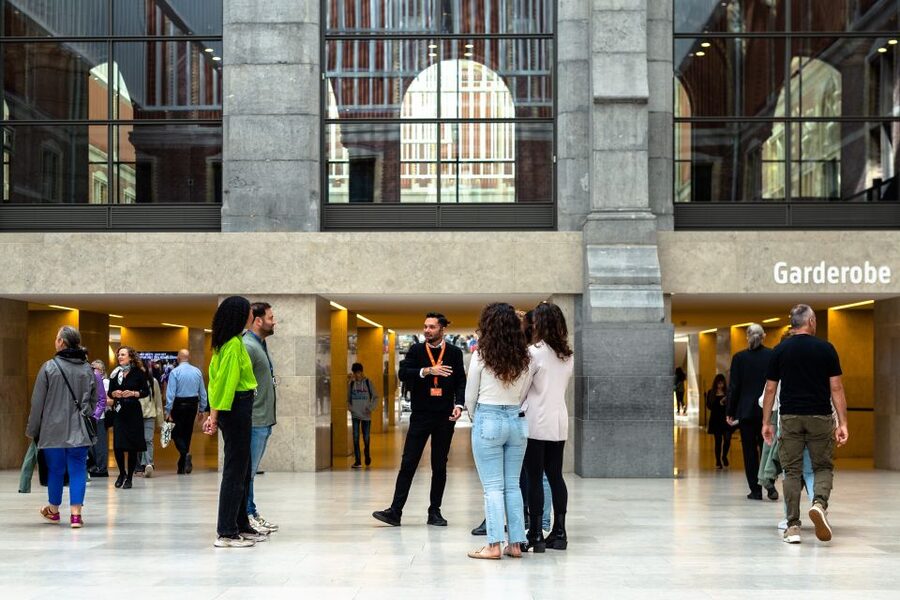
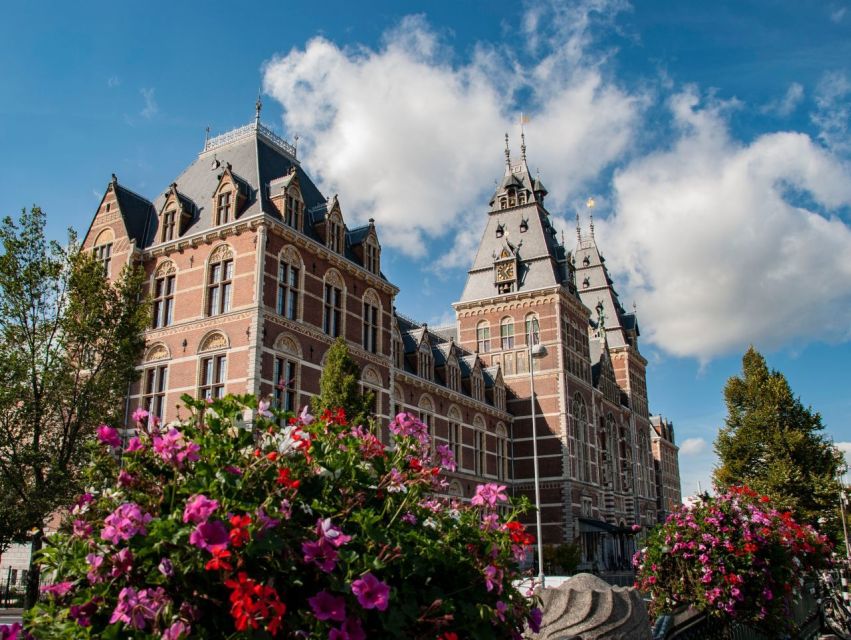
The meeting point is at Cobra Cafe in Museumplein, next to the Rijksmuseum. Your guide has the museum ticket ready at the start, so you do not need to arrange a separate entrance ticket for the guided portion.
Pay close attention to the exact meeting instructions for the option you book. The starting point can vary by option, and this is not the kind of tour where arriving casually at the museum entrance is a safe plan. Rijksmuseum time slots are strict. Once the tour begins, the entrance ticket expires, so a late arrival means missing the experience rather than simply catching up inside.
Give yourself enough time to find Cobra Cafe, identify the guide, and handle any last-minute questions. One practical weakness is that a guide may not always be easy to spot in a crowded museum area. A bright bag or clear sign would help, so use the contact and meeting details supplied with your booking rather than relying on guesswork.
Bring a passport or identity card. Leave large luggage, suitcases, oversized bags, and umbrellas elsewhere. Only a handbag or small, thin backpack is allowed inside, so pack with the museum’s rules in mind.
The Dutch Golden Age in two hours
Once inside, the tour focuses on selected rooms rather than trying to sweep through the entire collection. Many tours spend substantial time on the second floor, where the major Dutch masters and their best-known works are displayed.
The guide’s job is not simply to list dates and names. You should expect a story that moves from the rise of the new Dutch Republic to the subjects people wanted in their homes and public buildings. Art becomes a record of civic pride, household life, faith, trade, status, and changing ideas about identity.
A strong guide also helps you slow down. In a busy museum, it is easy to glance at a painting, recognize a name, and move on. Here, you may spend several minutes on a hand gesture, a reflective surface, a hidden object, or a detail in the background. Those small features often carry the meaning.
Some rooms have restrictions on speaking. The guide will tell you before entering a room where quiet is required. This is worth knowing because the tour may pause or change its style in certain spaces. You still receive the explanation, but you may need to listen closely or wait until the group moves on.
Rembrandt’s The Night Watch
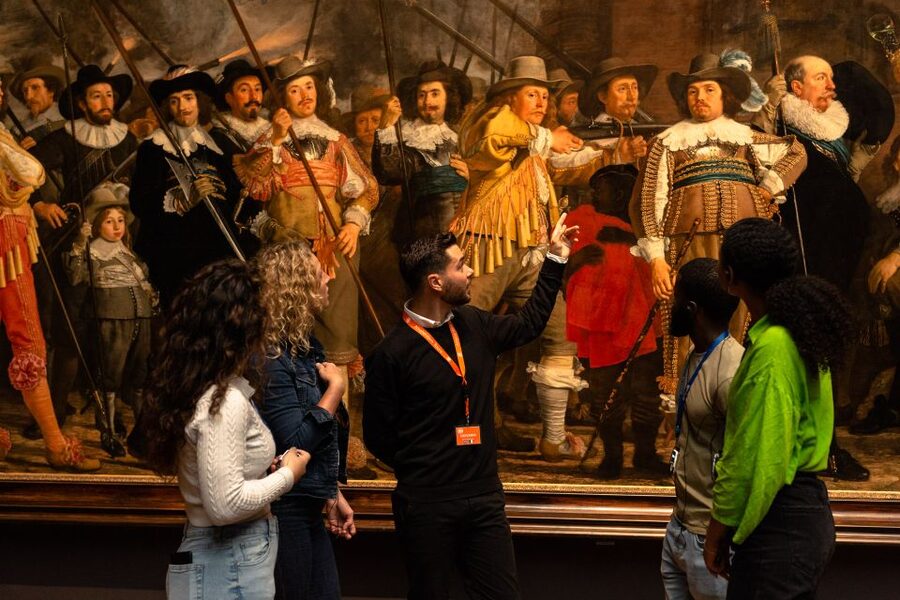
The tour’s headline work is Rembrandt’s The Night Watch, a painting famous for its size, movement, and dramatic use of light. The value of seeing it with a guide is that you get more than a quick look at a large canvas.
You can expect an explanation of how Rembrandt arranged the civic militia group so it feels active rather than lined up in stiff rows. The scale helps, but so do the gestures, faces, weapons, uniforms, and flashes of brightness that pull your eye across the scene.
The guide may also point out how the painting reflects the civic culture of Amsterdam. This was not simply a private portrait. It represented a group and its public role, which helps explain why civic commissions mattered in the Dutch Republic.
Crowds can make this stop feel hurried. You may not have long to stand directly in front of the work, especially if the room is busy. That is another reason the guide helps. You get a useful reading of the painting even if your first viewing is brief, and you can return to it later during your all-day museum visit.
More Van Gogh and Rijksmuseum tickets:
- Moco Museum Amsterdam Entrance Tickets with Banksy & More
★ 4.4 · 10,088 reviews - Amsterdam: Van Gogh Museum Ticket and City Canal Cruise
★ 4.6 · 3,899 reviews - Amsterdam: Van Gogh Museum Ticket & Canal Cruise
★ 4.5 · 3,304 reviews - Amsterdam: City Canal Cruise and Rijksmuseum
★ 4.5 · 2,129 reviews
Rembrandt’s portraits and Ferdinand Bol
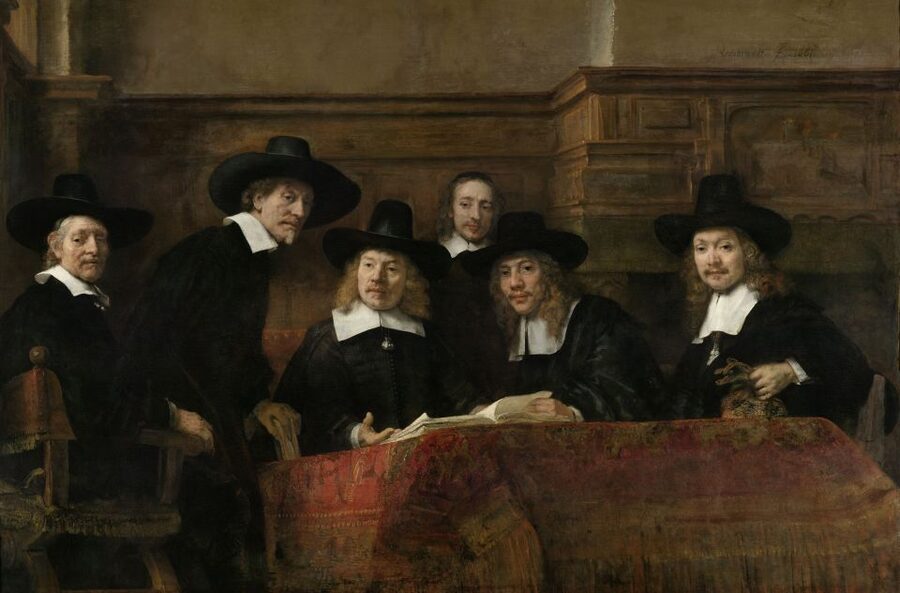
Rembrandt’s portraits offer a more intimate part of the tour. Look for the way he uses expression, clothing, pose, and light to suggest a person’s character and social position. The guide can direct your attention to details you might otherwise miss, including the difference between formal status and human presence.
The route also includes Ferdinand Bol’s self-portrait. Bol was connected to Rembrandt’s artistic circle, and a self-portrait gives you a chance to compare how artists presented themselves. The work becomes more interesting when you consider why a painter chose a certain pose, costume, or expression.
This is one of the tour’s useful habits: it does not treat every stop as a monument to a single famous name. You see how artists influenced one another and how portraiture worked as both personal image and public statement.
Several guides have been praised for bringing these paintings to life through stories and close looking. Martina, in particular, has been described as clear, warm, and full of insight into the Dutch masters. Claire has been praised for taking the group through the art as a connected journey rather than a pile of separate facts. Guide quality can vary from one departure to another, but the experience depends heavily on this storytelling.
Vermeer and the art of careful observation
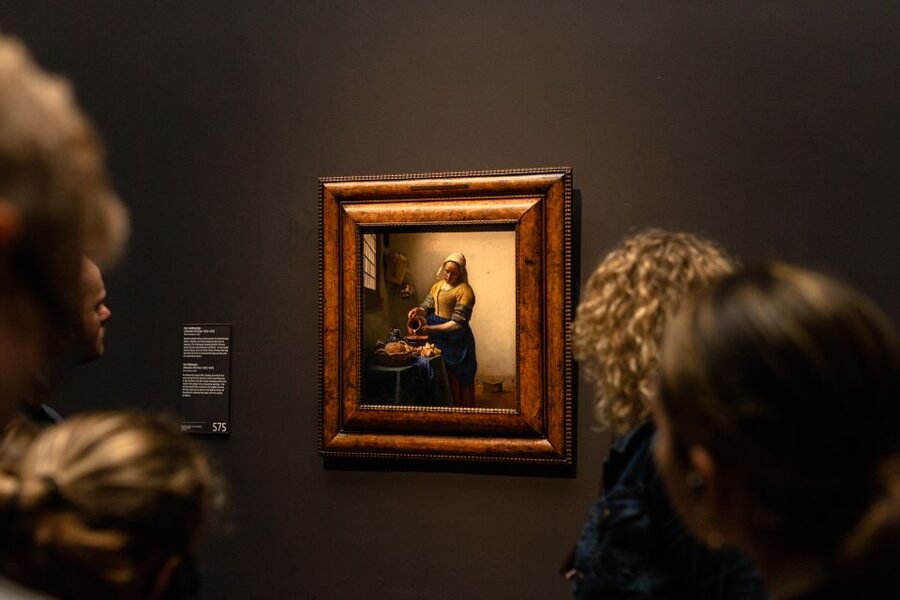
Vermeer’s work fits well into a tour built around looking closely. His paintings often appear calm and simple, yet small choices of light, placement, and domestic detail carry much of the meaning.
Your guide can help you notice how an ordinary room becomes carefully constructed. A map, a musical instrument, a window, a letter, or a pattern in a garment may tell you something about education, trade, relationships, or social ambition.
The available information highlights Rembrandt and Vermeer as key figures in the story of Dutch expansion. The tour is not presented as a full survey of every artist in the museum, so do not expect equal time for every gallery. Instead, you get a guided look at important examples and a framework for exploring the rest yourself.
I like this balance. A museum guide who tries to cover everything usually leaves you with a blur of names. A selective route gives you a few solid anchors. Once you understand how to read one or two works, you can apply the same questions to paintings you encounter later on your own.
Still lifes, Jan Steen, and everyday Dutch life
The tour also addresses the illusionism of Dutch still-life painting. These works can look like simple arrangements of food, flowers, glass, silver, books, or household goods, but they reward a closer look.
A guide may point out how painters suggest texture and weight. A lemon peel curls over a table edge. A metal object catches a sharp glint. A glass appears transparent. A fruit begins to spoil. The pleasure comes from the technical skill, while the meaning may touch on wealth, trade, time, or mortality.
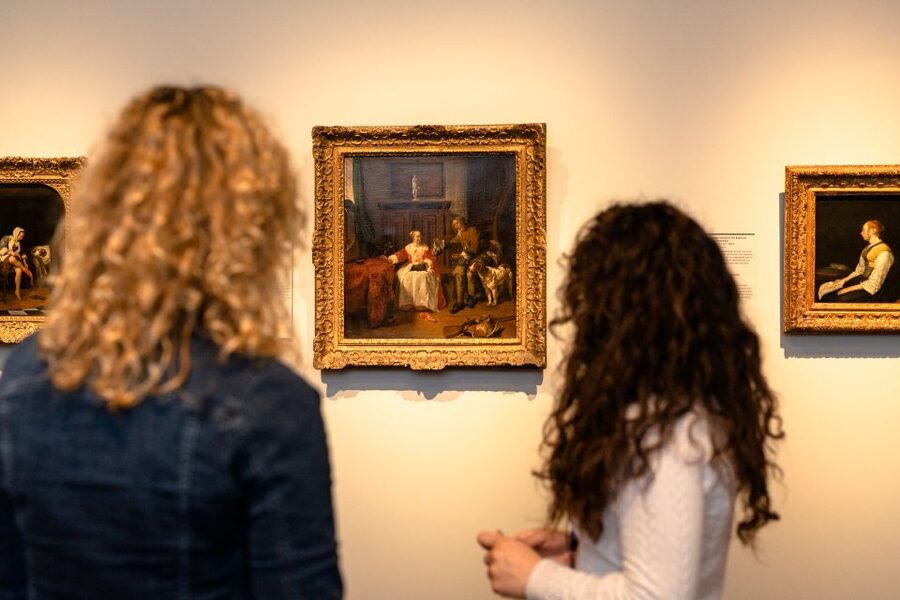
Jan Steen’s family interiors add a livelier view of daily life. His scenes are known for crowded domestic situations and human behavior that can be funny, unruly, or cautionary. The guide can explain how these household scenes work as entertainment and social commentary.
You should not expect a quiet, private inspection of each painting. Groups move through public galleries, and other people may gather around the major works. Still, a guide who knows where to position the group can help you see the details without wasting time searching for the right angle.
Delftware and 17th-century dolls’ houses
The Rijksmuseum is not only a painting museum. The tour includes 17th-century Delftware and dolls’ houses, which help widen the story beyond the walls of the gallery.
Delftware shows how Dutch makers responded to international trade and changing taste. The objects can look decorative at first, but they also raise questions about imitation, craftsmanship, household display, and the movement of goods and ideas.
The dolls’ houses offer another useful shift in scale. These are not merely toys to pass quickly. They can reveal how domestic interiors were arranged and how prosperous households displayed possessions. A guide can help you read these miniature rooms as records of status, labor, taste, and family life.
These stops are valuable for anyone who finds a long sequence of portraits tiring. They break up the paintings and show that the Dutch Golden Age was also built from objects, interiors, materials, and consumer habits.
The Pierre Cuypers Library
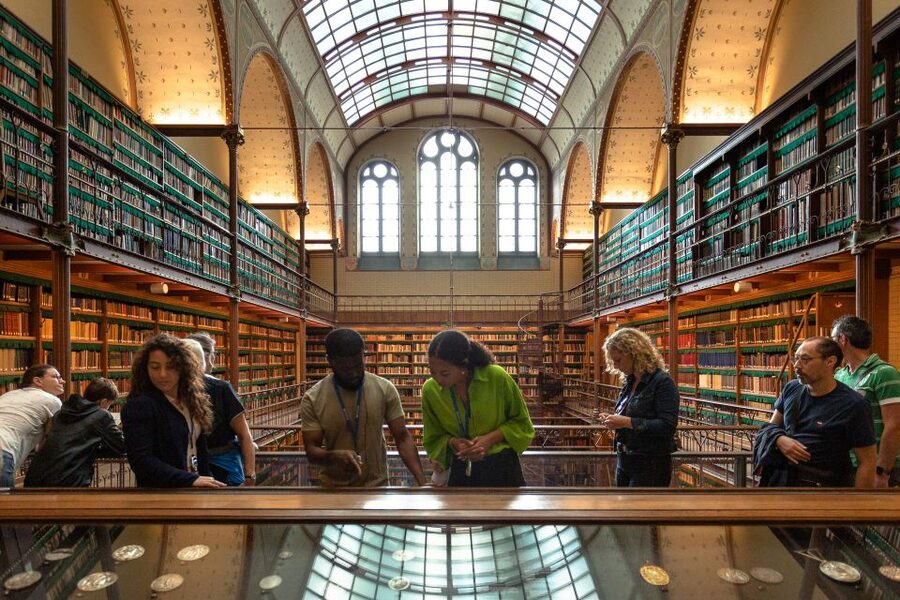
The Pierre Cuypers Library is another distinctive stop. Its presence shows the museum as a place of study as well as display. Even if you are mainly interested in paintings, a library within the museum adds a sense of how art is researched, cataloged, and understood over time.
The library may appeal most to visitors who like architecture, books, or the workings of museums themselves. It also gives the tour a broader finish. You are not only looking at individual masterpieces. You are seeing the institution that preserves, studies, and presents them.
The exact amount of time spent at each stop can vary. Two hours is enough for a well-paced introduction, not a leisurely visit to every featured area. If the library, dolls’ houses, or Delftware matter most to you, ask the guide how the route is being shaped that day.
What the guides add to the visit
The strongest part of this activity is the human explanation. Guides including Martina, Claire, Kawika, Kiran, Marinas, Marlena, Holly, Sylvia, Ronald, and Wybe Rood or Daniel have been singled out for clear delivery, humor, patience, and enthusiasm.
That does not mean you will have one particular guide. It does show what to value during the tour: a guide who can make art understandable without flattening it, answer questions, keep the group together, and adjust explanations to the people in front of them.
One especially practical detail is the use of headsets on at least some departures. A headset can make a major difference in a busy gallery, especially when you are standing several steps from the guide. If equipment is supplied for your tour, use it. It is much easier than trying to read lips while looking at a painting.
Groups can sometimes be combined if a guide is ill. That may affect the pace and size of the group. Still, the guide’s ability to wait for people, set up equipment, and maintain a clear route matters more than a perfectly small group.
Staying after the guided tour
Your ticket is valid all day, which adds real value to the two-hour format. After the guided route ends, you are free to continue through the remaining galleries, return to a favorite painting, visit the museum cafe, or browse the shop.
I recommend treating the guided portion as your orientation rather than your entire Rijksmuseum visit. The tour gives you a foundation and points you toward works worth revisiting. Afterward, you can move at a slower pace without trying to keep up with a group.
This also solves the main limitation of the tour. Two hours is short for such a large museum, but the all-day ticket means you are not forced to choose between a guided introduction and independent exploration. You get both, provided you have enough time in your schedule.
Price, timing, and overall value
At $78 per person, this is not the cheapest way into the Rijksmuseum. The price includes the entrance ticket, a live guide, and the two-hour guided tour, but food and drinks are extra.
I think the value depends on how you use the ticket. If you only have a tight window and want to understand the major Dutch masters, the guided route can save you from wandering without a plan. If you already know the museum well or prefer to read labels quietly, you may find the price harder to justify.
The all-day ticket improves the calculation. You can stay after the tour and see parts of the museum that the guide did not cover. A 4.7 rating from 649 reviews suggests a consistently well-received experience, with the guide’s explanations and presentation receiving the strongest praise.
Book only if you can arrive on time. The strict entry rule is the biggest practical risk, and a missed start can turn an expensive ticket into a wasted one. Free cancellation is available up to 24 hours in advance, and reserve-now, pay-later booking keeps your plans flexible.
Who should book this Rijksmuseum tour?
I would choose this tour if you are visiting the Rijksmuseum for the first time, want help with Dutch Golden Age art, or feel unsure how to approach a huge collection. It is also a good fit for families and mixed-interest groups because lively storytelling can hold attention better than a long series of labels.
Art lovers will appreciate the focus on composition, symbolism, portraits, and historical setting. Casual museumgoers can enjoy the famous works without needing prior knowledge. The tour can also help teenagers stay engaged, especially if the guide uses humor and points out surprising details.
You may want to skip it if you have only a few minutes in Amsterdam, cannot arrive early at Museumplein, or want complete control over your pace. The route is selective, speaking is restricted in certain rooms, and the guide may spend more time on paintings than on objects depending on the departure.
Should you book it?
Book this Rijksmuseum guided tour if you want a clear two-hour introduction to Dutch art followed by the freedom to explore alone. The combination of a live guide and an all-day ticket is the main advantage.
I would not book it simply to rush in, see The Night Watch, and leave. The real value comes from the connections between Rembrandt, Vermeer, portraits, still lifes, household scenes, Delftware, dolls’ houses, and the society that bought them. Arrive early, carry only a small bag, and plan enough time afterward to revisit the museum at your own speed.
FAQ
How long does the Rijksmuseum guided tour last?
The guided tour lasts two hours. Starting times vary, so check availability when choosing your date.
What does the $78 price include?
The price includes the Rijksmuseum entrance ticket, a live guide, and the guided museum tour. Food and beverages are not included.
Can I stay in the Rijksmuseum after the tour?
Yes. Your ticket is valid all day, so you can continue exploring the museum after the two-hour guided visit, or spend time in the cafe and shop.
Where does the tour begin?
The meeting point is at Cobra Cafe in Museumplein, next to the Rijksmuseum, although the exact meeting point may vary depending on the option booked.
What languages are available?
The tour is available with a guide in Dutch, German, Italian, English, or French.
Can I bring a suitcase or umbrella?
No. Large bags, suitcases, oversized luggage, and umbrellas are not allowed inside. Only a handbag or small, thin backpack is permitted.
Just added around Amsterdam
- Amsterdam: Food and Canal Tour★ 4.6 · 22 reviews
- Segway City Tours Amsterdam★ 4.3 · 23 reviews
- Amsterdam Canal Cruise in Classic Salon Boat With Drinks and Cheese★ 4.0 · 22 reviews
- Discover Deventer with an Outside Escape city game tour!★ 4.5 · 23 reviews
- Historical Walking Tour, private with local Dutch guide★ 5.0 · 23 reviews
- Utrecht Food Tour on a Bicycle with local guide★ 5.0 · 23 reviews
- Amsterdam: Captain For a Day 2-Hour Boat Rental★ 4.9 · 23 reviews
- Amsterdam Small-Group Breakfast Morning Cruise★ 5.0 · 23 reviews
Van Gogh & Rijksmuseum Tickets, compared.


Moco Museum Amsterdam Entrance Tickets with Banksy & More
Read our review →



Van Gogh Museum Amsterdam Exclusive Tour w/ Reserved Entry
Read our review →
Moco Museum Amsterdam Admission Ticket with Banksy and more
Read our review →Browse the lists this tour appears in