
Reviewed · MUSEUM TOURS IN AMSTERDAM
Amsterdam: Houseboat Museum Entry Ticket
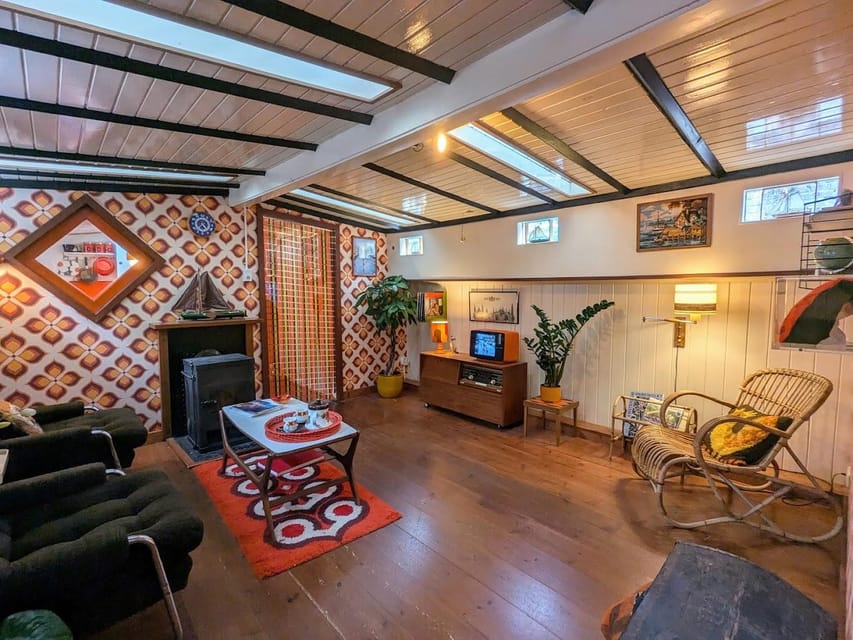
Amsterdam’s Houseboat Museum gives you something most canal cruises cannot: a look inside the boat itself. You step aboard the Hendrika Maria, a 1914 freight ship that carried goods to Scandinavia before becoming a family home in 1967. The compact rooms still show the orange, yellow, and brown style of the 1970s.
I like the original interior and the clear link between working vessel and floating home. I also like seeing the mast and leeboard, practical sailing gear that helps explain how this boat once moved under its own power. The main drawback is size: you may see the whole 80-square-meter boat in 15 to 20 minutes, and one very quick visit could take only five minutes.
In This Review
- Key points to know
- Boarding the Hendrika Maria in Amsterdam
- The working ship behind the floating home
- A 1970s home for four people
- What the audio guide adds
- How long the visit really takes
- Space, stairs, and photography
- Who will enjoy this small museum
- What makes the experience worth your time
- How to fit it into your Amsterdam day
- Should you book the Houseboat Museum?
- FAQ
- Where is the Houseboat Museum located?
- What boat does the museum occupy?
- What was the Hendrika Maria used for before becoming a houseboat?
- When was the ship converted into a home?
- How long does a visit usually take?
- Is the interior accessible to everyone?
- Can I take photographs inside?
Key points to know
- A real 1914 freight ship: The Hendrika Maria once transported goods to Scandinavian countries before its conversion to a home.
- A family home from 1967: See how four people lived aboard after the ship became a residential houseboat.
- Original 1970s design: Expect plenty of orange, yellow, and brown, with the interior preserved as a time capsule.
- Historic sailing equipment: The original mast and leeboard show how the vessel worked before its houseboat years.
- A short, compact museum visit: Plan on roughly 15 to 20 minutes if you follow the audio guide.
- Practical limits: Space is tight, stairs are steep, and flash photography is not allowed.
Boarding the Hendrika Maria in Amsterdam
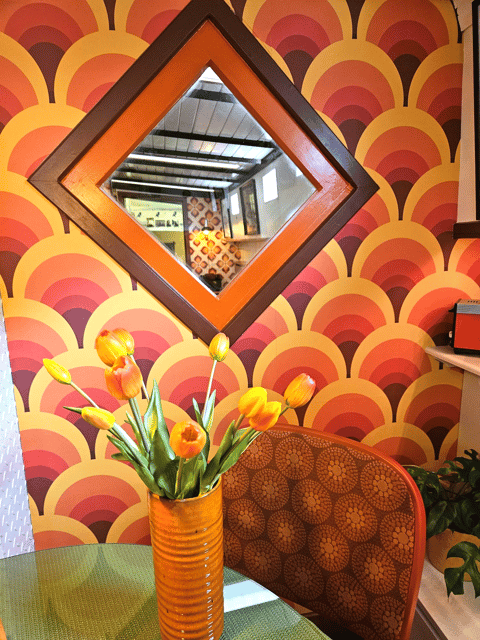
The appeal begins before you study a single display. This is not a replica built to resemble a houseboat. The museum is inside the actual Hendrika Maria, a working cargo ship from 1914 that later became a home.
That change of purpose gives the visit its shape. You are not simply looking at old furniture. You are seeing how a vessel designed to carry freight was adapted for daily family life. The boat once sailed to Scandinavian countries for transport work. In 1967, it was converted into a houseboat, and a family of four lived aboard.
I find that physical setting more useful than a standard museum panel. Narrow rooms, steep stairs, and the limits of the hull make the practical side of houseboat living easier to understand. You can picture the careful use of every bit of space, even during a quick visit.
The museum presents more than one period. The ship’s working life is represented by its original sailing mast and leeboard. Its later life comes through the residential interior, which remains largely original from the 1970s.
More Entry Tickets in Amsterdam
- Amsterdam: Van Gogh Museum Ticket
★ 4.7 · 52,054 reviews - Amsterdam: Heineken Experience Ticket
★ 4.6 · 30,055 reviews - Amsterdam: Rijksmuseum Entry Ticket
★ 4.7 · 25,535 reviews
The working ship behind the floating home
Before looking at the living quarters, pay attention to the boat as a vessel. The mast and leeboard are not just decorative leftovers. They were useful parts of the ship’s sailing system when the Hendrika Maria was still used for freight.
The mast helps tell you that this was once a working sailing ship, not just a motorized barge parked on a canal. The leeboard provided practical support while sailing. You do not need a technical background to appreciate these pieces, because their value is in the story they tell: this boat had a job long before it had a sitting room.
The ship’s route to Scandinavian countries adds a wider European context. Goods moved by water across borders, and a boat like this formed part of that working network. The Houseboat Museum keeps that story close to the later domestic one, so you can compare the boat’s original purpose with its second career.
I would give these details a little attention rather than rushing straight into the interior. The residential rooms are the main attraction, but the old sailing equipment explains why the boat looks and feels the way it does.
A 1970s home for four people
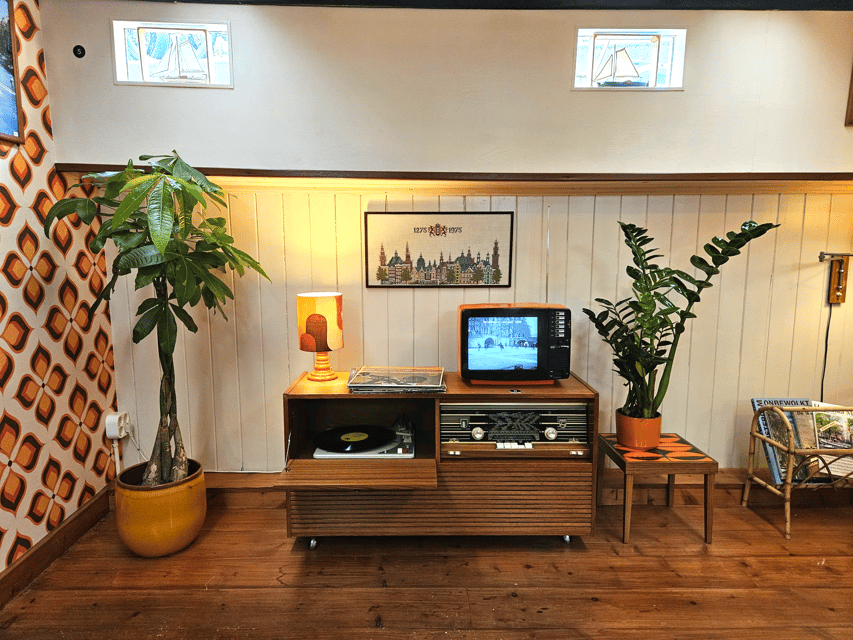
The most memorable part of the visit is the preserved interior. Once the Hendrika Maria became a regular home, its rooms took on a distinctly 1970s look. Expect strong orange, yellow, and brown colors. This is not a neutral restoration, and that is part of its charm.
The design may look dated, but it gives the boat a clear sense of time. You can see how a family of four made a home in a space originally intended for cargo. The museum asks you to think about practical living, not just fashionable decoration.
The small scale matters. An 80-square-meter houseboat can sound roomy on paper, but a boat is not arranged like a normal apartment. Passageways, stairs, and the shape of the hull affect how rooms connect. The result is a home that feels compact and carefully organized.
I like this part because it puts houseboat life on a human scale. You are not looking at a broad claim about living on the water. You are looking at the setting where four people actually lived, with the furnishings and colors left in place.
At the same time, the interior may not hold your attention for a long time if you want a large museum with many rooms and displays. The whole boat can be covered quickly. One visit using the audio guide takes about 15 to 20 minutes, and you should allow for the possibility of a much faster experience if you move through without stopping.
What the audio guide adds
The visit includes information about the boat and the people who lived on it, and the presentation is interactive. An audio guide can help you notice the difference between the ship’s freight years and its later domestic use.
If you listen carefully, the short visit becomes more than a walk through old rooms. You can connect the mast and leeboard outside or above you with the vessel’s earlier working life, then see how the same structure was adapted for a family home.
The listed host and greeter languages include English, French, Traditional Chinese, German, Spanish, Portuguese, Italian, and Dutch. The supplied details do not identify individual guides by name, so you should not expect a named personal tour host as part of the ticket.
Because the boat is small, the audio material has a practical advantage. You do not need to search a large building for context. The story comes to you as you move through the rooms. Still, the information will not turn this into a long guided tour. The compact layout sets a natural limit on the visit.
More Museum Tours in Amsterdam
- Moco Museum Amsterdam Entrance Tickets with Banksy & More
★ 4.4 · 10,088 reviews - Amsterdam: The Upside Down Museum Entrance Ticket
★ 4.4 · 9,506 reviews - Amsterdam: Red Light Secrets Museum Entry Ticket
★ 4.2 · 5,722 reviews - Amsterdam’s Weirdest Museum: Believe It or Not!
★ 4.5 · 4,086 reviews
How long the visit really takes
The ticket is described as a one-day activity, but that does not mean the museum itself fills a day. The physical visit is short. A careful audio-guided tour generally takes 15 to 20 minutes, while a very brisk look can be over in about five minutes.
That timing affects the value of the $12 price. I think the ticket works best as a small stop in a day of Amsterdam sightseeing, especially if you enjoy unusual museums, boats, design, or local life. You are paying for access to a genuine historic houseboat and a focused story, not for hours of entertainment.
At roughly $12, the price is reasonable if you take time to inspect the details and listen to the information. It is less convincing if you expect a full afternoon attraction. I would not plan a special cross-city trip for this alone unless the history of houseboats is a personal interest.
The short duration can also work in your favor. You can fit it between other Amsterdam plans without losing much time. If rain interrupts your canal walk, or you want a change from large art museums, this makes an easy compact stop.
Space, stairs, and photography
The Hendrika Maria is a real boat, so space is limited. You should expect narrow areas rather than broad museum galleries. That close setting is central to the experience, but it can feel cramped if you prefer open rooms.
The stairs are steep and may not suit everyone. Take that seriously when deciding who should visit. The information does not describe the boat as fully accessible, so you should not assume that every area will be easy for people with limited mobility.
Photography is allowed, which is useful if you want to remember the bold 1970s interior or the old nautical details. Flash photography is not permitted inside. Turn off the flash before entering and use the available light.
Food and drinks are not included, though this is not a major issue for such a short visit. Hotel pickup and drop-off are also not included. You are buying museum entry, not a transport package or a longer canal excursion.
Who will enjoy this small museum
I would recommend the Houseboat Museum to you if you like attractions with a real sense of place. The Hendrika Maria combines working maritime history, domestic life, and 1970s design in one compact stop.
It is particularly suited to:
- People curious about how families lived on Amsterdam’s houseboats
- Visitors who enjoy historic boats and working craft
- Anyone interested in interior design from the 1970s
- Families who want a short, unusual museum visit
- Visitors building a flexible Amsterdam day around several small attractions
- Anyone who prefers an authentic object over a polished modern exhibit
The museum may be less suitable if you want a long guided experience, extensive galleries, or a spacious building. The boat is small, and its appeal depends on your interest in the details of ordinary life.
Children may find the idea of a home on a boat memorable, although the steep stairs and tight rooms require care. The supplied information does not give a minimum age or a specific child policy, so check the current booking details if those points matter to your group.
What makes the experience worth your time
The Houseboat Museum works because the story is tangible. You can see the difference between a freight barge and a home without relying only on photographs or written explanations.
The 1970s furnishings are an especially strong feature. Orange, yellow, and brown may not be to everyone’s taste, but they make the period easy to recognize. The interior feels like a preserved chapter of everyday life rather than a generic display about houseboats.
The family-of-four story adds scale. You can ask practical questions as you move through the rooms: How did the family organize the space? What did it mean to treat a former cargo vessel as a permanent home? How much of the boat’s identity came from its working past, and how much changed after 1967?
The mast and leeboard add another useful layer. Without them, the visit could feel like a tour of an old floating apartment. With them, you see the full life of the vessel, from freight transport to family residence.
The museum also gives you a chance to think about Amsterdam’s relationship with water without turning the experience into a broad lecture. The boat itself provides the evidence. You see how living on water involves both freedom and limits, including restricted space and unusual access between rooms.
How to fit it into your Amsterdam day
Since the visit is short, I would pair it with other plans rather than treat it as a stand-alone day trip. The one-day ticket format gives you flexibility, but the museum’s own scale means you will likely want another activity before or after it.
Build in enough time to listen to the audio guide instead of simply stepping aboard, glancing at the rooms, and leaving. The difference between five minutes and 15 to 20 minutes is mostly your willingness to pause and consider the boat’s details.
If you are traveling with someone who dislikes tight spaces or steep stairs, explain the setup before booking. That small bit of planning can prevent disappointment. For everyone else, the compact layout is part of the lesson.
The experience is not a canal cruise, and no hotel pickup or drop-off is included. You should arrange your own way to the museum and treat the $12 ticket as admission to one focused attraction.
The cancellation policy is helpful for a changing itinerary. You can cancel up to 24 hours in advance for a full refund, and the reserve-now, pay-later option lets you hold a place without paying immediately. Check availability for the specific starting time, since the activity is listed with a one-day duration but does not operate as an all-day guided tour.
Should you book the Houseboat Museum?
Book it if you want a short, distinctive look at Amsterdam life on the water. The combination of a real 1914 cargo ship, a 1967 houseboat conversion, an original 1970s interior, and old sailing equipment gives the visit more substance than its small size suggests.
Skip it if you need a major attraction that fills several hours, or if steep stairs and confined spaces would make the visit uncomfortable. At $12, the value depends on your expectations. For a brief museum stop with a clear story and authentic setting, it is a fair price. For a full-length tour, it is too short.
My advice is simple: add it to your plans if houseboats, maritime history, or period interiors appeal to you. Go slowly, listen to the audio guide, and look beyond the bright colors. The Hendrika Maria is most interesting when you see both of its lives, first as a freight ship and then as a home.
FAQ
Where is the Houseboat Museum located?
The Houseboat Museum is in Amsterdam, in North Holland, Netherlands.
What boat does the museum occupy?
The museum is located aboard the Hendrika Maria, a cargo ship built in 1914.
What was the Hendrika Maria used for before becoming a houseboat?
It was used as a freight ship and sailed to Scandinavian countries for transporting goods.
When was the ship converted into a home?
The Hendrika Maria was converted into a residential houseboat in 1967.
How long does a visit usually take?
A visit following the audio guide takes about 15 to 20 minutes. A very quick visit may take around five minutes.
Is the interior accessible to everyone?
The boat has limited space and steep stairs, which may not be suitable for everyone.
Can I take photographs inside?
Yes. Photography is allowed, but flash photography is not permitted inside the museum.
More Museums and Galleries in Amsterdam
- Amsterdam: Van Gogh Museum Ticket and City Canal Cruise
★ 4.6 · 3,899 reviews - Amsterdam: Rembrandt House Museum Entrance Ticket
★ 4.7 · 3,385 reviews - Amsterdam: Van Gogh Museum Ticket & Canal Cruise
★ 4.5 · 3,304 reviews - Amsterdam: NEMO Science Museum Ticket
★ 4.4 · 2,979 reviews
Just added around Amsterdam
- Amsterdam: Food and Canal Tour★ 4.6 · 22 reviews
- Segway City Tours Amsterdam★ 4.3 · 23 reviews
- Amsterdam Canal Cruise in Classic Salon Boat With Drinks and Cheese★ 4.0 · 22 reviews
- Discover Deventer with an Outside Escape city game tour!★ 4.5 · 23 reviews
- Historical Walking Tour, private with local Dutch guide★ 5.0 · 23 reviews
- Utrecht Food Tour on a Bicycle with local guide★ 5.0 · 23 reviews
- Giethoorn Day Trip from Amsterdam With Cruise and Cheeseplatter★ 5.0 · 23 reviews
- Amsterdam: Captain For a Day 2-Hour Boat Rental★ 4.9 · 23 reviews
Museum Tours in Amsterdam, compared.

Moco Museum Amsterdam Entrance Tickets with Banksy & More
Read our review →


Amsterdam’s Weirdest Museum: Believe It or Not!
Read our review →

Browse the lists this tour appears in