
Reviewed · ENTRY TICKETS IN AMSTERDAM
Amsterdam: Fabrique des Lumières Entry Ticket
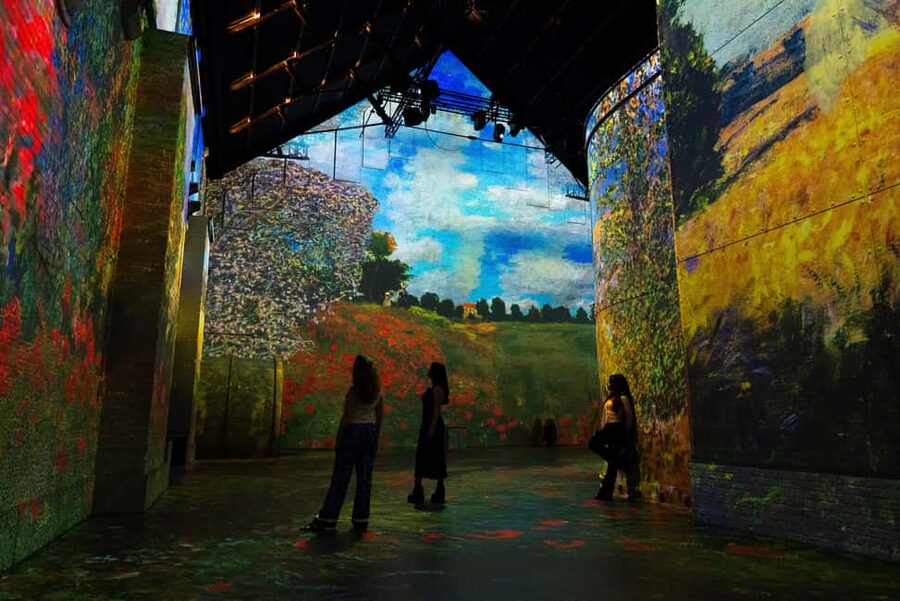
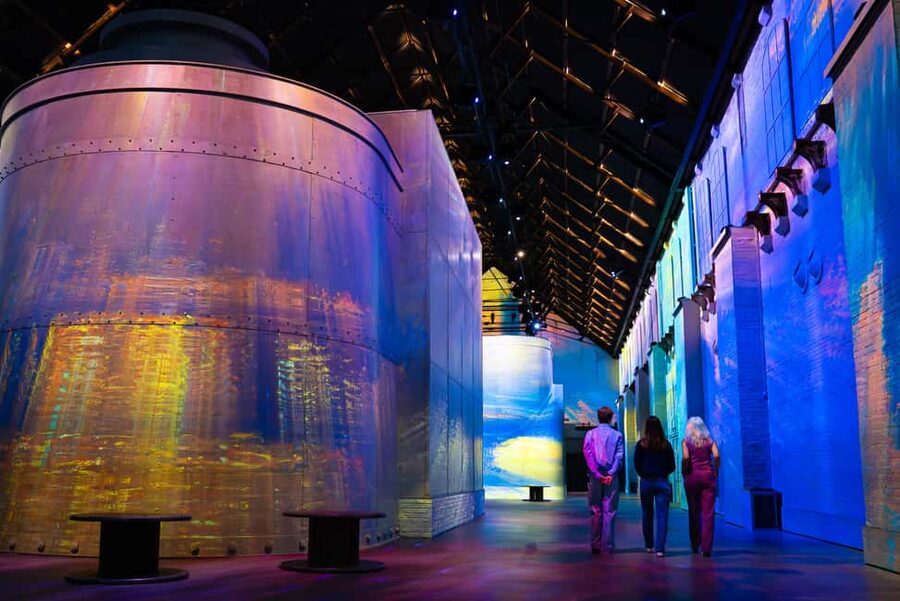
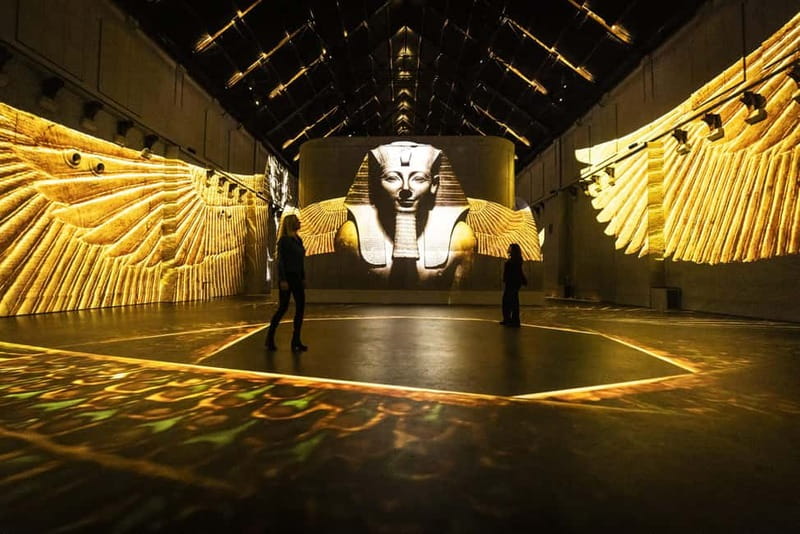
Fabrique des Lumières turns a huge former industrial space into a moving picture show. Inside the 3,800-square-meter hall, paintings, sculptures, monuments, and patterns spill across walls as high as 17 meters. Ancient Egypt is the main event, but two shorter presentations add French painting and strange computer-generated worlds.
I like the scale: this is not a small projection room with a few flashing screens. You can walk through the images, change your viewpoint, and watch the music guide the story. I also like the freedom to stay for another loop, explore the smaller rooms, and see the show from different angles. The main drawback is that this is an artistic spectacle, not a traditional museum visit. You will not find a guide explaining every object, and people who dislike loud music, intense light, or repeated projections may find it tiring.
In This Review
- Key points to know before you go
- Entering the former industrial hall
- The Kingdom of the Pharaohs across 17-meter walls
- French Orientalist painters and a complicated point of view
- Foreign Nature turns mathematics into moving color
- Smaller rooms and changing viewpoints
- Why the $20 ticket can be good value
- Timing, access, and practical restrictions
- Who will enjoy Fabrique des Lumières most
- Should you book the Amsterdam Fabrique des Lumières ticket?
- FAQ
- Where is Fabrique des Lumières located?
- How long does each exhibition last?
- What exhibitions are included?
- Is the ticket timed?
- Can I stay after one presentation ends?
- Is Fabrique des Lumières wheelchair accessible?
- Are lockers included?
- Can I bring a stroller, food, or large bag?
- Is the experience suitable for young children?
Key points to know before you go
- A 3,800-square-meter industrial hall: Artwork covers walls and floors in a space reaching 17 meters high.
- Three different presentations: Ancient Egypt is followed by French Orientalist painters and the abstract world of Foreign Nature.
- About 40 minutes per show: The programs run in a loop, and you can stay to watch them again.
- A good rainy-day choice: The venue sits in Westergas park and is easy to reach by public transport.
- Timed entry for $20: The price is reasonable if you stay for several programs rather than rushing through one.
- Some limits matter: No strollers, food, drinks, luggage, large bags, pets, or flash photography. Children under 3 and people with epilepsy should not attend.
Entering the former industrial hall
Fabrique des Lumières is in Westergas park, a useful change of scene from Amsterdam’s canals and tightly packed center. The setting is a large industrial building, and the architecture matters. High brick and concrete walls give the projections room to spread, while the open floor lets you move around rather than sit in one fixed seat.
Your ticket has a timed entry, so check the available starting time when booking. It is not a guided tour, and there is no named guide leading you from room to room. Instead, you enter the exhibition area and find your own place to watch.
You can leave large bags and other permitted belongings in lockers. Do not arrive with a suitcase, large bag, stroller, food, or drink, since these are not allowed inside. Assistance dogs are permitted, but other pets are not.
The venue is wheelchair accessible. The atmosphere is relaxed, but it is still a sensory presentation with bright projections and music. Flash photography is forbidden, and you should avoid the experience if you have epilepsy. Children under 3 are not considered suitable for the program.
More Entry Tickets in Amsterdam
- Amsterdam: Van Gogh Museum Ticket
★ 4.7 · 52,054 reviews - Amsterdam: Heineken Experience Ticket
★ 4.6 · 30,055 reviews - Amsterdam: Rijksmuseum Entry Ticket
★ 4.7 · 25,535 reviews
The Kingdom of the Pharaohs across 17-meter walls
The main program, The Kingdom of the Pharaohs, uses ancient Egypt as both subject and stage. Images of temples, reliefs, sculptures, jewelry, painted decoration, and monuments move across the building while music supplies the rhythm.
The presentation focuses on the people who made and worshipped these works. You see the world of the pyramid architects and craftsmen, along with the deities and rulers who shaped Egyptian religious life. The projection format gives a sense of movement through time, even though the source material comes from still art and carved stone.
This is the part to watch from several positions. From the center of the hall, you can take in the full sweep of the projections. From a side wall, the pictures become more abstract as they pass around corners. A higher viewpoint, where available, gives you a different sense of the building’s size. Some people choose to watch the program once from the main floor and again from another angle.
The music is not background decoration. It controls the pace and changes the mood as images appear, enlarge, and fade. If you enjoy art with a clear visual beat, this combination is likely to work well. If you prefer to study a painting quietly, the constant movement and sound can get in the way.
Each exhibition lasts about 40 minutes, though you can stay longer and watch again. The programs play on a loop, so you do not need to worry about missing the beginning after finding a good viewing position. I would give the Egypt program at least one complete run before deciding how long to stay.
French Orientalist painters and a complicated point of view
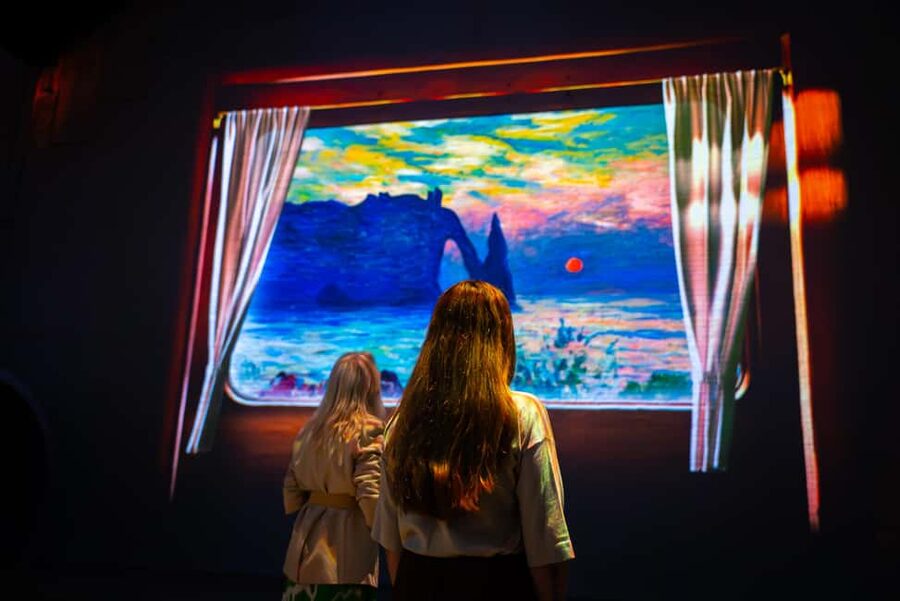
The second presentation turns to 19th-century French Orientalist painters, including Ingres, Delacroix, and Gérôme. These artists were fascinated by parts of the East that were unfamiliar to many Western audiences at the time.
Their paintings are often visually appealing, with carefully arranged interiors, costumes, architecture, and human figures. Projected at a giant scale, small details become easier to notice, and the changing light gives the pictures a new sense of movement.
There is an important qualification here. Orientalism did not offer a neutral record of Eastern countries. It reflected Western fantasies and stereotypes, often presenting distant places in romanticized and simplified ways. The projection show gives the paintings more space and drama, but it does not turn those old assumptions into fact.
I appreciate having that context in mind before watching. You can enjoy the color, technique, and theatrical presentation while remembering that these works tell you as much about 19th-century European imagination as they do about the places they depict.
This section may appeal most to people who like painting, art history, or the way older art changes when paired with modern technology. It is less about a chronological museum lesson and more about mood, scale, and visual association.
Foreign Nature turns mathematics into moving color
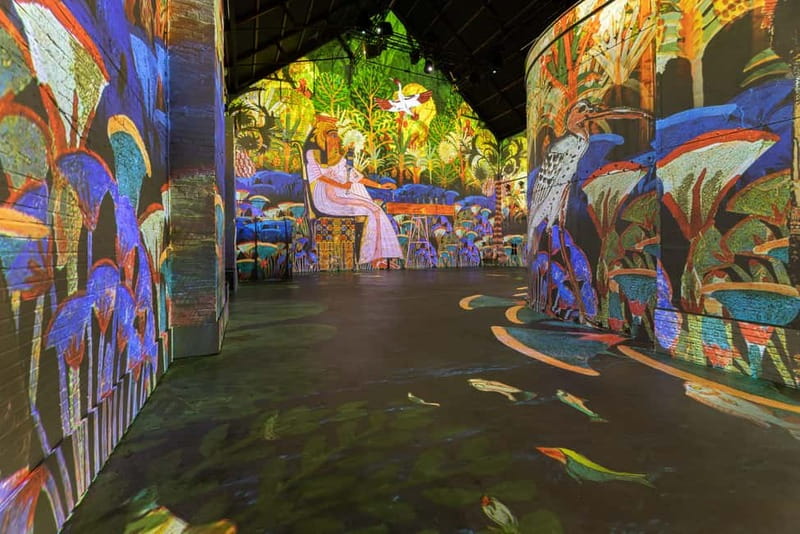
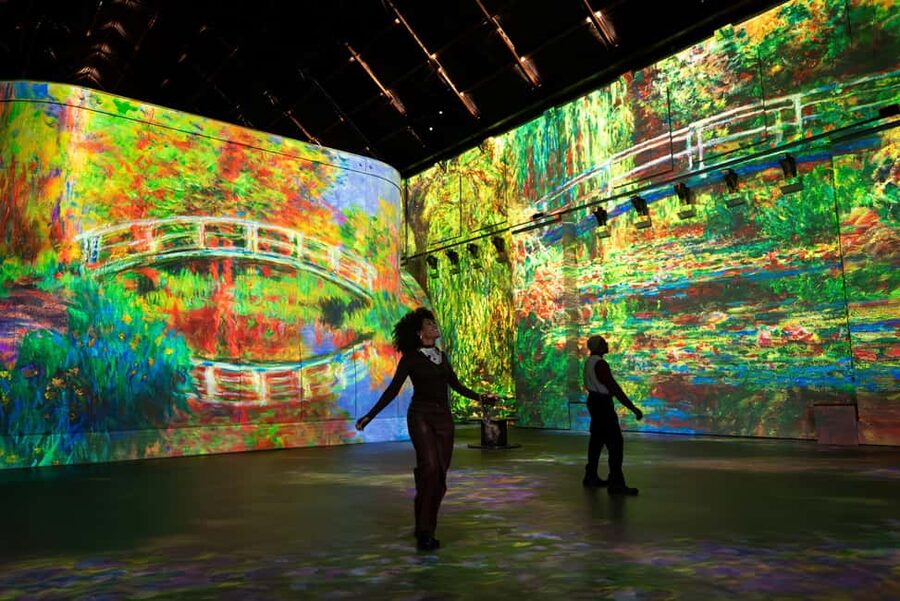
Foreign Nature is the most abstract of the three programs. It uses computer-generated fractals to create strange, colorful scenes where mathematics and visual art meet.
You will not be following a historical story here. Instead, patterns form, repeat, expand, and shift into shapes that can feel almost alien. The point is the changing relationship between order and motion. A simple mathematical pattern can produce a scene that looks organic, cosmic, or otherworldly.
This presentation may be a welcome change after the recognizable figures and monuments of Egypt and the Orientalist paintings. It asks less of your historical attention and more of your imagination. Some people will find it calming, while others may prefer the clearer subject matter of the first two programs.
If you are visiting on a wet day, this is a pleasant place to slow down. You can stand, sit if seating is available, or move through the room while the images continue around you. The scale and color make it easy to spend longer than expected, especially if you watch the patterns from more than one position.
A few more Amsterdam half-days to weigh up
- Amsterdam Classic Saloon Boat Cruise with Drinks and Cheese
★ 5.0 · 31,825 reviews - Amsterdam Luxury Canal Cruise + Unlimited Drinks & Bites option
★ 5.0 · 30,518 reviews - Amsterdam: Classic Boat Cruise with Optional Cheese & Wine
★ 4.6 · 22,925 reviews - Amsterdam: Evening Cruise with Optional Wine and Snacks
★ 4.4 · 19,696 reviews
Smaller rooms and changing viewpoints
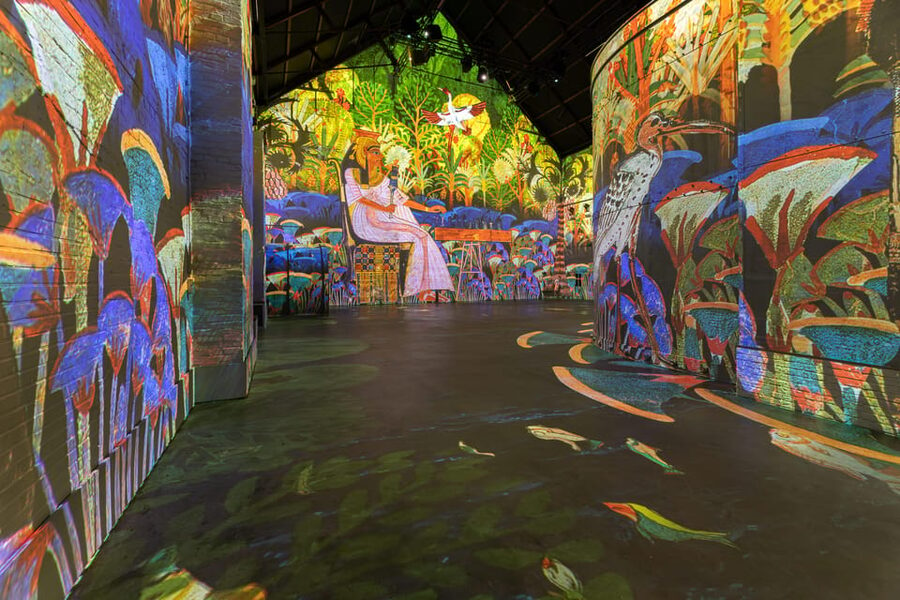
The main hall is the obvious draw, but do not rush out after the first presentation. The venue includes smaller spaces that give the art a more enclosed feel. A projection that seems grand in the main room can feel more personal when it fills a compact studio.
One useful approach is to treat the visit as a visual walk rather than a show with one correct seat. Start in the large hall, then try a side area or smaller room. Look at the floor as well as the walls. From close by, the projections feel more enveloping; from farther away, you can see how separate images connect across the architecture.
The space may feel different depending on how many people are inside. A quieter visit gives you more freedom to shift position, while a busier period may require patience. Since the ticket is timed, arriving at the correct entry time helps you make the most of the available loop.
Photography without flash is part of the appeal for many people, but the images are difficult to capture fully with a phone. The color, sound, and size are experienced best in the room itself. Take a few pictures if allowed by the venue’s current rules, then put the phone away for at least one complete sequence.
Why the $20 ticket can be good value
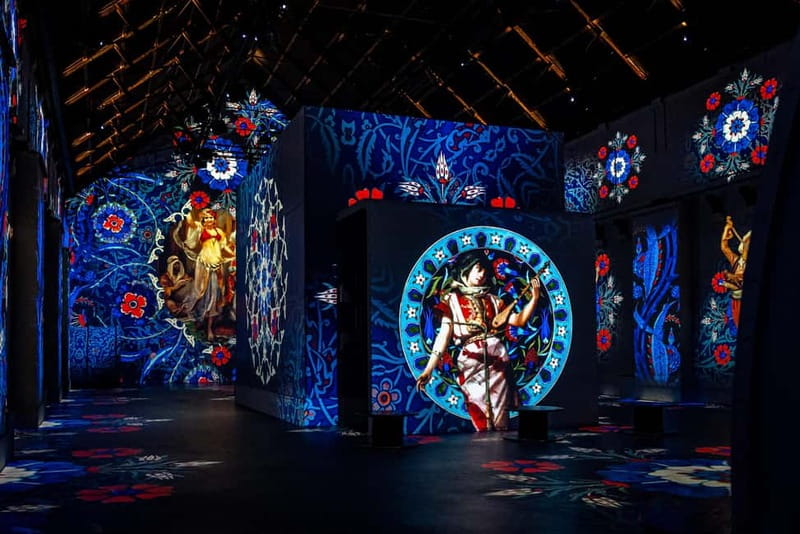
At $20 per person, the ticket is not the cheapest short attraction in Amsterdam. Its value depends on how you use it.
If you enter, watch one section for 15 minutes, and leave, the price feels high. If you stay for the full Egypt program, watch the other two presentations, revisit a favorite sequence, and explore the smaller rooms, the cost becomes easier to justify. The ability to stay longer and see a program again is important because there is no separate admission charge for each presentation.
The experience also fills a useful gap in an Amsterdam itinerary. It works for a wet afternoon, a break from conventional museums, or a day when you want art without reading wall labels for hours. It is not a substitute for the Rijksmuseum or another collection of original works, but it offers something those museums cannot: the physical sensation of art moving across an entire building.
The strongest value comes for pairs, families with suitable-age children, and friends who enjoy visual experiences together. The program is also a good choice if one person in your group likes art museums and another prefers technology, music, or photography.
Timing, access, and practical restrictions

The ticket is valid for one day, with entry tied to an available starting time. Book a time that leaves room to stay beyond the first 40-minute presentation. Arriving just before entry is sensible, since the timed system is designed to control access.
Westergas park is easily accessible by public transport. The attraction is outside the tightest historic center, so allow enough time to reach the park and find the venue. The park setting makes the visit easy to pair with a wider outing, though the ticket itself covers Fabrique des Lumières rather than a separate guided tour of Westergas.
Lockers are included. Use them for bags that meet the venue’s rules, but do not count on bringing luggage or large cases inside. Baby strollers are not allowed, which is an important point for families with infants. Children under 3 are not considered suitable for the experience.
The venue is wheelchair accessible. There is no guide included, so you are responsible for your own pace and interpretation. That independence is part of the charm, but anyone looking for expert commentary should choose a conventional guided museum visit instead.
Free cancellation is available up to 24 hours before the visit, and you can reserve now and pay later. Those options help if your Amsterdam schedule is still changing.
Who will enjoy Fabrique des Lumières most
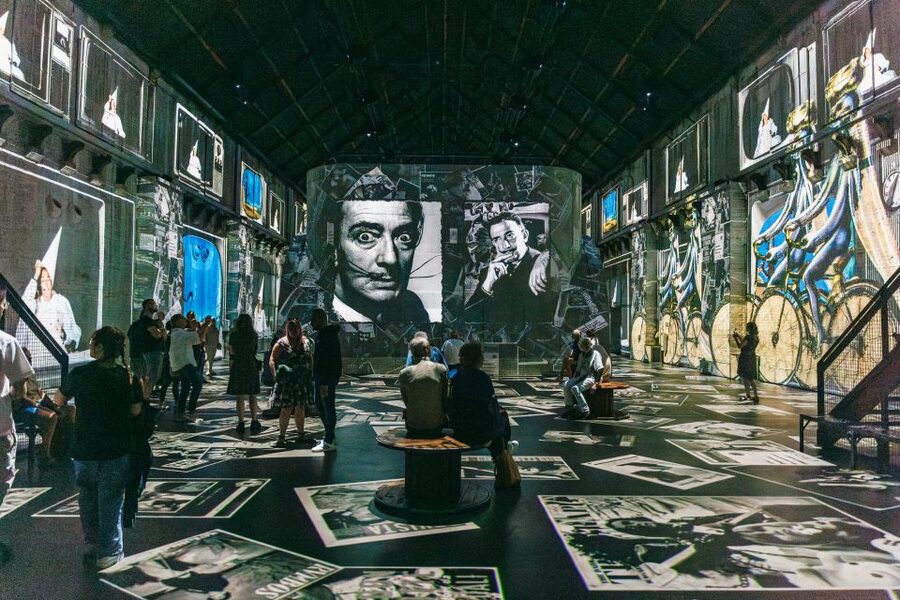
I would recommend this experience to you if you want art to feel physical and immediate. It suits people who like music with visual shows, large-scale digital installations, modern technology, and unusual museum formats.
It is especially good for:
- Art newcomers: You do not need specialist knowledge to understand the broad visual stories.
- Museum skeptics: The moving images and music offer a lighter alternative to rooms of framed paintings.
- Photographers and design fans: The changing colors and angles provide plenty to notice, though the full effect is hard to capture on a phone.
- Families with older children: The scale and motion can hold attention better than a quiet gallery, as long as children can manage bright light and sound.
- Rainy-day planners: The indoor program can occupy a substantial part of an afternoon.
- Repeat viewers: You can see the same program from the main hall, smaller rooms, a balcony if open, or another position on the floor.
I would hesitate if you want original artworks, a personal guide, detailed historical explanation, or a quiet environment. The attraction interprets art through projection, music, and movement. That is its strength, but also its limit.
Should you book the Amsterdam Fabrique des Lumières ticket?
Book it if you want an accessible, highly visual break from standard sightseeing and can spare roughly an hour or more. The ancient Egypt program gives you the clearest sense of occasion, while French Orientalist Painters adds art-historical interest and Foreign Nature provides a colorful change of pace.
For the best value, plan to stay for every program and watch at least one favorite section twice from different viewpoints. At $20, that makes the ticket a solid choice, particularly on a rainy day or for a group with mixed interests.
Skip it if you dislike loud music, intense light, repeated visual sequences, or art presented without a guide. But if you are curious about what happens when classic images leave the frame and take over an industrial building, Fabrique des Lumières is one of Amsterdam’s more distinctive modern attractions.
FAQ
Where is Fabrique des Lumières located?
It is located in Westergas park in Amsterdam, in North Holland, Netherlands. The venue is easily accessible by public transport.
How long does each exhibition last?
Each exhibition lasts approximately 40 minutes. The presentations run on a loop, and you can stay longer to watch them again.
What exhibitions are included?
The experience includes The Kingdom of the Pharaohs, French Orientalist Painters featuring Ingres, Delacroix, and Gérôme, and Foreign Nature, which uses computer-generated fractals.
Is the ticket timed?
Yes. The ticket provides timed entry, and you should check the available starting times when booking.
Can I stay after one presentation ends?
Yes. You can stay longer and enjoy the exhibitions again.
Is Fabrique des Lumières wheelchair accessible?
Yes, the venue is wheelchair accessible.
Are lockers included?
Yes. Lockers are included with the experience.
Can I bring a stroller, food, or large bag?
No. Baby strollers, food and drinks, luggage, and large bags are not allowed. Pets are also not allowed, except for assistance dogs.
Is the experience suitable for young children?
Children under 3 are not considered suitable for this experience. People with epilepsy should also avoid it because of the intense projected light.
Just added around Amsterdam
- Amsterdam: Food and Canal Tour★ 4.6 · 22 reviews
- Segway City Tours Amsterdam★ 4.3 · 23 reviews
- Amsterdam Canal Cruise in Classic Salon Boat With Drinks and Cheese★ 4.0 · 22 reviews
- Discover Deventer with an Outside Escape city game tour!★ 4.5 · 23 reviews
- Historical Walking Tour, private with local Dutch guide★ 5.0 · 23 reviews
- Utrecht Food Tour on a Bicycle with local guide★ 5.0 · 23 reviews
- Amsterdam: Captain For a Day 2-Hour Boat Rental★ 4.9 · 23 reviews
- Amsterdam Small-Group Breakfast Morning Cruise★ 5.0 · 23 reviews
Entry Tickets in Amsterdam, compared.



Keukenhof Ticket and Roundtrip Shuttle Transfer
Read our review →
Moco Museum Amsterdam Entrance Tickets with Banksy & More
Read our review →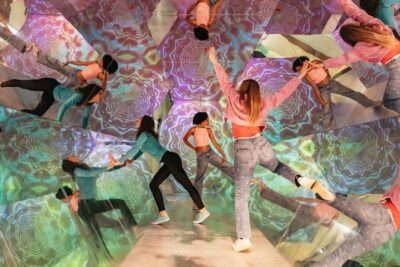

Browse the lists this tour appears in