
Reviewed · AMSTERDAM CANAL CRUISES
Amsterdam: Exclusive Tulip Tour Canal Cruise
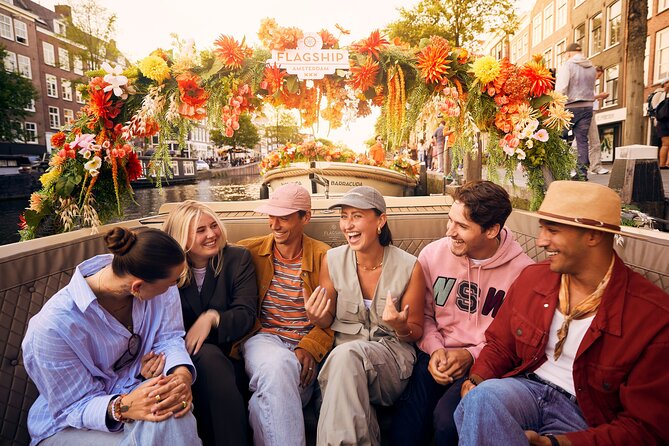
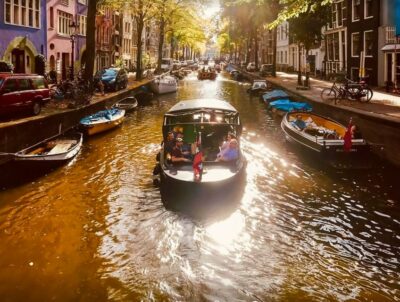
Amsterdam’s tulip boat canal cruise turns a familiar city ride into a bright photo opportunity. The boat is decorated with lifelike tulips, and the small maximum group of 10 gives you a more personal setting than a large canal vessel.
I like the intimate size and the route’s mix of landmarks, from Oosterdok and houseboats to the Amstel and the Golden Bend. I also like that the cruise is short enough to fit neatly into a busy day. The main drawback is seasonal: the tulip boat may not operate in winter or poor weather, even though the flowers are artificial.
In This Review
- Key points at a glance
- What the tulip boat adds to a standard canal cruise
- Starting at Oosterdok near Prins Hendrikkade
- Houseboat Alley and life on the water
- Following the Amstel, the river that shaped Amsterdam
- Why Amsterdam’s houses lean
- The Stopera and Amsterdam’s civic center
- The seven bridges after Thorbecke Bridge
- The Golden Bend and Herengracht mansions
- A guide-led ride with room to ask questions
- Drinks, photos, and the real value of $37.80
- Choose your timing with care
- Who should book this Amsterdam canal cruise?
- Should you book the tulip boat?
- FAQ
- How long is the Amsterdam tulip canal cruise?
- Where does the cruise start?
- How many people can join the cruise?
- Is the tour offered in English?
- Are drinks included in the ticket price?
- What happens if bad weather cancels the cruise?
Key points at a glance
- Lifelike tulip decoration: The boat gives you a colorful setting for photos, especially around sunset.
- Small maximum group: With no more than 10 people, you get a quieter ride and a better chance to hear the skipper.
- Classic canal sights: The route includes houseboats, the Amstel, the seven bridges, and the grand Herengracht mansions.
- English-speaking guidance: Skippers including Tim, Wes, Bart, and Abel have led rides praised for friendly commentary and city knowledge.
- One-hour format: This works well when you want a quick introduction to Amsterdam’s waterways without giving up half a day.
- Drinks cost extra: An onboard bar is available, but beverages are not included in the ticket price.
What the tulip boat adds to a standard canal cruise
Amsterdam has no shortage of canal cruises. Many offer the same broad view: narrow houses, water-level streets, and bridges sliding past at a gentle pace. This version adds a clear visual theme. The boat is dressed in tulips, creating a cheerful setting that feels especially suited to photos.
The flowers are lifelike rather than freshly picked. That matters because you should book this for the tulip design and the canal route, not as a seasonal flower tour. You will not be cruising through fields of spring bulbs or visiting the Keukenhof gardens.
The small-group format is the other important feature. The boat carries a maximum of 10 people, so the ride should feel less crowded than a large sightseeing vessel. You can hear the skipper more easily, ask a question without shouting across the boat, and take photos without a forest of heads in every frame.
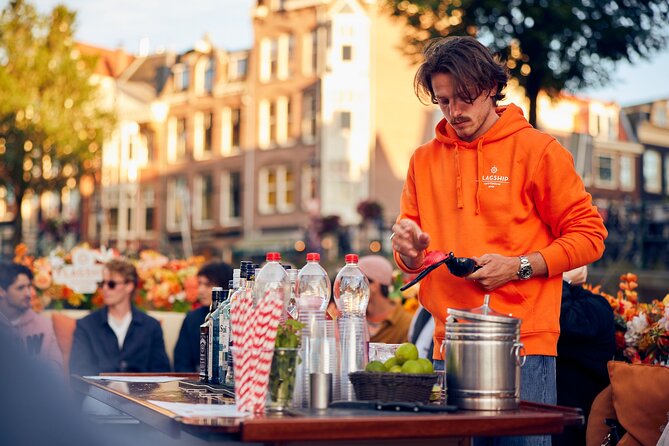
The guide is part of the appeal. Tim, Wes, Bart, and Abel are among the skippers associated with especially warm feedback. Their styles may differ, but the strongest pattern is clear: you can expect an English-speaking guide who mixes sightseeing with short explanations about Amsterdam’s buildings and waterways.
More Boat Tours in Amsterdam
- Amsterdam Classic Saloon Boat Cruise with Drinks and Cheese
★ 5.0 · 31,825 reviews - Amsterdam Luxury Canal Cruise + Unlimited Drinks & Bites option
★ 5.0 · 30,518 reviews - Amsterdam: Classic Boat Cruise with Optional Cheese & Wine
★ 4.6 · 22,925 reviews
Starting at Oosterdok near Prins Hendrikkade
The cruise begins at Prins Hendrikkade 33A, 1012 AB Amsterdam. This is near Oosterdok, an old harbor area that once served Amsterdam’s working waterfront and now combines historic buildings with modern attractions.
Oosterdok gives you a useful opening view of the city’s changing character. The NEMO Science Museum has its distinctive sloping shape nearby, while the National Maritime Museum connects the area to Amsterdam’s long relationship with ships, trade, and water.
Starting here also puts you close to public transportation. Check your meeting details carefully and arrive with enough time to find the departure point. A one-hour cruise moves quickly, so a late arrival can take a noticeable bite out of the experience.
The opening stretch is less about Amsterdam’s postcard canal houses and more about the city’s harbor setting. I like that contrast. You see that Amsterdam is not only a collection of pretty canals, but also a port city shaped by boats, cargo, and water management.
Houseboat Alley and life on the water
As the boat moves into the canal network, you pass Houseboat Alley, where homes sit directly on the water. These are working residences, not floating museum pieces, so the best approach is respectful observation rather than intrusive photography.
Houseboats show how Amsterdam adapts to limited urban space. A conventional street has foundations, sidewalks, and parked cars. Here, the water itself becomes part of the neighborhood. The result is one of the city’s most distinctive residential scenes.
This part of the route is particularly useful if you are trying to understand everyday Amsterdam. The ornate canal houses often receive the attention, but houseboats reveal another side of the city’s relationship with its waterways. You see modern comforts placed within an older maritime setting.
The tulip-covered boat adds a playful contrast to these practical homes. Your photos will have more color than a standard cruise, but the route still gives you a close look at how people live beside and on the canals.
Following the Amstel, the river that shaped Amsterdam
The Amstel is the central waterway behind Amsterdam’s name and early development. The city grew around the river, and the story traditionally connects its name to a dam built across the Amstel: Amstel plus dam became Amsterdam.
The waterway is broader than many of the inner canals, so the view opens up. This gives you a short break from the tight rows of houses and bridges. It also helps you see why the river was so useful for movement, trade, and settlement.
Your skipper may point out how the city grew outward from this water. That context makes the canal network easier to understand. Amsterdam was not planned as a decorative maze. It developed as a practical city where water served as a route, a boundary, and a source of income.
The route does not turn the Amstel into a long historical lecture. The cruise lasts only about an hour, so the commentary is designed to keep moving. That suits me. You get enough background to make the views meaningful without giving up the relaxed pace of the ride.
More Keukenhof and tulip field runs:
- Amsterdam: Keukenhof Ticket and Roundtrip Shuttle Transfer
★ 4.7 · 11,799 reviews - Amsterdam: Tour to Keukenhof Gardens with Windmill Cruise
★ 4.5 · 2,819 reviews - From Amsterdam: Keukenhof Gardens Ticket and Transfer
★ 4.5 · 2,741 reviews - Amsterdam: Day Tour Keukenhof and Zaanse Schans Windmills
★ 4.5 · 1,549 reviews
Why Amsterdam’s houses lean
One of the most memorable details on an Amsterdam canal cruise is the angle of the houses. Some buildings appear to lean forward, while others seem to tilt slightly to one side. This is not simply careless construction.
Amsterdam sits on soft marshland. Heavy buildings can sink into the ground, so builders used wooden poles to reach a firmer layer below. Over time, foundations shifted at different rates, producing the uneven appearance you see today.
The leaning houses are a good example of how a short cruise can reveal practical city history. From street level, you may notice the quirky shapes but miss the reason. From the water, the narrow facades line up in a long display of old engineering, later repairs, and gradual movement.
Do not expect every house to lean at the same angle or for the skipper to explain every building. The point is the larger lesson: Amsterdam’s beauty depends on constant work beneath the surface. The canal houses are attractive, but their foundations tell an equally interesting story.
The Stopera and Amsterdam’s civic center
The route continues toward the area known as the Stopera. The name joins the Dutch words for city hall and opera, reflecting the two major functions of the complex.
This part of the ride shifts from residential canals to civic architecture. You get a view of a working part of the city rather than a string of purely picturesque houses. That change keeps the cruise from feeling like one repeated postcard after another.
The Stopera is useful context for understanding Amsterdam as a modern capital. The city’s historic center is close by, but municipal government and cultural performance share this prominent location. A canal view lets you take in the scale and position of the complex without walking around it.
The cruise does not include a visit inside the city hall or opera building. You are seeing the area from the water, with the skipper providing the setting and background. If you want detailed architectural study, you will need a separate visit on foot.
The seven bridges after Thorbecke Bridge
After the Thorbecke Bridge, the boat reaches one of the route’s best-known visual moments: the seven bridges. From the right position, and if other boats do not block the view, you can see seven similar stone bridges lined up one behind another.
This sight rewards patience and a good camera angle. The alignment is not guaranteed every second. Canal traffic can interrupt the view, so listen when the skipper points it out and be ready with your phone.
The seven-bridge view also shows why a boat is valuable here. From the street, you can cross one bridge at a time. From the water, the bridges stack into a single scene, giving you a wider sense of the canal layout.
The boat’s tulip decoration is useful at this point because the flowers can frame your photo. If you are taking pictures, avoid spending the whole ride looking at your screen. The bridges, buildings, and reflections change quickly, and the best view may last only a few seconds.
The Golden Bend and Herengracht mansions
The final major highlight is the Golden Bend of the Herengracht. This section is known for large, elegant canal mansions built during Amsterdam’s period of great wealth and expansion.
The houses here are more imposing than the narrow facades seen elsewhere. Their width, ornament, and position along the canal reflect the status of the people who could afford such addresses. From the boat, you get the most natural view of these buildings: from the water, looking up at their full height.
I find this portion especially effective late in the day. An 8 p.m. departure can coincide with sunset, creating softer light on the canal and facades. Timing depends on the season, of course, but evening departures can add atmosphere without changing the route.
The Golden Bend is also where the contrast between Amsterdam’s social past and present becomes clear. The mansions suggest old wealth, while bicycles, houseboats, working boats, and modern city life remain close by. In one hour, you see several layers of Amsterdam rather than only its prettiest streets.
A guide-led ride with room to ask questions
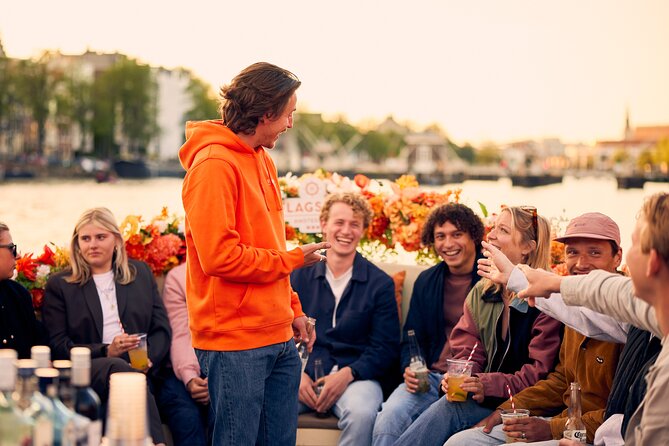
The skipper does more than steer. The guide explains the sights, gives background on the canals, and helps you notice details that are easy to miss. The most praised skippers include Tim, Wes, Bart, and Abel, with Bart described as especially strong at combining guiding and boat handling.
You should expect an English-language tour. The information is delivered while the boat moves, so this is not the same as a formal museum talk. It is a light, practical introduction suited to seeing many parts of central Amsterdam in a short period.
A small boat changes the feel of the conversation. With up to 10 people, you are closer to the skipper and more likely to hear the explanation clearly. You can also ask about a building or bridge as it comes into view.
Guide quality can vary from departure to departure, and no particular skipper is guaranteed. Still, the repeated praise for Tim, Wes, Bart, and Abel suggests that the human element is a real part of the product, not just an extra line in the description.
Drinks, photos, and the real value of $37.80
The ticket costs $37.80 per person. That is not the cheapest way to see Amsterdam’s canals, but the price includes the skipper, the boat ride, and the small-group setting. You are paying for the route and the atmosphere, not for a meal or a drink package.
The onboard bar sells a variety of drinks, but you pay separately. Keep that in mind if you are comparing this with a cruise that includes refreshments. The bar is convenient, though you do not need to buy anything to enjoy the ride.
The value is strongest if you care about three things:
- You want a small boat instead of a large shared vessel.
- You plan to take photos with the tulip decorations.
- You want a quick route covering several central sights.
The value is weaker if you mainly want a low-cost way to sit on a canal for an hour. In that case, a simpler cruise may be enough. It is also weaker if you expect real tulips, a flower-growing region, or a full historical tour.
At about 38 days of advance booking on average, this is not an activity I would leave until the last moment if your schedule is fixed. The boat holds only 10 people, and the strongest departure times, such as sunset, may be more sought after.
Choose your timing with care
The one-hour length makes the tour easy to place between major Amsterdam sights. You can use it early in your visit to get a broad sense of the canal layout, or later to enjoy a slower hour after walking through the center.
An evening departure has a clear advantage when the timing matches sunset. The tulips photograph well in softer light, and the canal houses can look more atmospheric as the day fades. An earlier departure may be better if you want clearer views of architectural details.
Winter requires special caution. The artificial flowers do not mean the boat runs in every season. Strong winds and poor weather can lead to the tulip tour being unavailable, and one booking was affected by a winter scheduling problem.
The weather policy is fair: if the operator cancels because conditions are poor, you can receive a different date or a full refund. You can also cancel for a full refund if you do so at least 24 hours before the start time. Cancellations or changes inside that 24-hour window are not refunded.
Who should book this Amsterdam canal cruise?
I would choose this experience for a first visit when you want a compact introduction to Amsterdam from the water. It also suits you if photos matter, especially if you like colorful, playful settings rather than a plain sightseeing boat.
Couples, small groups of friends, and solo visitors who prefer a quieter ride should find the 10-person limit useful. Families may also appreciate the short duration, though the experience is still a seated canal tour rather than a hands-on activity.
I would not make it your only Amsterdam history experience. The commentary covers useful facts, but one hour cannot explain the city in great depth. Pair it with time on foot around the canals, a museum visit, or a walk through the Jordaan and historic center.
Most people can participate, and the meeting point is near public transportation. The ticket is mobile, and confirmation arrives at booking, which keeps the practical side simple.
Should you book the tulip boat?
Book it if you want a small, photo-friendly canal cruise with an English-speaking skipper and a route packed with recognizable Amsterdam sights. The tulips give the boat a distinct look, while the Amstel, seven bridges, houseboats, and Golden Bend provide enough variety to keep the hour moving.
Think twice if you are booking in winter, if the forecast is poor, or if you expect fresh flowers. Confirm that the tulip boat is operating for your date before setting out, particularly when strong wind or bad weather is possible.
At $37.80, the experience earns its price through the small group, themed boat, and guide-led route. It is not the absolute budget choice, but it is a sensible pick when you want a short cruise with more personality than a basic canal ride.
FAQ
How long is the Amsterdam tulip canal cruise?
The cruise lasts approximately one hour and returns to the original meeting point.
Where does the cruise start?
It starts at Prins Hendrikkade 33A, 1012 AB Amsterdam, Netherlands, near public transportation.
How many people can join the cruise?
The experience allows a maximum of 10 people.
Is the tour offered in English?
Yes. The tour is offered in English and includes a skipper who provides guidance during the cruise.
Are drinks included in the ticket price?
No. The boat has an onboard bar, but drinks are available for purchase separately.
What happens if bad weather cancels the cruise?
If poor weather causes the operator to cancel, you will be offered another date or a full refund. You can also cancel at least 24 hours before the start time for a full refund.
More Canal Cruises in Amsterdam
- Amsterdam: 75 Minute City Canal Cruise with Audio Guide
★ 4.4 · 17,501 reviews - Amsterdam: Open Boat Cruise option Unlimited Drinks & Bite
★ 4.6 · 15,046 reviews - Amsterdam: City Centre Canal Cruise
★ 4.2 · 12,827 reviews - Amsterdam: Smoke and Lounge City Boat Cruise
★ 4.7 · 8,572 reviews
Just added around Amsterdam
- Amsterdam: Food and Canal Tour★ 4.6 · 22 reviews
- Segway City Tours Amsterdam★ 4.3 · 23 reviews
- Amsterdam Canal Cruise in Classic Salon Boat With Drinks and Cheese★ 4.0 · 22 reviews
- Discover Deventer with an Outside Escape city game tour!★ 4.5 · 23 reviews
- Historical Walking Tour, private with local Dutch guide★ 5.0 · 23 reviews
- Utrecht Food Tour on a Bicycle with local guide★ 5.0 · 23 reviews
- Amsterdam: Captain For a Day 2-Hour Boat Rental★ 4.9 · 23 reviews
- Amsterdam Small-Group Breakfast Morning Cruise★ 5.0 · 23 reviews
Amsterdam Canal Cruises, compared.
Amsterdam Classic Saloon Boat Cruise with Drinks and Cheese
Read our review →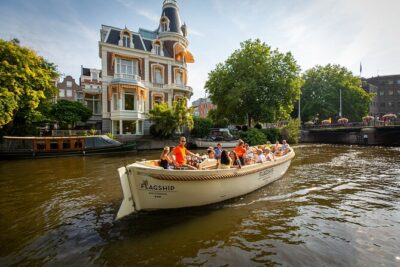
Amsterdam Luxury Canal Cruise + Unlimited Drinks & Bites option
Read our review →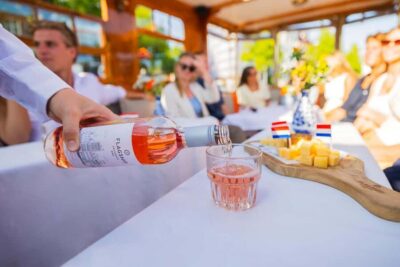
Classic Boat Cruise with Optional Cheese & Wine
Read our review →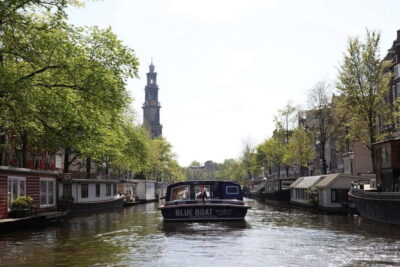
75 Minute City Canal Cruise with Audio Guide
Read our review →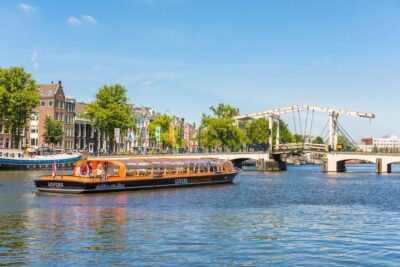

Luxury Saloon Boat Cruise with Cocktails & Waffle
Read our review →
Covered Canal Booze Cruise with Unlimited Drinks
Read our review →Browse the lists this tour appears in