
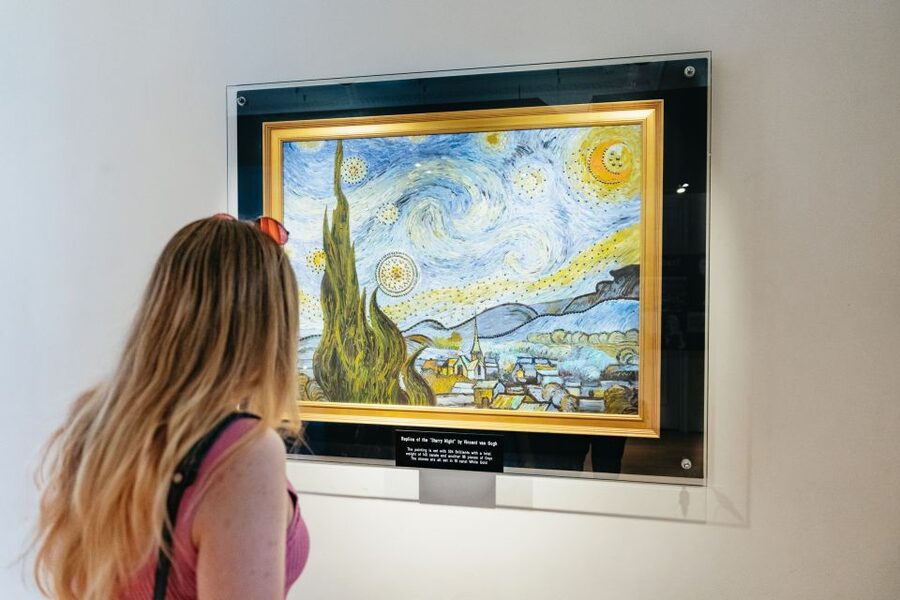
Reviewed · MUSEUM TOURS IN AMSTERDAM
Amsterdam: Diamond Museum Entrance Ticket
Amsterdam’s Diamant Museum turns a small, glittering stone into a long story, beginning 3 billion years ago and 200 kilometers underground. You’ll follow the path from raw diamond to finished jewelry, then try to steal one yourself in the Laser Room without setting off the alarm.
I like the mix of serious diamond history and hands-on fun, especially the replicas of 22 famous stones and the playful heist challenge. I also like that your ticket includes the adjacent Coster Diamonds, giving the visit a closer look at polishing and jewelry craftsmanship. The main drawback is size: at $14, this is an easy add-on, but it may feel brief if you expect a full-day museum.
In This Review
- Key Points
- Starting at Paulus Potterstraat 8
- Beginning 3 Billion Years Beneath the Earth
- From Rough Stone to Finished Jewelry
- Twenty-Two Famous Diamonds in Replica Form
- Royal Jewels from the House of Oranje-Nassau
- The Laser Room Diamond Heist
- What the $14 Ticket Buys You
- Who Will Enjoy This Museum Most
- Practical Ways to Plan Your Visit
- Should You Book the Diamant Museum?
- FAQ
- Where is the Amsterdam Diamant Museum?
- How much does admission cost?
- What does the ticket include?
- How long is the ticket valid?
- What are the museum’s opening hours?
- Is a guide included?
- Can I cancel my booking?
- Are wheelchairs, pets, or large bags allowed?
Key Points
- Follow a diamond’s journey: Learn how a stone moves from underground formation through mining, trade, polishing, and jewelry design.
- See 22 famous diamond replicas: The displays explain the stories behind well-known stones without requiring you to view the originals.
- Try the Laser Room heist: Move between laser beams and reach the diamond without triggering the alarm.
- View royal jewelry: The collection includes diamonds and jewels linked to the House of Oranje-Nassau.
- Use the same ticket at Coster Diamonds: The adjacent attraction adds a closer look at diamond cutting and craftsmanship.
- Plan for a compact visit: The museum is open daily from 9:00 AM to 5:00 PM, and your ticket is valid for one day.
Starting at Paulus Potterstraat 8
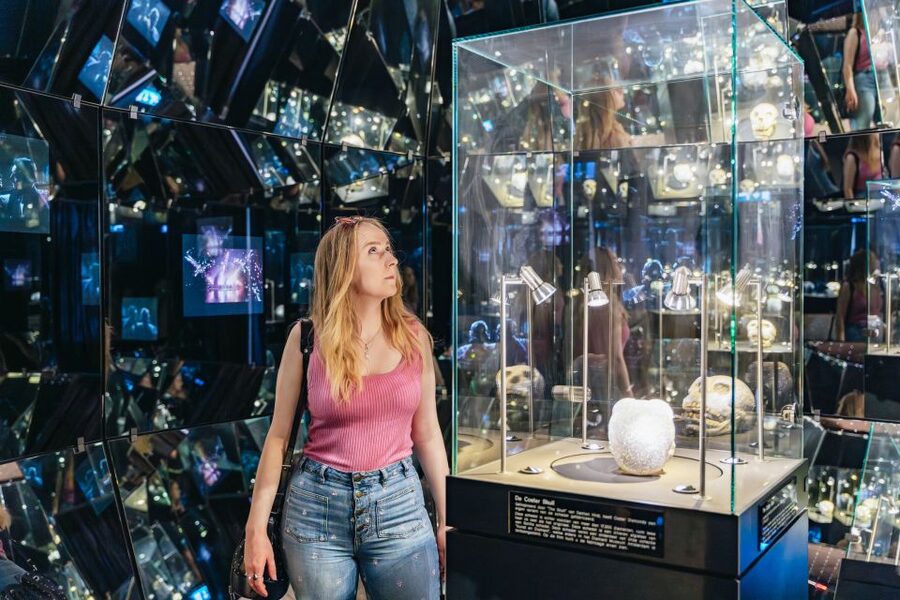
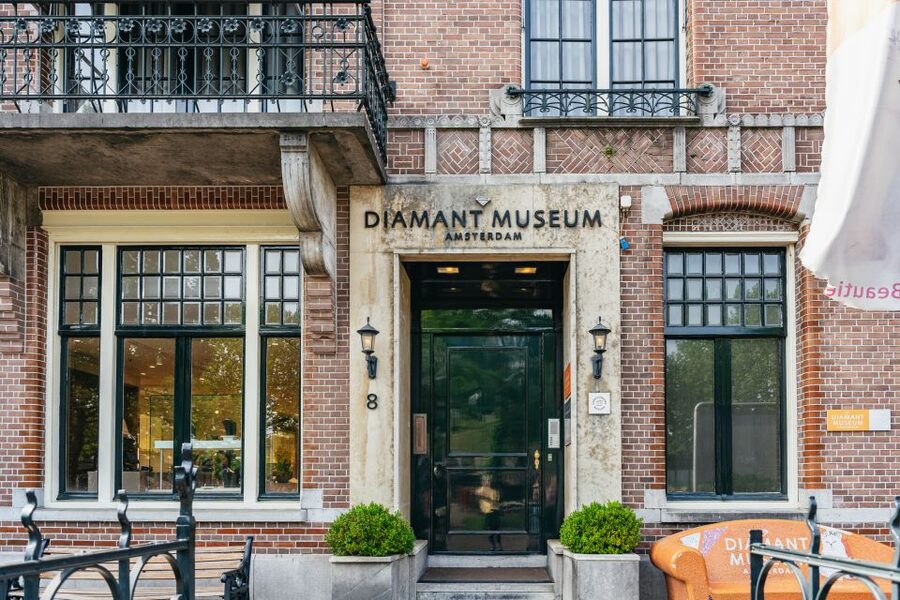
The museum is at Paulus Potterstraat 8, 1071 CZ Amsterdam. Your visit begins and ends there, with access to the Diamant Museum and adjacent Coster Diamonds included in the same ticket.
This location makes the museum a useful stop for an afternoon built around Amsterdam’s art museums, though the museum itself is not presented as a guided tour. No guide is included, so you move through the displays at your own speed. That suits you if you like stopping for labels, photographs, and short explanations without keeping pace with a group.
The museum is open every day, including weekends, from 9:00 AM to 5:00 PM. I would allow enough time to read the displays and watch the film rather than treating it as a quick photo stop. The exact amount of time you need depends on how closely you examine the jewelry and how long you spend with the Laser Room challenge.
Leave pets, smoking materials, luggage, and large bags behind. Those items are not allowed. The museum is also not suitable for wheelchair users, an important point to check before booking.
More Entry Tickets in Amsterdam
- Amsterdam: Van Gogh Museum Ticket
★ 4.7 · 52,054 reviews - Amsterdam: Heineken Experience Ticket
★ 4.6 · 30,055 reviews - Amsterdam: Rijksmuseum Entry Ticket
★ 4.7 · 25,535 reviews
Beginning 3 Billion Years Beneath the Earth
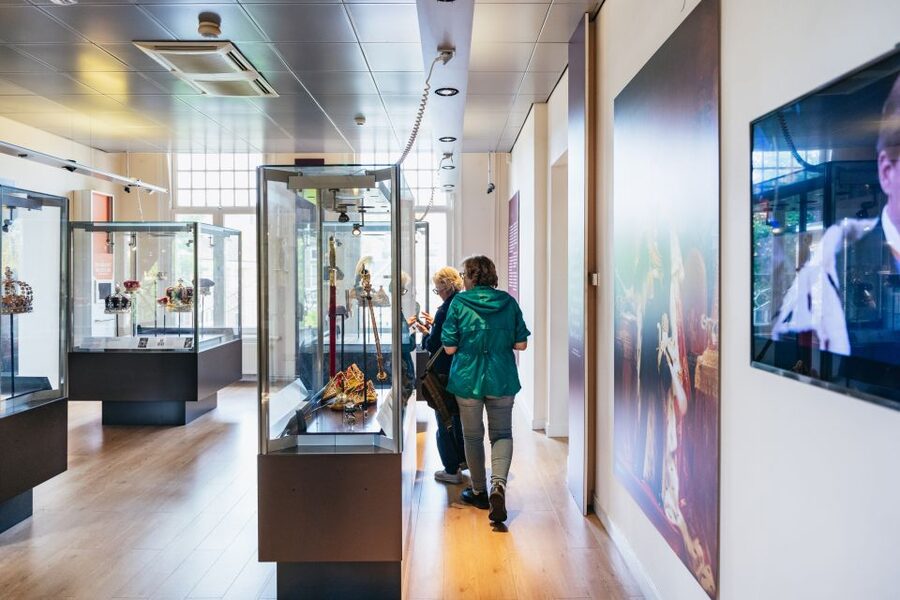
The museum’s opening story reaches far beyond Amsterdam. It begins with a diamond forming beneath the earth around 3 billion years ago, roughly 200 kilometers below the surface.
That timescale gives the visit a useful sense of proportion. A finished diamond may sit in a ring or necklace, but the stone itself began as a natural formation long before human history. You are not simply looking at pretty jewelry. You are tracing a material through geology, extraction, business, skilled labor, and royal display.
The museum explains diamond exploration and the stages involved in turning a rough stone into something suitable for a necklace, wrist, or finger. The value here is the change in viewpoint. Once you understand that cutting a diamond means making careful decisions about shape, facets, and the use of the original rough stone, the finished pieces become easier to appreciate.
You should not expect a long scientific course in geology. Instead, the museum offers a clear, accessible route through the diamond’s story. It works well for visitors who want context before looking at jewelry, and for families who need something more active than rows of objects behind glass.
From Rough Stone to Finished Jewelry
The central subject is transformation. You follow the diamond through formation, mining, distribution, trade, and processing.
A short film covers this journey in one sitting. It gives you a simple framework for the rest of the displays: first the stone exists in nature, then people find it, move it through commercial channels, and shape it into a finished object.
The polishing and processing displays are especially useful if you have never thought about what happens between a raw diamond and a polished jewel. The craftsmanship is not an afterthought. Cutting changes how the stone catches light, and jewelry design determines how that stone is worn and seen.
The adjacent Coster Diamonds adds value here. Your ticket includes entry to both places, so you can connect the museum’s explanations with a closer look at the diamond business and polishing tradition. The provided information does not promise a separate guided demonstration, so book this for the displays and craftsmanship rather than expecting a personal workshop.
I like this part because it keeps the subject grounded. The museum does not only show finished luxury objects. It also explains the work and decisions that create them.
Twenty-Two Famous Diamonds in Replica Form
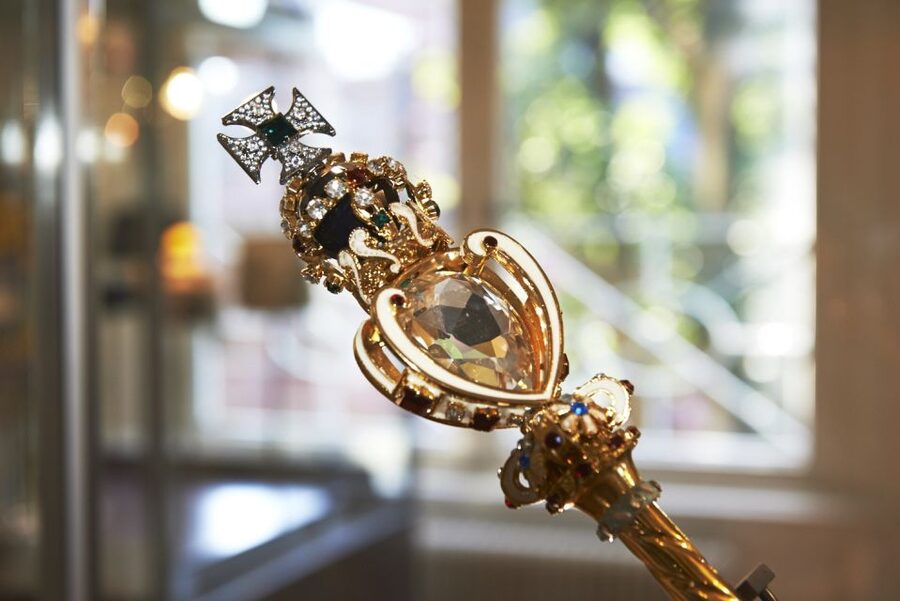
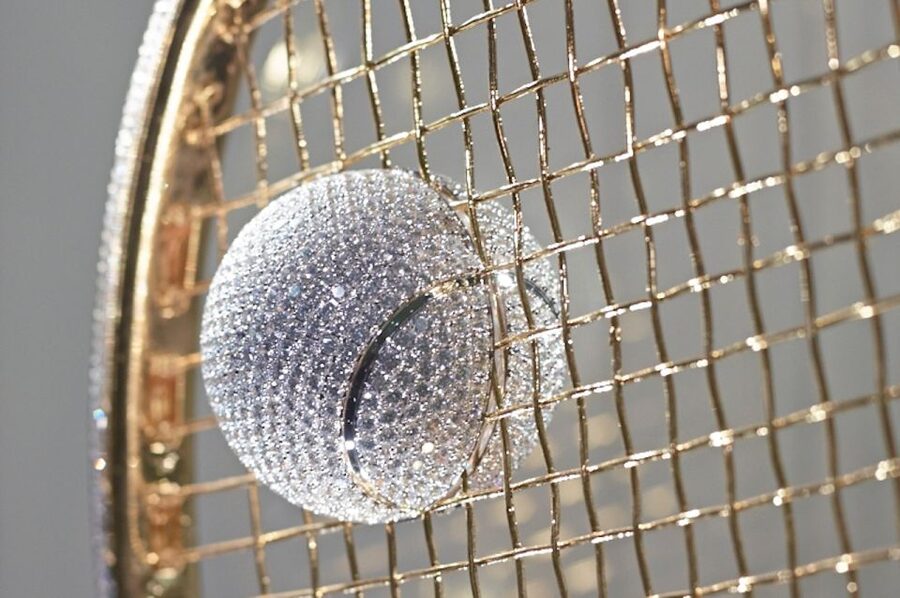
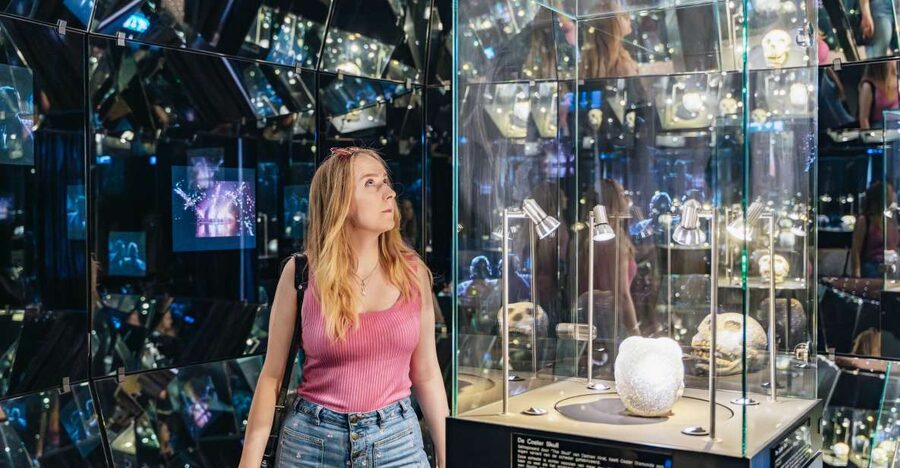
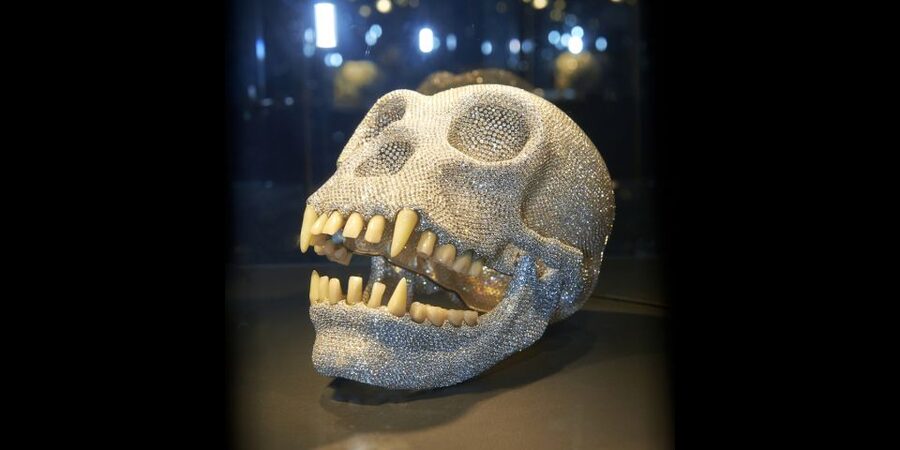
One of the museum’s strongest features is its display of replicas of 22 famous diamonds. These reproductions let you see the shapes and appearance of stones with notable stories without needing access to the originals.
That matters because a famous diamond is often difficult to understand from a name alone. A replica gives you something concrete to look at while the museum explains why the stone became known. Some stones are famous for their history. Others attract attention because of their unusual beauty or form.
The replicas also help you compare different cuts and styles. You can consider how size, shape, and polishing affect the way a stone is presented. The displays make the business of diamonds less abstract, particularly for younger visitors who may respond more readily to a recognizable object than to a long explanation.
Do not confuse this section with a vault full of original legendary stones. The museum specifically presents replicas of famous diamonds. That is still worthwhile, but it is an important expectation to set before you go.
More Museum Tours in Amsterdam
- Moco Museum Amsterdam Entrance Tickets with Banksy & More
★ 4.4 · 10,088 reviews - Amsterdam: The Upside Down Museum Entrance Ticket
★ 4.4 · 9,506 reviews - Amsterdam: Red Light Secrets Museum Entry Ticket
★ 4.2 · 5,722 reviews - Amsterdam’s Weirdest Museum: Believe It or Not!
★ 4.5 · 4,086 reviews
Royal Jewels from the House of Oranje-Nassau
The museum includes a collection of diamonds and jewelry connected with the royal House of Oranje-Nassau. This gives the visit a Dutch angle beyond the general story of diamond mining and trade.
Royal jewelry is useful here because it shows how diamonds operate as symbols as well as adornments. A necklace, brooch, or other jewel can signal status, ceremony, family connections, and public identity. The pieces also let you see how designers place stones into settings intended to be worn, not merely admired as individual objects.
I would pay attention to the difference between the stone and the finished piece. The museum’s subject is not just brilliance and size. It is also the relationship between a diamond and the design around it. The royal collection makes that point clearly.
This section may appeal most to visitors interested in monarchy, jewelry, or decorative arts. If you care mainly about geology or the practical mechanics of cutting, you may spend more time with the film and processing displays.
The Laser Room Diamond Heist

The Laser Room is the museum’s most playful feature. You attempt a diamond heist by moving between laser beams and trying to reach the stone without breaking a beam.
Hit a laser and an alarm sounds. That simple rule turns passive viewing into a physical challenge. You need to bend, stretch, and plan your movements, making this a natural break from the display cases and written explanations.
The activity is particularly useful for families. Children may not remember every stage of diamond distribution, but they are likely to remember trying to cross the room without setting off the alarm. Adults can treat it as a bit of harmless theater, or take the challenge more seriously than expected.
The Laser Room also reinforces the museum’s theme in a memorable way. Diamonds are often presented as precious, guarded objects, and this room lets you play out that idea. It does not replace the museum’s educational sections, but it gives the visit a lively finish.
The attraction is not described as a timed contest, and no score or prize is specified. Go for the challenge itself, not for a formal escape-room production. If physical movement is not comfortable for you, the rest of the museum remains the main reason to visit.
What the $14 Ticket Buys You
At $14 per person, this works best as a reasonably priced museum add-on rather than a destination that fills an entire day. The ticket covers the Diamant Museum and adjacent Coster Diamonds, so you get two connected looks at diamonds: one focused on history, famous stones, geology, and royal jewelry, and another tied to craftsmanship and polishing.
I consider that fair value if you already plan to be in the area and have an interest in jewelry or unusual museums. The Laser Room improves the value for families because it adds an activity beyond reading labels. The royal collection and famous-diamond replicas also give the visit more variety than a single display of polished stones.
The value is less certain if you want a large museum with many rooms or a formal tour led by an expert. No guide is included, and the experience is valid for one day rather than being a long scheduled program. You are paying for independent access and a compact collection.
Some people may find that they could buy a ticket at the door, depending on availability. For that reason, advance booking is most useful when you want to secure your plans or use the reserve-now, pay-later option. You can cancel up to 24 hours before the visit for a full refund, which gives you some flexibility.
Who Will Enjoy This Museum Most
I would recommend this museum to families, jewelry fans, and anyone curious about how a natural stone becomes a luxury object. The Laser Room gives children a clear reason to stay engaged, while the film and displays offer enough substance for adults.
It also suits a short Amsterdam visit. You can make the museum part of a day in North Holland without committing to a fixed-length guided excursion. Since the ticket is valid for one day and the museum is open from 9:00 AM to 5:00 PM, you have room to fit it around other plans.
The museum may be less satisfying for someone seeking original versions of every famous diamond. Many of the well-known stones appear as replicas, so keep that distinction in mind. It may also disappoint visitors who want a guide to explain every object in person.
Accessibility requires careful planning. The experience is listed as unsuitable for wheelchair users. Pets, smoking, luggage, and large bags are not allowed, so arrive with only what you can comfortably carry.
Practical Ways to Plan Your Visit
I would visit earlier in the day if you want time to read the material carefully and try the Laser Room without feeling rushed. The museum opens at 9:00 AM and closes at 5:00 PM daily, including weekends.
Start with the museum’s broad story, then watch the short film, and finish with the replica diamonds and royal jewelry. After that, use the adjacent Coster Diamonds visit to focus on polishing and design. This order gives you the basic story first and the craftsmanship second.
If you are visiting with children, let them know that the Laser Room is part of the attraction. It can provide a clear goal during the more information-heavy parts. You can also use the famous replicas to connect the displays with stories about notable diamonds.
Do not bring a large day bag unless you have confirmed storage arrangements separately, since large bags and luggage are not allowed. The supplied information does not specify storage facilities.
Should You Book the Diamant Museum?
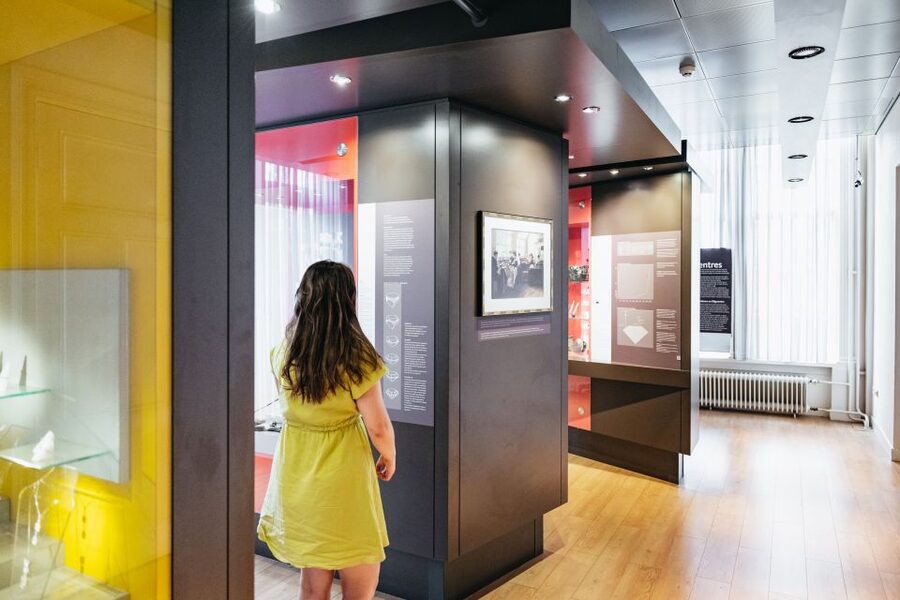
Book it if you want a compact, unusual Amsterdam museum with a good balance of explanation, jewelry, royal connections, and hands-on fun. At $14, the inclusion of Coster Diamonds makes the price easier to justify, especially for families and visitors already interested in cutting or jewelry design.
Skip it if you need a long guided experience, original versions of every famous stone, or wheelchair access. For everyone else, it is a sensible one-day stop, particularly when the Laser Room and royal collection appeal to your group. Reserve ahead if you value flexible planning, but the museum’s daily opening hours also make it a relatively easy visit to fit into your schedule.
FAQ
Where is the Amsterdam Diamant Museum?
The museum is at Paulus Potterstraat 8, 1071 CZ Amsterdam, in North Holland, Netherlands.
How much does admission cost?
The listed price is $14 per person.
What does the ticket include?
Your ticket includes entrance to the Diamant Museum and the adjacent Coster Diamonds.
How long is the ticket valid?
The ticket is valid for one day. Check availability for the available starting times.
What are the museum’s opening hours?
The Diamant Museum is open daily from 9:00 AM to 5:00 PM, including weekends.
Is a guide included?
No guide is included. You explore the museum and adjacent Coster Diamonds independently.
Can I cancel my booking?
You can cancel up to 24 hours in advance for a full refund.
Are wheelchairs, pets, or large bags allowed?
The experience is not suitable for wheelchair users. Pets, smoking, luggage, and large bags are not allowed.
More Museums and Galleries in Amsterdam
- Amsterdam: Van Gogh Museum Ticket and City Canal Cruise
★ 4.6 · 3,899 reviews - Amsterdam: Rembrandt House Museum Entrance Ticket
★ 4.7 · 3,385 reviews - Amsterdam: Van Gogh Museum Ticket & Canal Cruise
★ 4.5 · 3,304 reviews - Amsterdam: NEMO Science Museum Ticket
★ 4.4 · 2,979 reviews
Just added around Amsterdam
- Amsterdam: Food and Canal Tour★ 4.6 · 22 reviews
- Segway City Tours Amsterdam★ 4.3 · 23 reviews
- Amsterdam Canal Cruise in Classic Salon Boat With Drinks and Cheese★ 4.0 · 22 reviews
- Discover Deventer with an Outside Escape city game tour!★ 4.5 · 23 reviews
- Historical Walking Tour, private with local Dutch guide★ 5.0 · 23 reviews
- Utrecht Food Tour on a Bicycle with local guide★ 5.0 · 23 reviews
- Amsterdam: Captain For a Day 2-Hour Boat Rental★ 4.9 · 23 reviews
- Amsterdam Small-Group Breakfast Morning Cruise★ 5.0 · 23 reviews
Museum Tours in Amsterdam, compared.

Moco Museum Amsterdam Entrance Tickets with Banksy & More
Read our review →


Amsterdam’s Weirdest Museum: Believe It or Not!
Read our review →

Browse the lists this tour appears in